


Maxim Oreshkin and Dmitry Peskov on humanity in the age of artificial intelligence
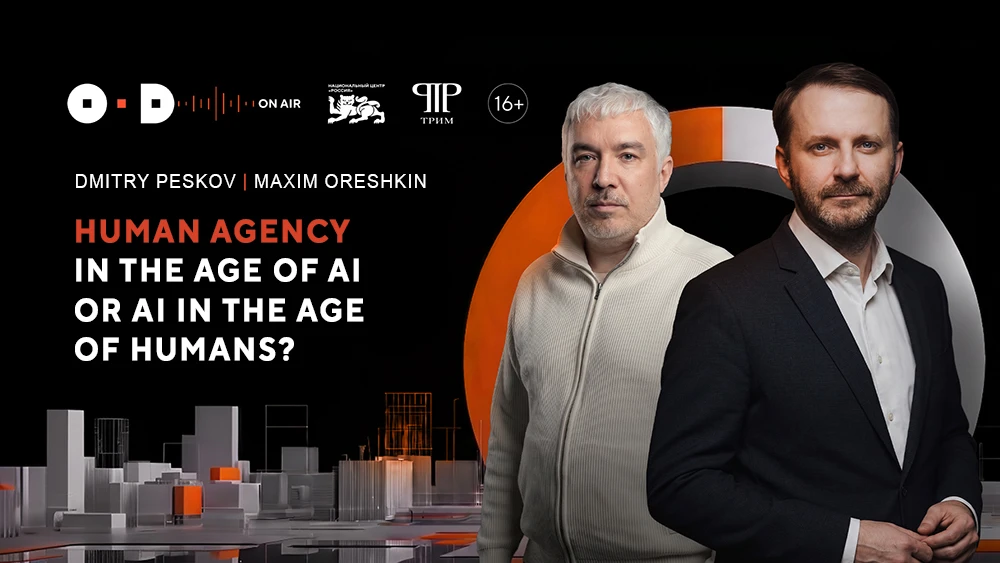
Artificial intelligence is changing not only how people usually obtain information, but also the very role of human beings in the modern world. If basic knowledge becomes available to virtually everyone, the main advantages will be the ability to create something new, ask the right questions and retain independence in decision-making. In a new podcast episode from the "Open Dialogue" Summer Expert Meetings, the Deputy Chief of Staff of the Presidential Executive Office of Russia, Maxim Oreshkin, and the Special Representative of the President of the Russian Federation for Digital and Technological Development, Dmitry Peskov, discussed the place of people in a world where artificial intelligence is becoming an everyday tool.
The central topic of the conversation was human capital and agency: the ability not merely to use technologies, but to understand them, set tasks for them and make decisions independently. Maxim Oreshkin noted that the development of neural networks creates enormous opportunities for the economy and enables the generation of new added value. At the same time, in his view, how society uses these advantages is fundamentally important: whether it directs them towards a narrow group or uses them for the benefit of a new generation.
Dmitry Peskov discussed what this new generation should be like in a world where access to knowledge is increasingly provided by artificial intelligence. In his view, advances in AI do not mean the disappearance of the human role. On the contrary, creativity, imagination, the ability to see new possibilities and the capacity to work alongside artificial intelligence will become increasingly important. These qualities will determine the competitiveness of future generations.
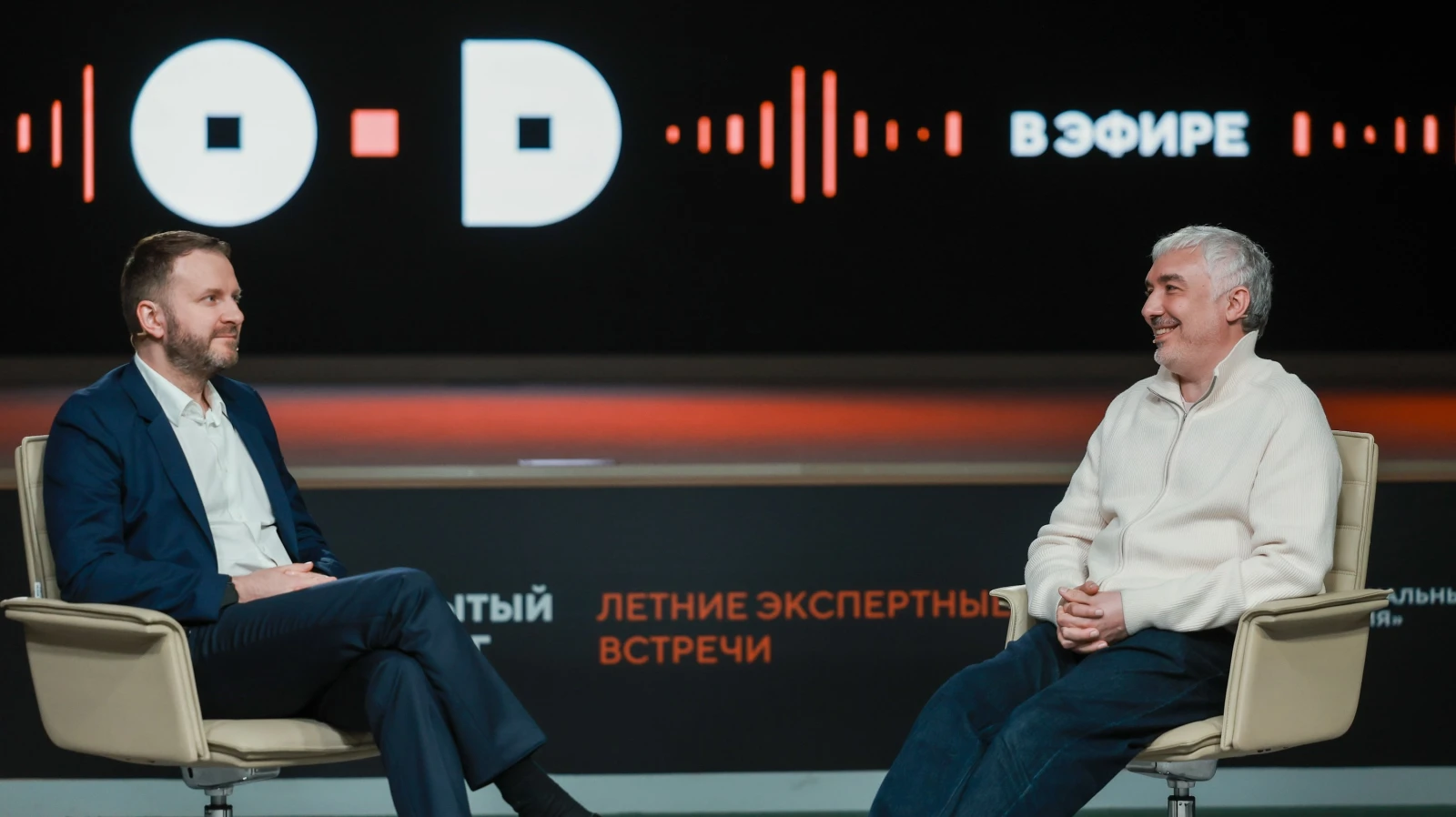
"In terms of the demands placed on people — their agency, potential and role — we must raise a generation of super-creators who do not surrender to artificial intelligence, but know how to tame it and work with it to create something fundamentally new. For the great task of ensuring humanity’s survival," the expert emphasised.
The participants devoted particular attention to how the very model of competition is changing. If access to basic knowledge and AI tools becomes virtually universal, the advantage will belong to those capable of using technology at a higher level — creating new solutions, formulating unconventional tasks and coordinating interactions with numerous AI agents.
Education was an equally important part of the conversation. The experts discussed why the spread of artificial intelligence does not make knowledge less necessary but, on the contrary, raises the standard required of people’s basic education. They also considered the risks associated with the influence of algorithms on people. In particular, they discussed possible restrictions on children’s access to artificial intelligence, the impact of algorithms on perceptions of the world and the issue of cognitive sovereignty.
Watch the new episode of the "Open Dialogue" podcast to understand why, in the age of artificial intelligence, it is increasingly important not merely to possess knowledge, but to retain independence and turn technology into a tool for personal development.


The White Sea and Lake Onega sites were the first Russian examples of ancient cave images, rock paintings and petroglyphs to be included on the UNESCO World Heritage List.


