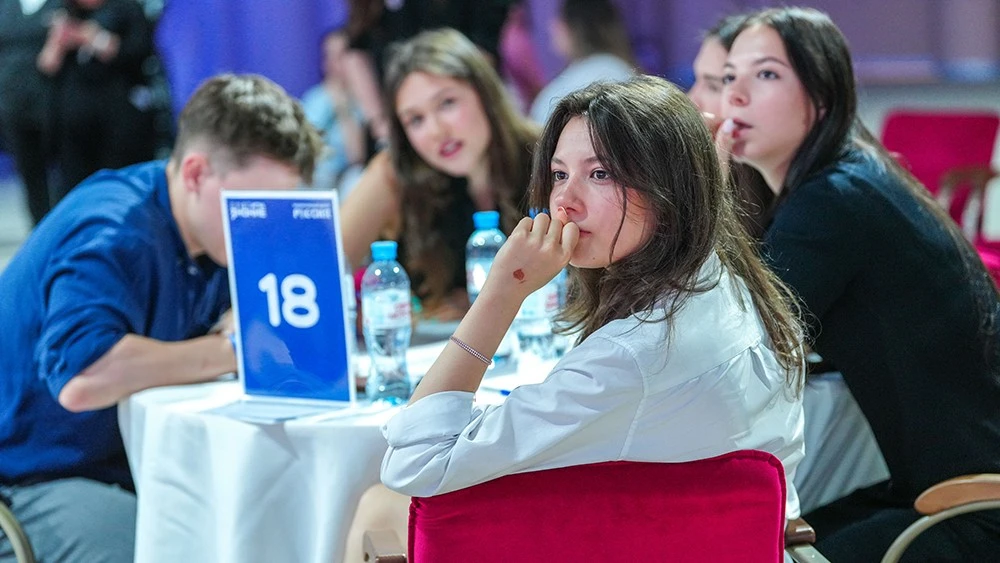
The ways expeditions help people understand the country were discussed at the Geography Teachers Forum
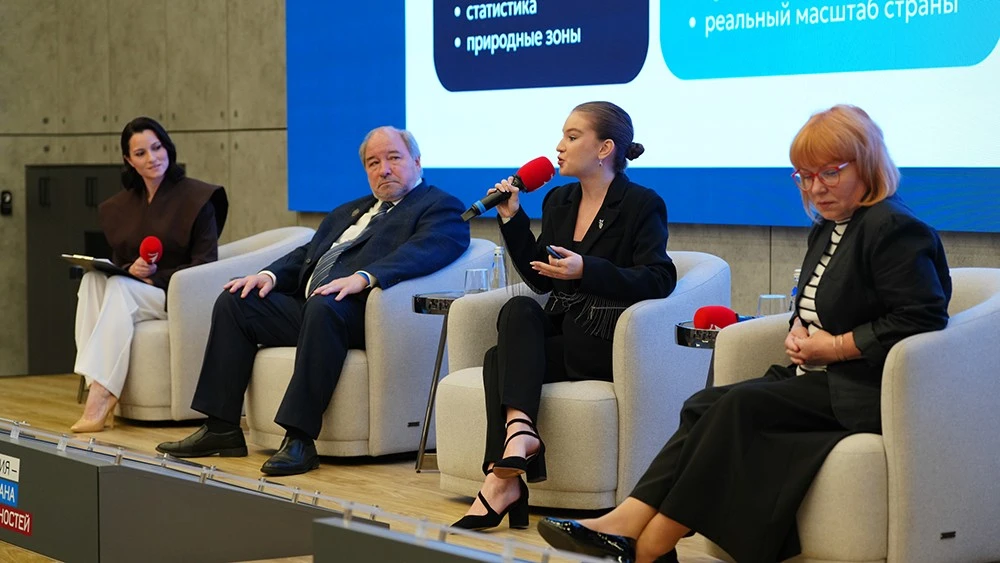
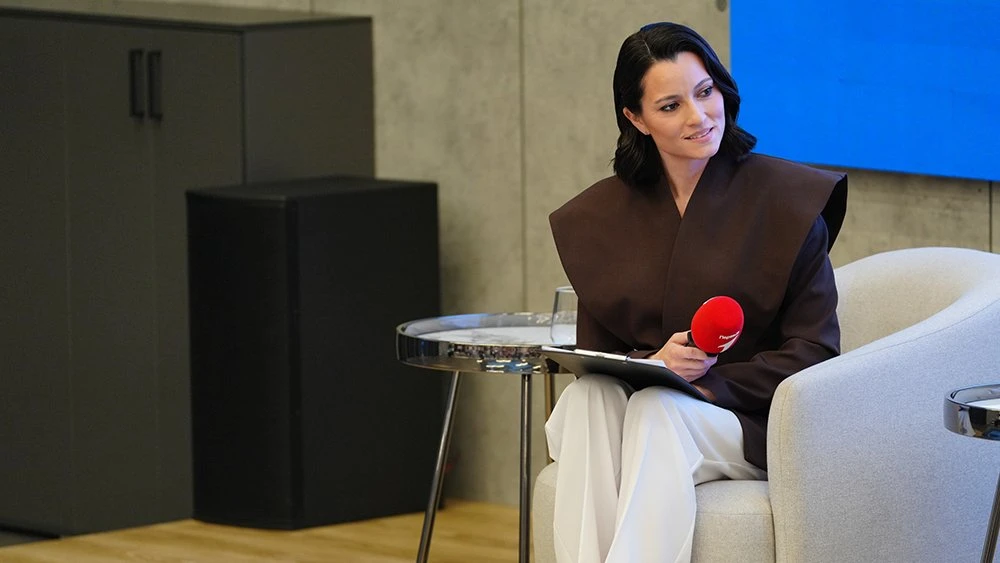
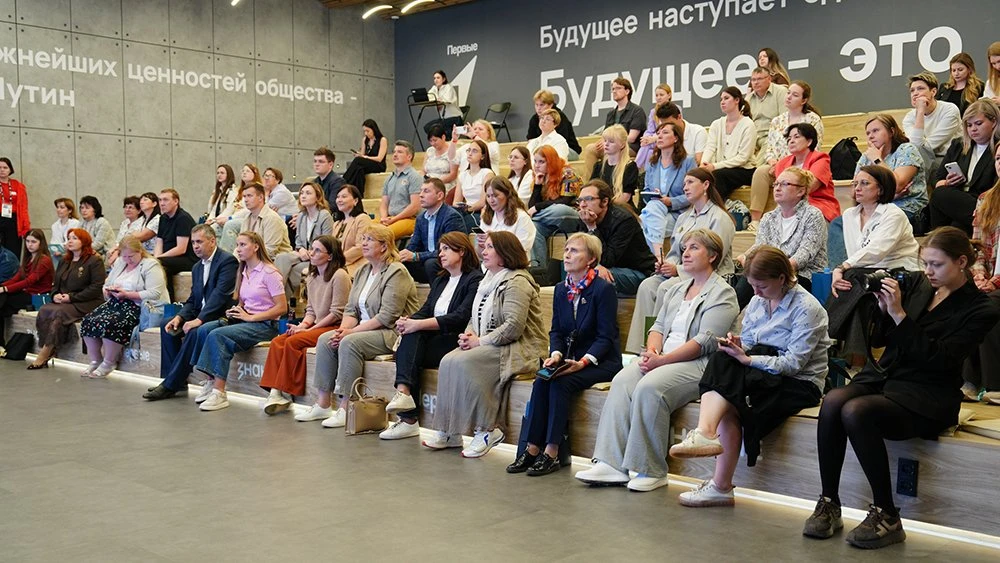
The transition from classic educational formats to learning geography through practical experience, travel and research was discussed by participants in the section "Beyond the Desk: Geographical Knowledge Through Expeditions and Scientific Discoveries". The event was held at the National Centre RUSSIA as part of the Forum of Geography Teachers and Students of Specialised Universities.
The section was opened by Igor Shidlovsky, Honoured Teacher of Russia and member of the Russian Geographical Society’s Commission on Geographical and Environmental Education. He explained why geography requires going "into the field", how research expeditions differ from educational ones, and how they launch interdisciplinary integration. As an example, the teacher spoke about his original programme "Educational Expedition", which won the Russian Geographical Society Award for "Best Educational Project in Geography".
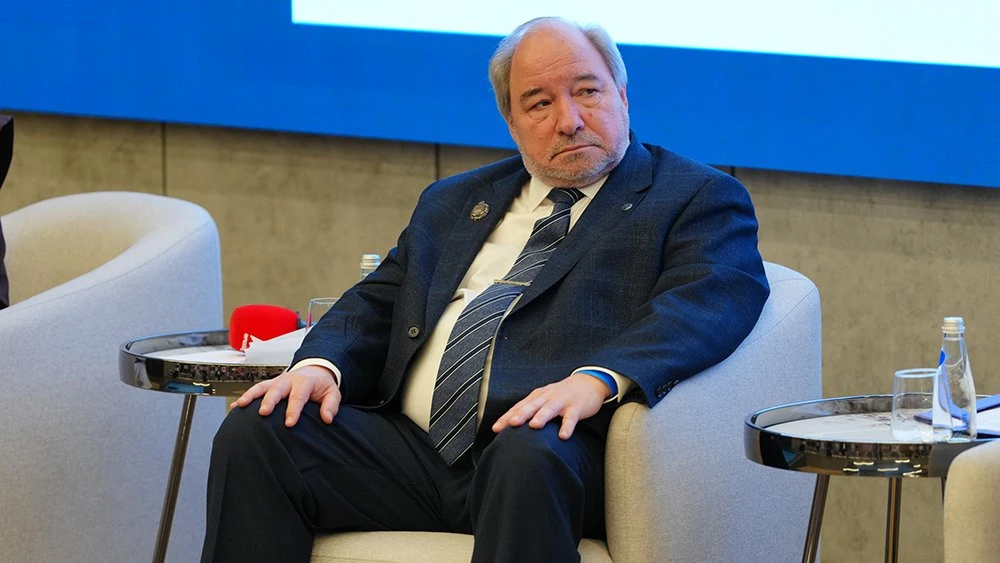
"You cannot study geography if you do not travel. I realised that simply travelling and simply being amazed by our country would not be right. You have to take as much as possible from a journey, including things that do not lie directly on the surface. That is why the idea of holding educational expeditions for children emerged long ago: we travel to a region and study it from every angle — history, literature, world artistic culture and, of course, geography. Geography ends up at the centre because everything that happened somewhere happened in a specific geographical region, and from a point on the map we immerse ourselves in the world of all the other sciences," Igor Shidlovsky emphasised.
Albina Bikbulatova, Director of the Department for Work with Educational Organisations at the Russian society Znanie, Doctor of Technical Sciences, Associate Professor and Honorary Worker of Education of the Russian Federation, presented the project "Znanie Lecture Hall": "We try to support teachers in a comprehensive way: we open lecture halls in schools, create a library of ready-made lectures and presentations, and hold contests where a school can receive up to two million roubles for projects — very often these are hikes and tours, and an introduction to their own and neighbouring regions. There is also the Znanie Academy with free courses for teachers, sanatorium vouchers and other incentives for lecturers. Our task is to make it easier for teachers to take children out from behind their desks into the real world, without leaving them to do this alone."
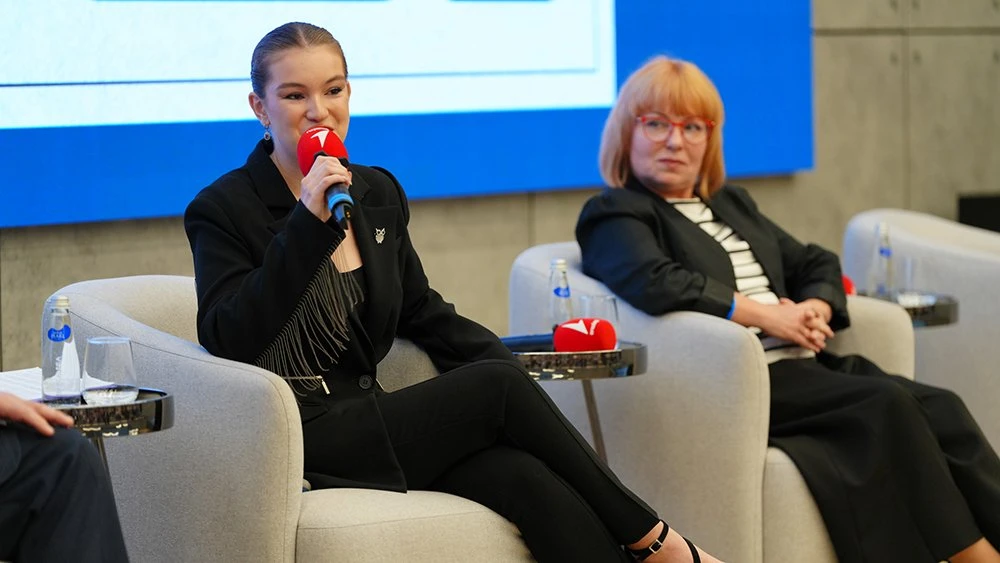
Sofia Makhatadze, Head of Partner Organisation Relations at the Studtourism youth and student tourism programme of the Ministry of Science and Higher Education of Russia, presented youth tourism as an accessible tool for the practical study of geography. She recalled that the project was created on the instruction of the President of the Russian Federation and today brings together 280 partner universities and 127 cities. Students and young professionals aged 18 to 35 can travel around the country, staying in the dormitories of partner universities for 100–200 roubles per day. On site, they are welcomed by the programme’s "ambassadors" — local students who help them see the city "through the eyes of their peers", showing them not only well-known museums but also "hidden corners", favourite routes, cafés and urban spaces. In this way, Studtourism makes trips budget-friendly, safe and filled with living content, while the territory becomes "alive", rather than merely drawn on a map or printed in a textbook.
The session was concluded by Natalia Alekseyenko, Candidate of Geographical Sciences and Associate Professor at the Department of Cartography and Geoinformatics of the Faculty of Geography at Lomonosov Moscow State University. She spoke about the history and objectives of the Young Geographer School at the Faculty of Geography of Moscow State University.
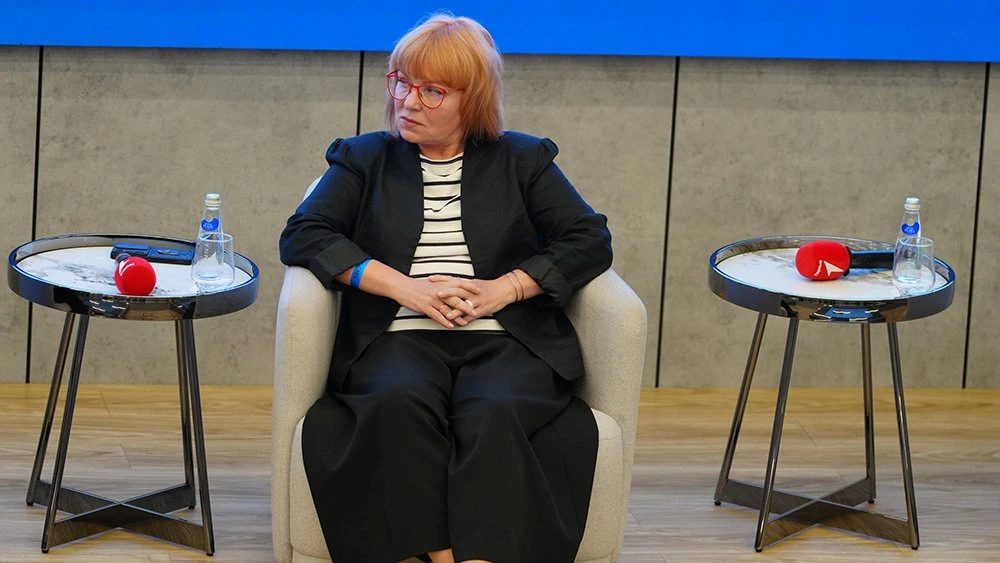
"Our main task is to show schoolchildren what professional geography is and whether they need it. We are completely free of charge: the faculty provides classrooms free of charge, and teachers give lectures and lead practical classes free of charge. Over three years, our young geographers manage to travel to the same region several times, at different times of year, keep field diaries, and compare nature and the economy. If you come six times, make sections and observations, then at some point you see something new — and a schoolchild can genuinely make a small scientific discovery even before entering university," Natalia Alekseyenko said.
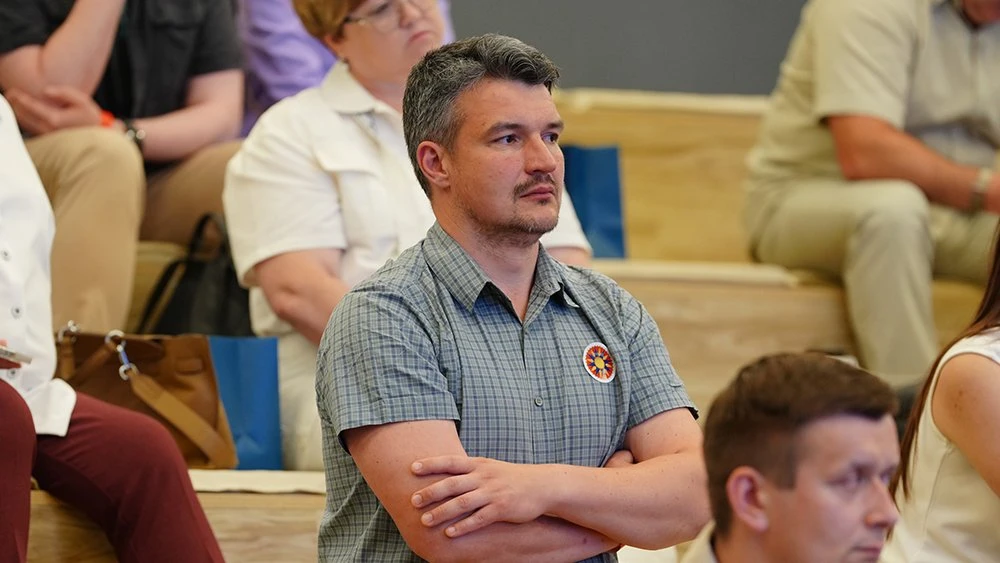
The Forum of Geography Teachers and Students of Specialised Universities was organised by the National Centre RUSSIA with the support of the Ministry of Education of the Russian Federation, the Ministry of Science and Higher Education of the Russian Federation, the Russian Geographical Society, the V. S. Lednev Institute for the Content and Methods of Education and HSE University. The event was held on 25 June and brought together more than 800 participants from all federal districts of the country.