


Nikolai Zharinov presents Dostoevsky’s vision of the ideal family at the III All-Russian Wedding Festival
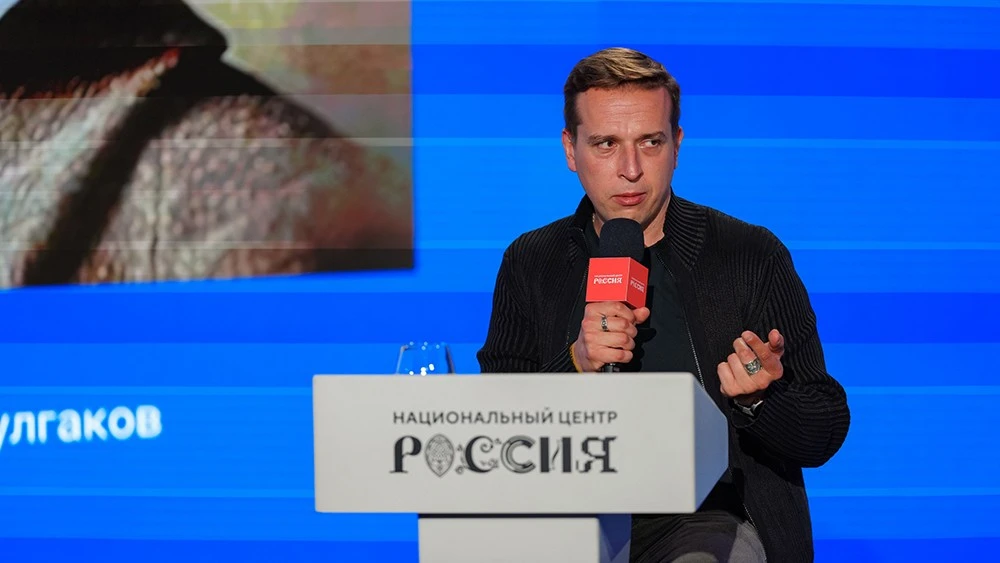
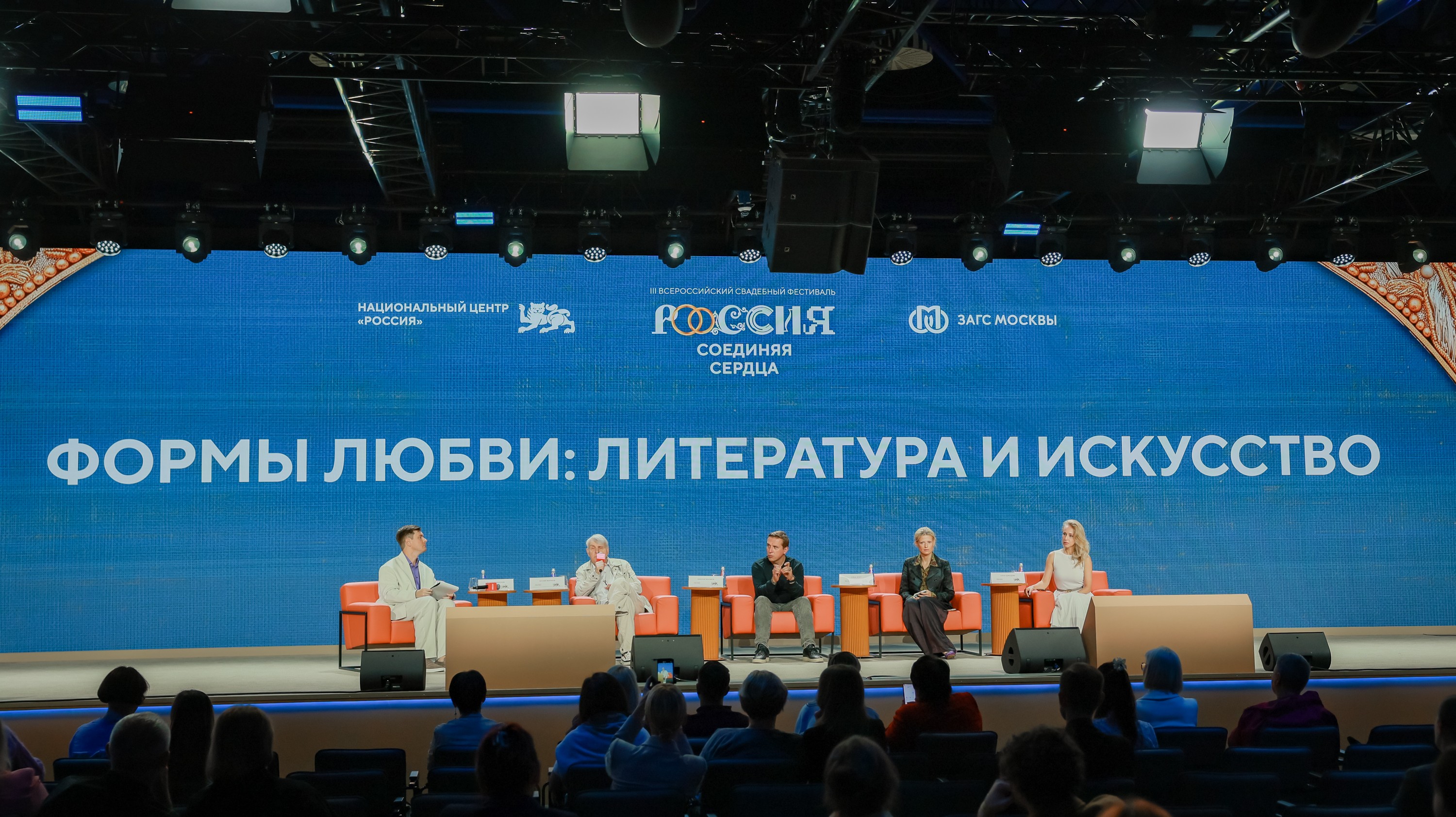
What constitutes an ideal family from Fyodor Dostoevsky's perspective, and why children remain the true source of light in his novels, were the themes explored by writer, philologist and cultural studies scholar Nikolai Zharinov at the National Centre RUSSIA. His talk took place as part of the open dialogue "Forms of Love: Literature and Art" during the III All-Russian Wedding Festival "Russia. Uniting Hearts".
According to Nikolai Zharinov, Dostoevsky's works contain very few harmonious marriages or stable relationships. Against this backdrop, one couple from "Crime and Punishment" stands out in particular.
"The one couple that can truly be described as ideal is Dunya Raskolnikova and Razumikhin. Dunya is an honest and open-hearted woman, while Razumikhin is an honourable man who always strives to help others. Together, they form what is almost an ideal new family," said Nikolai Zharinov.
He noted that Dostoevsky was not primarily concerned with portraying realistic family life. His characters exist in states of emotional and spiritual extremity, while love stories are often intertwined with suffering and destruction. This is true of both Raskolnikov and Sonya Marmeladova, and Dmitry Karamazov and Grushenka: their relationships are powerful, but unlikely to become lasting family unions.
At the same time, Nikolai Zharinov emphasised that Dostoevsky regarded children as the highest family value. "For Fyodor Mikhailovich, there is only one supreme value within the family, and that value is children. A child's suffering is the most terrible thing one can witness in life. That is why, whenever he speaks about something genuinely bright and hopeful within the family, he is speaking about children."
The speaker recalled that in "Crime and Punishment", Dostoevsky consistently shields Marmeladov's orphaned step-children from further hardship, while Svidrigailov's bequest offers them a chance at a different future. The writer also explores the need to protect children from suffering in the short story "The Beggar Boy at Christ's Christmas Tree" and in "The Brothers Karamazov", where the image of the broken Karamazov family is contrasted with the idea of caring for children as the future of society.
Nikolai Zharinov also touched upon Dostoevsky's personal life. According to the speaker, despite the writer's moral expectations of his characters, he himself was far from an ideal family man. His first marriage was marked by constant tension and conflict, while during his second marriage his severe gambling addiction often led him to lose much of what he had earned. Only the extraordinary patience and support of his wife enabled him to overcome this crisis. Zharinov suggested viewing this not as a condemnation of the writer, but as further evidence that Dostoevsky transformed his own experiences of suffering and mistakes into reflections on family, guilt, responsibility and faith.
According to the writer, both Tolstoy and Dostoevsky approached these questions within the intellectual framework of the 19th century, when the family novel was the dominant literary genre. The family was understood as a "little church" and as the space in which life continued, while discussions of faith, the meaning of suffering and moral choice inevitably unfolded through the themes of home, marriage and children.
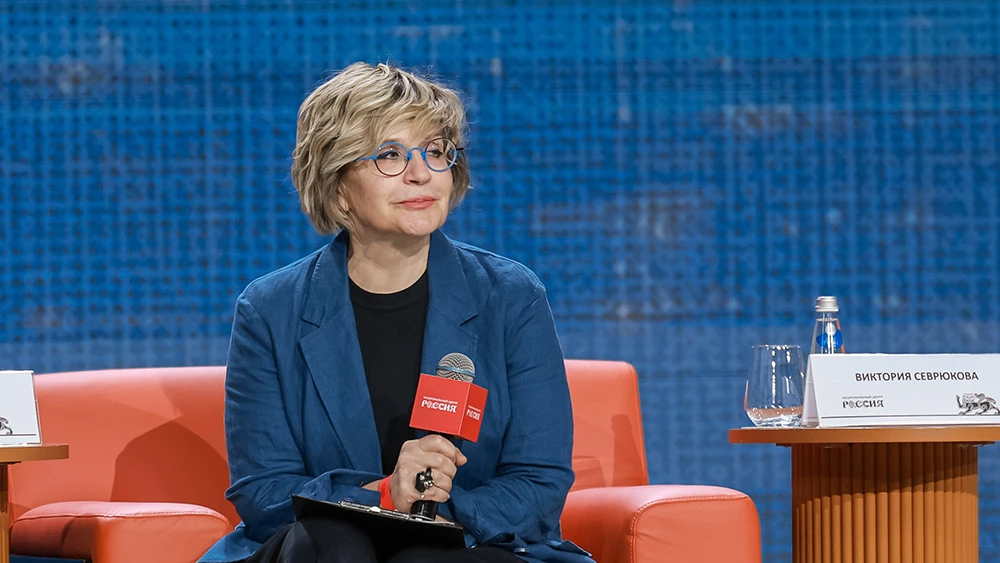
The discussion on literature, art and family values also featured Yevgeny
Zharinov, Professor at the Moscow Pedagogical State University, Doctor of
Philology, writer and translator; theatre and film actress, producer and
founder of the Istok House of Culture Sofya Ernst; and Director of the M'ARS
Centre for Contemporary Art Yelena Davydova. Participants discussed how books,
theatre, cinema, contemporary art and folk traditions help people reflect on
love, marriage, raising children and continuity between generations.
The open dialogue "Forms of Love: Literature and
Art" formed part of the educational programme of the III All-Russian
Wedding Festival "Russia. Uniting Hearts", held at the National
Centre RUSSIA. The festival brought together newlyweds, families, cultural figures
and public leaders around the themes of family values and strengthening the
institution of the family.
Event photobank

In a traditional Russian wedding, special symbolism was present not only in the bride's dress. The groom's costume was also a kind of message, encrypted in thread patterns and accessories.
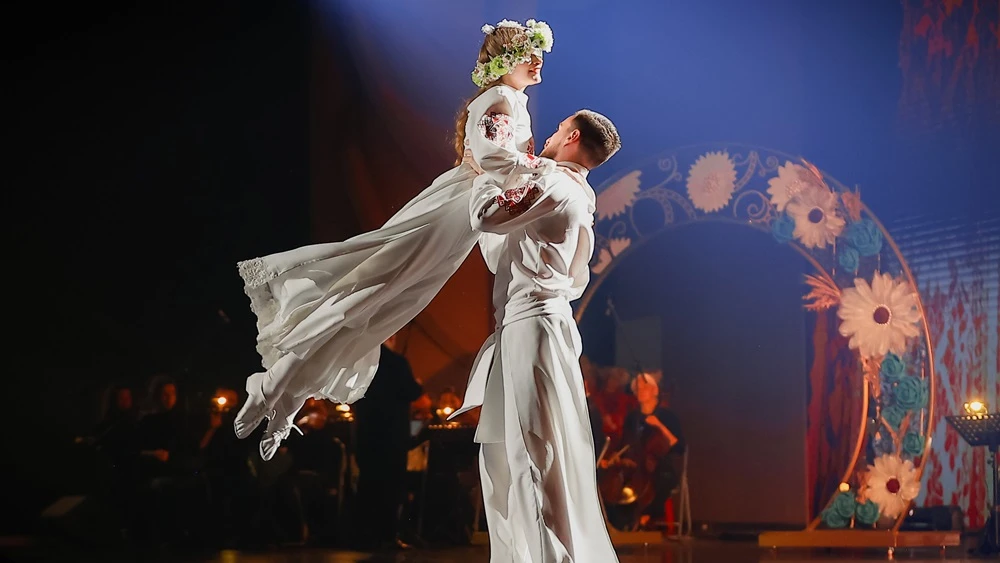
The peoples of the Volga Region and Russia's steppe regions viewed marriage as a union not only between two people but also between two families.
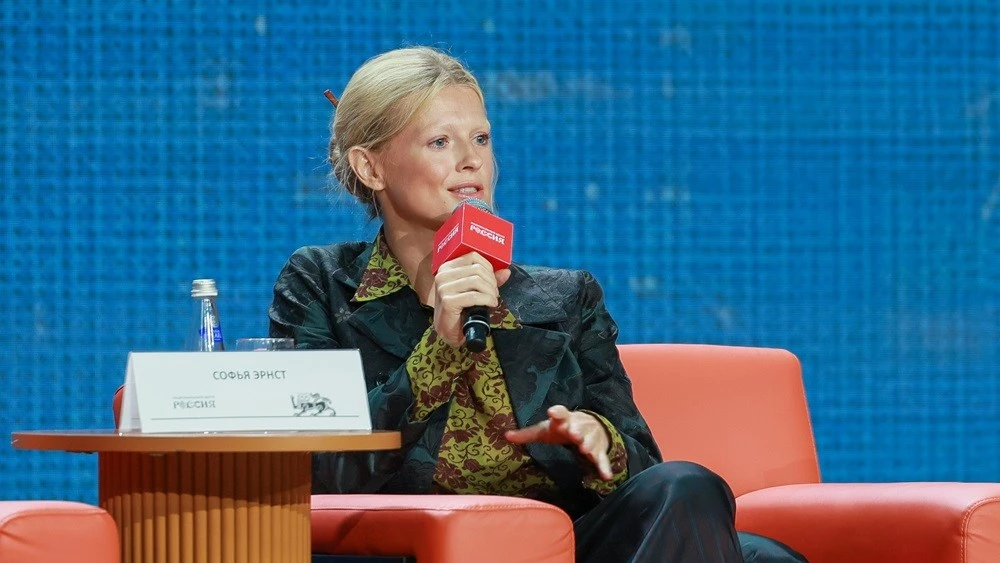
The open dialogue "Forms of Love: Literature and Art" formed part of the educational programme of the III All-Russian Wedding Festival "Russia. Uniting Hearts".


