What Neanderthals and Cro-Magnons dreamed of: anthropologist Stanislav Drobyshevsky on the inner world of ancient people
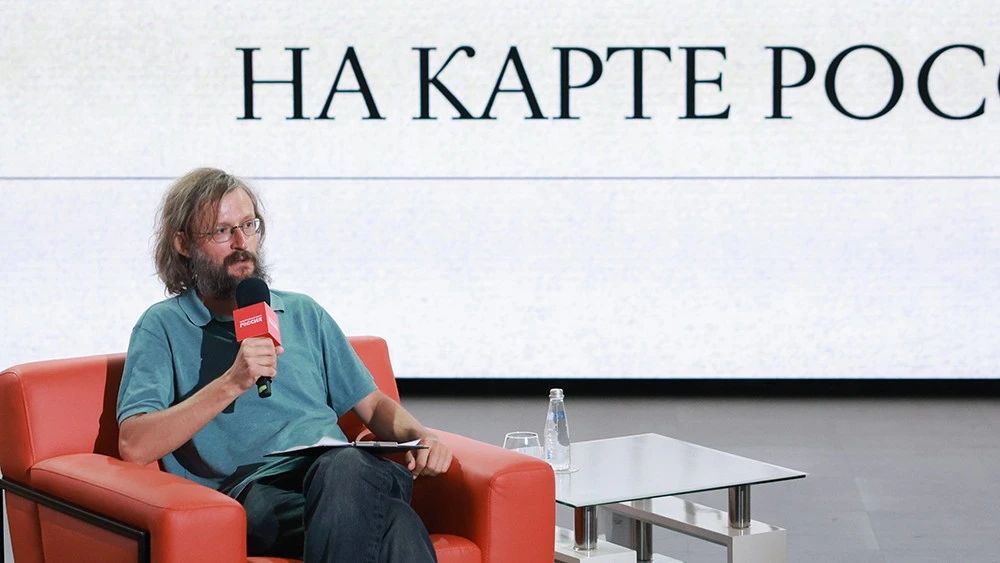
Imagine that you are a Neanderthal: you sleep 12 hours a day
and spend another two hours eating. So what do you do with all the remaining
time, what do you think about or perhaps dream of? Stanislav Drobyshevsky,
Candidate of Biological Sciences, anthropologist, Associate Professor at
Lomonosov Moscow State University, co-founder of the Antropogenez.ru portal and
founder of the public science popularisation movement Drobyshevsky Projects,
suggested looking at ancient people not as objects of research but as living
beings with their own inner world.
The expert began by saying that before the emergence of
sapiens, as archaeological finds show, the lives of our ancestors were
extremely pragmatic. According to Stanislav Drobyshevsky, this makes
Neanderthals both mysterious and very "non-human" in the modern
sense.
"Ancient people are interesting because before sapiens
appeared, it seems that they were not particularly concerned with anything
beyond the basic set of needs: eating, reproducing, not freezing — and that was
basically it. That is why they have virtually no art or ornaments: if we look
at a span of 100,000 years, there are only a handful of finds. With sapiens,
however, everything changes abruptly: a great deal of art, ornaments and
symbols appear. This is why Cro-Magnons become more 'like us'. Some of my
colleagues even admit that studying them is not as interesting, because they
are understandable: they are just like us and do the same things. Neanderthals
are more interesting because almost nothing is clear about them, apart from
basic survival," Stanislav Drobyshevsky explained.
According to the anthropologist, what Neanderthals did
during those ten free hours remains a mystery. After all, these people left us
no fairy tales, no symbols and no other evidence that their brains worked
"in fantasy mode".
"Let us take a particularly sleepy Neanderthal as an
example: he sleeps for 12 hours and eats for two — that leaves 10 hours. So
what does he do for those 10 hours? I have absolutely no idea. And that is
precisely what makes it interesting, because Neanderthals look impossibly
pragmatic. Sapiens, meanwhile, begin to fantasise — to put it this way, to
'hallucinate' with their brains. And these 'hallucinations' give rise to art,
fairy tales and symbols. And not only art: sport belongs there too, and science
to a large extent as well. Because there is science that is purely applied, and
then there is science that exists 'just in case', without any direct benefit.
Archaeology, expeditions and the study of petroglyphs also belong to this
realm. You cannot 'spread it on bread', and it is not always easy to monetise,
but people still do it. Because they want to. And Neanderthals probably really
would not have done any of this," Stanislav Drobyshevsky concluded.
It turns out that the main difference between Neanderthals
and more "modern" species of ancient people, as well as all of us,
lies not in brain volume or the complexity of tools, but in the desire to do
things that bring no immediate benefit. This is not about "eating and
keeping warm", but about what we call culture, dreams and meaning. And
perhaps it is thanks to this that we remain "Homo sapiens", Stanislav
Drobyshevsky believes.
"Conversations with Stanislav Drobyshevsky" is an
original educational project of the National Centre RUSSIA, hosted by Russian
anthropologist Stanislav Drobyshevsky. Watch the full recording of the meeting
on the russia.ru website in the "Livestreams and Videos" section.
Wedding ceremonies will also take place at the National Centre RUSSIA branches in the Khanty-Mansi Autonomous Area — Yugra and the Primorye Territory.