

Best essayists of the II Open Dialogue announced
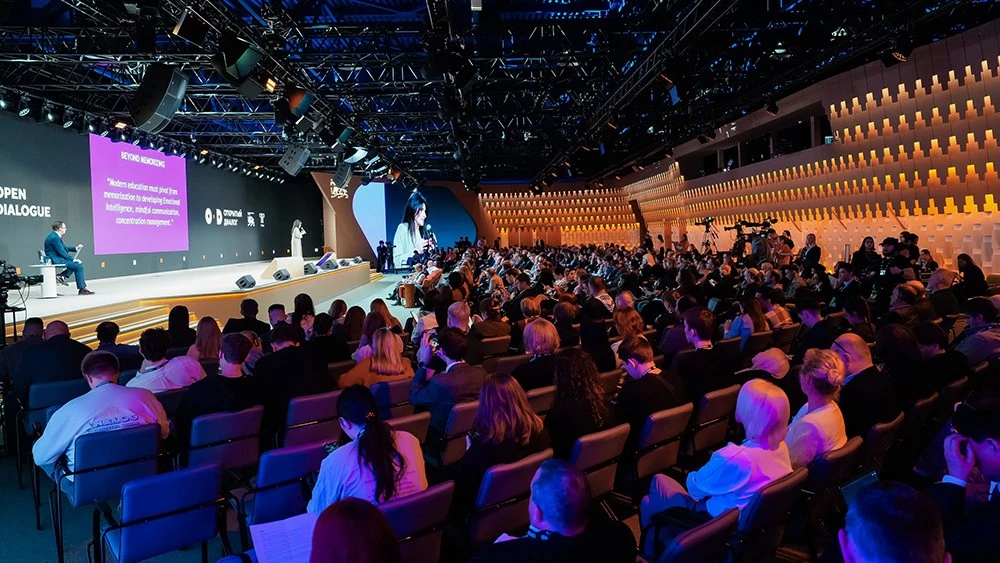
On 28
April, at the National Centre RUSSIA, within the framework of the II Open
Dialogue "The Future of the World. A New Platform for Global Growth",
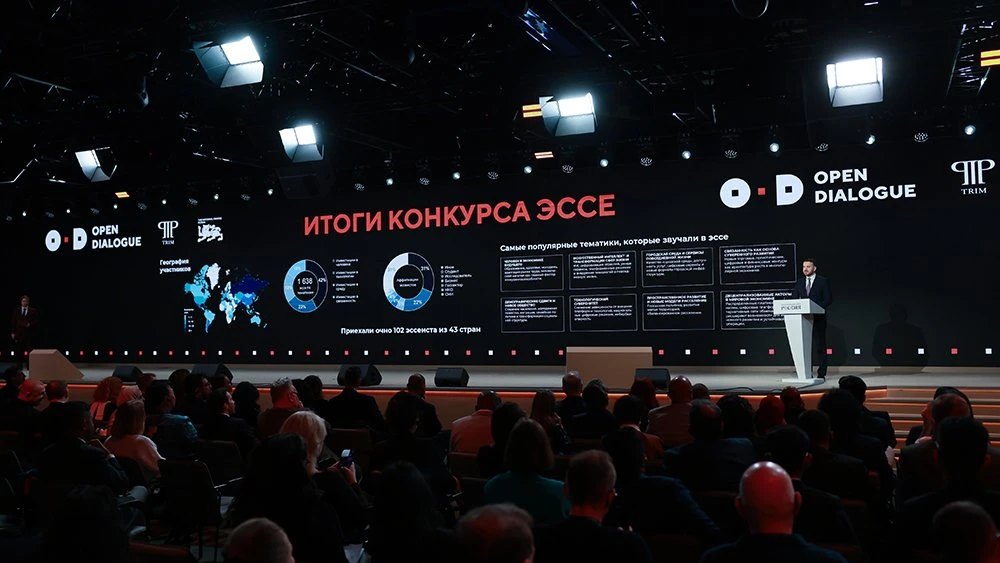
the best essayists were announced. They have presented ideas on key directions
for global economic development and new formats for global cooperation. Their
proposals cover a wide range of topics — from human capital development to
digital sovereignty, technology, and a sustainable environment — forming a
cohesive vision of the future of the world amidst global changes.
The second
day of the II Open Dialogue "The Future of the World. A New Platform for
Global Growth" was intense and vibrant. During the official opening, the
President of the Russian Federation, Vladimir Putin, addressed the
participants.
"The
contest for essays and creative works saw participation from experts, business
leaders, and scientists from 120 countries, including Asia, Africa, the Middle
East, Europe, Australia, North and South America. All the authors and
researchers, with their varied backgrounds and views, were united by a strong
and bold idea: to form a common understanding of the future — the future of a
world that has entered an era of profound, structural changes <...> It is
obvious: no country can develop alone — at the expense of other states or to
their detriment. Furthermore, modern global challenges require a joint response
and united efforts. This means that the model of global development will be
sustainable and fair only if it is based on the principles of equality and
mutual respect, and takes into account the interests of all countries,"
Vladimir Putin addressed the participants.
According
to the Russian leader, a complex, multipolar architecture of global development
is forming before our eyes. An increasingly important role is played by states
that truly understand and value the importance of national sovereignty in the
political, economic, cultural, and social spheres, and can determine their own
development vector based on their own values, resources, priorities, identity,
and sovereign worldview.
As part of
the second day of the Open Dialogue, the Deputy Chief of Staff of the
Presidential Executive Office of the Russian Federation and Deputy Chairman of
the National Centre RUSSIA Organising Committee, Maxim Oreshkin, spoke about
the megatrends determining the future of the world. The first is related to the
changing global geoeconomic picture. The second is demographics, and the third
trend is technological.
"The world is changing, and this process is inevitable.
The basis of these changes is the transformation of the global economic
structure. We see how centres of not only economic growth but also economic
activity have shifted to the BRICS countries. Technology, finance, trade — all of this will
be more closely linked to the BRICS nations. The development of the BRICS
economies, their connectivity, and the new technological solutions that will
emerge within them — this is the face of the world of the future," said
Maxim Oreshkin.
According
to him, sovereignty is becoming a key factor in future development, and the
world is transitioning to a multipolar system with an increased role for BRICS
countries and a redistribution of economic growth centres. He also pointed to
the rapid growth of investment in artificial intelligence, which is already
being actively applied in management and healthcare, including early disease
risk detection. According to him, the development of AI and digital platforms
is leading to the formation of a new economic model — platformisation — where
transaction costs are reduced and markets and institutions are transformed.
During the
day, pitching sessions were held across four areas: "Investments in Human
Capital", "Investments in Connectivity", "Investments in
Technology", and "Investments in Environment". Four authors had
been selected for each of these vectors the day before, and on 28 April, the
best among them were determined.
Thus, in
the "Investments in Human Capital" track, the winner was Lubinda
Haabazoka, an economist and Director of the Graduate School of Business at the
University of Zambia, who proposed viewing education as the key to real
cooperation and human capital development within the BRICS format. Serving as
an expert in this session was Dr Selina Neri, co-founder, Director General, and
Dean of the Future Readiness Academy (UAE) and visiting professor at the
SKOLKOVO School of Management. She noted that investments in people are
impossible without investments in those who teach and guide others.
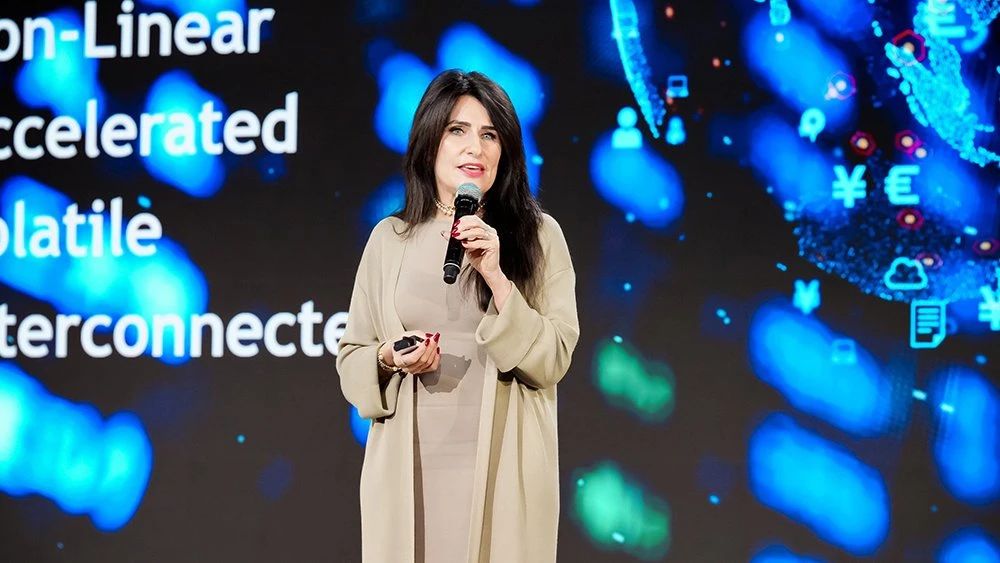
"Teachers,
mentors, and professors change our lives. As a lecturer, I use AI myself, but I
will never hand over the most important thing to it — live interaction and
those moments that change the trajectory of my students. The future of labour
and education must be created together — by teachers and students, employers
and young specialists," said Dr Selina Neri.
The winner
in the "Investments in Connectivity" category was Solomon Gardie, a
postgraduate student at Addis Ababa University from Ethiopia. During his
presentation, he called digital data "the gold of our time" and
outlined a new challenge facing the countries of the Global South today. For
instance, data generated on their territory is processed outside of it, and
countries do not receive a fair share of this resource.
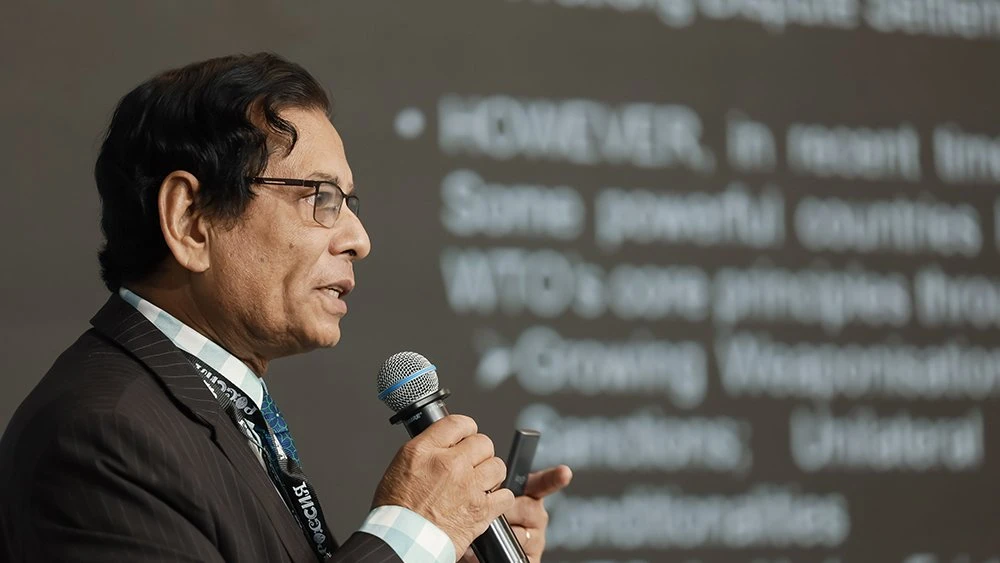
The
economist at the TALAP Centre for Applied Research (Kazakhstan), Rakhim
Oshakbayev, served as an expert and jury member for the "Investments in
Connectivity" track. He admitted that many of his colleagues' essays were
imbued with "starry-eyed optimism" and a belief in universal unity.
"When
we invest in connectivity, we must first look at its resilience: whether it can
withstand the blows that are undoubtedly already being dealt and will continue
to be dealt. Therefore, the main rule of survival is the availability of an
alternative, not efficiency. We must adhere to an 'armour architecture' that
includes four main aspects: self-sufficiency of infrastructure connectivity,
digital sovereignty, secure transactions, as well as redundancy and
overcapacity," noted Rakhim Oshakbayev.
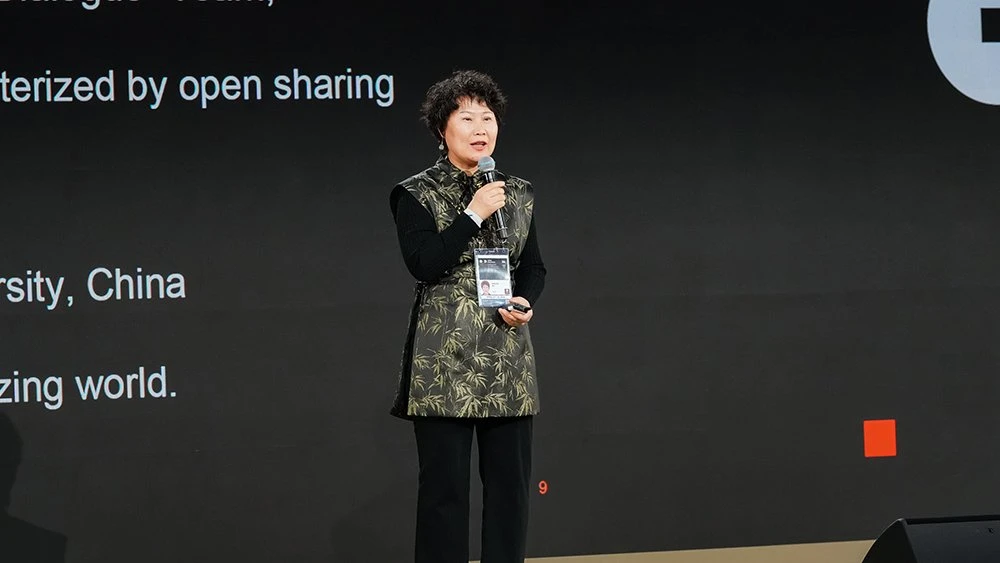
Aya
Arfaoui, a student at Mohammed V University of Rabat from Morocco, was named
the winner of the "Investments in Technology" track. She raised the
issue of the digital sovereignty of developing countries. According to her,
international institutions do not grant sufficient influence in regulating the
digital space, while decisions are increasingly being made by algorithms.
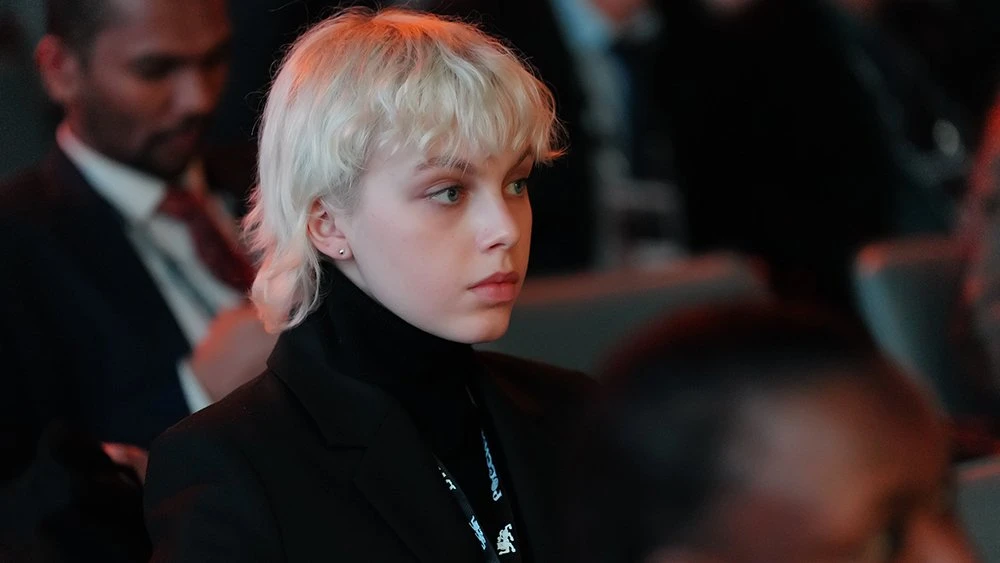
Alexey
Shpilman, Director of AI Technology Development at T-Technologies, who served
as an expert in the session, spoke about how artificial intelligence and agent
systems are capable of transforming business processes: they accelerate the
implementation of ideas — from startups to large-scale corporate projects — and
generally change the rules of the game in the field of technological
innovation.
"To
implement AI, many processes need to be restructured, and no one wants that. It
is often treated as just another tool to be integrated into existing systems
and managed in the same way as other tools. This slows down transformation,
although the effect of full implementation can be immense: for example, a task
that previously took three days is completed in 20 minutes," said Alexey
Shpilman.
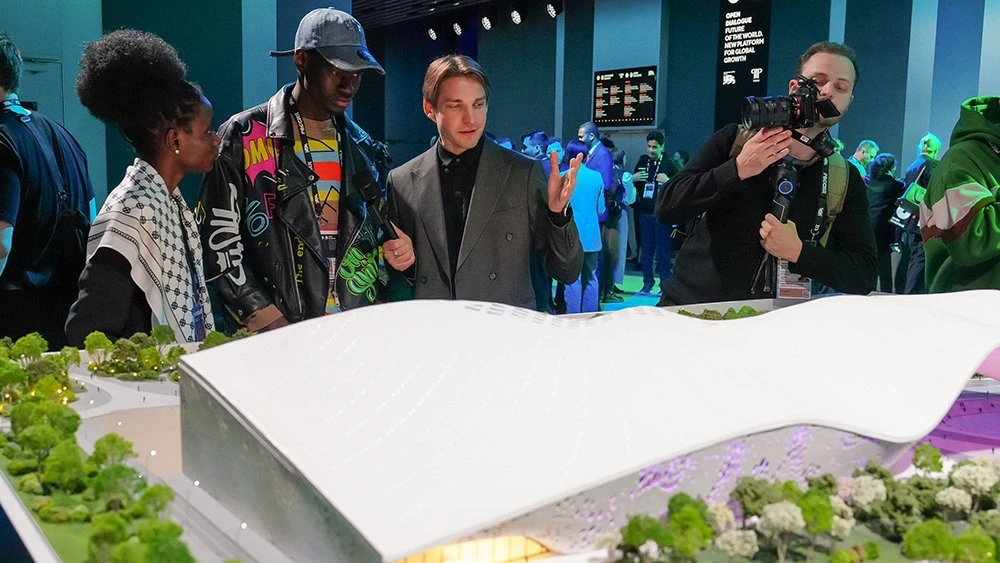
In the
"Investments in Environment" category, Soumya Bhowmick, a researcher
at the Observer Research Foundation from India, was chosen as the winner. He
believes that for almost 100 years the world has been occupied with measuring
GDP, which says nothing about the real wealth of nations. He compared the
economy to a "wedding cake", in which GDP is merely the beautiful
topping, beneath which human, natural, and physical capital are hidden.
According to the speaker, it is long overdue to include these in the primary
indicators of well-being and prosperity.
James Law
(China), the founder and Director General of Cybertecture, served as the lead
expert for the final pitchings dedicated to the living environment and its
impact on human well-being and overall economic productivity. Summarising the
"seventeen wonderful ideas" presented during the pitches, he
figuratively noted that the environment plays the role of a canvas on which
each of us can paint a picture of an amazing future.
On 29
April, within the framework of the II Open Dialogue at the National Centre
RUSSIA, the Deputy Chief of Staff of the Presidential Executive Office, Maxim
Oreshkin, will hold a youth meeting titled OD Campfire, followed by the final
epilogue.
The Open
Dialogue "The Future of the World. A New Platform for Global Growth"
is an international project where experts from around the world discuss the
development of the global economy. The initiative is aimed at forming a new
global growth model and brings together participants from various countries for
an open exchange of ideas and the development of solutions. The Open Dialogue
unites more than 3,000 authors and experts from over 120 countries.
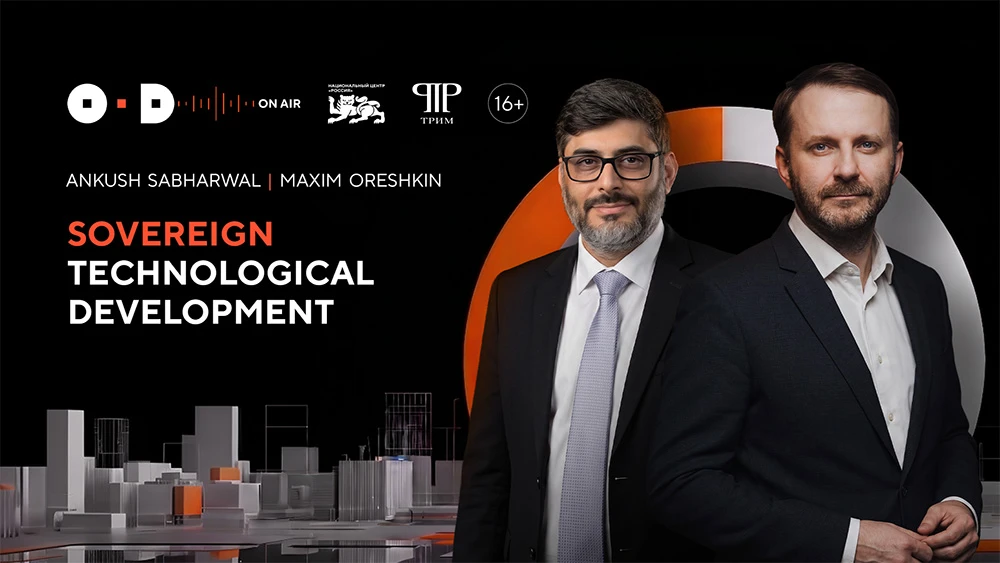
The new episode of the National Centre RUSSIA Open Dialogue podcast explores key questions of the digital age: who owns AI and data.

The new episode of the National Centre RUSSIA Open Dialogue podcast begins with the idea that artificial intelligence is no longer merely a digital tool.