


From the Zaraysk bison to the Palaeolithic "Venuses": how ancient masterpieces change our understanding of humanity
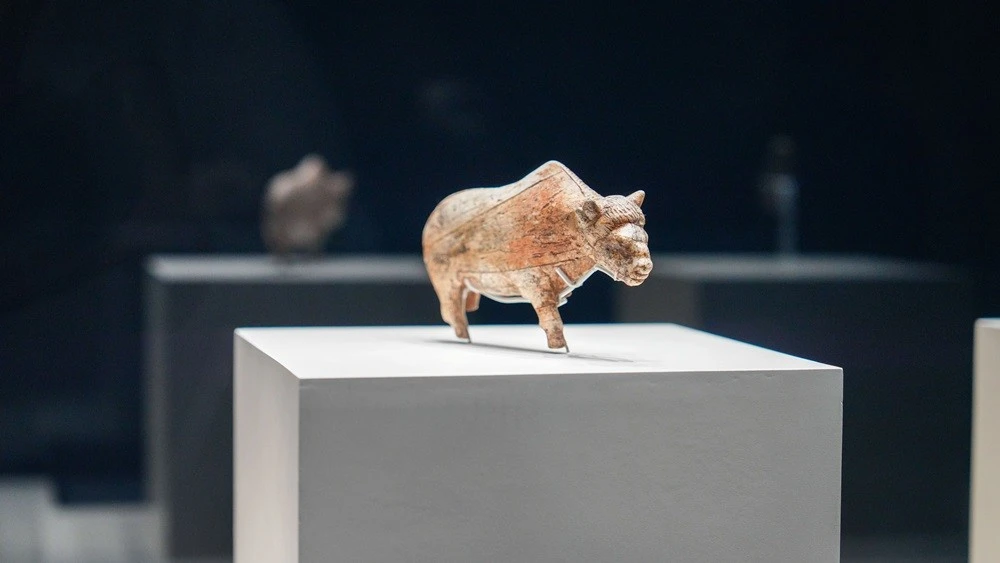
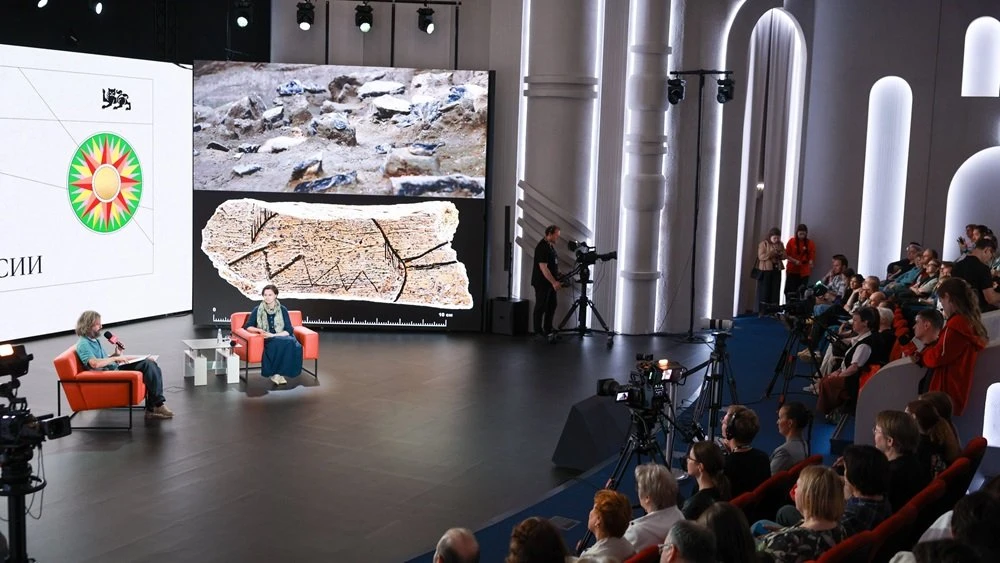
The famous Zaraysk bison and the Palaeolithic "Venuses" are among the most ancient works of prehistoric art. How such finds change our understanding of our ancestors and their vision of the world was discussed at a meeting of the series "Conversations with Stanislav Drobyshevsky", which was held at the National Centre RUSSIA on 19 June.
The conversation began with the question: "What is Zaraysk?" It is an old town in the Moscow Region, where an Upper Palaeolithic mammoth-hunter site was discovered in the second half of the 20th century. It was here that one of the most famous monuments of ancient art in Russia was found: a stone figurine of a bison around 22 thousand years old. Stanislav Drobyshevsky, founder of the science popularisation movement "Drobyshevsky’s Projects", said that, in terms of its artistic qualities, this small object is quite comparable to the finest examples of European Palaeolithic art.
"The bison statuette is not only a beautiful work of art, but most likely also an example of hunting magic… The figurine is made absolutely magnificently. It has a nose, eyes, horns and ears. The hair on the mane, chest, back and sides is shown. Everything is done very accurately," Stanislav Drobyshevsky emphasised.
The figurine is carved from mammoth ivory and is roughly the size of a palm. What matters is not only how it was made, but also how it was placed within the space of the site. The bison was found in the so-called pit No. 71. At its bottom, Palaeolithic masters left a small "podium" of white sand, carefully placed the figurine in the wall of the pit, laid a fragment of a mammoth tooth, arctic fox bones and other objects beside it, then covered it from above with a mammoth shoulder blade and filled it in. Such a complex "scenario" is very different from an accidental domestic burial. According to Stanislav Drobyshevsky, what we see is a carefully thought-out ritual composition.
"This is hunting magic in its purest form. People do all this with the bison figurine, go out onto a high promontory above the Osyotr River, and there is a herd of bison moving before them. It is magic that works, but only twenty thousand years ago. If you did something like this now, bison would hardly come to you," the expert clarified.
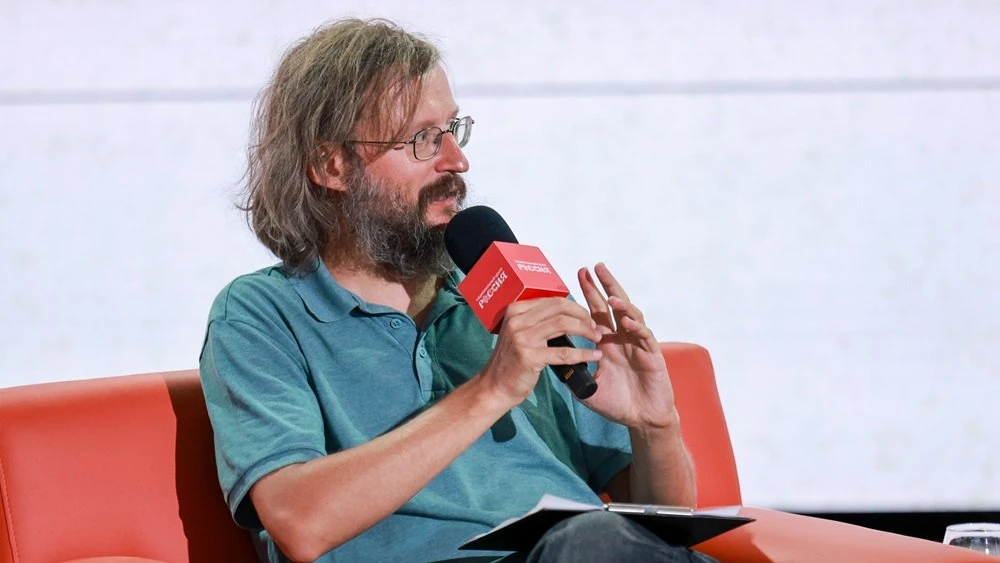
Stanislav Drobyshevsky also reminded that the image is specifically of a female bison: a calmer and more predictable animal, and therefore a convenient and relatively safe target for hunting. In its proportions, this female bison matches modern animals with remarkable accuracy. For an Upper Palaeolithic artist who had neither photography nor anatomical atlases, such precision is evidence of fine observation and developed visual thinking.
The bison is not the only masterpiece of the Zaraysk site. The so-called Palaeolithic "Venuses" were also found here: small female statuettes that archaeologists associate with ideas of fertility, the continuation of the family line and a complex system of rituals. In terms of composition, their "life path" is in many ways similar to the story of the bison: the figurines were also placed in specially prepared pits, sometimes on sand podiums and sometimes covered with mammoth shoulder blades. However, as Stanislav Drobyshevsky noted, the difference lies in the details.
"Unlike the bison, they buried the bison, but they did not bury the Venus. That is, they covered it with that mammoth shoulder blade, but did not bury it… Through such things, we see how the thinking of Upper Palaeolithic people, the Cro-Magnons, contrasted with and differed sharply from Neanderthal thinking," the expert explained.
Comparing the "fate" of the bison and the "Venuses" makes it possible to reconstruct a complex system of symbols: some images "go" fully into the ground, while others remain accessible; some are connected with hunting magic, others with human life, the family line and, possibly, ideas about women’s and men’s roles in the community.
Stanislav Drobyshevsky also spoke about finds from the Khotylevo archaeological complex in the Bryansk Region. He described a unique find: a so-called Neanderthal "scratched object", a bone around 80 thousand years old with zigzags, brackets and strokes carved into it. According to the scholar, this drawing had no practical purpose and became the first known image of such complexity created by a Neanderthal.
Thus, according to the scholar, Zaraysk and other Upper Palaeolithic sites appear as a world literally saturated with symbols: art is woven into everyday life, hunting, rituals and the structure of dwellings. This is why the Zaraysk bison and the Palaeolithic "Venuses" become key arguments in the discussion of how Homo sapiens differs from its closest evolutionary relatives.

The festival passed its tenth anniversary last year, and its popularity in its home city continues to grow.

For Nadezhda Babkina, the Motherland begins not with state symbols or borders, but with childhood, her native home and the feeling of unity that arises.

As always, our Department Store delights its guests with unique objects and items.


