


"Russia is fantastic": literary award winners share their reactions
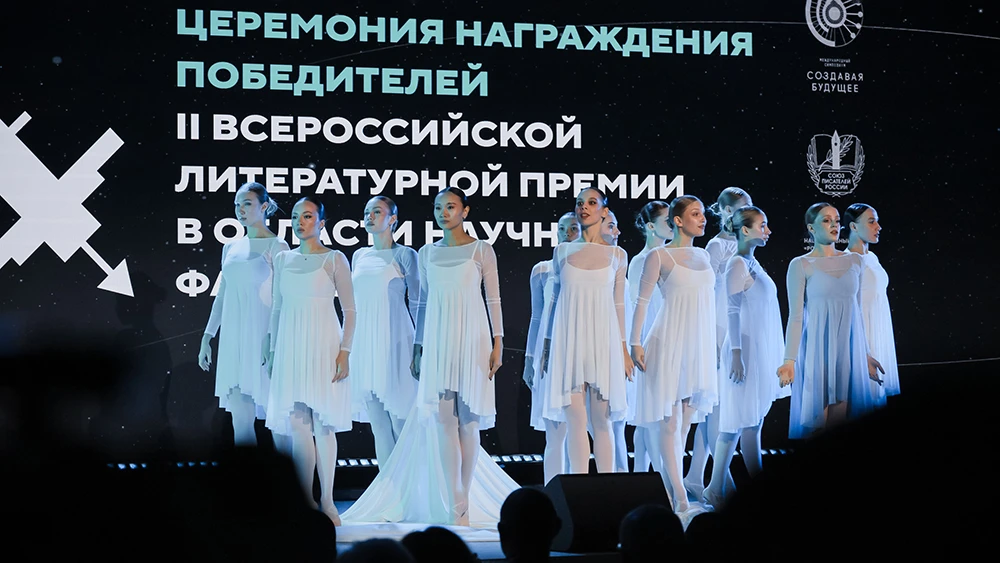
Writers whose work helps shape visions of the future were
honoured on 13 November at the III International Symposium "Inventing the
Future" at the National Centre RUSSIA. The winners of the II All-Russian
Science Fiction Literary Award shared how it felt to receive their awards and
said that recognition for their work gave them a powerful incentive to keep
creating new worlds we would want to live in.
Yekaterina Avsyannikova, who writes science fiction and popular science books
for children and teenagers, won the "Children's and Young Adult
Fiction" category and a special prize from the publisher EKSMO for her
science fiction book "Alpha Orionis. Mission 'Saturn'" (AST, Avanta).
She said the scale of the event had surprised and inspired her and given her
great hope.
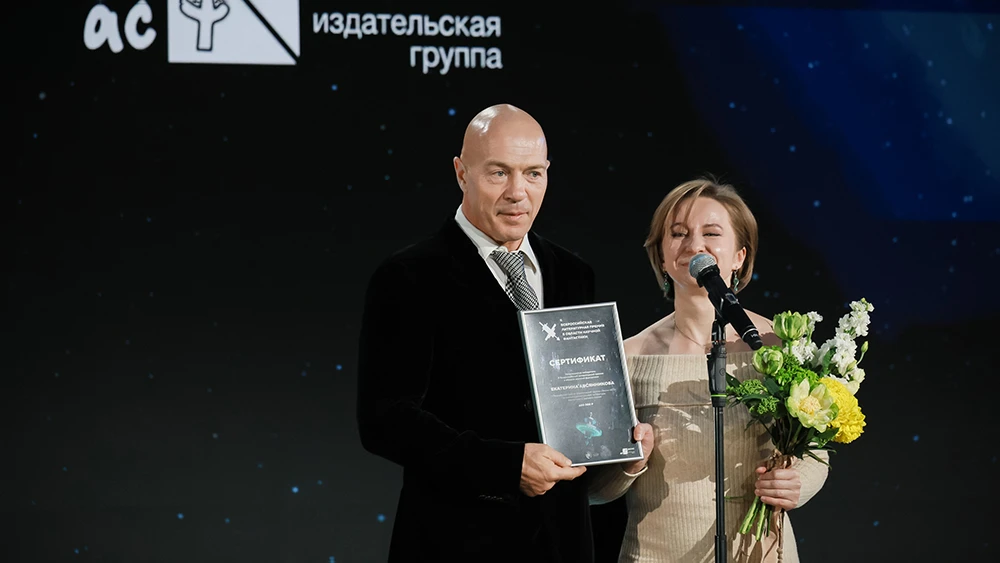
"At the beginning of this year, I visited the Cosmonaut Training Centre,
and one of the things we did was train in a centrifuge. It was a little
nerve-racking, a little scary and really, really enjoyable. This feels just the
same, only a hundred times better. I really hope we can revive science fiction
together, especially for children. Our children now read a lot of fairy tales
and fantasy, but very little good literature by Russian authors. Judging by the
feedback on my books, we have every chance of changing that," said
Yekaterina Avsyannikova.
She also shared her writing plans. The "Alpha Orionis" series is
intended to run to seven books, and she is currently working on the fifth.
After that, Yekaterina Avsyannikova plans to start writing new pieces that will
draw on her ideas for flights to the Moon and other sketches about space.
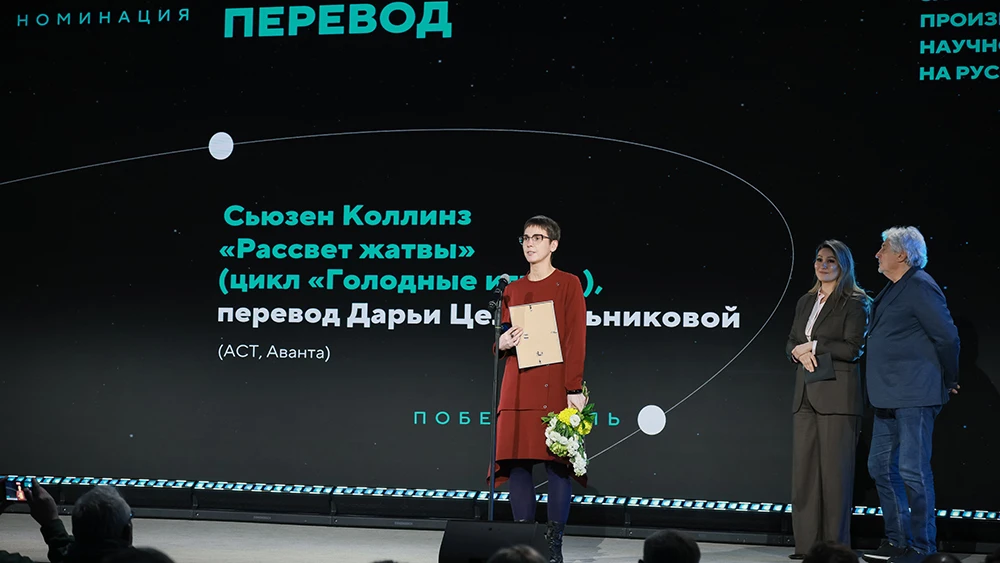
Darya Tselovalnikova won the "Translation" category for her
translation of Suzanne Collins's novel "Sunrise on the Reaping", part
of "The Hunger Games" series. She said the attention the award had
drawn to her work as a translator was a personal victory and an important
achievement for the profession as a whole.
"Literary translators often work behind the scenes. When a book is well
translated, readers usually give the author the credit, while translators are
the first to be blamed for the slightest mistake, whether it involves a fact,
the language or the plot. That's why I'm overwhelmed with emotion today. I
would also add that an excellent command of the language and a degree of
literary talent are usually only the starting point for a translator of fiction.
You also need to achieve mastery and learn some of the most important secrets
of the trade. I'm very grateful to the translation school that gave me my start
in life. It also trained many talented translators, and we now continue to grow
together as a close-knit team of like-minded colleagues," said Darya
Tselovalnikova.
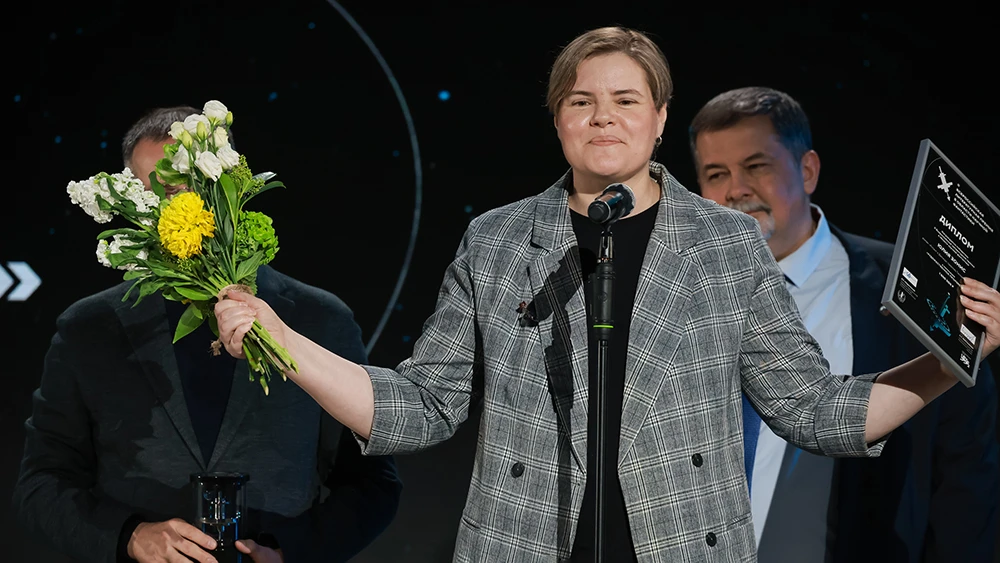
Yulia Zonis, who won the "Fiction" category, noted the almost
mystical coincidences between the story of how she wrote her book and the
history of the Symposium. "I started writing the novel as soon as I got
back from the first Symposium in 2024, and it drew much of its inspiration from
our sessions. The book came out in 2025, and I was given my author's copy just
before the second Symposium. Now, quite unexpectedly, the novel has won an
award at the third Symposium. Science fiction or coincidence? You decide."
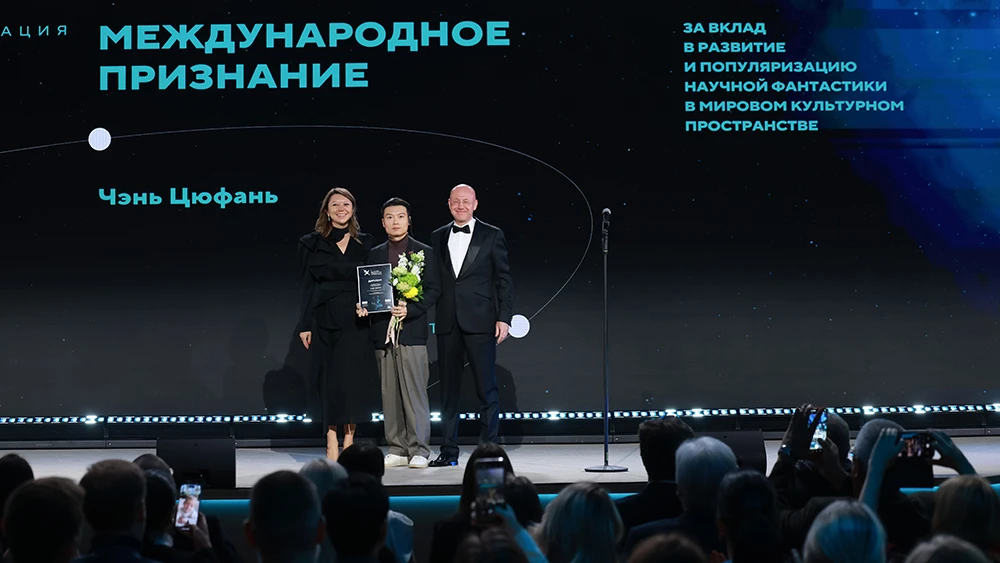
Kirill Gnedyshev also won in the "Visual Image" category, and Chen
Qiufan won in the "International Recognition" category. Igor
Shengalts and Nikolai Perumov received "International Recognition"
awards for their contribution to promoting Russian-language science fiction
abroad. Special prizes from the award's partners went to Vadim Panov and
Alexander Zhuravsky.
The All-Russian Science Fiction Literary Award was established by the National
Centre RUSSIA and the Writers' Union of Russia to revive public interest in the
genre as a driver of scientific and technological progress. Winners were
selected in five main and two special categories. The "Children's and Young Adult Fiction" and
"International Recognition" awards, along with special prizes from
the award's partners, were presented for the first time. More than 120 works
published in 2025 were nominated for this year's award.
The III International Symposium "Inventing the Future" was held on 12–13 November at the National Centre RUSSIA. The event was organised at the direction of the President of the Russian Federation, Vladimir Putin, under the auspices of the Decade of Science and Technology, with the support of the Russian Ministry of Foreign Affairs and the Ministry of Science and Higher Education.
Event photobank

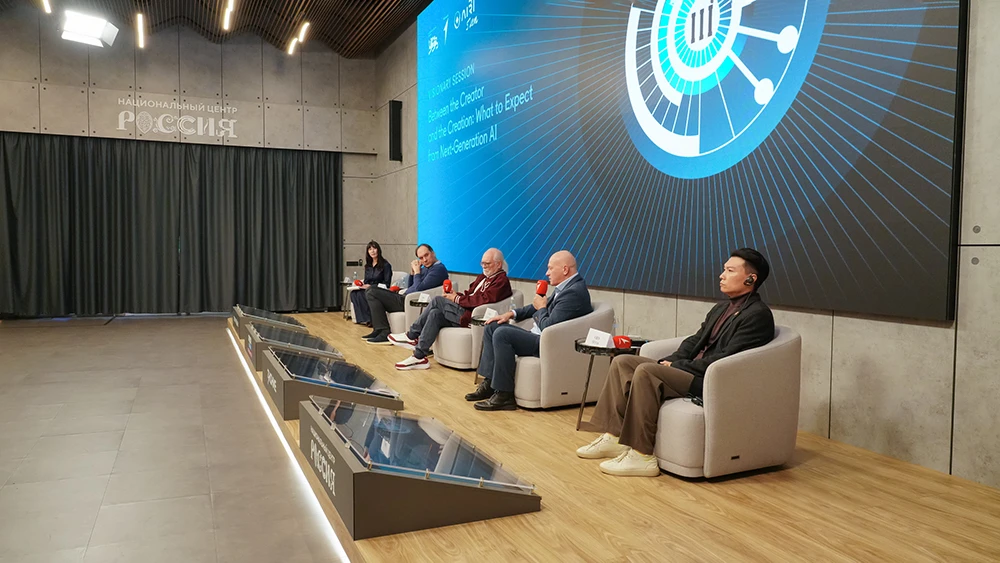
The public talk "Big Questions: Why Explore the Depths of the Ocean?" focused on one of Earth's least explored environments and a major frontier for future discoveries.
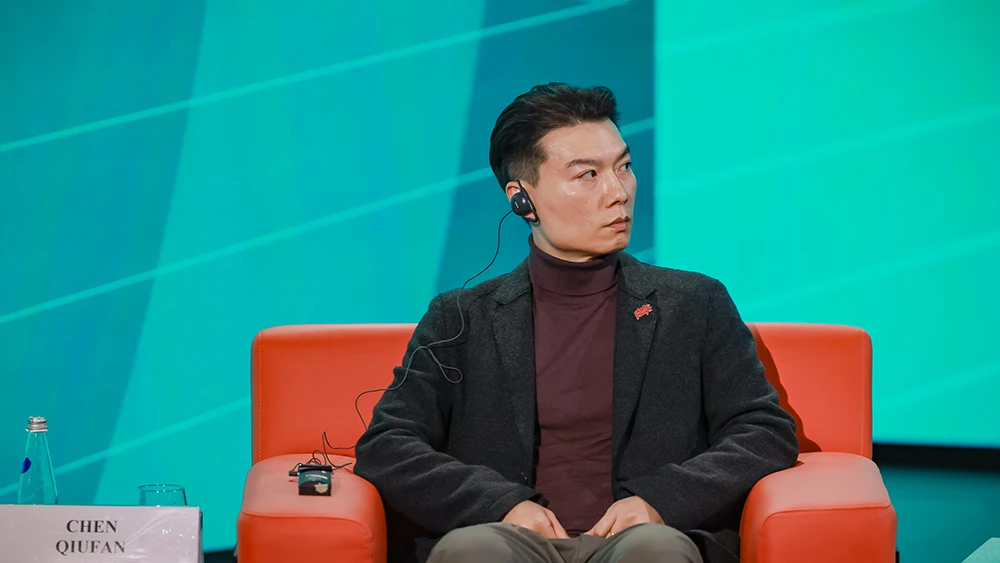
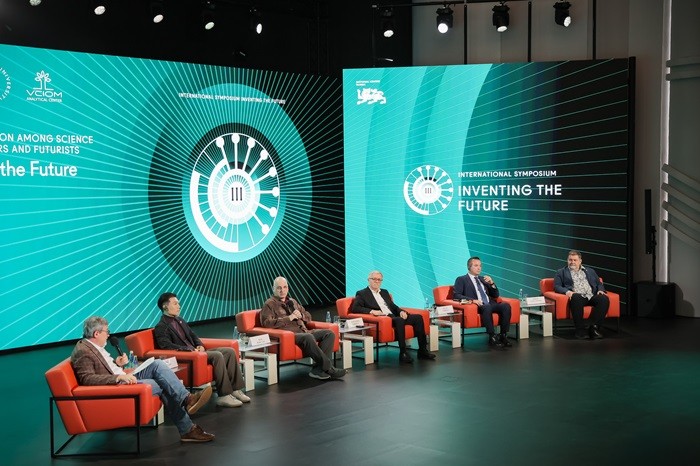
Writers from Russia and China discussed how science fiction ideas take shape and what literature is warning us about today.
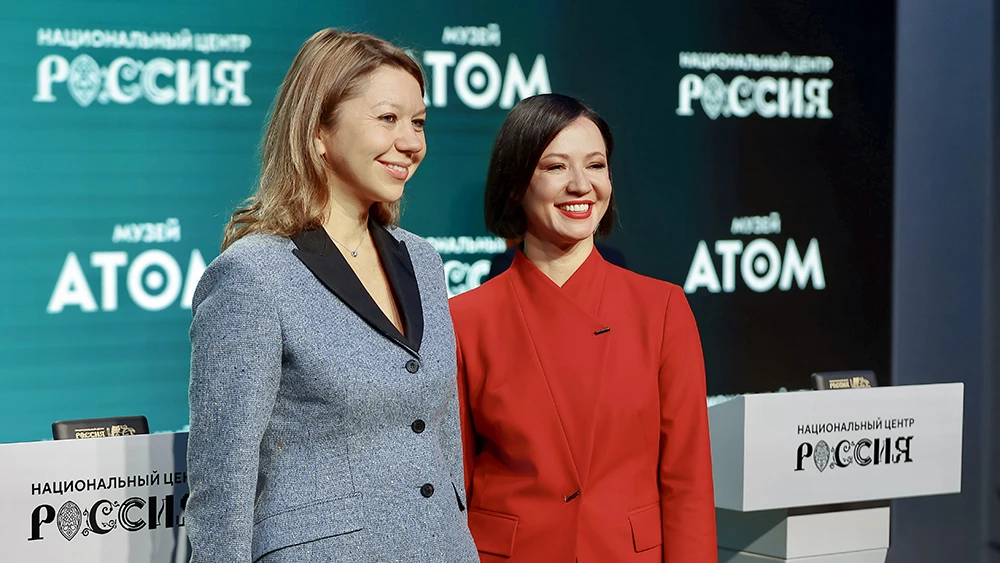
The National Centre RUSSIA and the ATOM Museum have agreed to work together on educational, cultural and leisure projects.


