
Merchant-style Russian table at the Department Store of the National Centre RUSSIA
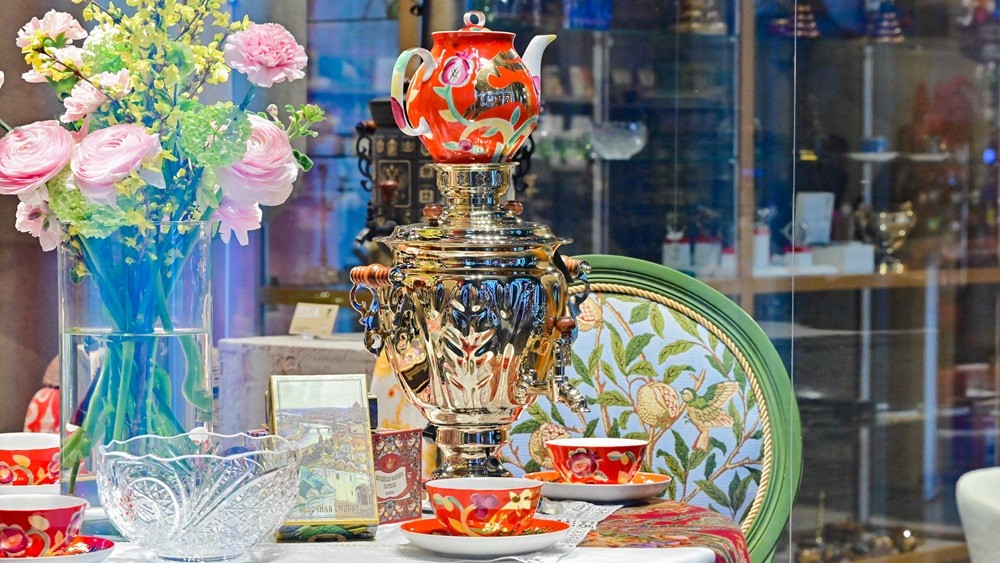
A special table setting has been presented at the Department Store of the National Centre RUSSIA — a Russian table styled after a merchant’s feast. This is not simply a display but a carefully composed arrangement that brings together works by contemporary Russian manufactories and classic symbols of national everyday life. On a single table, ceramics by "Dymov Ceramics", Gusev crystal and a Tula samovar come together to create the image of a hospitable merchant household.
At the centre of the composition are two collections by "Dymov Ceramics" — "Cosmos Flower" ("Kosmeya") and "Rosehip" ("Shipovnik"). The "Cosmos Flower" collection is designed in a soft pastel palette: pale pink, lavender and cream shades with gold edging evoke the delicate beauty of a blooming spring garden. A minimalist background and subtle hand painting inspired by Suzdal patterns create a sense of lightness and harmony. The name of the collection refers to the Latin Cosmos — universe, order and beauty — while the motifs of the cosmos flower, which adorns gardens in Suzdal, become its key artistic symbol.
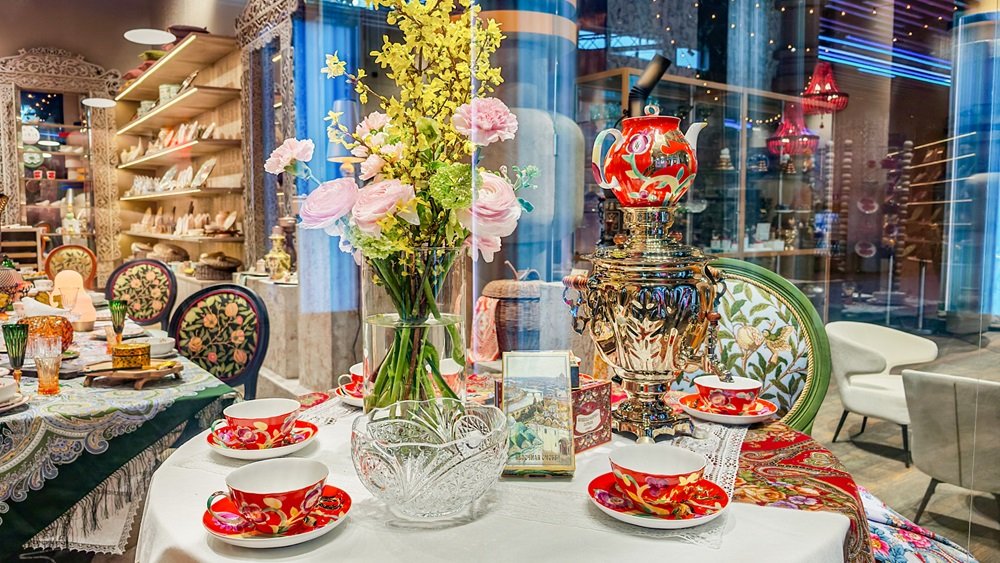
The "Rosehip" collection gives the table a warmer, more homely character. Terracotta, burgundy, olive and ochre tones, along with motifs of berries and branches inspired by folk ornament, evoke associations with country-house aesthetics and large family feasts. Each item is hand-painted, turning the tableware into a genuine work of applied art. Together, "Cosmos Flower" and "Rosehip" demonstrate how contemporary ceramics continue the traditions of Suzdal pottery craftsmanship, reinterpreting them for a modern interior.
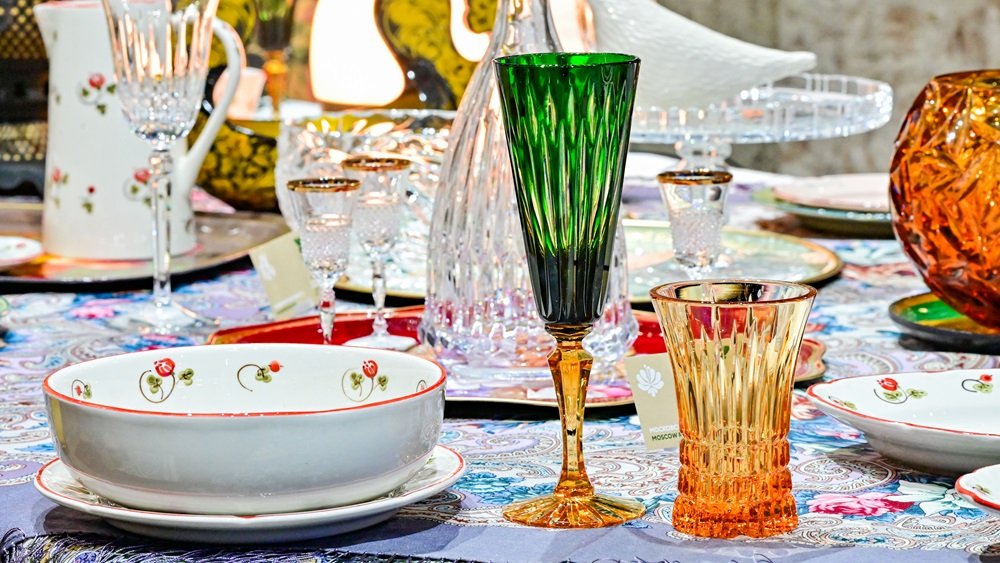
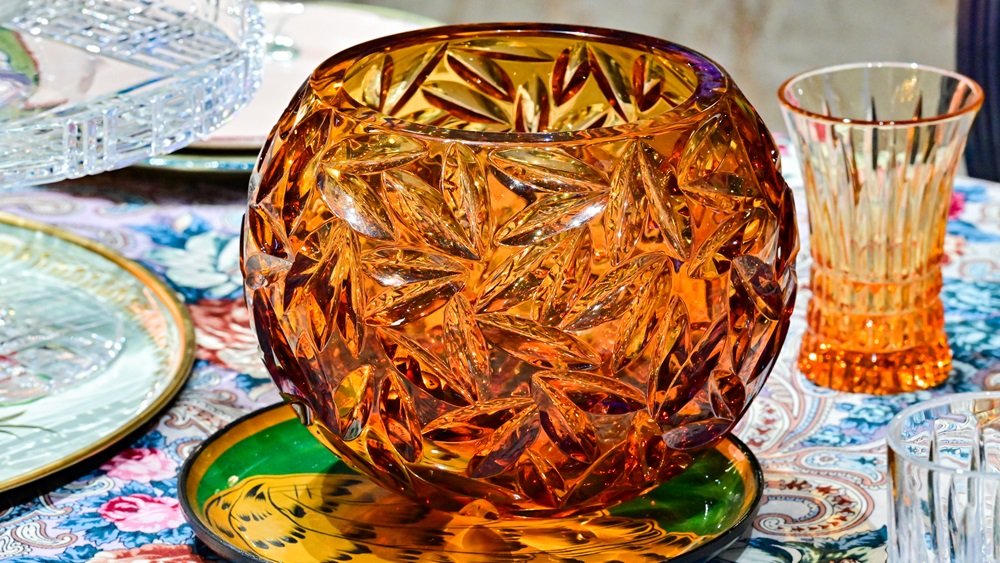
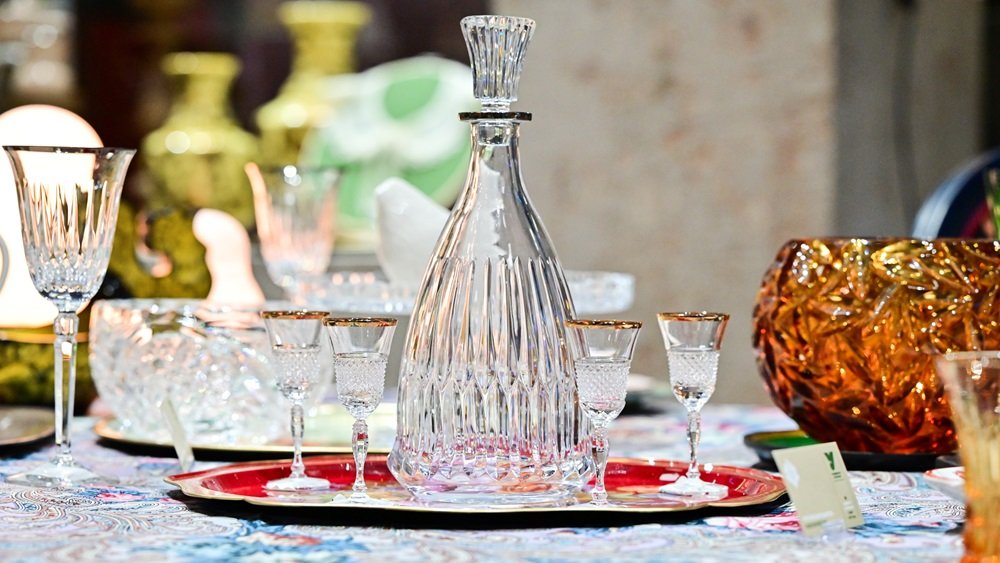
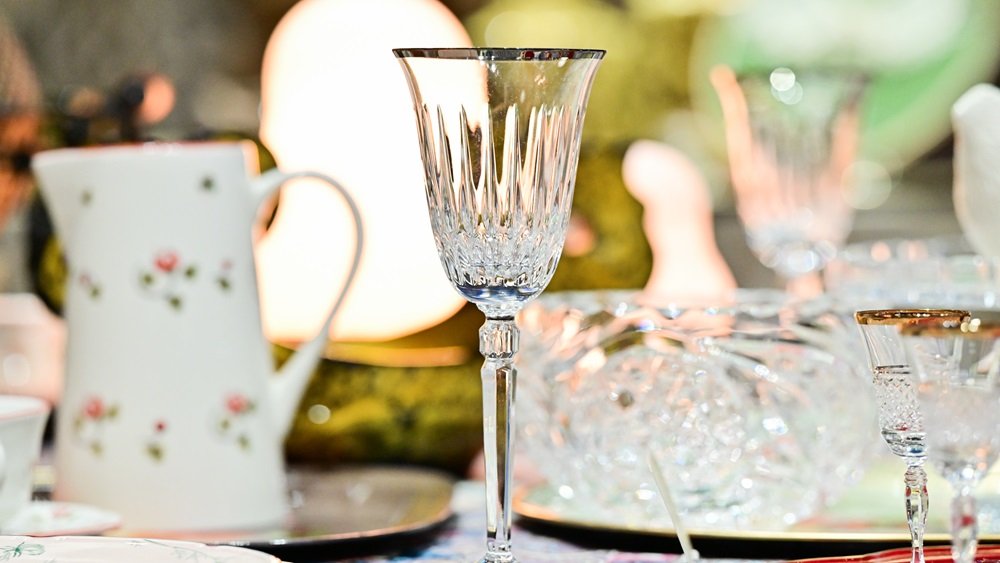
Gusev crystal plays an important role in the composition. Glasses, vases, decanters and sweet bowls with signature cuts reflect the light and add a sense of ceremony to the setting. Traditional techniques — "Russian stone", "Maltsov cut", deep engraving, gilding and silvering — emphasise the continuity of Russian glassmaking schools and recall the finest examples of pre-revolutionary crystal. Against the matte ceramics, the shimmering facets of the crystal create a striking contrast and heighten the festive atmosphere.
Pavlovo Posad shawls serve as an unusual but striking element of the setting. Their bright ornament and dense texture add depth and give the table arrangement a three-dimensional feel, recalling the tradition of decorating merchant homes with rich fabrics.
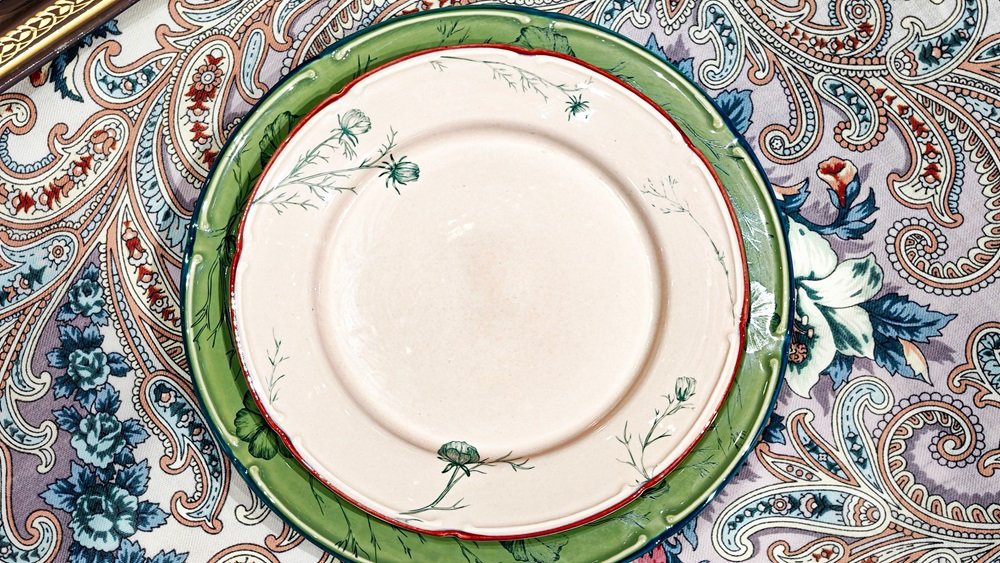
Another important detail is the Zhostovo trays. They introduce rich colour and the shine of lacquer painting, functioning both as practical stands and as independent decorative accents. The floral ornaments characteristic of Zhostovo painting echo the motifs of the ceramics and shawls, emphasising that behind each object stands a living craft school and a long artistic tradition.
Completing the image of a merchant feast is the Tula samovar — an enduring symbol of Russian hospitality. Placed at the centre or on a separate side table, it becomes the semantic core of the arrangement. The history of the Tula samovar, which goes back to the workshops of the Lisitsyn and Batashev families, its variety of forms and rich decoration all recall merchant traditions of the nineteenth century. At that time the samovar was not only a household item but also a sign of family status; today it is both a fashionable element, a tribute to tradition and a truly functional household appliance. It is no secret that the most delicious tea is brewed in a samovar.
Together these elements create a coherent image of a merchant feast at the Department Store RUSSIA — generous, festive and built on respect for craftsmanship and continuity. The Russian table becomes not merely a display of goods but a visual narrative about national aesthetics, where history, contemporary design and the living tradition of hospitality meet.
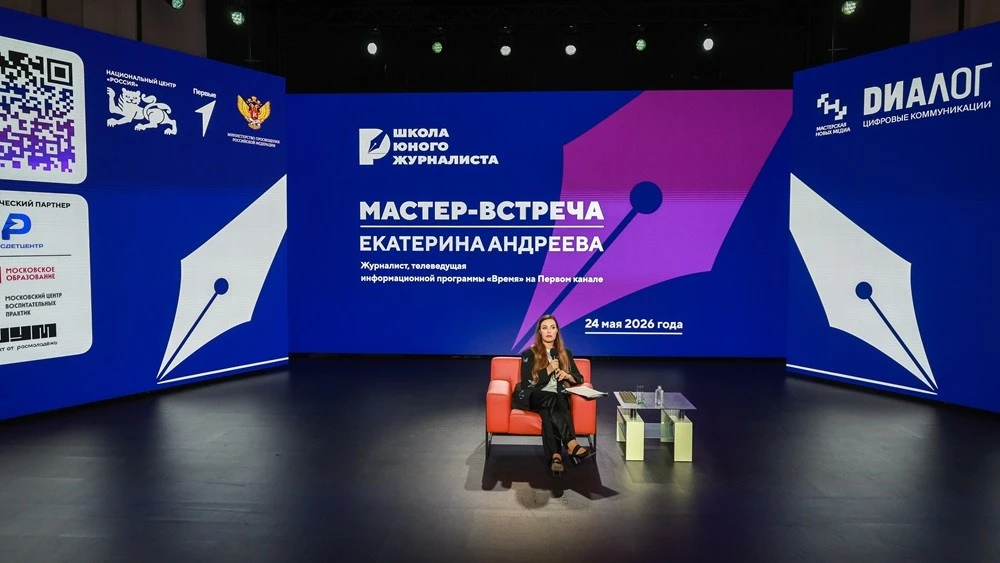
The expert shared with the students not only professional secrets, but also her personal success story.
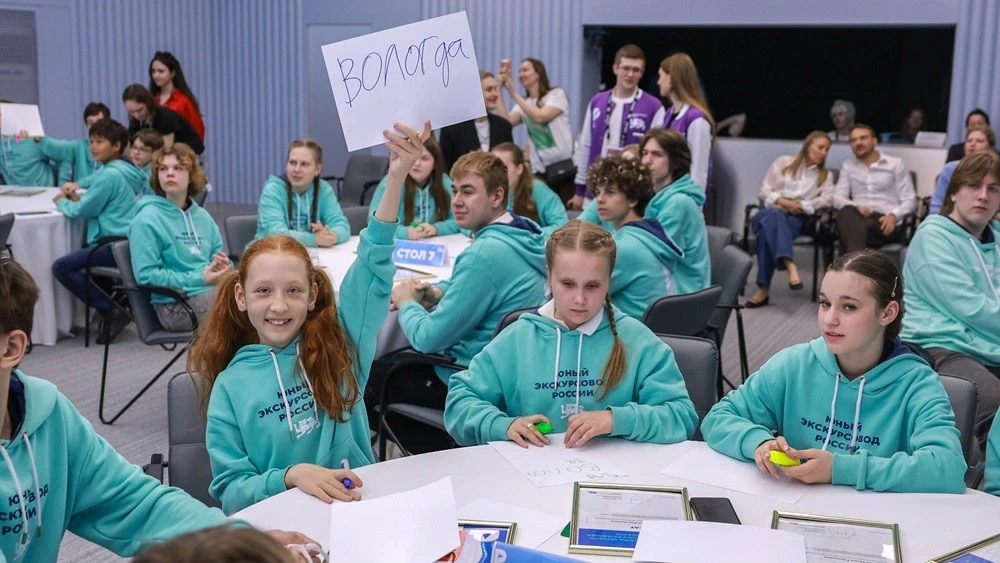
The results of the 2025-2026 season of the Young Tour Guides School of Russia project were summed up at the National Centre RUSSIA.