

Chef and AI: the National Centre RUSSIA guests discover how technology helps create new dishes
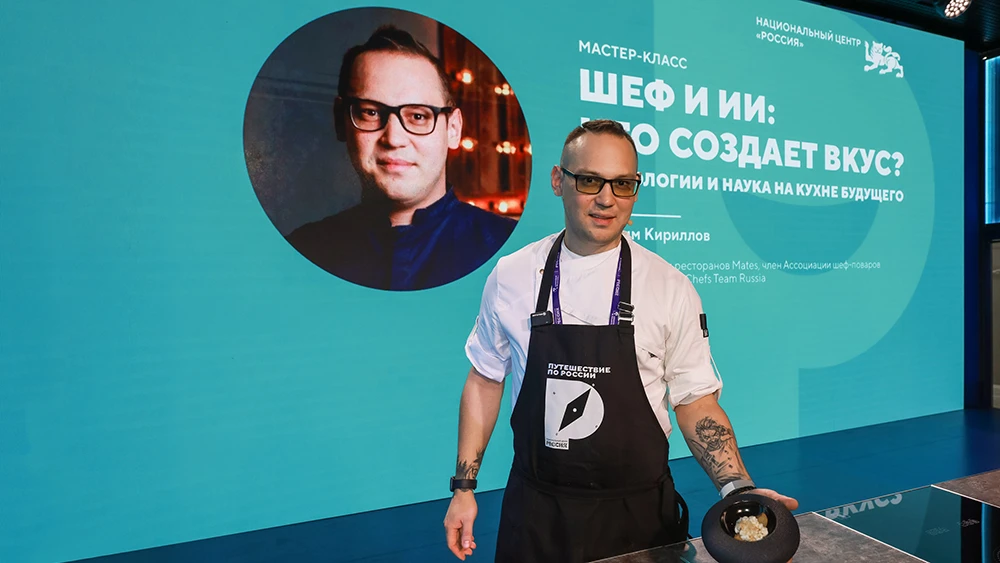
The "Digital Solutions" IT Forum is being held at
the National Centre RUSSIA. The discussion of advanced technology continued at
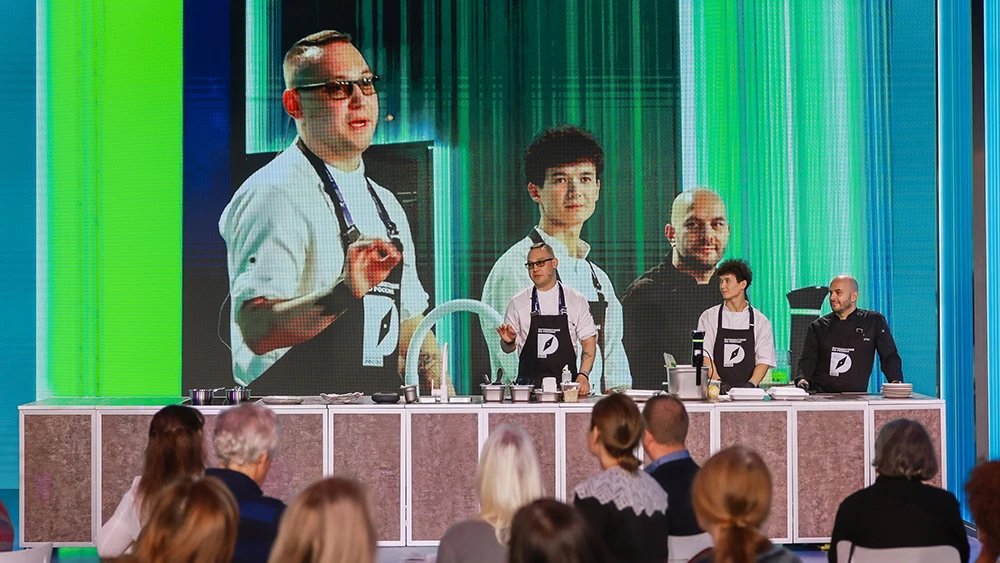
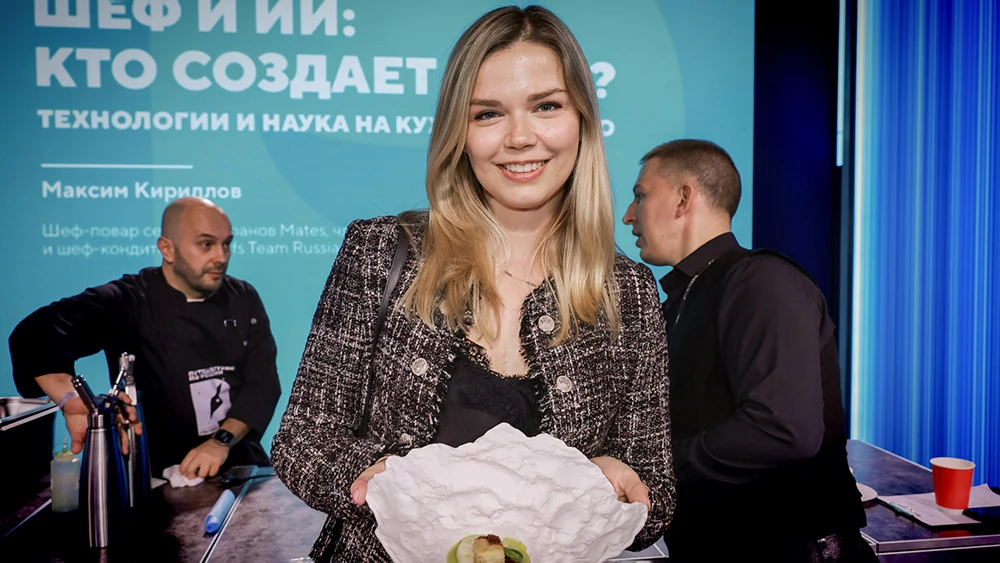
the Gastronomic Rows with the culinary workshop "Chef and AI: Who Creates
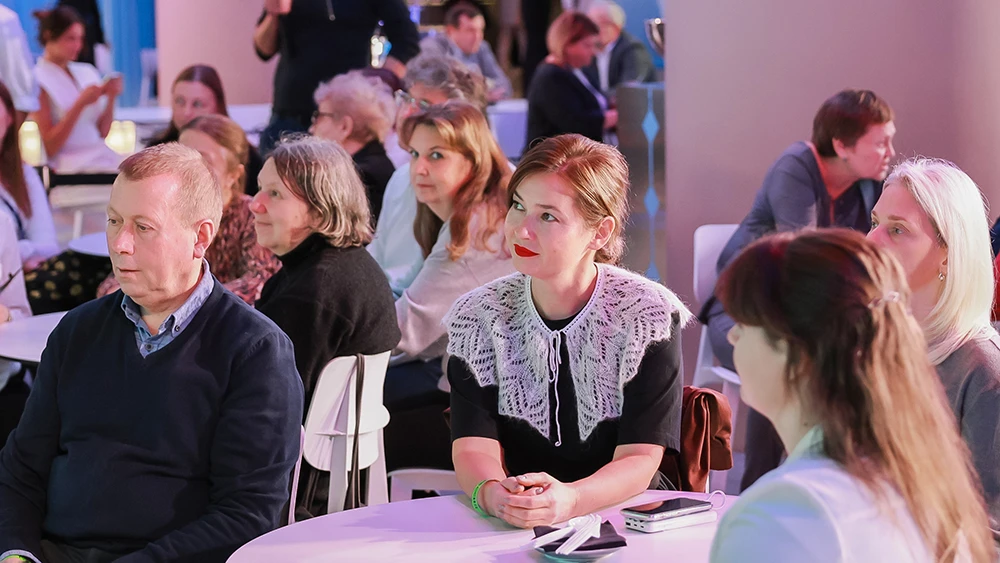
the Flavour?". Participants saw first-hand how neural networks can assist
in the kitchen and why the final decision always rests with people.
The workshop was led by Maxim Kirillov, Operations Chef at the Mates restaurant
chain and a member of the Chefs Team Russia Association of Chefs and Pastry
Chefs. He explained that he
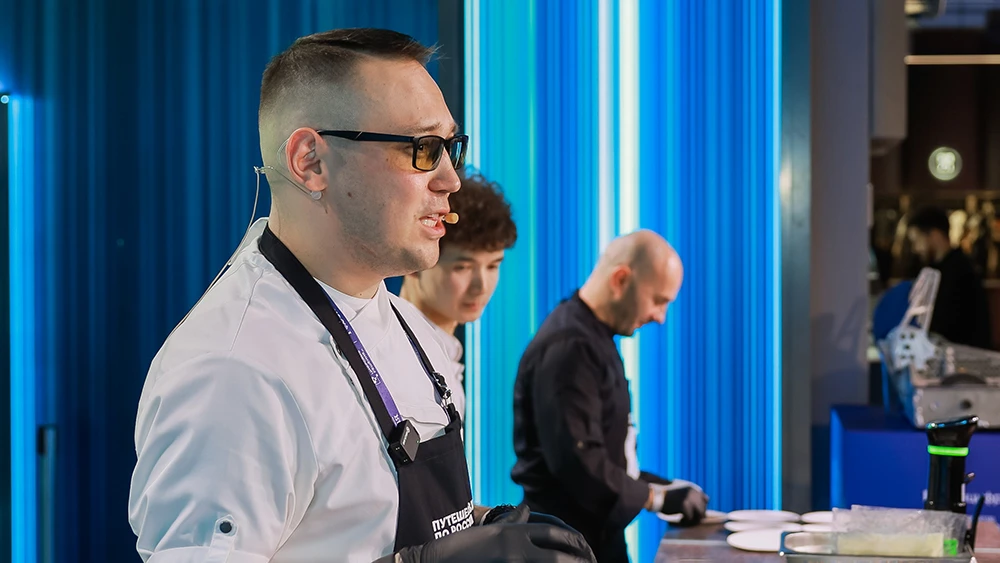
actively uses AI both in everyday life and at work: "I prefer to give AI
an idea, let it develop it and then refine it myself until the flavour is
right. Of course, the final say always rests with us, the chefs."
During the workshop, the chef presented three dishes created in collaboration with AI: velvety beetroot with lemon cream and buckwheat popcorn, honey-mustard chicken thigh with baked apple and Borodinsky crunch, and pear in a sour cream cloud with oat crumble and honey.
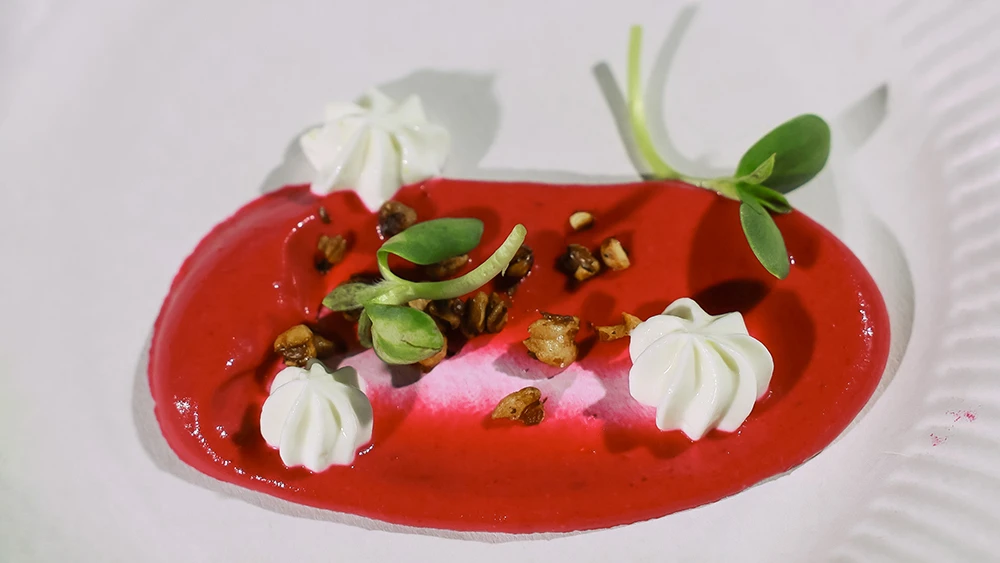
These dishes demonstrated how the approach works in practice. Simple, readily available ingredients such as beetroot and buckwheat were used as the basis. AI helped shape the concept and suggested combinations, while the chef adapted the recipes and refined them himself to achieve the desired flavour and texture.
"AI can save a great deal of time. For example, I can take the ingredients I have in my fridge and ask it to suggest what I could make with them. Or I can ask it to scale a four-serving recipe up for 70 people. That used to take much more time, but now I receive a ready calculation and always check it myself," Maxim Kirillov said.
The expert offered workshop participants some simple ideas for using AI. The first was to formulate the right question. For example: "Guests are arriving in an hour. Suggest a delicious dinner using pumpkin, since it is autumn." The response can then be used to quickly compile a shopping list for any missing ingredients. Adding more detail — "Prepare a dinner for eight people using pumpkin and an oven" — allows the assistant to suggest details that the cook may not have considered immediately.
Another tip from the chef was to provide the digital assistant with a list of
everything in the fridge to receive breakfast, lunch and dinner menu options
for the whole family. Guests also learnt that AI can be useful for more than
preparing food. According to the chef, the technology helps organise
purchasing, sort products into categories and prepare for large events more
quickly. At the same time, the flavour and quality of a dish cannot be
entrusted entirely to an algorithm. After all, the workshop's guiding principle
is: "The algorithm suggests — the human decides."
In the kitchen, therefore, artificial intelligence does not replace a
professional but serves as a tool that frees up time otherwise spent on routine
tasks. People retain the central role: tasting, adjusting, experimenting and making
the final decision about what a dish should be.

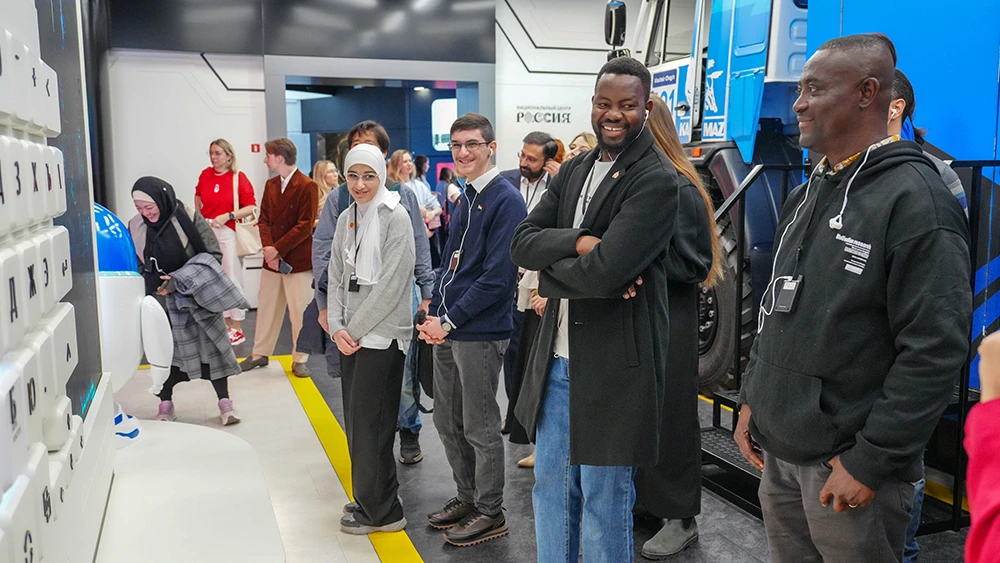
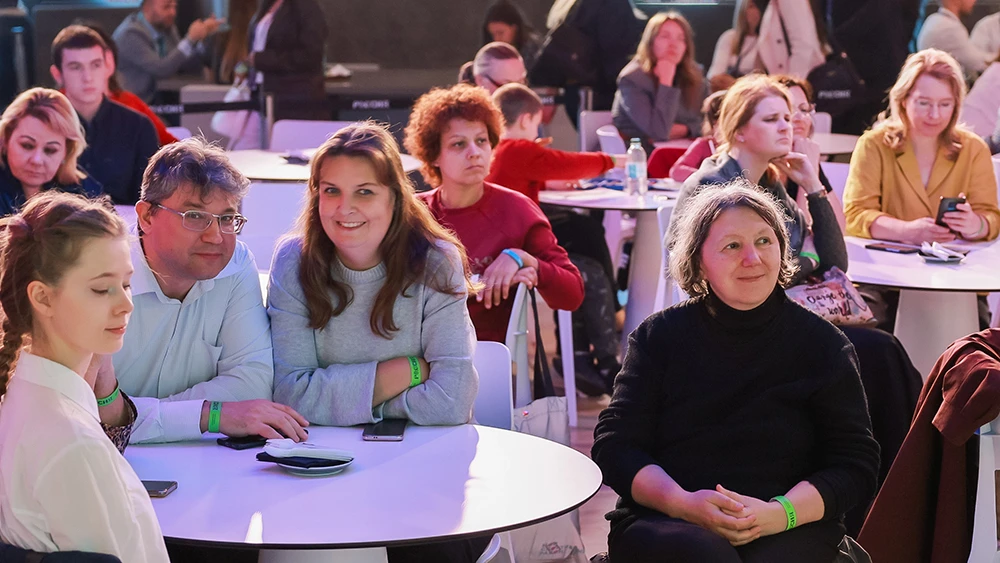
The tour was attended by diplomats from 12 countries: Turkey, Ghana, Ethiopia, Brunei, Mongolia, Pakistan, Iraq, Sudan, Cameroon, Cuba, the Republic of Korea and Morocco.