


Security council secretaries of CIS member states review the year and outline priorities for cooperation at the National Centre RUSSIA
The world
remains unstable under pressure from the West, and the Commonwealth of
Independent States needs to confront common threats together by strengthening
sovereignty, developing its own technological solutions and expanding practical
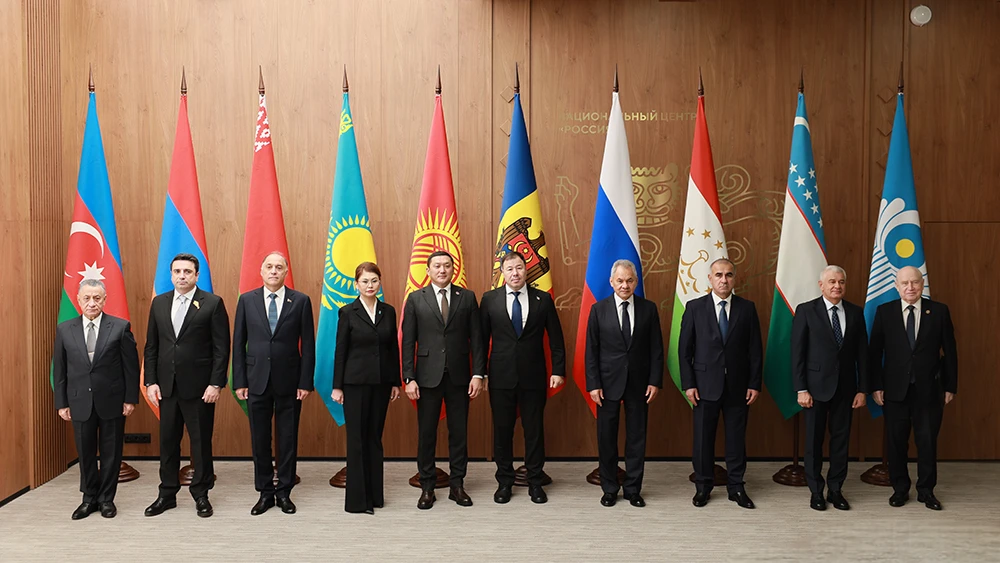
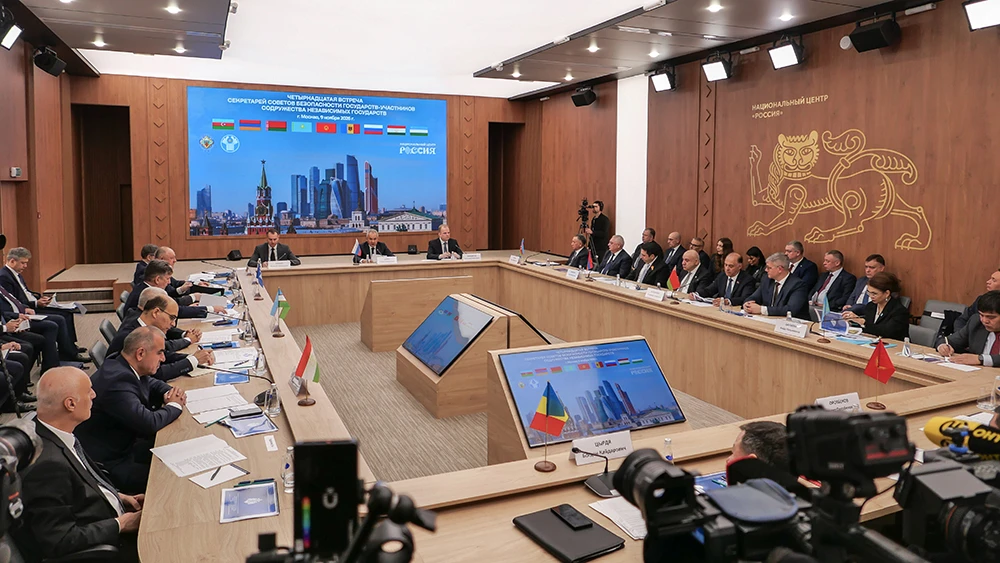
cooperation on security. This was the conclusion of the XIV meeting of the secretaries of the security councils of the member states of the Commonwealth of Independent States, which was held on 9 November at the National Centre
RUSSIA.
"In keeping with established tradition, you will
discuss a wide range of issues in your field in depth and exchange views on
priority measures that will protect our citizens most effectively from external
and internal threats. Today, with a difficult geopolitical situation and
escalating conflicts in several parts of the world, it is important to make
full use of your institutions' considerable analytical and forecasting
capabilities to strengthen the security and sovereignty of CIS member states
and ensure stability across the Commonwealth. It is important to assess
developments comprehensively and objectively and to actively expand cooperation
so that we can tackle our shared challenges successfully. I am confident that
your meeting will be productive and that the proposals and recommendations put
forward during it will help broaden cooperation across a range of areas,"
said the President of the Russian Federation, Vladimir Putin. His message of
greeting was read out by the Secretary of the Security Council of the Russian
Federation, Sergei Shoigu.
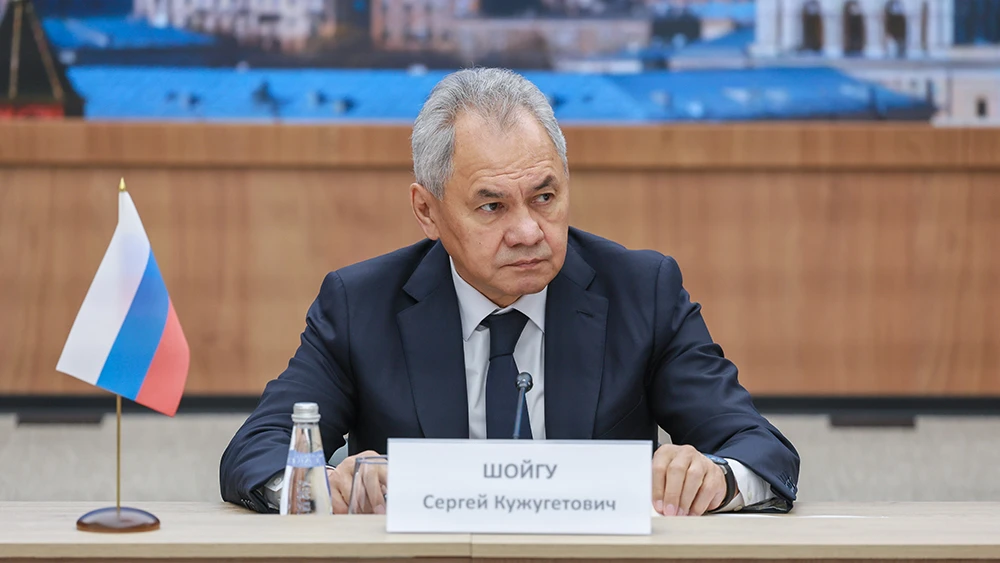
Sergei Shoigu, in his turn, noted that significant changes had taken place on the international stage since the previous meeting and were still unfolding. He said the West uses postcolonial methods of control, including interference in political and electoral processes and unlawful restrictive measures. These actions make the situation more difficult in various regions, but they have no effect in countries whose authorities put the interests of their people, sovereignty and traditions first.
"The countries of the Global South and East are
becoming an increasingly influential force in world politics and the global
economy, shaping the direction of international relations and the contours of
the security architecture. In the current circumstances, it is important to
work together to create mechanisms that will help us respond to the
consequences of emerging international crises. Russia has proposed establishing
reserve funds within BRICS and the SCO to hold resources that can be used to
assist people in partner countries in emergencies. The proposal is to establish
regional hubs at key logistics points to store vital reserves, primarily food
and energy supplies, critical materials, medicines and essential goods,"
he said.
Sergei Shoigu added that the potential for conflict is spreading and that risks are rising in the fight against terrorism, extremism, organised crime and illicit arms trafficking, as well as in connection with new threats of interference in the internal affairs of independent states. He said that Western digital solutions could lead to a loss of sovereignty because infrastructure could be switched off in an instant. That is why countries need to develop their own solutions, he emphasised, citing the "Rassvet" satellite constellation for broadband internet with global coverage as an example.
He noted that militarisation continues in Europe, with military
spending rising and NATO infrastructure expanding in Poland and the Baltic
states, and said that provocations regularly occur in border areas. The
situation in Central Asia remains stable, and Kazakhstan and Uzbekistan have
chosen Russian solutions for nuclear power, he continued. The Secretary of the
Security Council of the Russian Federation identified the spread of terrorism
and extremism into the region as a threat and stressed the importance of
cooperation with Kabul, since stability in Afghanistan affects the situation in
the region.
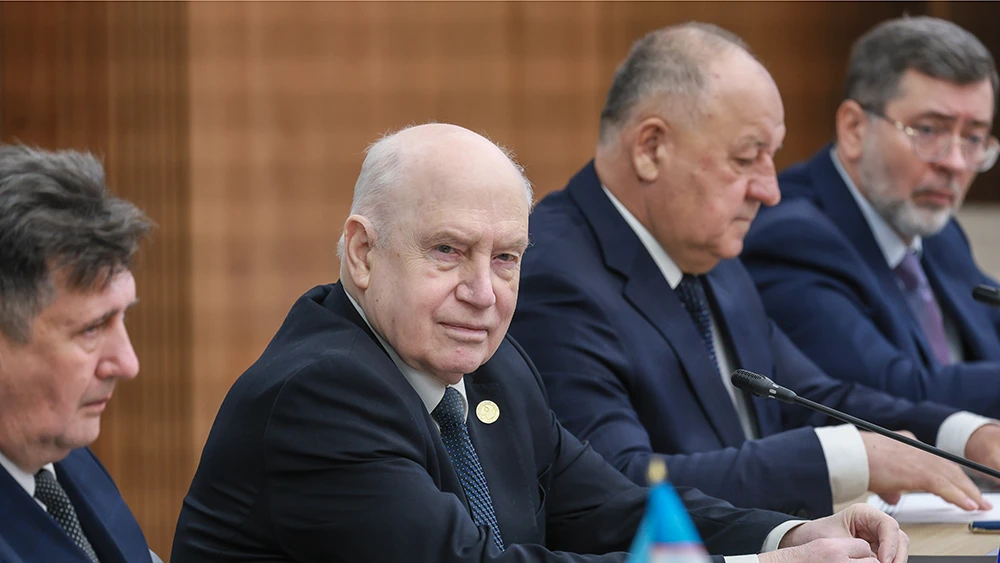
The CIS Secretary General, Sergei Lebedev, recalled that the 14th meeting of the secretaries of the Commonwealth's security councils was being held ahead of the 35th anniversary of the founding of the CIS. He said the anniversary offered a good opportunity to take stock of the CIS's work so far and look ahead, and gave his assessment of the CIS's role in current circumstances.
"Today, amid growing geopolitical tensions around the
world, the Commonwealth serves as a reliable, time-tested platform for
long-term strategic partnership. It offers a unique forum for multilateral
dialogue based on equality, consensus and mutual respect for one another's
interests. This respectful approach helps us adapt confidently to the multipolar
world order now taking shape and make effective use of new opportunities,"
emphasised Sergei Lebedev.
He added that these opportunities can only be used if
Commonwealth member states confront common threats together. Sergei Lebedev
pointed out that isolated national monitoring systems cannot fully guarantee
public safety. A strategic priority for CIS member states is therefore to
create a shared information space for emergency prevention and response. In
closing, he expressed confidence that the meeting's outcomes would set new
strategic priorities for developing the collective security system across the
CIS and strengthen the mechanisms through which member states work together to
address today's challenges.
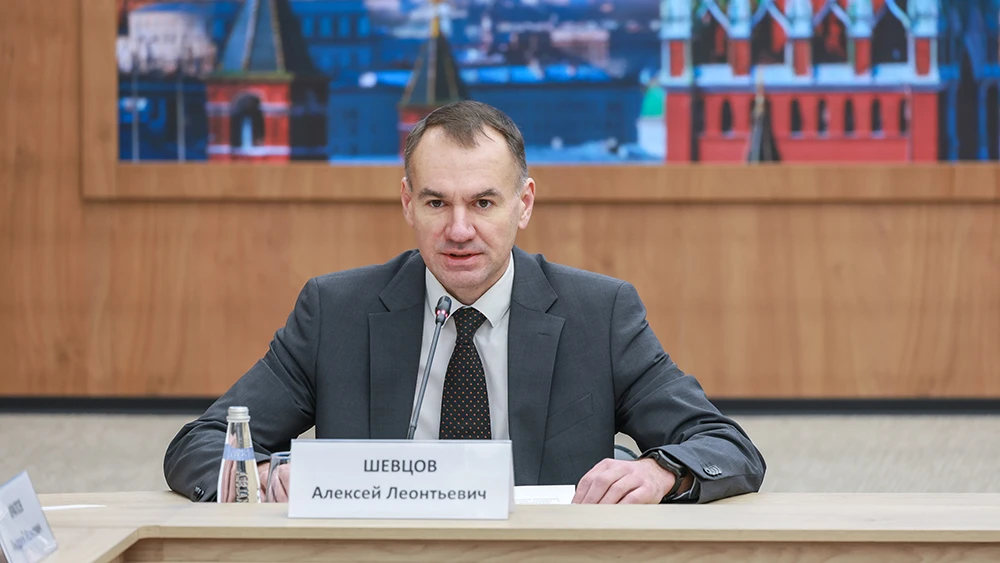
The International Week "Peoples of Russia" was held in Russia from 2 to 8 November. The Deputy Secretary of the Security Council of the Russian Federation, Alexei Shevtsov, reviewed its outcomes. He recalled that the International Week "Peoples of Russia" has been held annually since 2026. He said its purpose is to strengthen unity among the multiethnic people of the Russian Federation and develop multilateral humanitarian cooperation.
"The events drew representatives of public authorities,
international organisations, businesses and the expert community from all
regions of the Russian Federation and 44 other countries. More than 5,000
people took part in 64 events in the business programme. The panel sessions and
discussions focused on unity among the peoples of Russia, historical memory,
strong families, bringing up young people and continuity between generations.
The international programme was structured as a direct and open dialogue
between countries that share traditional spiritual and moral values. The
central event of the International Week was a plenary session with the
President of the Russian Federation, Vladimir Vladimirovich Putin, devoted to
service to the Motherland and to promoting our country's image abroad as a
guardian of universal human values shared by most of the world's population.
The speakers' remarks sparked considerable interest among participants and
beyond. We attracted widespread attention online, and around two million
viewers across virtually every continent have already watched the livestreams
on RuTube," he said.
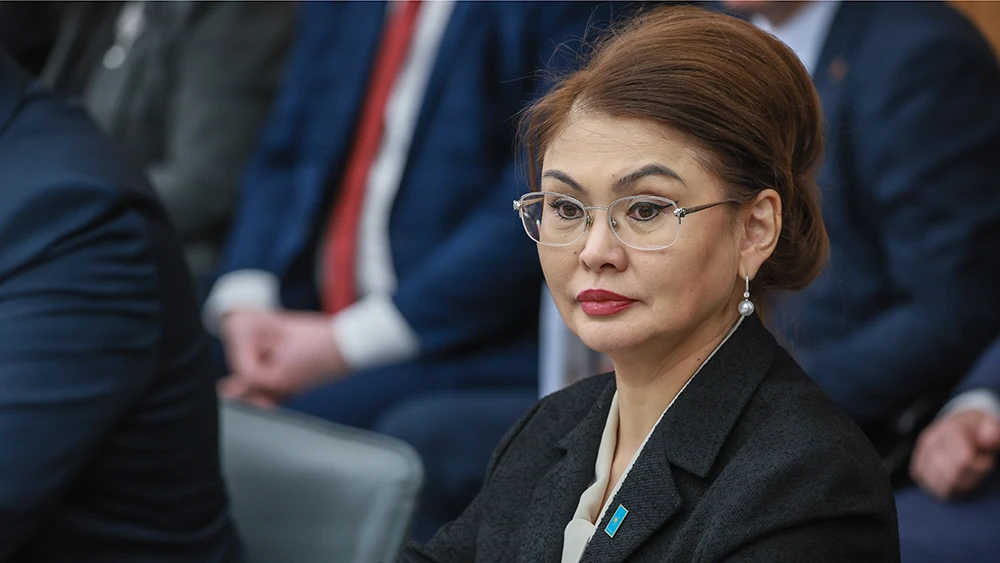
Alexei Shevtsov said that at the film forum, heads of
national film companies emphasised the importance of joint initiatives to
strengthen a shared cultural space and promote historical truth through
collaborative film projects. He added that the Russian Geographical Society
introduced audiences to the folklore legacy and distinctive cultures of
Indigenous peoples in Russia and other CIS countries, while the
"Znanie.Unity" marathon and Youth Day brought together around 7,000
school pupils, students and representatives of youth organisations at the
National Centre RUSSIA. The week concluded with a street sports festival and a
mass run at VDNH.
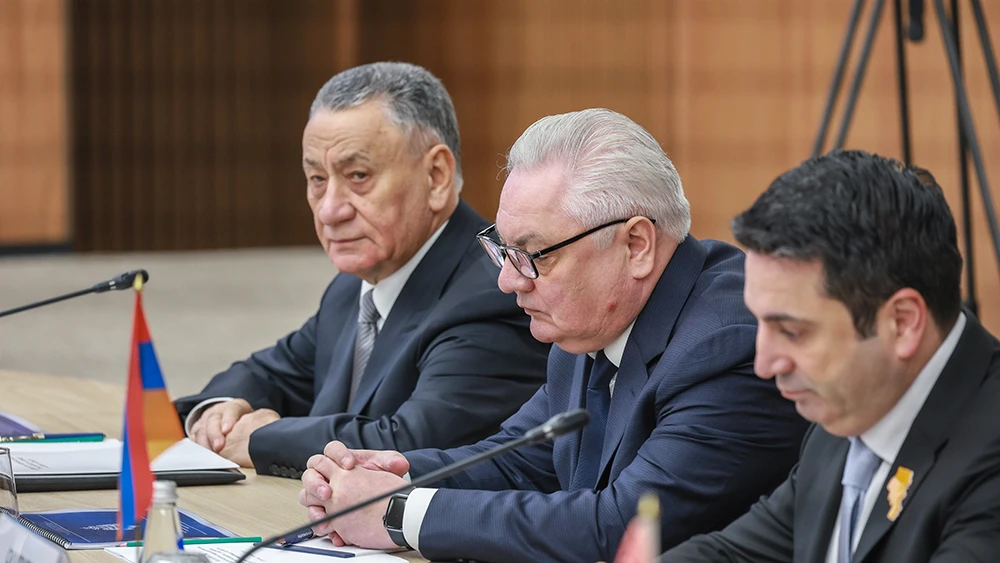
According to Alexei Shevtsov, several thousand events dedicated to unity among peoples and a shared Russian civic identity were held across Russia's regions. Russian Foreign Ministry missions abroad and Rossotrudnichestvo organised more than 160 events in 46 countries, attended by 22,000 people.
He emphasised that the week demonstrated demand for this
format and the effectiveness of direct dialogue between peoples. Proposals
developed during the week will be used to improve nationalities and youth
policy, develop humanitarian cooperation and prepare a new version of the
National Security Strategy in 2027.
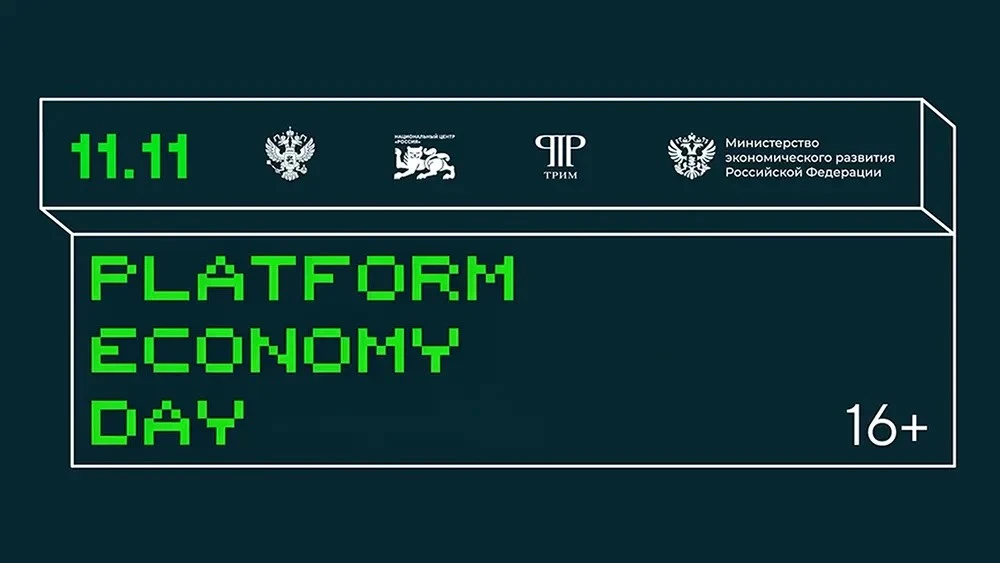
The central event will be the plenary session, "Platforms-2036: The Economy of the Next Decade".
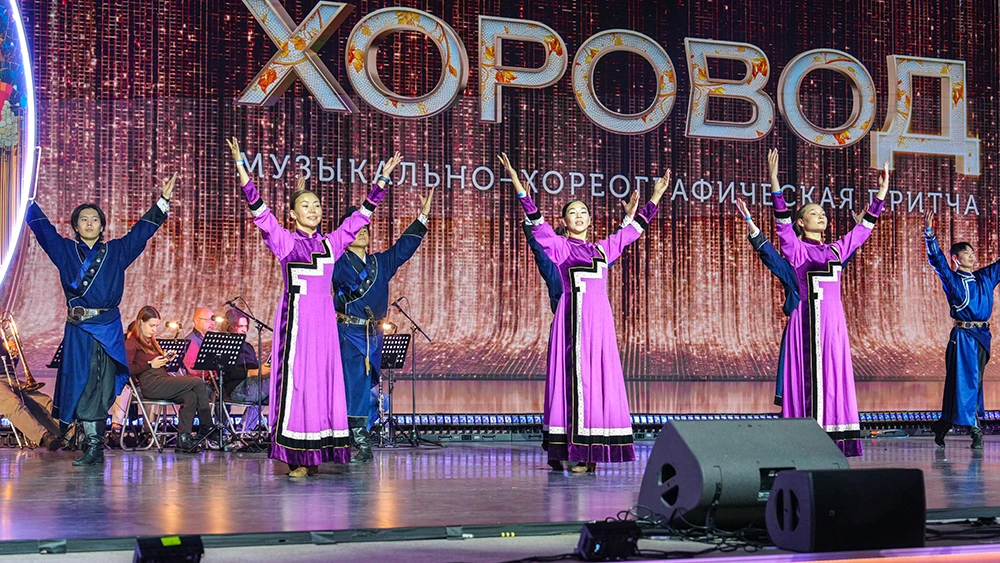
The khorovod (round dance) is a symbol of unity among peoples. In this shared circle, no one comes first or last, and everyone moves together.
The National Centre RUSSIA holds a maintenance day every Monday.


