


Symbol of unity: the National Centre RUSSIA presented the premiere of the musical and choreographic parable "Khorovod"
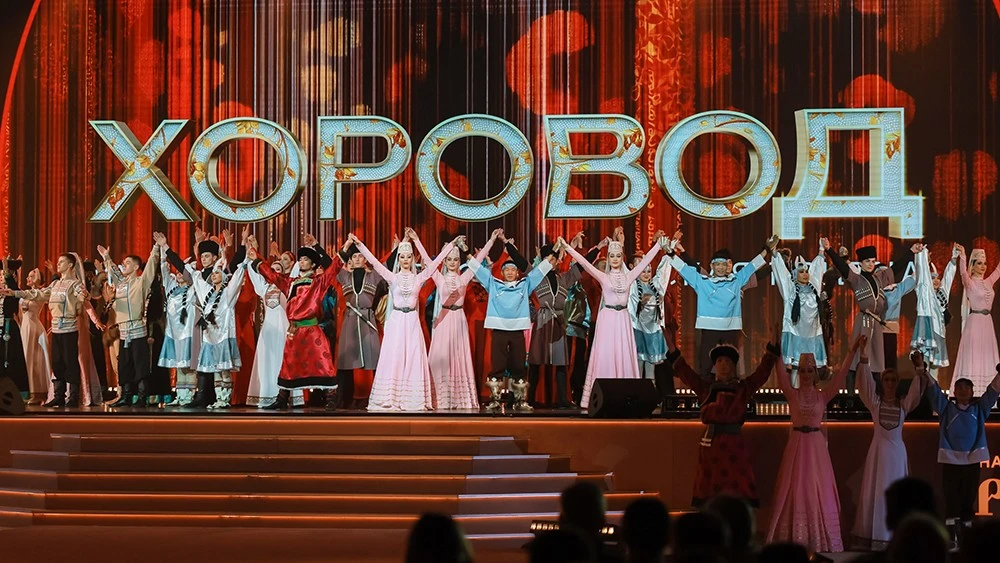
The National Centre RUSSIA hosted the premiere of the first
musical and choreographic parable "Khorovod" — a large-scale project
dedicated to one of the country's most important cultural symbols.
Approximately 300 artists were involved in the event, and the first audience
members included experts and essayists from the II Open Dialogue "The
Future of the World. A New Platform for Global Growth". Through dance and
music — universal languages understood without translation — the richness of
the cultures of the peoples of Russia was revealed to the audience. In a
country where hundreds of languages are spoken, it is dance that remains the
element that unites everyone.
During the Year of Unity of the Peoples of Russia, a series of cultural events is planned at the National Centre RUSSIA, aimed at strengthening interethnic dialogue and popularising the traditions of the country's peoples.
"Vladimir Vladimirovich Putin launched the Year of
Unity of the Peoples of Russia at the National Centre. And we continue it here
with 'Khorovod'. This is a musical and choreographic parable about our
Motherland — the largest country in the world, of which we are proud. Russia is
a multi-ethnic state, home to more than 190 peoples. We have succeeded in
bringing together various groups from the North, South, West, East, and Central
Russia. Some of them were established as far back as the Great Patriotic War —
they represent a true cultural heritage. The National Centre showcases and
develops young talents. In particular, we staged a special number featuring
Bolshoi Theatre soloist Ildar Gainutdinov, throat singing master Olena UUTAI,
and a performance by the young generation of artists from the Igor Moiseyev
Ensemble. We carefully preserve the creative work of our ancestors and take
pride in their art and mastery. The khorovod is one of the oldest dances.
People stand in a circle, hold hands, and with kindness create a unified
energy. In this dance, there are no first or last, leaders or outsiders —
everyone is together. Our great country is the same: it is united. Music and
dance are an international language that requires no translation. Here, talent
and truth are what matter most," said Anastasia Zvyagina, Deputy Director
General of the National Centre RUSSIA.
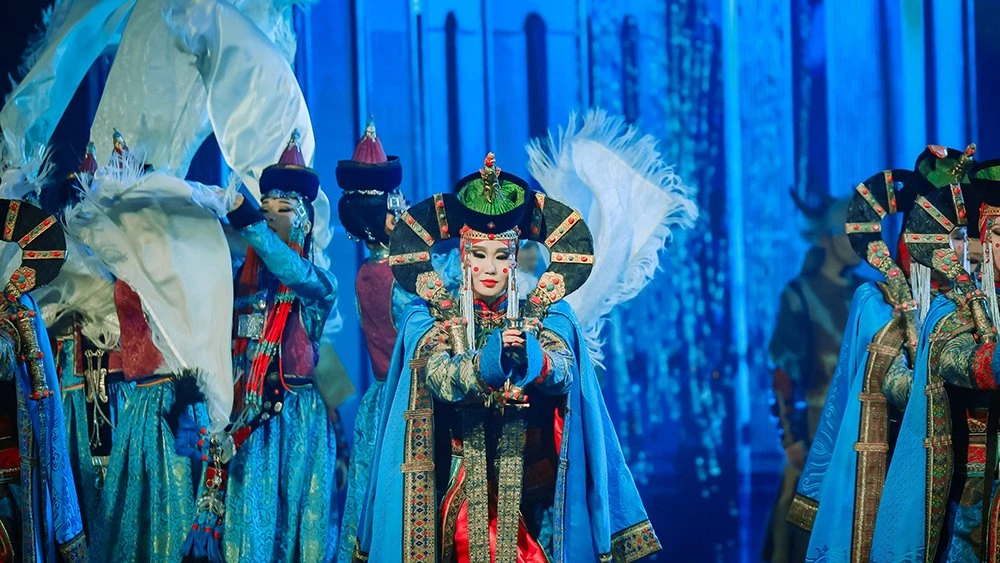
The parable is structured as a multi-layered artistic
statement and is divided into five thematic blocks: "Russian Folk
Dance", "Dances of the Peoples of Russia" (North, West, South,
East, Historical Territories), "Nature of Russia", "Youth and
the Future", and "Pereplyas" (The Dance-Off). Each part reveals
a separate layer of the country's cultural identity, bridging traditions and
modernity.
"The circle is the foundation of the 'Khorovod'
parable. The choreography, music, and visual content are built on a circular
principle: at the beginning, the audience is seemingly 'spun' into this
movement, then they become involved in it, and in the finale, they feel a
unified energy. This is a symbol of unity, which was broken down into
choreographic and musical parts. The National Centre RUSSIA allows for the
organic combination of different genres. A symphonic orchestra features in the
parable, which at first glance might seem incompatible with other elements, yet
this combination succeeded: it reflects everything that is close and familiar,
referencing the Russian code. Groups with their own ethnics and identities —
from the North, South, West, and East — are also brought together. This merges
with modern ballet. The result is a union of music, choreography, and visual
imagery," said Chief Director and Creative Producer Chulpan Piotrovskaya.
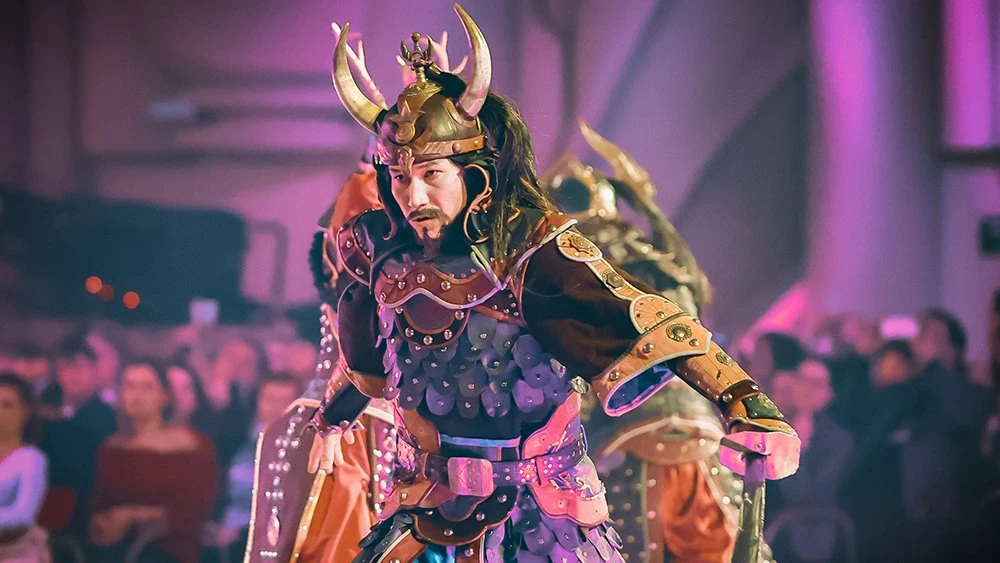
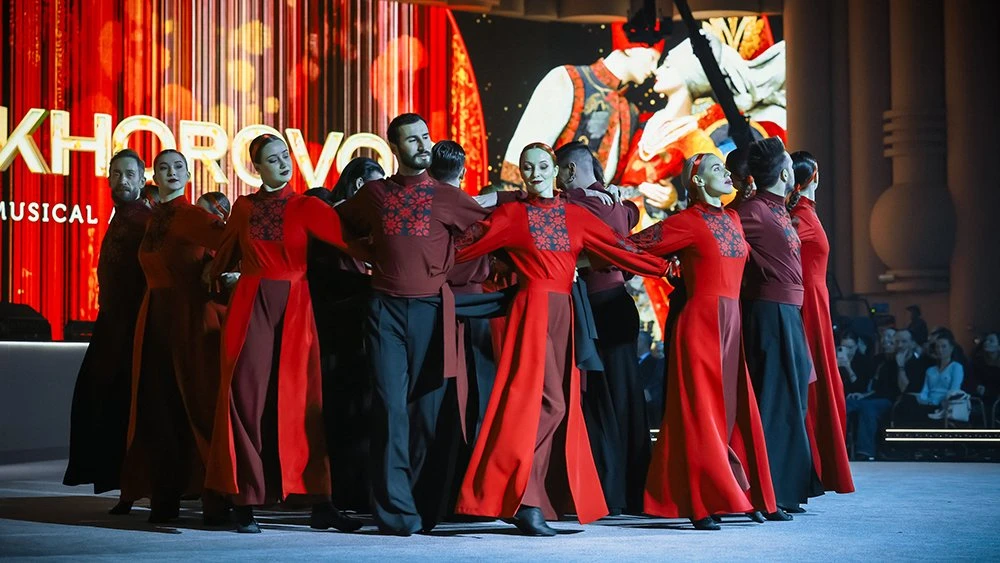
As part of the "Dances of the Peoples of Russia"
section dedicated to the South, the Alan State Academic Ensemble performed a dagger
dance — one of the most complex and spectacular numbers, requiring the highest
technique and virtuoso execution.
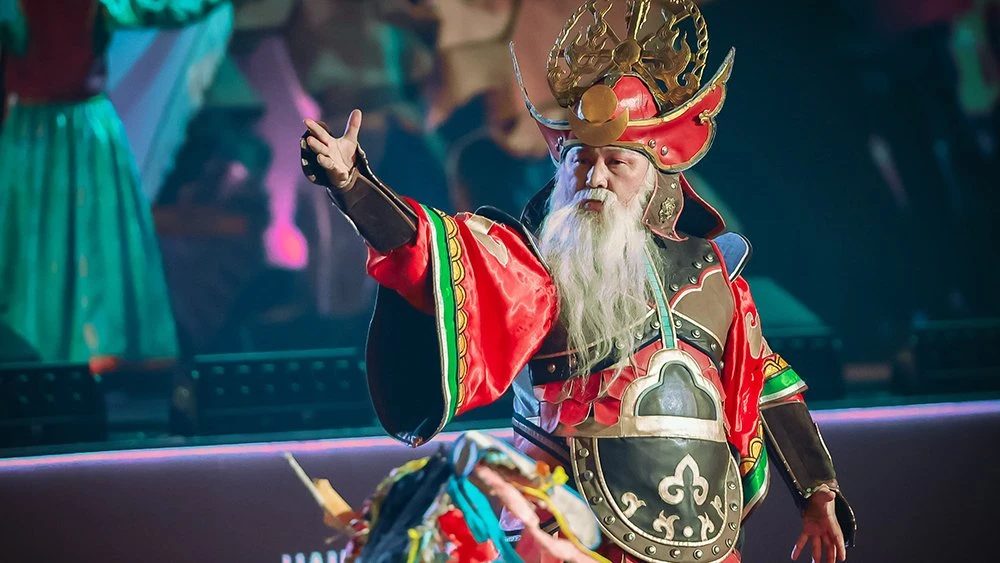
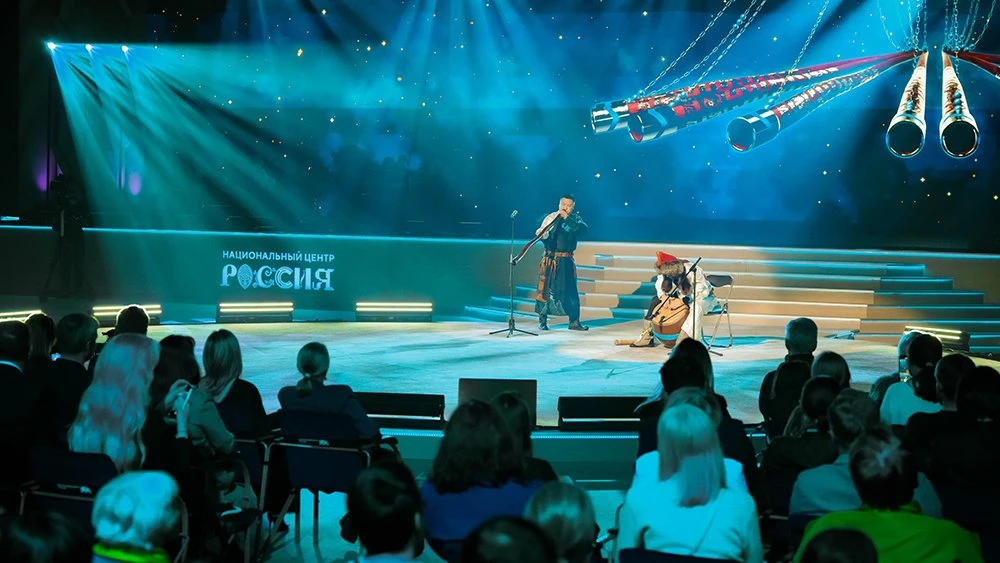
In the "Nature of Russia" block, the audience was
presented with a number created by the National Centre RUSSIA specifically for
this project. It combined the modern choreography of international competition
laureate and guest soloist of the Bolshoi Theatre, Ildar Gainutdinov, with the
unique sound of the khomus (vargan) performed by the world-famous
ethno-musician, khomus virtuoso, master of throat singing, and bearer of the
culture of the northern peoples of Russia, Olena UUTAi. The key metaphor of the
evening — "I dance the music" — was embodied on stage: movement and
sound intertwined, conveying the unifying energy of nature. In this artistic
dialogue, dance personifies the human being, while singing represents the voice
of nature and music itself.
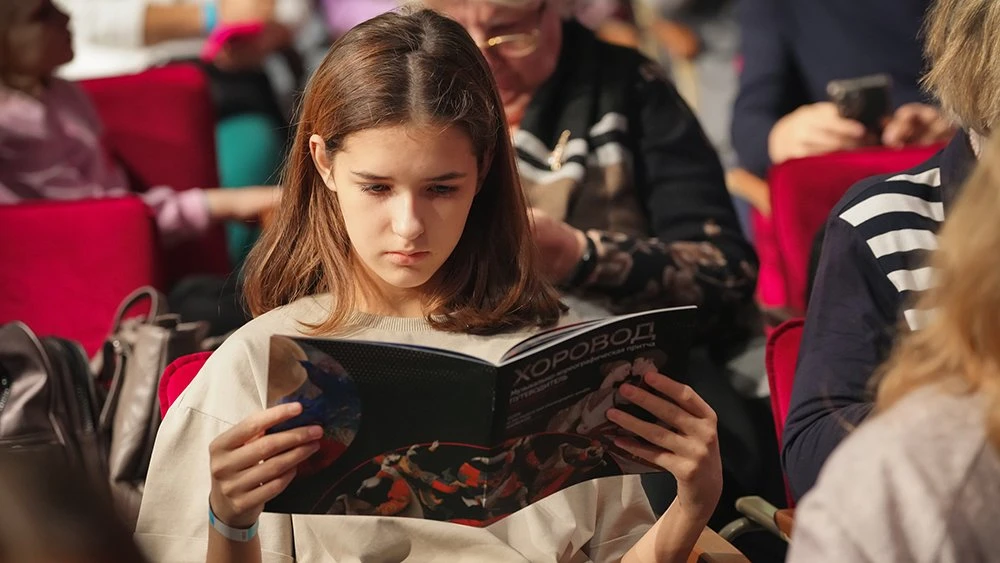
"The leading role in this number belongs to the music.
When I first heard it, I got goosebumps — it was true magic. At that time, I
was on tour and had already received the finished musical version of the piece.
I wanted to get home as soon as possible, lock myself in the studio, and start
creating something unique. In the process of working, there was a desire to
find new forms and elements, to connect as much as possible with the musical
composition — so that we became a single whole and the number turned out unlike
anything I had done before. As a result, acrobatics, ballet, and elements of
contemporary dance merged in it," noted Ildar Gainutdinov.
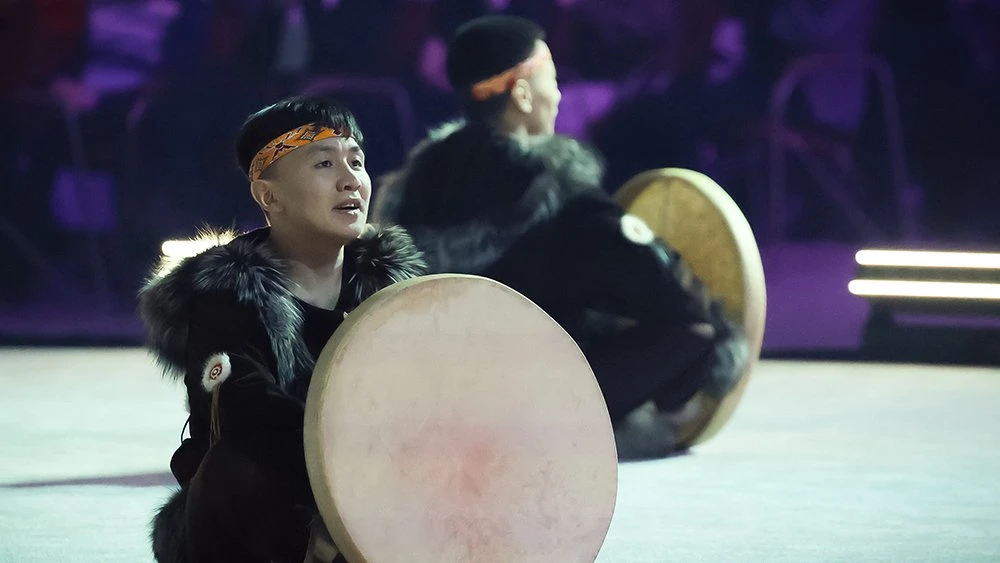
The culmination of the programme was the original
"Pereplyas" — a dynamic final number in which all participants joined
together. In a whirlwind of movement, the artists exchanged rhythms, styles,
and cultural codes, creating a unified space of interaction. During the
parable, the dancers drew the audience into a shared round dance, erasing the
boundary between the stage and the hall.
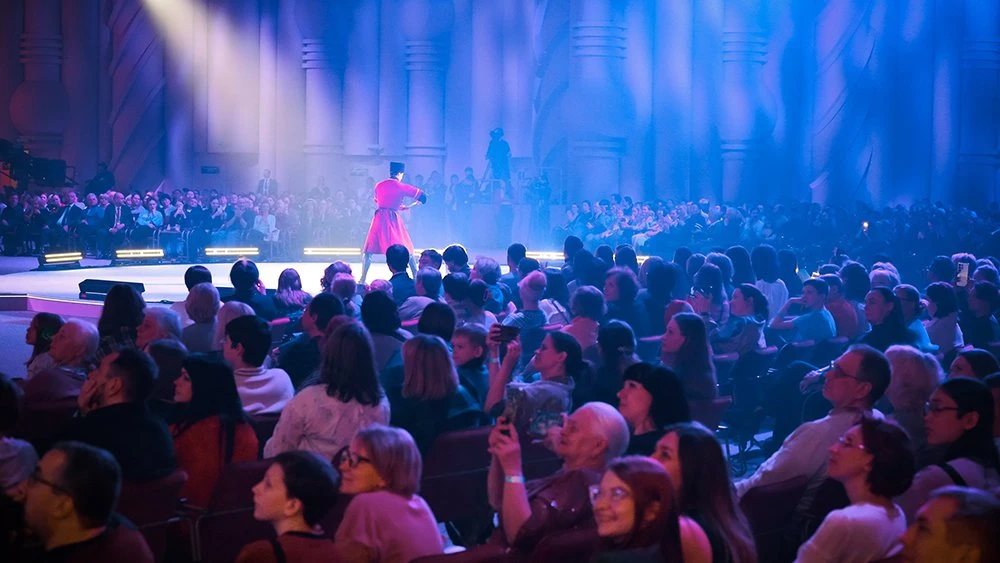
The performance concluded with the rendition of the
composition "Nash Narod Khorovod" (Our People are a Round Dance),
which became part of a social media campaign where participants from across the
country shared their round dance videos, supporting the idea of unity through
movement.
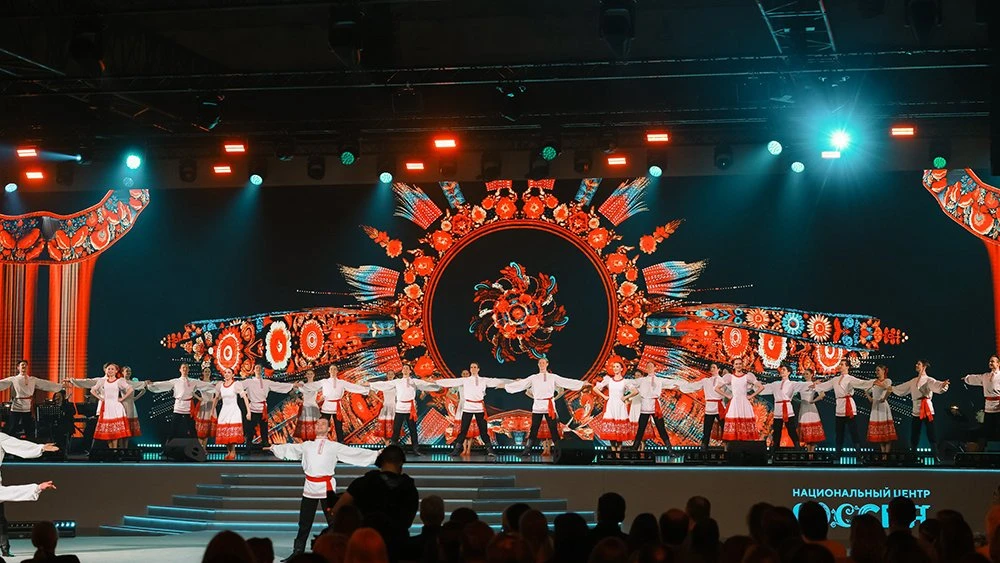
The leading creative groups and ensembles from various regions of the country took part in the musical and choreographic parable "Khorovod": Ergyron (Chukotka), Kantele (Karelia), Alan (North Ossetia), Baikal (Buryatia), Donbass, Gzhel, as well as the School-Studio of the Igor Moiseyev State Academic Ensemble of Popular Dance. Both recognised masters of folk choreography and young performers working at the intersection of tradition and modernity met on stage. Their performances demonstrated the richness of movement and the unique characteristics of the cultures of Russia's peoples.
The project is being implemented with the support of the Presidential Foundation for Cultural Initiatives.
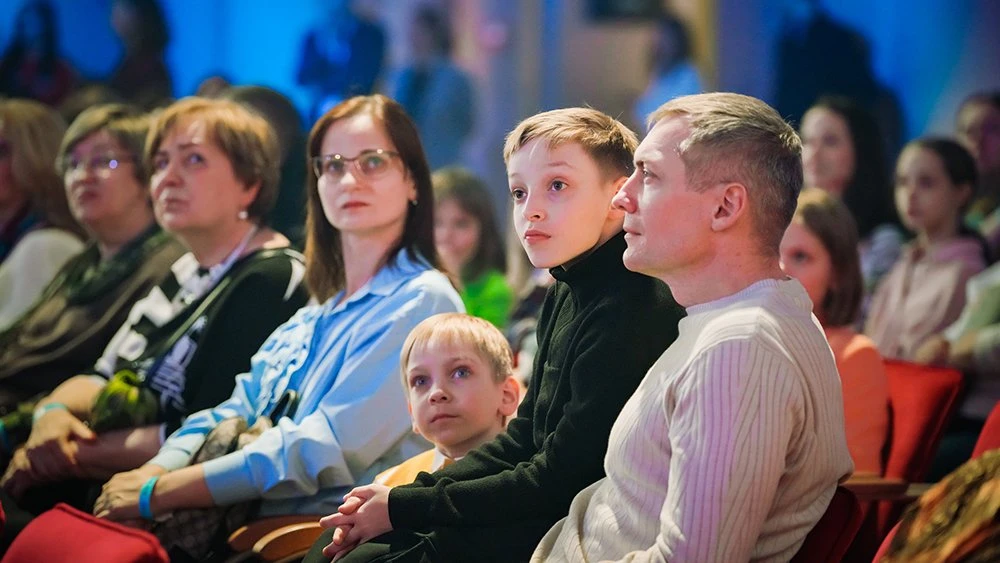
A recording of the musical and choreographic parable
"Khorovod" can be viewed on the National Centre RUSSIA website and
social media, as well as on 10 May on the Kultura TV channel.
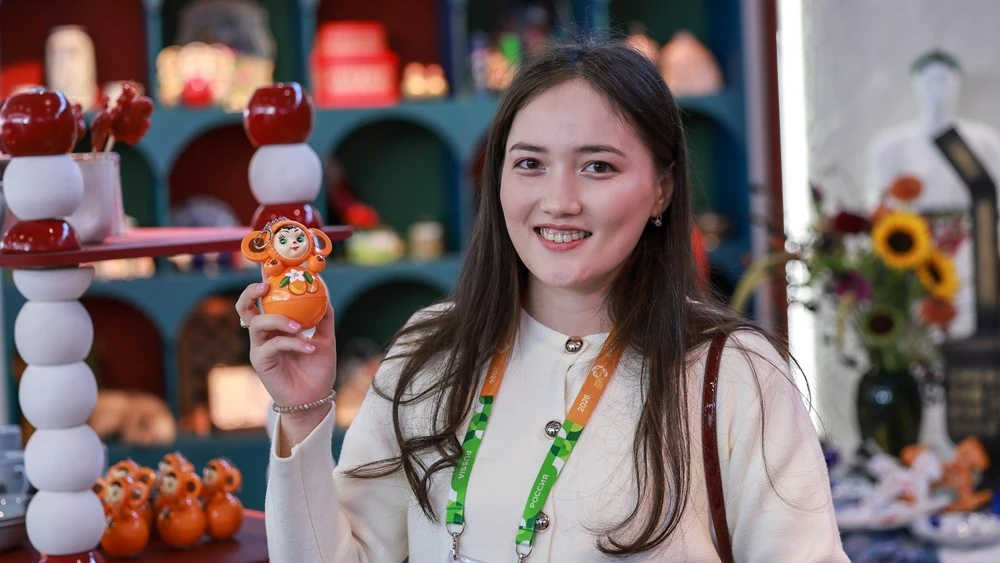
A special series of nevalyashkas (roly-poly toys) in the form of Cheburashka was created specially for the International Festival of Youth — 2026 in Yekaterinburg.
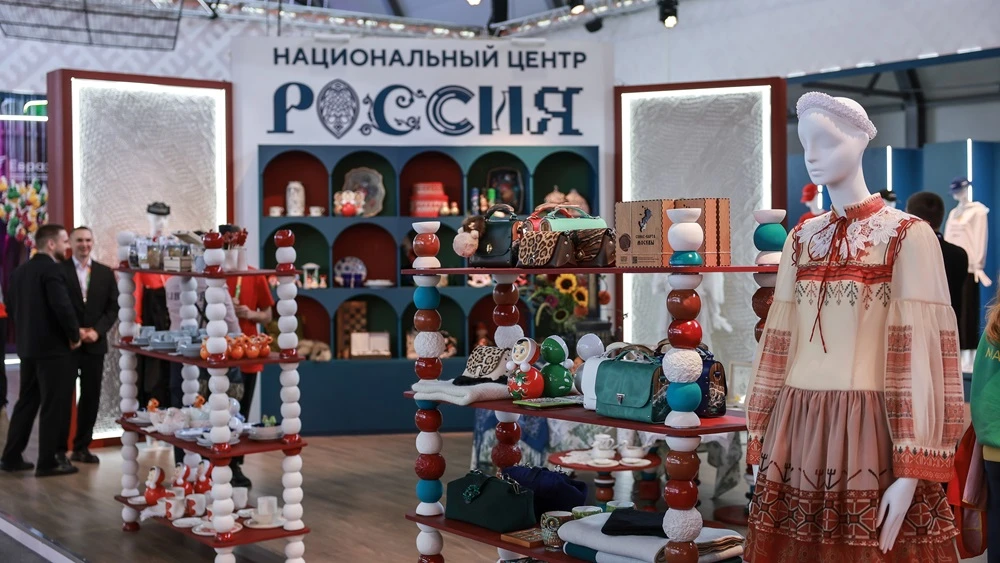
Guests are already discovering Russian brands, trying their hand at making items themselves and becoming part of the large-scale "Nevalyashki" installation.
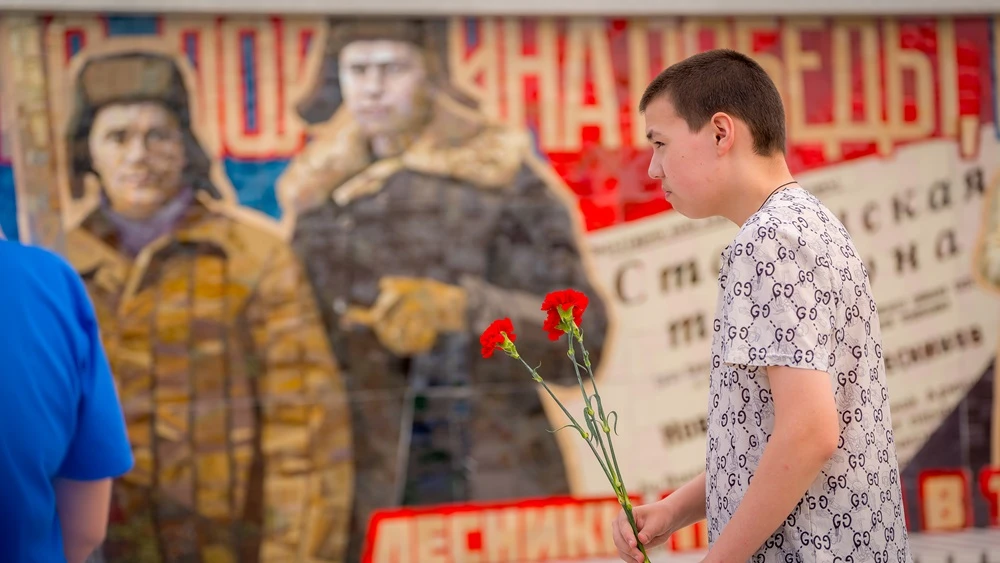
The National Centre RUSSIA in Yugra joined the historical re-enactment festival "City of Labour Valour: Living History".


