Stanislav Drobyshevsky on the mysteries of evolution and the future of humanity – in the new episode of the "Russia Speaks" podcast
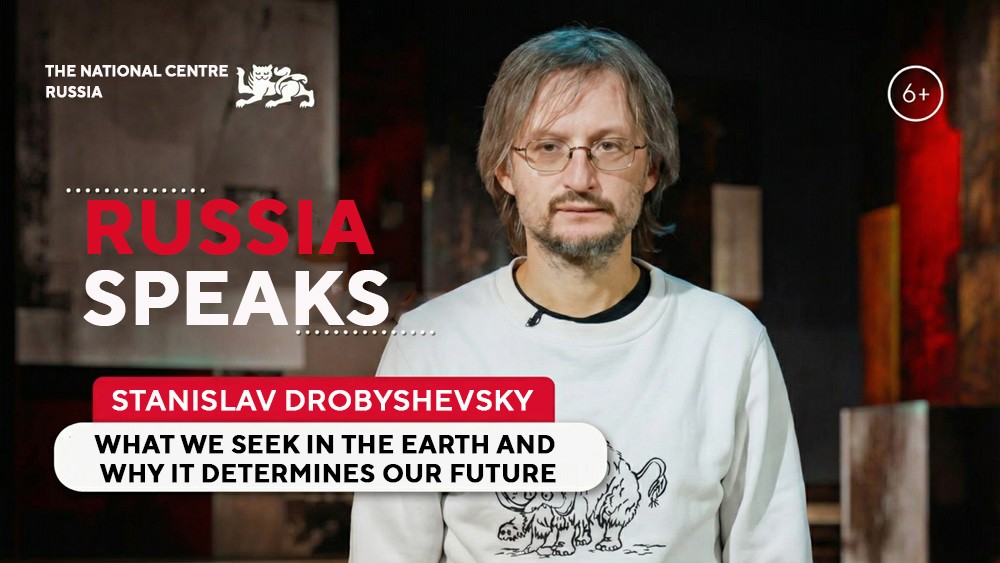
A new episode of the original podcast "Russia Speaks" by the National Centre RUSSIA is dedicated to remarkable discoveries in anthropology and reflections on the future of human civilisation. The guest of the episode was Stanislav Drobyshevsky, anthropologist, Candidate of Biological Sciences, Associate Professor at Lomonosov Moscow State University, and leader of the public science popularisation movement "Drobyshevsky’s Projects".
The conversation begins with an account of the village of Khotylevo in the Bryansk region – a unique archaeological site where traces of different eras have been preserved within a small area, from Neanderthals to medieval explorers. The scholar shares details of a rare discovery – a bone with a geometric ornament created by a Neanderthal around 80,000 years ago. According to him, it challenges the established view of Neanderthals as primitive beings and prompts reflection on the nature of creativity in ancient times.
During the discussion, Stanislav Drobyshevsky compares the lifestyles of Neanderthals and Cro-Magnons – our direct ancestors. He also explained why Cro-Magnons prevailed in the evolutionary struggle: the key factor was their ability to communicate and establish long-distance connections.
In the new, 14th episode of the podcast "Russia Speaks", the anthropologist also addressed the evolutionary roots of modern concepts of beauty and partner selection strategies, the prospects of genetic engineering as a means of adapting humanity to a rapidly changing environment, and shared reflections on the potential "heirs" of humanity and the choice facing contemporary society: to retreat into technological superiority or to build an open, creative civilisation.
The new episode of the podcast "Russia Speaks" featuring Stanislav Drobyshevsky is available to watch on the website russia.ru.