


Machine tool industry as the foundation of industrial development: new technologies and engineering talent discussed at the National Centre RUSSIA
Modern
industry is impossible without the machine tool construction — a sector that
provides the technological foundation for the development of virtually every
area of manufacturing. The importance of the industry, the training of
engineers and the development of next-generation equipment were discussed at
the National Centre RUSSIA during the "Motherland Is People" meeting
dedicated to technological sovereignty.
"This
year, we began the practical implementation of the national project 'Space',
which covers the internet, satellite communications and navigation, Earth
remote sensing and meteorological services. These solutions are in demand
across the entire economy and give citizens equal access to education,
employment, medical, government and financial services regardless of where they
live. The areas I have outlined are based on a common technological framework.
It is formed by the machine tool industry, robotics, microelectronics, new
materials and products of the chemical industry. The maturity of these sectors
determines the limits of what the manufacturing industry can achieve, as well
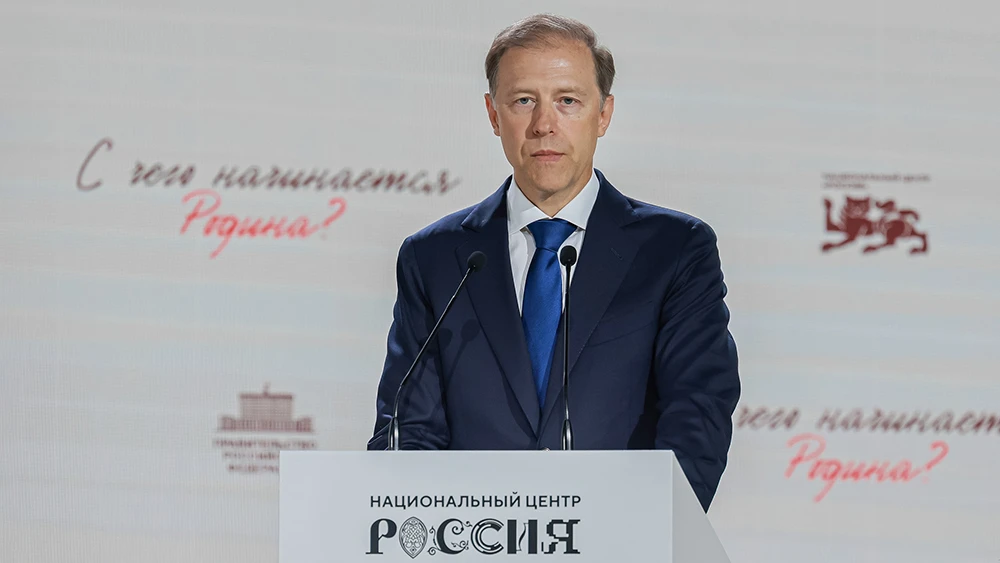
as the quality and competitiveness of Russian goods," said the First
Deputy Prime Minister of the Russian Federation, Denis Manturov.
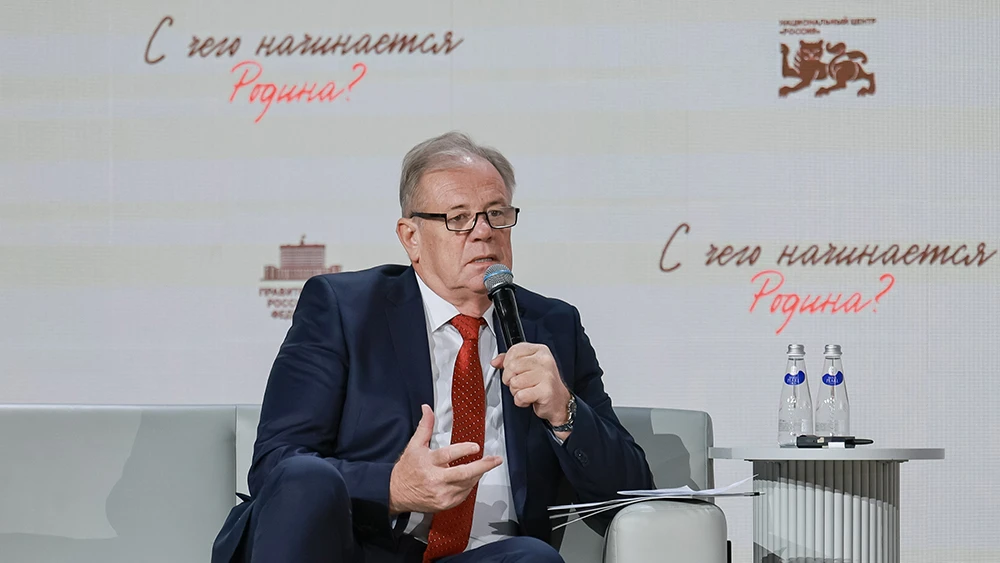
Yury Koval,
Director of the Lead Competence Centre for the Machine Tool and Tooling
Industry at STANKIN Moscow State University of Technology, emphasised that the
machine tool industry is a key area of industry: "This is the sector
without which success is impossible in any area of industry. The achievements
of the machine tool industry affect the development of industry as a whole in one
way or another."

The Lead
Competence Centre was established by decision of the Government of the Russian
Federation and operates at STANKIN Moscow State University of Technology, one
of the country's leading universities for training engineers for the machine
tool and tooling industry. Today, the Centre employs around 60 highly qualified
designers and analysts who identify areas for the industry's development, study
promising technologies and propose them for implementation. In 2027, the
Centre's production facilities will cover 19,000 square metres and will be
equipped with modern machinery.
"This
will allow us not only to design the best machine tools, but also to develop
metal-cutting equipment that is not currently manufactured in the Russian
Federation. Most importantly, our pilot production facilities will enable us to
build prototypes, test them and then transfer them to our industrial partners
for serial production," Yury Koval said.
The speaker
devoted particular attention to the training of engineering personnel.
According to Yury Koval, creating modern production facilities is directly
linked to the ability to attract and train specialists capable of working with
new technologies. At the same time, young people's attitudes towards
engineering professions are gradually changing.
"Many
people remember a time when the engineering profession was, shall we say, not
particularly sought after in society. Young people were more likely to choose
careers in management, economics and law. Today, the situation has changed. The
country needs engineers. Competition for places on engineering programmes has
increased in recent years. Engineering really is a prestigious
profession," the speaker emphasised.
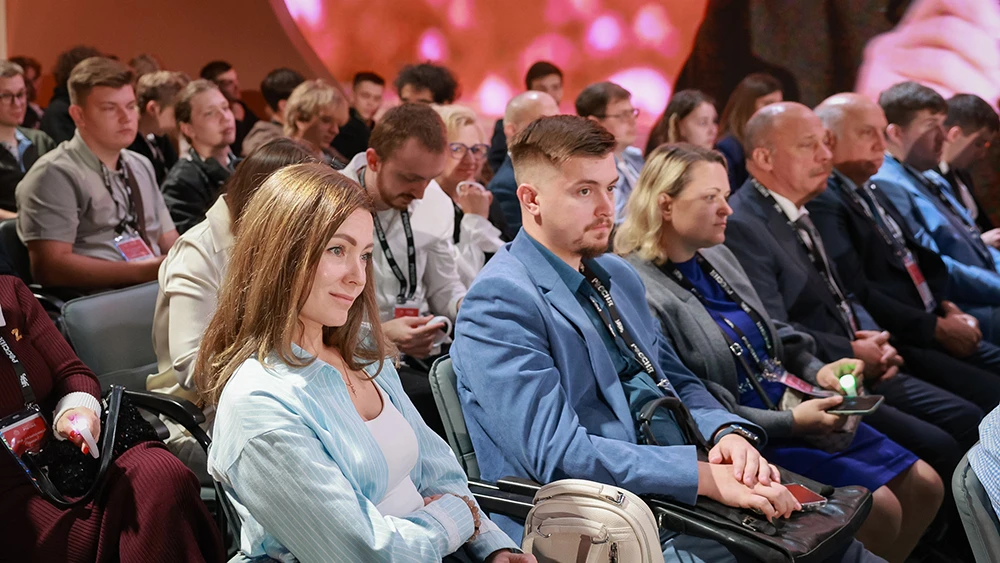
One of the
ways of attracting young specialists to the industry is to introduce them to
modern manufacturing. The Lead Competence Centre has a youth design bureau
where students from STANKIN Moscow State University of Technology and other
technical universities in Moscow work. Each young specialist is assigned an
experienced mentor, allowing practical knowledge and experience to be passed on
directly in the course of their work.
"You
can design the most sophisticated machine tool or the most advanced technology,
but without people, it is all just a pile of metal," Yury Koval
emphasised.
He also
noted that the modern machine tool industry is very different from the
conventional image of industrial production. Today, a machine tool is a
high-tech system, and its control panel is comparable in complexity and
technological sophistication to modern aircraft control systems.
An
important step in the development of engineering education will be the new
campus of STANKIN Moscow State University of Technology. A decision to allocate
funding for its construction has already been made. By 2030, the university is
expected to have a new look, modern infrastructure and completely updated
facilities.
The
"Motherland Is People" meeting on "Technological
Sovereignty" was held as part of the All-Russian project "What Does
the Motherland Begin With?" at the National Centre RUSSIA. The thematic
meeting brings together representatives of the Government of the Russian
Federation, federal executive authorities and regions, as well as heads of
enterprises and opinion leaders.
Event photobank
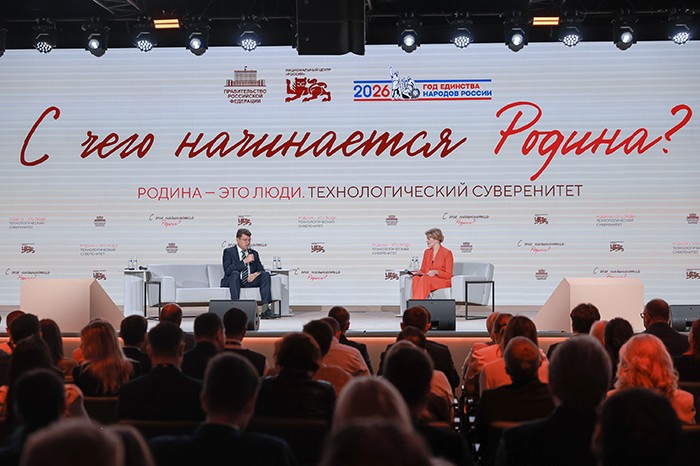

The event "Motherland Is People. Technological Sovereignty", was held at the National Centre RUSSIA.

The first issue of the National Centre RUSSIA magazine, "The Lion" ("Lev"), is now available to readers: it can be purchased at the Department Store RUSSIA or downloaded in digital format.

The first expedition of the International Volunteer Arctic Corps has concluded in Yugra.


