

Tolstoy is our Homer: legacy of the great writer discussed at the National Centre RUSSIA Literary Club
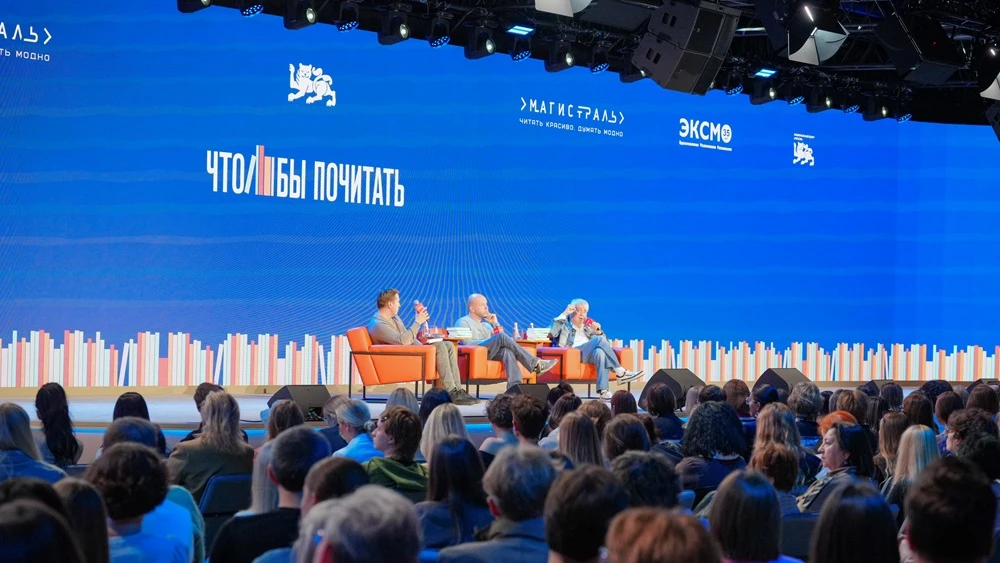
To see the world as a whole, to feel the movement of history through the destinies of many people and to create an epic that continues to shape national identity — this, according to Yevgeny Zharinov, Doctor of Philology and Professor at Moscow Pedagogical State University, is what defines the scale of Leo Tolstoy's artistic world. The classic author's role in Russian and world culture was discussed on 15 September at a meeting of the National Centre RUSSIA Literary Club "What to Read?!".
The meeting "Leo Tolstoy and the Crisis of Modern Man" was timed to coincide with the writer's birthday. Yevgeny Zharinov was joined by philologist, cultural scholar and writer Nikolai Zharinov and philosopher, Candidate of Philosophical Sciences and Associate Professor at Moscow State University Stanislav Zharinov to discuss the life and work of the author of "War and Peace".
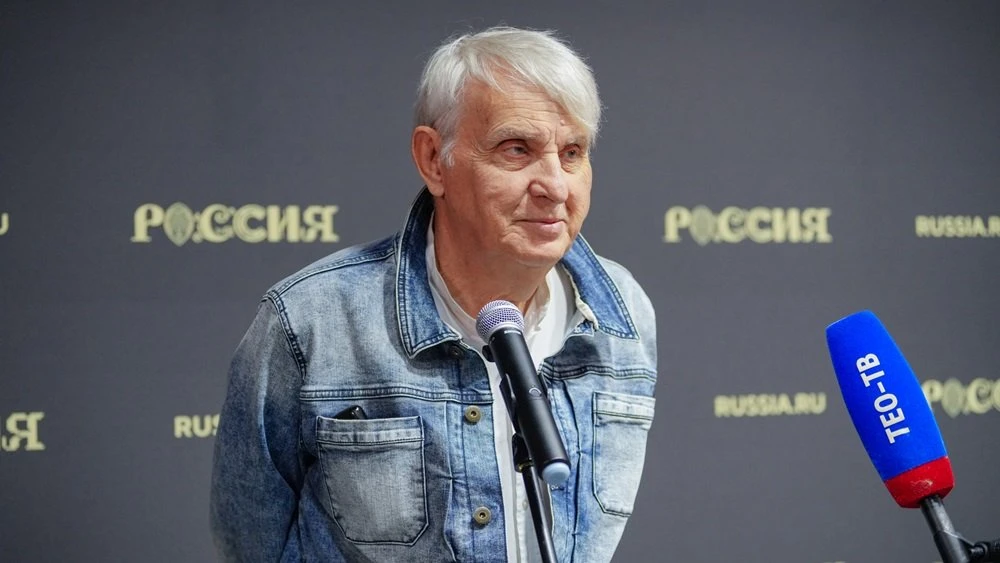
"Tolstoy is an epic writer. His contribution to world and Russian literature is the epic novel, the epic. He has an extraordinary epic sweep. One of the highest criteria for a writer is the ability to see the world as if from space, to see it as a whole. It is no coincidence that Homer, who established the epic tradition, is regarded as a key figure not only in Western European but also in world literature. In this sense, Tolstoy is our Homer. His 'War and Peace' is part of Russia's cultural code," Yevgeny Zharinov emphasised.
The expert noted that Tolstoy's tradition continued in 20th-century Russian literature. According to him, the writer's large-scale epic thinking was reflected in works such as Vasily Grossman's "Life and Fate", Konstantin Simonov's "The Living and the Dead" and Mikhail Sholokhov's "And Quiet Flows the Don".
Yevgeny Zharinov also drew attention to the philosophical foundations of "War and Peace". He recalled that Tolstoy, together with Afanasy Fet, turned to Arthur Schopenhauer's "The World as Will and Representation", studied Ancient Greek, read Homer in the original and engaged deeply with the biblical tradition. According to the philologist, all these sources helped the writer create a unique vision of the world.
A special place in the novel is occupied by the idea of the "swarm principle" — the notion that each person's private life is connected with the broader movement of history. Even when people are focused on their own concerns, they remain participants in a larger historical process. It is precisely this perspective that allows Tolstoy to portray the life of the country in all its diversity.
The meeting was held as part of the National Centre RUSSIA Literary Club "What to Read?!". The club brings together experts and readers for discussions about literary legacy, reading culture and ideas that continue to influence individuals and society across generations.