

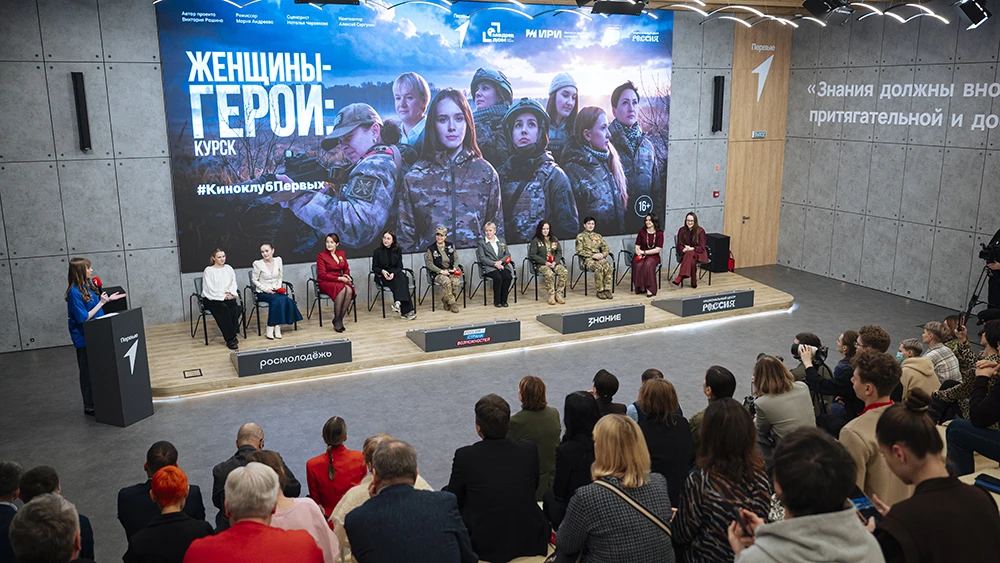
Documentary "Women Heroes: Kursk" premieres at the Film Club of the First
The
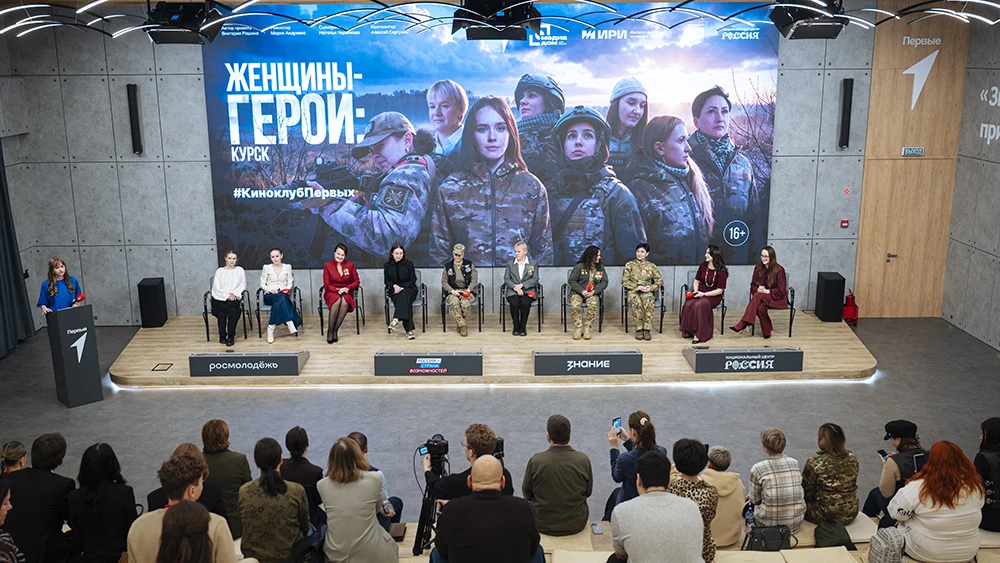
documentary "Women Heroes: Kursk" premiered on 26 November at the
Media House of the First ("Space of Opportunities") at the National
Centre RUSSIA. Based on the true stories of women from the Kursk Region, the
film tells of the heroism of Russian women who showed their finest human
qualities during their time in the special military operation. The
screening was held as part of the Film Club of the First with the support of
the Movement of the First and the Internet Development Institute. In March
2026, the project was presented to the President of Russia, Vladimir Putin,
during a meeting with women at the Kremlin.
"Today, women serve shoulder to shoulder with men in
the special military operation zone, carrying out extremely difficult tasks and
showing loyalty to their Motherland, bravery and courage. Ahead of Mother's
Day, we screened a film at the Media House of the First that captures the full
extent of the heroism of women, many of them very young, who selflessly helped
their loved ones and tended to the wounded in the most difficult conditions,
making an invaluable contribution to preserving and developing our country.
Many of the women whose stories inspired the film are also devoted wives and
mothers of large families who uphold centuries-old values. I thank the women
featured in the film for being willing to talk with us — you are a source of
strength for the younger generation and an example to follow," said the Hero
of Russia, graduate of the "Time of Heroes" presidential personnel
programme and Chair of the Board of the Movement of the First, Artur Orlov.
The project's creator and director, Viktoria Rashina, a
winner of the "Leaders of Russia. Politics" contest, a volunteer and
a lawyer, said that when she first came to Kursk in August 2024 to help friends
and saw how remarkably the people of Kursk had come together, she wanted to
document these examples of selflessness, resilience and service to their
country and its people. At temporary accommodation centres, in hospitals, along
the front line and at headquarters, she met remarkable women who stood by
Russian soldiers and became their comrades during those difficult days. These
are the women featured in "Women Heroes: Kursk".
"It's important to tell the stories of real Russian
heroes — they set a good example for young people. Many people looked up to
Hollywood characters when they were young, and today we need role models from
our own country — people know little about them, and films help fill that gap.
Cinema can teach us something: when viewers see what a hero does, they
understand that they can and should act the same way," said Viktoria
Rashina.
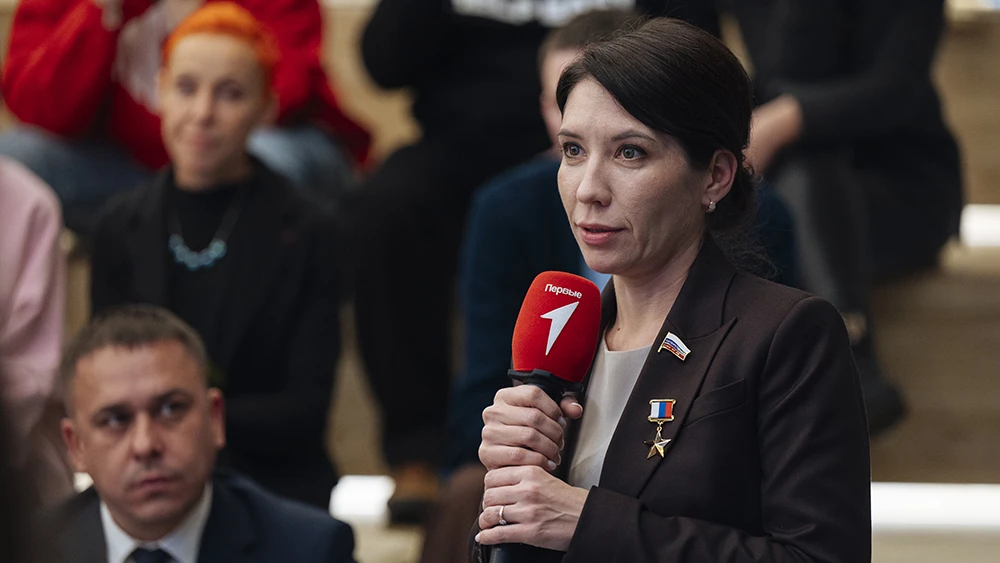
The film's director, Maria Andreyeva, noted: "Our film
is about heroic women, and their portraits help us capture and feel the spirit
of the times while showing different personalities and archetypes of women's
strength. The sense of solidarity came through especially clearly in these
stories, as young women came to Kursk from different regions to help people
they had never met. I wanted to go beyond simply documenting what happened and
recording interviews, to get to know these women deeply, understand what moved
them and tell their stories through film."
The Hero of Russia, Lyudmila Bolilaya, attended the
premiere. After watching the film, she expressed her support for the women
featured in it and for its creators, having been through a difficult experience
herself. On 31 January 2025, Lyudmila Bolilaya was on duty as a nurse at a
command post. When the Ukrainian Armed Forces launched a surprise attack and
wounded her fellow service members, she rushed to help and pulled several of
them out from under fire. During the second attack, she shielded a wounded
soldier with her body and took most of the shrapnel herself. Her selfless
actions saved the lives of Russian service members, and she was taken to a
field hospital in a serious condition.
"Thank you to Maria and Viktoria and to all the women
in the film for showing life as it really is. This is no fiction — these brave
young women are defending their Motherland today, yet at heart they're still
the same girls, and they'll return to civilian life after the special military
operation. Thank you for your courage, for the lives you've saved and for
sharing your stories. We stand with you and are ready to support all your
efforts — everything you do makes a difference," emphasised Lyudmila
Bolilaya.
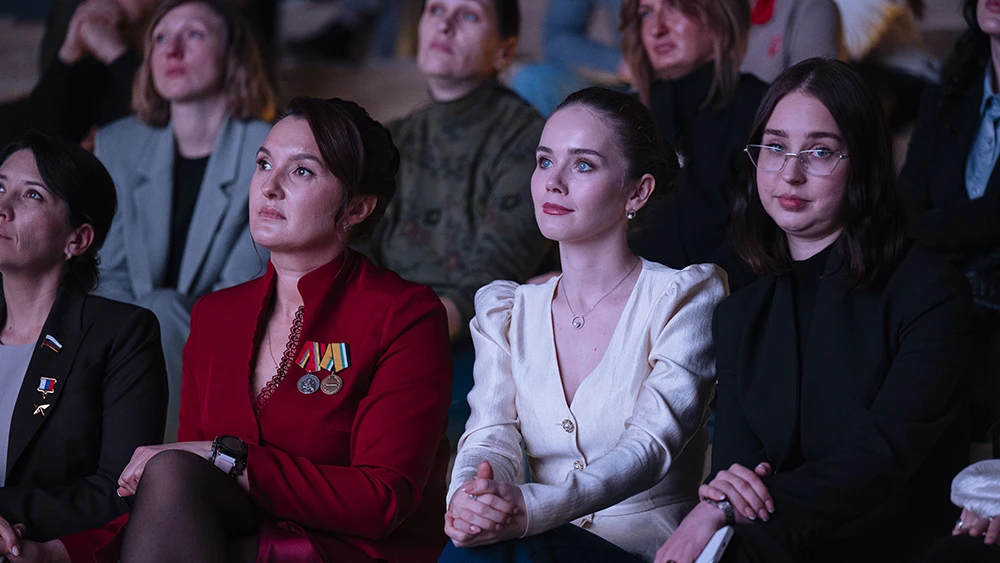
The film features women who showed courage and selflessness
in difficult circumstances.
Margarita Kiseleva, president of the "Night
Valkyries" motorcycle club, has volunteered with the
"Pyatnashka" International Brigade since autumn 2022. She brings
together women motorcyclists from Russia and other countries and inspires them
to support those on the front line.
Maria Skrob, who heads the "Help for the Border
Region" charitable foundation, helped save 655 civilians in the Kursk
border area and was awarded the "For Faith and Service to the
Fatherland" medal by the Russian Ministry of Defence and the
"Defender of the Kursk Region" medal by the Governor of the Kursk
Region.
Yelena Kasimova, whose call sign is "Lynx", leads
an evacuation team and serves as a military medic: she remains the only
healthcare worker in several border communities, caring for both service
members and local residents. Yelena Kasimova is the wife and mother of men who
took part in the special military operation, and her younger son was killed on
the front line.
Yekaterina Nelepina, head of the #WEARETOGETHER regional
headquarters in the Kursk Region and an associate professor at Kursk State
University, won the "One for All" category at the district stage of
the "Pride of the Nation 2025" award for a project supporting border
residents and service members.
Alexandra Aidynbekova, known by the call sign
"Yaga", has helped Donbass since 2014 and spent almost all her time
on the front line from 2022 onwards: she completed military training, delivered
supplies to soldiers, took part in the assault on Artyomovsk, suffered a wound
and two concussions, and worked in some of the most difficult areas, including
near Sudzha and in Bolshesoldatskoye. In civilian life, Alexandra Aidynbekova
is a mother of several children.
Yelizaveta Pivorovich, a 21-year-old combat veteran, signed
a contract with the "ArBat" Special Purpose Battalion after the
events in Kursk and now takes part in combat missions as a war correspondent,
documenting what happens.
Anastasia Novikova, a medical volunteer from Moscow, helped
soldiers and doctors at front-line medical stabilisation posts in the Kursk
border area from the first days of the incursion: for her, the work is a
personal way of giving thanks for having once had her life saved, and the
events in Kursk were also a turning point in her own life, as that was where
she found love.
Yelena Sokolova, a war correspondent with the
"Pyatnashka" International Brigade, is also featured in the film. In
her work, she reports on key events in the special military operation. She
joined the Donbass militia at the age of 18. During the events in Kursk, she
documented war crimes committed by the Ukrainian Armed Forces in the border
area, particularly in Sudzha. Yelena Sokolova now teaches at the Military
University named after Prince Alexander Nevsky and works at Rospatriotcentre.
"There are women on the front line carrying out
specific duties, but they're the exception to the rule, and I hope it stays
that way. Acts of heroism also happen away from the front line, when people in
border areas and behind the lines get on with their jobs every day despite the
hardships, going to work and keeping their towns and the country running. War
correspondents are rare and especially valuable specialists: they face the same
risks as soldiers because there are effectively no areas behind the lines any
more. For a war correspondent, professional ethics are an absolute obligation:
every word matters, and every promise must be kept," noted Yelena
Sokolova.
Kirill Medvedev, a member of the Yunarmiya (Young Army), a
representative of its Main Headquarters and a pupil at the Economics Lyceum of
Plekhanov Russian University of Economics, shared his impressions of the film:
"I liked the atmosphere of the film and the way it told the women's
stories. I think films like this foster patriotism and show that real heroes
are ordinary, kind, decent people. Watching it made me want to help even more.
I plan to send humanitarian aid to the front line: I'll write a card, send some
tinned food and do what I can to support our soldiers that way."
The Film Club of the First shows audiences a different side
of cinema: they learn how the story came about, what the filmmakers set out to
achieve and what stayed off screen. The screening becomes a chance to immerse
themselves in the filmmaking process, better understand what the filmmakers
intended and see the film in a new light.