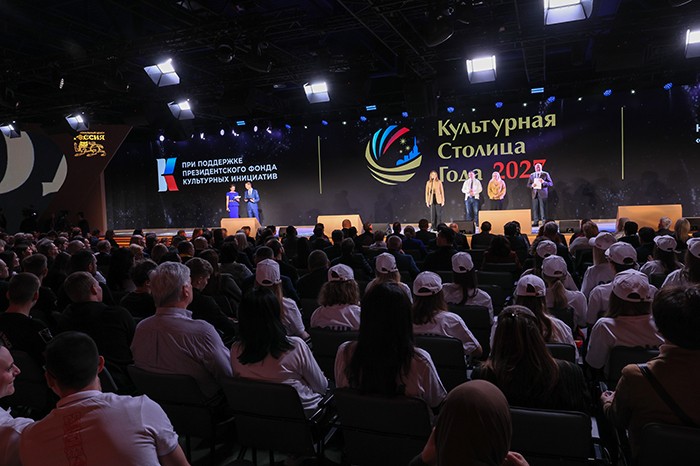
The ceremony to award the title "Cultural Capital 2027" has begun at the National Centre RUSSIA
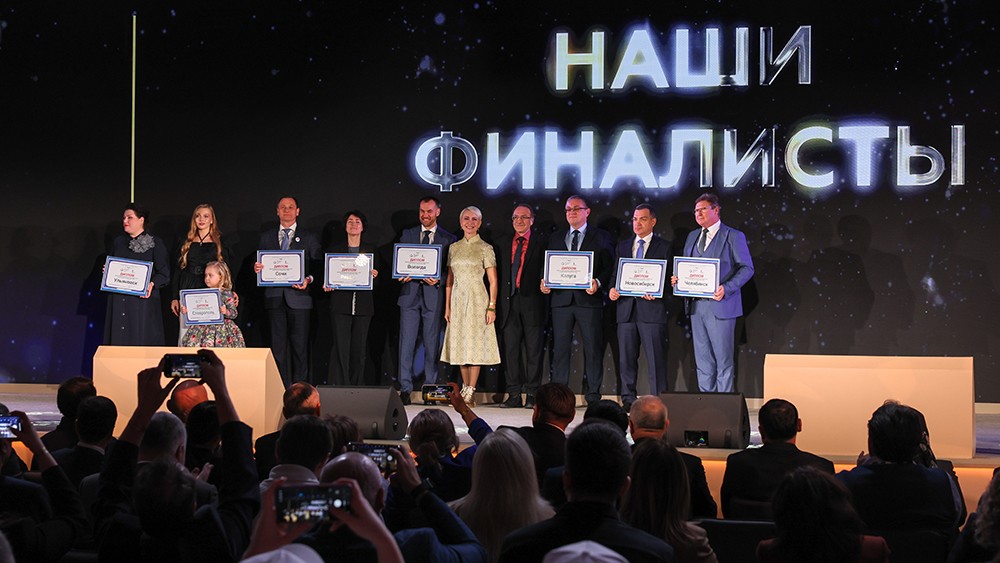
A ceremonial event to award the title "Cultural Capital 2027" has
opened at the National Centre RUSSIA. This is an honorary status that is
awarded each year to one city of the Russian Federation following the results
of a contest selection. The project is aimed at supporting the cultural
development of regions, showcasing their unique identity, and demonstrating
their tourism and economic potential. Eight finalist cities are competing for
the title. Project presentations will be delivered by the finalist cities:
Novosibirsk, Vologda, Kaluga, Ryazan, Sochi, Stavropol, Ulyanovsk, and
Chelyabinsk. The event is held with the support of the Presidential Foundation
for Cultural Initiatives.
The contest
participants were welcomed by the First Deputy Chief of Staff of the
Presidential Executive Office of the Russian Federation, Sergei Kiriyenko.
"The
'Cultural Capital of the Year ' contest has been held since 2023 with the
support of the Presidential Foundation for Cultural Initiatives and is one of
the major nationwide projects that makes it possible to demonstrate how unique
Russia is and how great the potential of our regions is. Thanks to the creative
potential, hard work, and enthusiasm of the residents of the participating
cities, a new future for the regions is being shaped. Territories are becoming
more attractive places to live and centres of attraction for tourists,
investors, and young professionals. The first winner of the contest, the holder
of the title 'Cultural Capital 2024', Nizhny Novgorod, set a high standard for
organising large-scale project events. Impressive results were demonstrated by
Grozny — 'Cultural Capital 2025', and there are high expectations for the
upcoming year 2026 from the city of Omsk — 'Cultural Capital 2026'. Today, the
members of the contest organising committee face the difficult and responsible
task of naming the city that will be awarded the honorary title 'Cultural
Capital 2027'. I wish the teams of the participating cities success and good
luck," the greeting message from Sergei Kiriyenko was read out by the
Deputy Chief of the Presidential Directorate for Social Projects, Alexander
Zhuravsky.
On behalf
of the Minister of Science and Higher Education of the Russian Federation,
Valery Falkov, a greeting address was delivered by his Deputy, Olga Petrova.
"As a
resident of Nizhny Novgorod, I remember how it all began, and I can say that
the bar set by Nizhny Novgorod and then raised even higher by Grozny is now
being taken up by Omsk. Overall, we can see how the contest is developing, how
it creates a sense of pride and helps people discover our great country
<...> All the cities participating today are already clear contenders for
victory and for helping us learn even more about our country. Our students play
a special role in this — they are a major driving force, so do not forget to
make use of this development mechanism," said Olga Petrova.
The State
Secretary and Deputy Minister of Culture of the Russian Federation, Zhanna
Alekseyeva, noted that participation in the "Cultural Capital"
contest is already a victory and an achievement for the heads of the
constituent entities of the Russian Federation, ministers of culture, cultural
workers, and all those who work for the development of the regions.
A greeting
address was also delivered by the Chairman of the organising committee of the
"Cultural Capital of the Year" contest, State Duma Deputy and Doctor
of Economics Nikolai Novichkov: "In fact, the main winners are all of us.
The main winner is Russia, our great people, because wherever we look, in every
corner of the country, there is a city worthy of the title of cultural capital of
Russia. There are more than a thousand cities in our country, which means we
have at least another thousand years of work ahead of us so that each city can
become the cultural capital of Russia at least once."
"Cultural
Capital" is an honorary status that is awarded annually to one city of the
Russian Federation following the results of a contest selection. The project is
aimed at supporting the cultural and socio-economic development of Russia’s
regions. Active teams representing administrative centres of the constituent
entities of the Russian Federation, regardless of population size, as well as
other cities and urban agglomerations with a population of 200,000 or more, may
take part in it.
To create
more equal conditions for participation, representatives of Moscow and Saint
Petersburg — cities with a historically established capital status — take part
in the project not as contestants, but as co-organisers and experts.