


The Vologda Region Days conclude at the National Centre RUSSIA

The Vologda
Region Days were held at the National Centre RUSSIA from 3 to 8 February. The
event was part of the programme of thematic regional days at the "Book of Fairy Tales" exposition. The central event of the week was the
presentation of the region's development strategy, delivered by the Governor of
the Vologda region, Georgy Filimonov.
The
region's development strategy is aimed both at creating comfortable living conditions
for the residents, and at their future. According to the governor, all of the Vologda
region’s economic achievements are directed towards solving the task of preserving
the population.
"Our
budget has a pronounced social character — last year it was 99.2 billion
roubles spent on social obligations and expenditures. At the same time, the
budget allocates 53.3 billion roubles to infrastructure development. These
figures show the scale of our work," stated Georgy Filimonov.
Over 7,800
families made use of support measures in 2025. These include a 50 percent
compensation for housing and utility costs, the creation of 26 free rental
points for newborn essentials at young parent centres, the launch of the
"Social Nanny" service, and the introduction in 2024 of the
"Transport for Large Families" programme, under which 70 large
families raising seven or more children were provided with cars.

The
governor also focused on the demographic issue. The Vologda region rose by ten
positions in the demographic ranking of Russian regions — reaching 40th place.
Mortality decreased in the Vologda region, and the number of marriages
increased. For the first time in 11 years, the region overcame depopulation and
showed the maximum growth in the total fertility rate over the past 13 years.
Today, it is in the TOP-5 regions where the total fertility rate has increased
by more than 0.044 points. According to Georgy Filimonov, the goal by 2030 is
to reach a rate of 1.62.
Another
important topic addressed in detail by the head of the region is the
development of tourism potential. He stated that today the Vologda region is
among the top three leading regions in Russia in terms of tourist numbers
during the winter holidays, surpassed only by Moscow and Saint Petersburg. The
governor added that the goal is to enter the TOP-5 Russian regions for
year-round tourism. The region’s territory hosts about 3.500 cultural heritage
sites. Among them are the Kirillo-Belozersky Monastery and the Ferapontov
Monastery with 15th-century frescoes by Dionysius, which are on the UNESCO
World Heritage List.
The
governor emphasized that, following the instruction of President of the Russian
Federation Vladimir Putin to establish a special economic zone of
tourist-recreational type in Veliky Ustyug, an application has been submitted
to the Ministry of Economic Development of Russia. Furthermore, work is
currently underway to create the infrastructure for the "Vologodskaya"
special economic zone of industrial-production type in the settlement of
Leskovo. By 2035, the volume of investments made by potential SEZ residents is
projected to reach 11.4 billion roubles, with 1,056 jobs created.

The Vologda region is also becoming a point of attraction for active recreation enthusiasts. This topic was the subject of a separate discussion within the educational intensive "Running Across the Russian North: Discovering the Vologda Region". Amateur runners became interested in races in small cities. The current Russian market consists of 110,000 active running tourists who bring with them 175,000 supporters.
"We
are actively working on creating marathon routes. Currently, thanks in part to
teams from Vologda and Gatchina, a project has been initiated aimed at uniting
half-marathons in the northwest of our country. This will help meet the demand
for trips to small towns and provide an economic effect," said Vladimir
Voloshin, founder and organiser of large-scale running events.
As part of
the thematic week, visitors to the National Centre RUSSIA participated in the
gastronomic show "The Taste of Vologda". They not only sampled dishes
but also learned how to preserve the natural flavour of ingredients. The
audience was treated to pancakes with added products from the farms in the Vologda
region. Following this, the guests were served a roll of Vologda pike-perch
with rogulka and crushed potatoes, and to conclude the programme, the chefs
presented a traditional dessert dish from the Vologda lands — dezhen made from
oat flour with cream made from baked milk.

Throughout
the week, visitors to the Department Store RUSSIA at the National Centre had a
chance to take a look at and purchase chaga-based tea beverages, and wooden
educational toys for children. Chaga tea is made from the birch fungus,
traditionally classified as a northern functional food. Guests of the Department
Store praised the drink not only for its taste and aroma but also for the
expressive look of its packaging, which can later be used as a box.
Visitors
could also view and purchase wooden toys made by Vologda artisans. Different
types of wood, natural oils, and paints are used in their production, making
the items tactilely pleasant and safe. The Vologda products demonstrate how
regional manufacturers combine craft experience, an eco-friendly approach to
materials, and growing interest in conscious consumption.
The next
region to present its thematic days at the National Centre RUSSIA will be the
Yamalo-Nenets Autonomous Area. All events at the National Centre RUSSIA are
free of charge. Some of them require registration in advance on the website
russia.ru. Please see the current schedule of events in the "Events"
section.
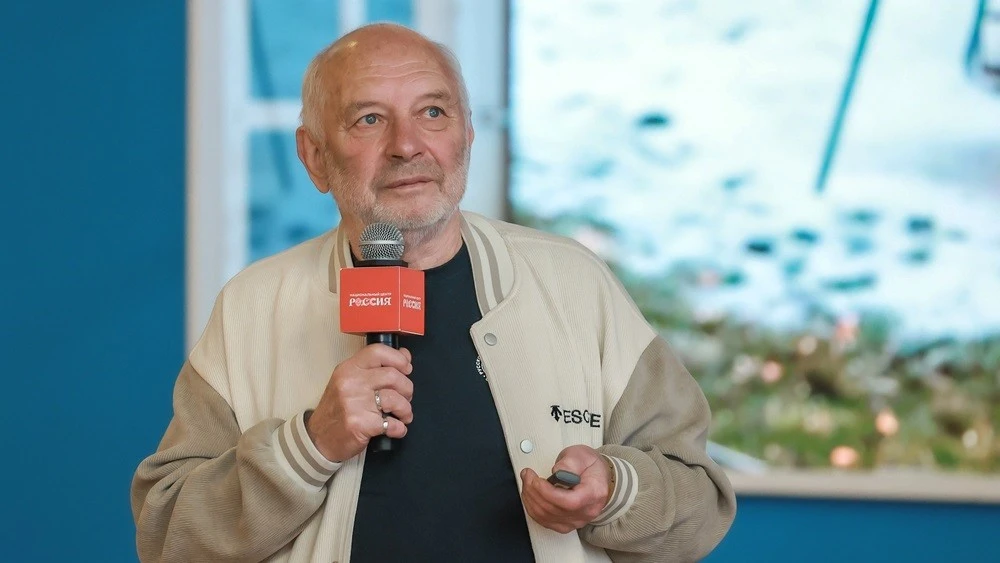
Geography is not just a school subject, but a key to understanding the world: it connects events and places, the past and the future, traditions and technologies.

The participants saw how presenters, directors and sound engineers work in real time.
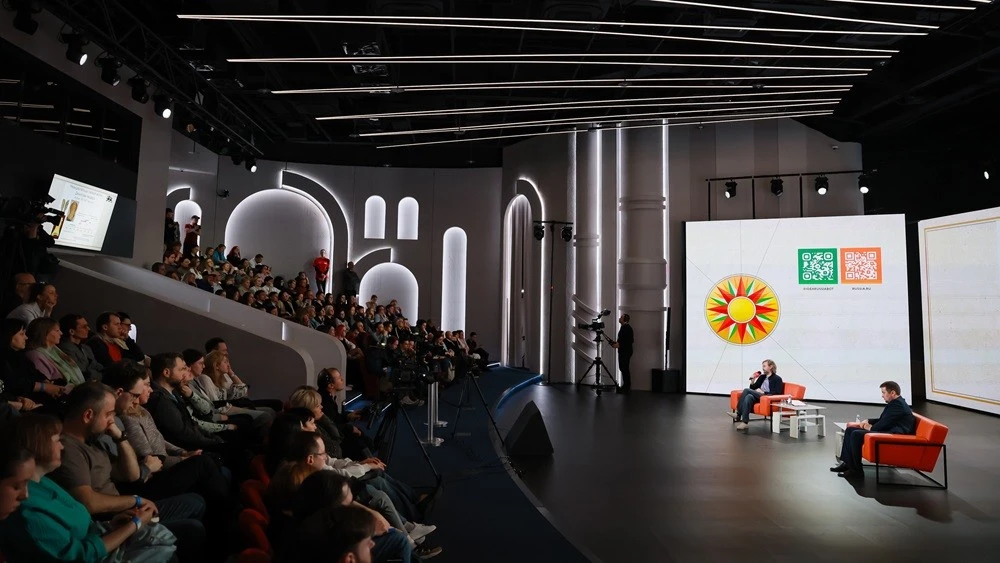
A new educational project, timed to coincide with the exposition "Geography Lessons" and titled "Conversations with Stanislav Drobyshevsky", has launched at the National Centre RUSSIA.


