


"There were no selfies in cave art": archaeologist Yelena Levanova explained whom prehistoric people depicted

Hunting magic, clans with their own "logos" and a rare camel on a cave wall. Yelena Levanova, Candidate of Historical Sciences, Head of the Centre for Palaeoart at the Institute of Archaeology of the Russian Academy of Sciences and a lecturer with the science popularisation movement "Drobyshevsky’s Projects", discussed what prehistoric art was like and why it contained so few images of people at a meeting of the "Conversations with Stanislav Drobyshevsky" series at the National Centre RUSSIA on 19 June.
The expert recalled that the best-known subjects of cave art were associated not with people but with large animals on which the lives of ancient hunters directly depended: bison, horses and mammoths.
"In fact, roughly the same set of images can be found both in Europe and in the Southern Urals. Large animals were extremely important to people during this period. Whether ritual magic or something else was involved is not easy for us to understand today, but the role of these animals in people’s lives is obvious," Yelena Levanova noted.
The researcher discussed the Kapova Cave in the Southern Urals. According to her, a truly unique scene was recently discovered there: an outline image of a two-humped camel, created in the same style as the classic Palaeolithic scenes featuring horses and bison.
"There are very few camels in Palaeolithic art. They can be found only in the Kapova Cave, the neighbouring Ignatievskaya Cave and on several small bone plaques. This magnificent two-humped camel is particularly interesting precisely because it is so rare for that period, although we know from the bones that these animals lived there," the archaeologist explained.
Yelena Levanova emphasised that many such caves were sanctuaries rather than dwellings: people came there specifically to leave drawings and signs and then departed. The same motifs may have belonged to particular families and clans, serving as distinctive symbols. Ancient artists, however, depicted people only very rarely.
"There are very few anthropomorphs, meaning images of people, from the Upper Palaeolithic. People rarely depicted themselves, and when they did, they appeared as strange, somewhat mythical creatures. Apparently, there was no need to admire oneself. Today, we take self-portraits and selfies. There were no selfies in cave art," she concluded.
"Conversations with Stanislav Drobyshevsky" is an original educational project by the National Centre RUSSIA, with Russian anthropologist Stanislav Drobyshevsky as its host. The initiative’s main goal is to introduce viewers to Russia’s unique historical and anthropological legacy and the latest discoveries in this field, as well as to broaden their knowledge of the regional characteristics of our country. The first meeting in the series, entitled "The Earliest People of Siberia", was held at the National Centre RUSSIA on 14 April.
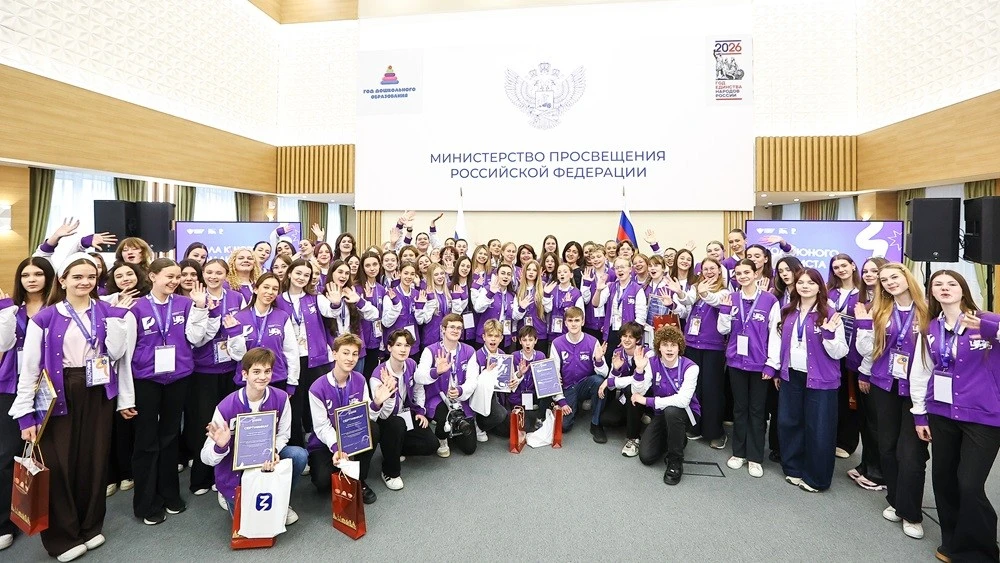
The participants spoke with representatives of the education sector, learned the secrets of their work, asked the speakers questions and wrote down every word.
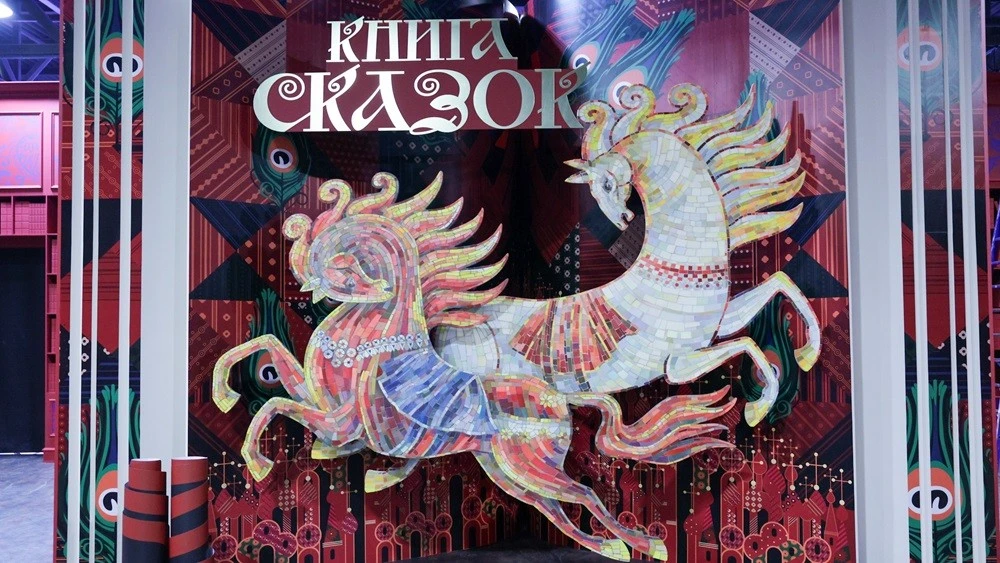
A new virtual tour has appeared among those available on the website of the National Centre RUSSIA: a tour of the "Book of Fairy Tales" exposition.

Well-known TV presenter and journalist Yekaterina Andreyeva met with participants in the Young Journalists School project at the National Centre RUSSIA.


