


As part of the "Investments in Human Capital" pitching session of the Open Dialogue, the most outstanding presentation was selected

On the second day of the Open Dialogue "The Future of the World. New Platform for Global Growth," a panel pitching session titled "Investments in Human Capital" took place at the National Centre RUSSIA, where some of the most remarkable essayists presented their ideas.
The topic "Investments in Human Capital" attracted the largest number of essays from around the world, becoming one of the most in-demand themes within the framework of the Open Dialogue. The panel pitching session on 29 April featured experts including: Lubinda Haabazoka, Director of the Business School of the University of Zambia; Emmanuel Argo (France), Chair of the Africa Mundus network operating in Asia, Africa, and the Caribbean; Michel Bauwens (Belgium), Founder of the P2P Foundation; and Oleg Makarov (Belarus), Director of the Belarusian Institute for Strategic Studies and Doctor of Law.
Participants presented essays on a wide range of topics. Ismail Sooliman Quaraysha from South Africa, a journalist from the Institute for Corporate Citizenship, spoke about the role of business in social responsibility. Maxim Luppov from Russia, a postgraduate student at Lobachevsky University, presented a paper on the role of artificial intelligence in the education systems of BRICS+ countries. Jessica Martinez Cruz from Mexico, a lecturer at the Autonomous University of Puebla, devoted her essay to the issues of African migration and the development of human capital.
Steven Alber from Estonia, an independent futurist, delivered a presentation on how cognitive capital and psychological well-being may impact the future of the economy. Yelizaveta Romanova from Russia, a student at the Russian State Social University, explored the topic of inclusion and the creation of an accessible environment. Jakob Pinneker from Germany, head of the recruitment agency "Oka," presented an essay on the relocation of qualified professionals to Russia.
The work of Yelizaveta Romanova, a student at the Russian State Social University, received the highest praise in the "Investments in Human Capital" panel pitching session.
"A barrier-free and inclusive environment is not a luxury, but a necessity. If people can learn to be a bit more tolerant and respectful, it will lead our country to greater development and, ultimately, to the full realization of human rights. A barrier-free environment ensures equal opportunities not only for people with disabilities but also for pensioners, mothers, and military personnel, providing them with more comfortable living conditions," believes Yelizaveta Romanova.
Another participant of the pitching session, Jakob Pinneker, also shared his vision of investment in people.
"The arrival of foreigners — primarily those who are highly qualified, educated, financially stable, and family-oriented — is a direct investment in the human capital of Russia. The relocation of such individuals improves the investment climate, stimulates the inflow of capital, and fosters the overall development of the economic model. It also improves the demographic situation, expands cultural and social contacts, and encourages the flow of new ideas," said Jakob Pinneker, Head of the recruitment agency "Oka."
He noted that the Nizhny Novgorod region is one of the first to actively facilitate the relocation of highly qualified foreign specialists to Russia. The expert added that the experience of the Nizhny Novgorod region should be scaled across the entire country in order to use foreign human resources for the development and prosperity of Russia.
The Open Dialogue received 696 submissions from 102 countries, written in 18 languages, including Pashto, Malagasy, Serbian, and Greek. Following more than 200 online interviews, 101 authors and 24 world-class experts from 48 countries across all continents were selected to participate in person in Moscow. Those who could not attend in person had the opportunity to watch the live broadcast on the website russia.ru.
Event photobank


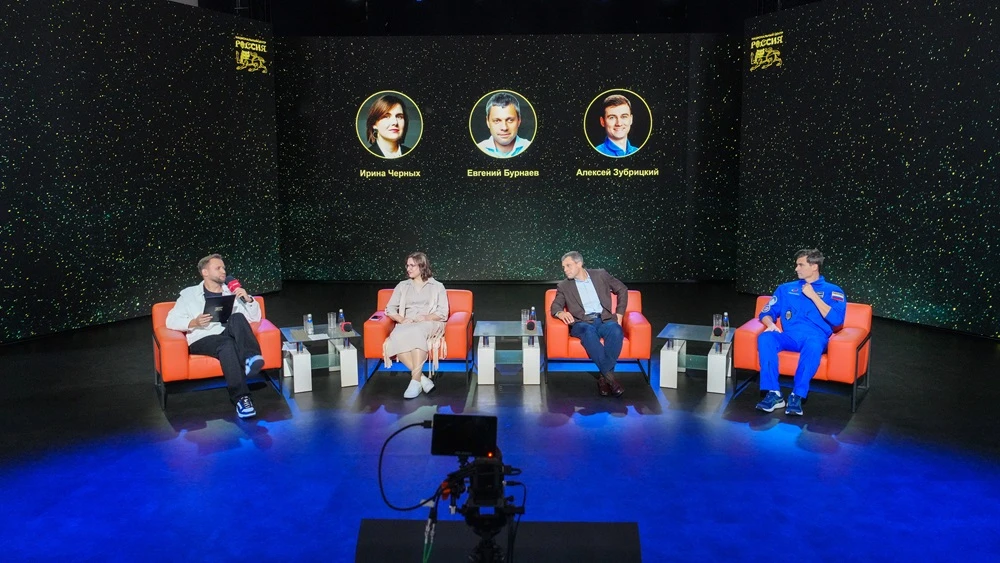
The event was hosted and moderated by producer and space exploration populariser Pavel Bugrov.
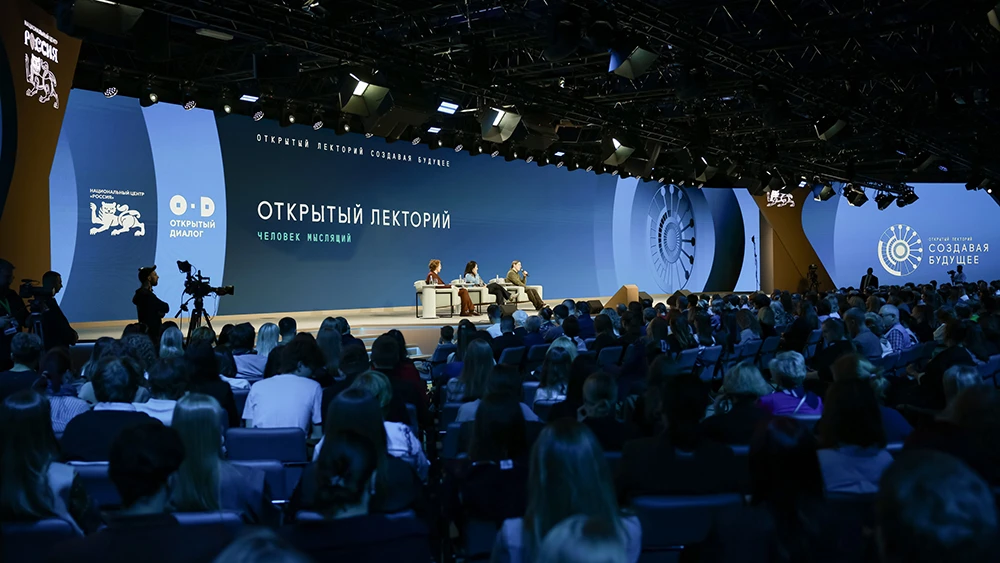
The experts discussed how the digital environment is changing the way people consume information, why it is important to maintain the ability to concentrate.
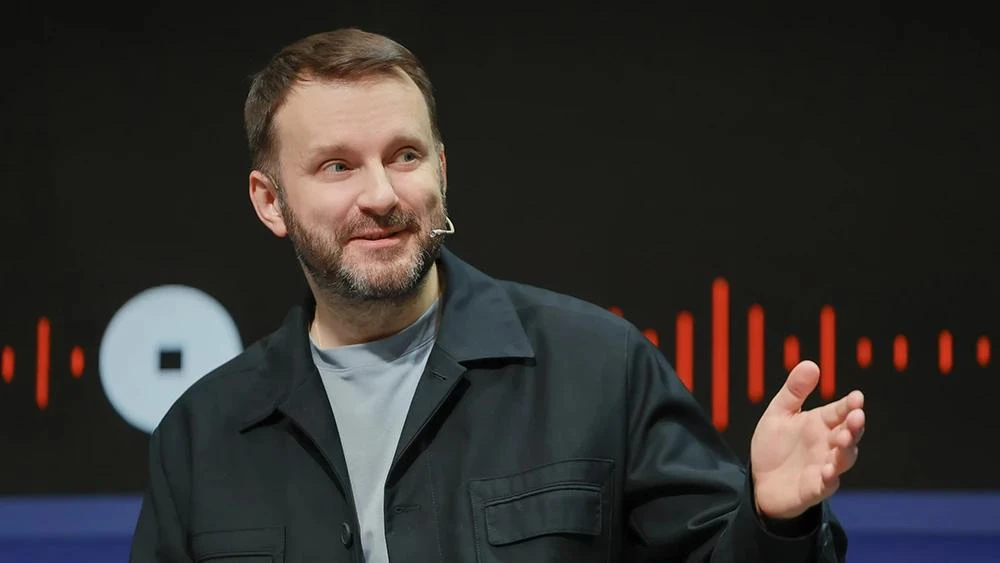
The talk was held in Yekaterinburg as part of the International Festival of Youth — 2026.


