

Varaha Avatar: exploring Indian culture at the exposition "Legacy for the Future"

At the
National Centre RUSSIA, the exposition featuring young artists from Russia,
China, India, Brazil, Ethiopia, and Iran is available for viewing until
February 2. Paintings, sculptures, photographs, and art installations allow
visitors to not only enjoy the art but also learn more about different
cultures.
Madhav S. Thuruthil, a student from the Sri Sankaracharya Sanskrit University, presented his artwork titled "Varaha Avatar" at the exposition "Legacy for the Future." His work is dedicated to the third of the ten avatars of the Hindu god Vishnu. Traditionally, the deity is depicted as a human with the head of a boar. Varaha Avatar is known as one of humanity's primary protectors against evil.

According
to the legend, the demon Hiranyaksha kidnapped the goddess Earth and hid her in
the primordial waters. Vishnu appeared as Varaha to rescue her. Varaha
destroyed the demon and lifted the goddess Earth from the cosmic ocean, raising
her on his tusks. This allowed her to reclaim her place in the universe,
restoring prosperity to the world.
The painting
is created in the style of frescoes from the mid-18th century in the Kerala
state of southwestern India. Such frescoes traditionally adorned ancient
temples and palaces. The artist paid special attention to detail, incorporating
traditional religious symbols and using specific colors — Pancha Varna, the
fundamental colors of Buddhism and Hinduism.

Each color
carries a unique meaning. For example, black is the antithesis of
enlightenment, symbolizing hatred, attachment, and ignorance. White, as in Western
traditions, is associated with innocence and purity, as well as wisdom and
knowledge.
Blue
represents the inner world, growth, and transformation, while red symbolizes
fire, anger, and stubbornness but is also associated with vitality. One of the
primary colors, yellow, signifies freedom from desires and renunciation of the
material world.
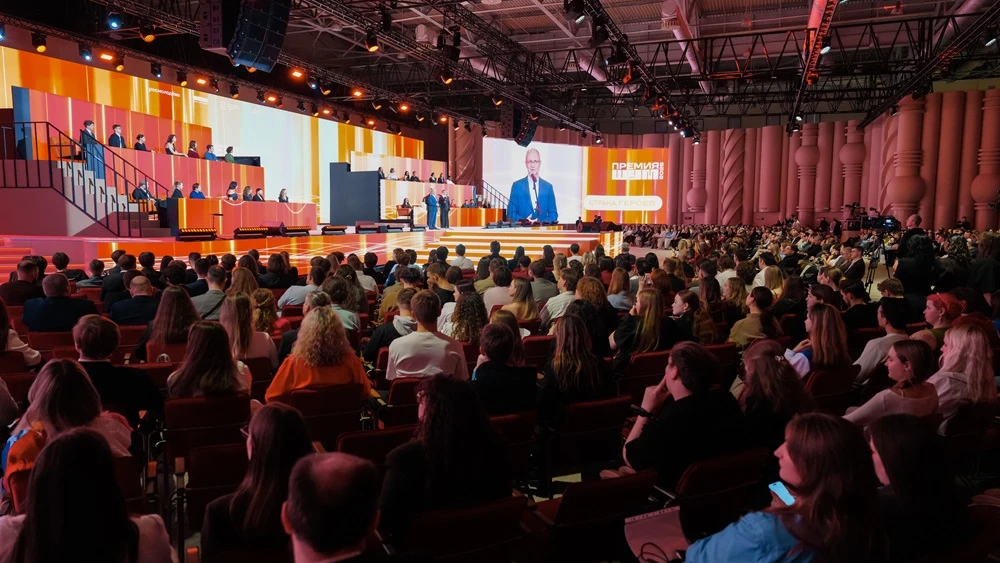
In its third season, the project received more than 15,000 entries from every region of Russia and other countries.
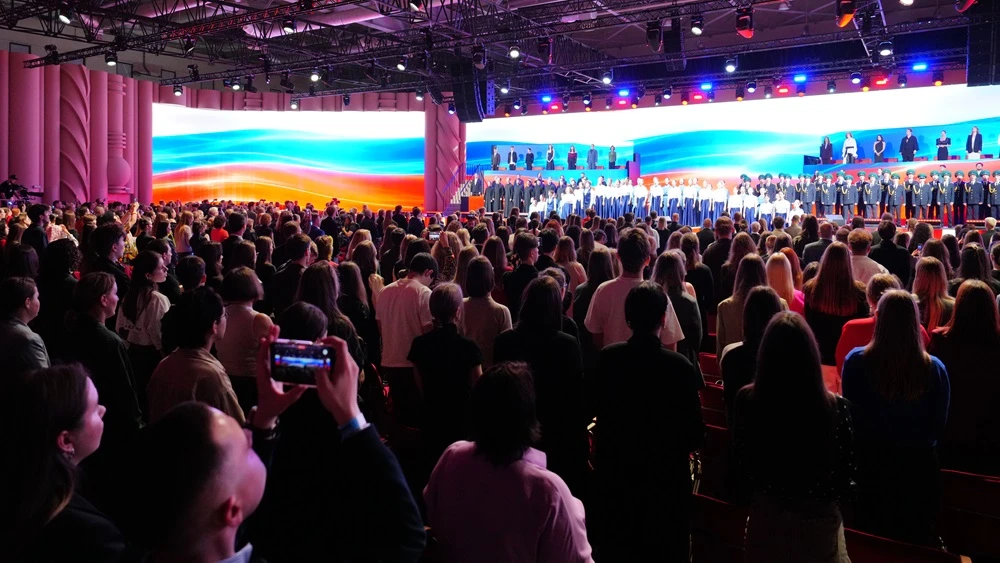
The message highlights the special role of the media in shaping society's spiritual and moral values.