


Behind the scenes of a fairy tale: how the original multi-genre performance "Morozko" works

The multi-genre performance invites audiences to view a classic story through the lens of family values. The story follows a family that, having become immersed in digital reality, has lost live communication and warmth. In order to rediscover mutual understanding, the characters must pass through the world of Russian fairy tales, where each of them finds not only the missing daughter but also their true self. The performance brings together traditional folkloric motifs, choreography and music, forming a vivid and relevant reflection on the importance of family bonds, love and inner harmony.
Multi-genre performance MOROZKO
PLOT
At the heart of the new story, inspired by the fairy tale "Morozko", is Nastenka’s family — her mother Vera, father Alexei and sister Marfa. Once, the family shared a warm tradition of staging home performances based on Russian fairy tales on the eve of the New Year. Over the years, however, everyone became absorbed in their own interests and smartphones, and the tradition disappeared.
On the eve of the New Year, Nastenka longs to restore the family’s warmth and makes a wish — and a miracle happens: her phone turns into a portal that transports her into the magical world of Russian fairy tales. Morozko becomes her guide and mentor, while the family sets out in search of their daughter, hoping to bring her back before the New Year, otherwise the portal will close.
Each member of the family must face an important trial in order to save Nastenka, rediscover their true selves and restore the warmth of their family.
The multi-genre performance is built using the classical fairy-tale structure formulated by the renowned folklorist Vladimir Propp in his work "Morphology of the Folktale".
DIRECTORIAL APPROACH
While preserving recognisable images of Russian fairy-tale characters and archetypes, the creators give the story a new voice, addressing the contemporary individual and their inner questions. Through Russian fairy tales, the performance speaks about Russian culture — its character, values and deep roots.
A fairy tale is a special language through which the peoples of Russia have spoken for centuries about what matters most: family, kindness and choice, honesty and responsibility for one’s actions, and love.
For this reason, the protagonists — Nastenka’s family — find themselves inside fairy tales in order to discover not only their missing daughter but also themselves. Behind their attachment to smartphones lies a lack of something essential: Vera, Alexei and Marfa are missing warmth, understanding and faith in themselves. To restore their authentic selves, they must undergo trials and reunite as a family.
LIBRETTO
After making a heartfelt wish, Nastenka’s entire family finds itself in the world of Russian fairy tales. Nastenka alone ends up in her favourite tale, "Morozko", while Marfa, Vera (mother) and Alexei (father) find themselves with the Cat Bayun.
The cunning guide, Cat Bayun, tells them that Nastenka has fallen into the clutches of Baba Yaga, and together they set off to the far end of the world — to the hut on chicken legs — to rescue their youngest daughter. Along the way, they encounter beloved fairy-tale characters, familiar stories and well-known heroes.

"Winter Festivities"
Music by Sergei Kapatsinsky
Russian National Ballet Kostroma
The opening number set in the world of Russian fairy tales. The dance sequences performed by the Russian National Ballet Kostroma are structured narratively from winter to summer, reflecting the state of affairs within Nastenka’s family. At the beginning of the story, the family is marked by emotional coldness, which is why the festivities are "winter".

Dance scene "The Enchanted Forest"
Music by Nikolai Rimsky-Korsakov
Eduard Akhmetshin, leading principal dancer of Moscow theatres, laureate of international competitions
Ledyakh Choreographic College
The inhabitants of the enchanted forest welcome the heroes into the fairy-tale world. The Learned Cat greets them at their first "stop" — in the fairy tale Ruslan and Lyudmila.
Adagio from the ballet "Ruslan and Lyudmila"
Music by Mikhail Glinka, Viktor Agafonnikov
Yekaterina Pervushina, Honoured Artist of Russia, principal ballerina of the Kremlin Ballet Theatre
Artur Mkrtchyan, leading soloist of the Stanislavsky and Nemirovich-Danchenko Moscow Music Theatre
Together with Cat Bayun, the heroes leaf through a book of fairy tales containing a wide range of stories: Alyonushka, Koschei the Immortal, Ruslan and Lyudmila by Alexander Pushkin, Baba Yaga and the Grey Wolf. They set off on a great journey across the entire world of Russian fairy tales.
Adagio from the ballet "The Firebird"
Music by Igor Stravinsky
Kristina Kretova, principal ballerina of the Bolshoi Theatre
Artyom Ovcharenko, Honoured Artist of the Russian Federation, principal dancer of the Bolshoi Theatre
A fairy-tale trial for Vera, the mother. A strict businesswoman, she has forgotten that within her family she is the guardian of warmth and the home. Her encounter with the Firebird helps her return to her true self — gentle, kind and loving. However, to do so, she must make one important decision.
Musical scene "Musical Medley"
Buranovskiye Babushki
Folk ensemble "Vertograd"
The sisters of Baba Yaga rejoice on their way to the hut. A dialogue between contemporary and folk music prepares the audience for the unveiling of one of the oldest and most iconic antagonists of Russian fairy tales — Baba Yaga.

Dance scene "The Kite"
from the opera "The Tale of Tsar Saltan"
Music by Nikolai Rimsky-Korsakov
Artur Mkrtchyan, leading soloist of the Stanislavsky and Nemirovich-Danchenko Moscow Music Theatre
A fairy-tale trial for Marfa. In the modern world, Marfa is used to relying only on herself and has lost faith in love, although deep down she dreams of falling in love and starting a family. In this scene, Marfa allows herself to be protected and realises that true love always arrives at the right moment. Her faith in love gradually returns.

The Swan Princess’s Aria from the opera "The Tale of Tsar Saltan"
Lyrics by Vladimir Belsky
Music by Nikolai Rimsky-Korsakov
Anastasia Belukova, opera singer, laureate of international competitions
The Swan Princess thanks Ivan for saving her. Marfa realises that she is falling in love: she stops looking only at her phone screen and sees in Ivan a kindred spirit and a hero.
"Spring Scene"
Music by Dmitry Fyodorov, Alexei Ivanov, Alexander Rumyantsev
Russian National Ballet "Kostroma"
Marfa’s heart has thawed, and in the fairy-tale world, just as in Nastya’s family, spring gradually arrives.
Dance scene "Snowflakes and the Blizzard"
Music by Nikolai Rimsky-Korsakov
Yekaterina Pervushina, Honoured Artist of Russia, principal ballerina of the Kremlin Ballet Theatre
Ledyakh Choreographic College
The enchanted forest is stirred when it learns that the heroes have fallen into a trap set by Baba Yaga. A blizzard rises, everything is covered in snow. Morozko and Nastenka rush to save the family.

"BA-BA YAGA"
Music and lyrics by Yevgeny Skripkin
BABA YAGA (BY)
The heroes find themselves at the far edge of the world of Russian fairy tales — in Baba Yaga’s lair. She has outwitted everyone and is preparing her guests for dinner. This is a trial for the father, who must remember that he is not only a scholar absorbed in science, but also the protector of his family.
Dance scene "Dance Confrontation"
Music by Andrei Andryukhin
Performed by the full cast of the production
A large-scale confrontation between good and evil. The forces collide in a powerful dance duel. Nastenka and Morozko unite the heroes.
"Folk Song"
Lyrics by Marat Garipov
Music by Timofei Zaitsev
Irina Ukhanova, theatre and film actress
Theatre "At the Nikitsky Gate"
Nastenka rejoices in the reunion of her family. A song celebrating the restoration of family warmth and the triumph of good.
"Harvest Song"
Music by Dmitry Fyodorov, Alexei Ivanov, Alexander Rumyantsev
Russian National Ballet "Kostroma"
Good has prevailed. Summer arrives in the fairy-tale world. Morozko returns the heroes to the real world and hastens back to his own fairy tale.
Final scene "Family Album"
Song "My God, What a Trifle"
Music and lyrics by Sergei Trofimov
The final scene — an epilogue. The audience learns what happened to the heroes several years later.
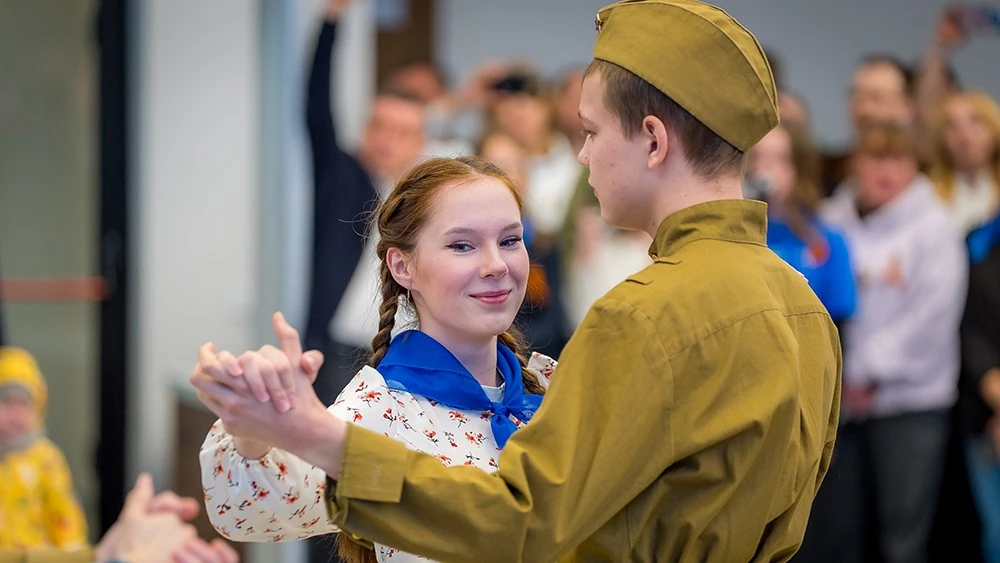
Residents of Yugra joined a khorovod (round Dnce) and performed the "Waltz of Unity" to melodies from the war years.
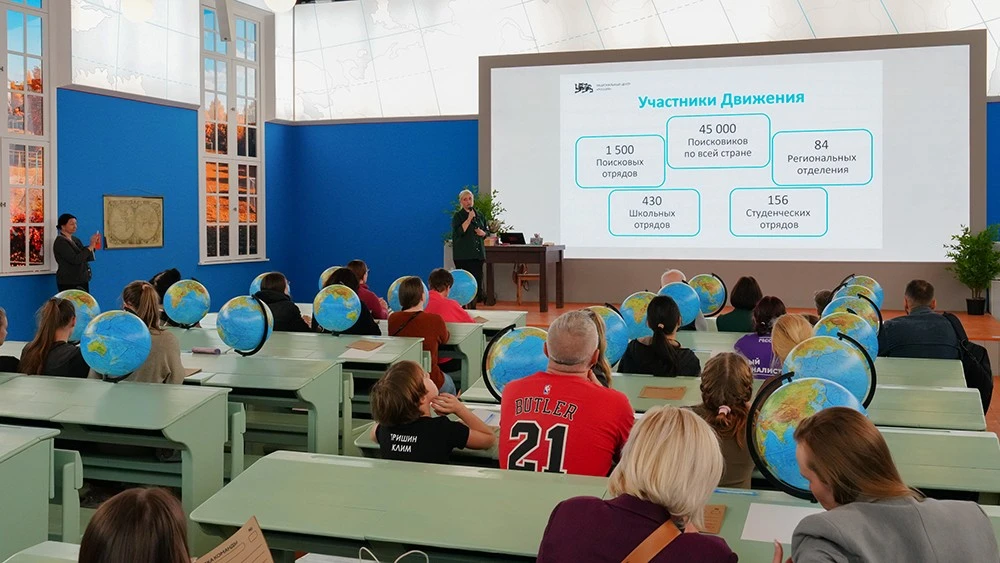
The intellectual contest was held in the "Geography Classroom" at the "Geography Lessons" exposition.
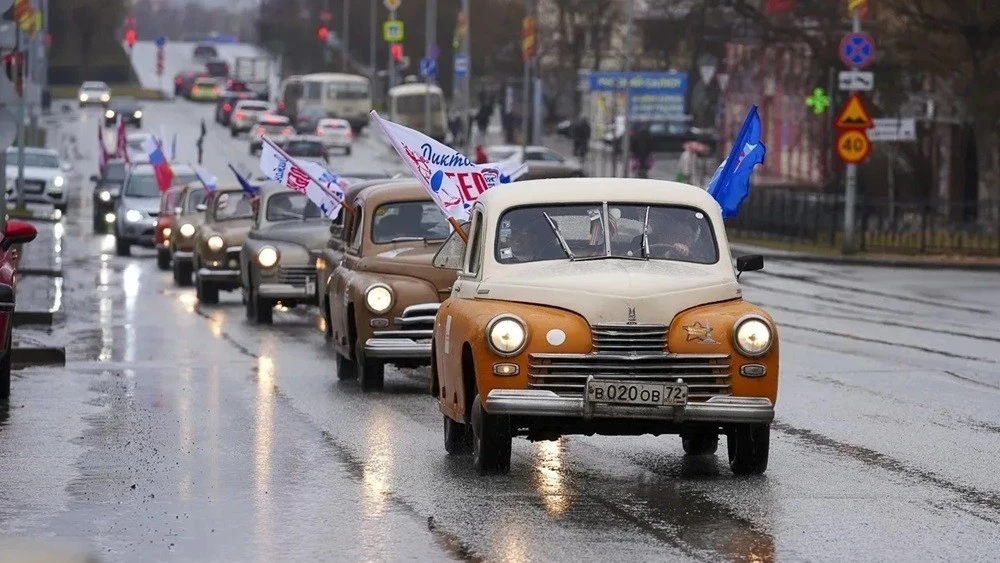
The expedition has been held since 2012 on the initiative of young people from Yugra to preserve the memory of the heroism of frontline soldiers and home-front workers.


