


Learning through practice: "First. Skills for Life" festival concludes at the Media House of the National Centre RUSSIA
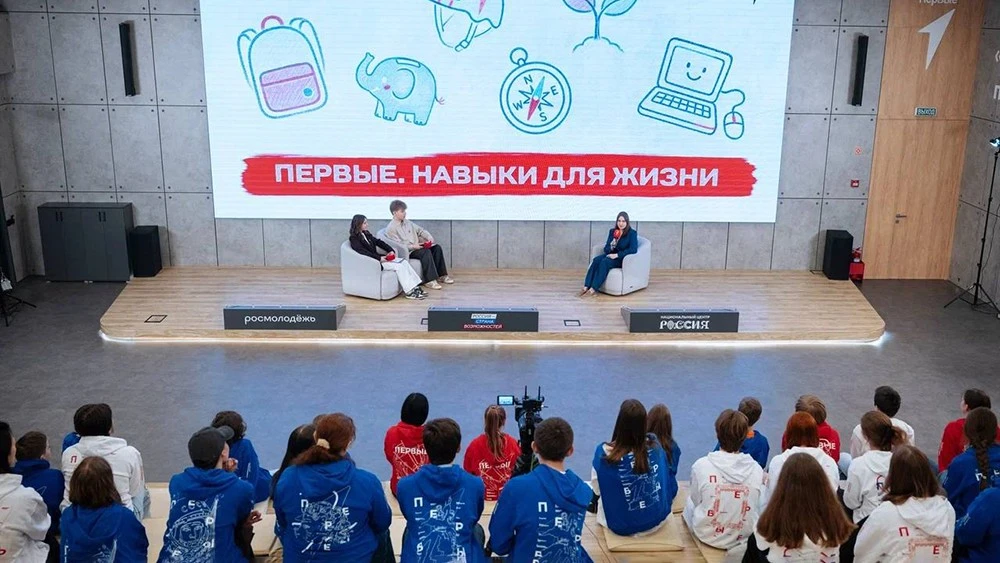
From 16 to 19 June, the Media House of the Movement of the
First at the National Centre RUSSIA hosted the "First. Skills for
Life" festival. The project was designed for teenagers and focused on
safety, financial and media literacy, career guidance, and the ability to help
themselves and others. Participants explored real-life situations, learning how
to avoid falling victim to fraudsters, protect personal data, choose a
profession, plan a budget and identify unreliable information.
One of the festival's central themes was the "First
Aid" segment. Guests and experts addressed practical questions, discussed
possible courses of action and explained how to respond safely in different
situations.

"Since 2022, the All-Russian Student Rescue Corps,
together with the Ministry of Education of the Russian Federation, has been
developing a movement of school rescue teams. As part of these teams, school
students learn the basics of first aid, tourism, topography and how to act in
emergency situations. These skills help them respond appropriately when
relatives or those around them need assistance. Many students later continue
this path by joining student rescue teams. This creates a continuity of
support, responsibility and readiness to help others. Today, I can see that
schoolchildren are genuinely interested: they ask many important questions, for
example, how to behave during an earthquake, an accident or another emergency,"
noted Maksim Dzhetygenov, Head of the Moscow City Branch of the All-Russian
Student Rescue Corps.

A separate part of the festival focused on career choices.
Participants discussed careers in agriculture and veterinary science and
considered why today's schoolchildren are increasingly interested in
professions connected with animals, nature, technology and farming. As part of
the joint project by the Movement of the First and the Ministry of Agriculture,
named The ABC of Agricultural Professions, teenagers took part in a quiz
designed to offer a fresh perspective on careers in the agricultural sector.
Financial literacy and cybersecurity also generated
considerable interest among participants. Together with representatives of
T-Bank, the Central Bank of Russia, Rosfinmonitoring and other experts, they
discussed how to recognise "easy money" schemes, understand the
dangers of investment fraud on social media, identify warning signs and
appreciate the importance of protecting personal data.

"Today, we spoke with participants about the basic
principles of financing, saving and investing, and about how young people can
begin shaping their future trajectory now. The subject may seem complicated,
but that is no reason to avoid learning about it. It is important to understand
what will happen to your money tomorrow, how to build a financial safety net
and achieve your goals step by step. Managing money is a delicate matter, so my
advice to the participants is always to assess your risks, understand your
financial profile, think about what interests you and what you want in the
future. Based on that, you can make informed investment decisions," said
Yegor Kroshechkin, a third-year student at the Financial University under the
Government of the Russian Federation.
Another key topic was responsible behaviour in society.
Together with representatives of the Central Election Commission of Russia, the
Kutafin Moscow State Law University and the Moscow Children's Rights
Commissioner, participants discussed the importance of understanding
information and civic processes. Experts and hosts of the event reflected on
what people experience when they visit a polling station for the first time and
why participation in elections begins with personal responsibility. Guests also
shared advice with those preparing to vote for the first time.
Representatives of the Movement of the First also explored
digital safety with a representative of the Whitelist Internet project. They
learned what teenagers need to do to protect their personal data, identify
dangerous messages and links, avoid scammers and establish their own
"digital perimeter" of protection. They also discovered what ethical
hackers do and why their work is essential for safeguarding people, companies
and government systems.

"Today, it is important for everyone to build both a
personal and a digital perimeter of protection: to understand where useful
information ends and risk begins, how to stop in time and avoid falling for
suspicious messages, links or offers. Spam is a good example. We have learned
not to open such emails or forward them because we understand that doing so is
unsafe. The same conscious approach is needed in other digital situations. We
also discussed the profession of the ethical hacker. These specialists identify
vulnerabilities in systems in order to protect people, data and infrastructure.
Marathons like this are incredibly valuable. They provide young people with
practical knowledge, which helps develop critical thinking and foster a
responsible attitude towards the digital environment," emphasised Elina
Sidorenko, Director General of Whitelist Internet and Professor at MGIMO
University.

The festival also highlighted children's initiatives that
address important issues in an accessible and engaging way. One such initiative
was the "Storytellers" project, whose creators use fairy tales to
teach children about safety, self-care and caring for others. The participants
believe that familiar characters and stories help children better understand
complex life situations, remember important rules and apply them in everyday
life.

"The idea for the project emerged after taking part in
the "First. Skills for Life" marathon. There, I learned a great deal
about a comprehensive culture of safety and realised how important it is for
children and teenagers to acquire this knowledge from an early age. Together
with the "Storytellers" team and the Children's Public Council under
the Moscow Children's Rights Commissioner, we decided to look for a format that
would resonate with younger audiences. That is how "Fairy Tales Without
Danger" came into being. Through fairy-tale stories, children find it
easier to understand difficult situations, remember important rules and apply
them in their lives. Fairy tales are not merely entertainment; they are a good
way of speaking to children about safety, emotions, values and the culture of
our country," said "Storytellers" project creator Yegor Knyazev.
Participants in the festival included representatives of T-Bank, the All-Russian Student Rescue Corps, the Central Bank of Russia, the fact-checking project Lapsha Media, the Alliance for the Protection of Children in the Digital Environment, the School of CyberSecurity, as well as experts in education, narcology, financial intelligence and veterinary science.
The Movement of the First's project "First. Skills for Life" helps teenagers discuss important topics in a simple and accessible way. All episodes of the festival are available to watch on the Movement of the First's VKontakte page.
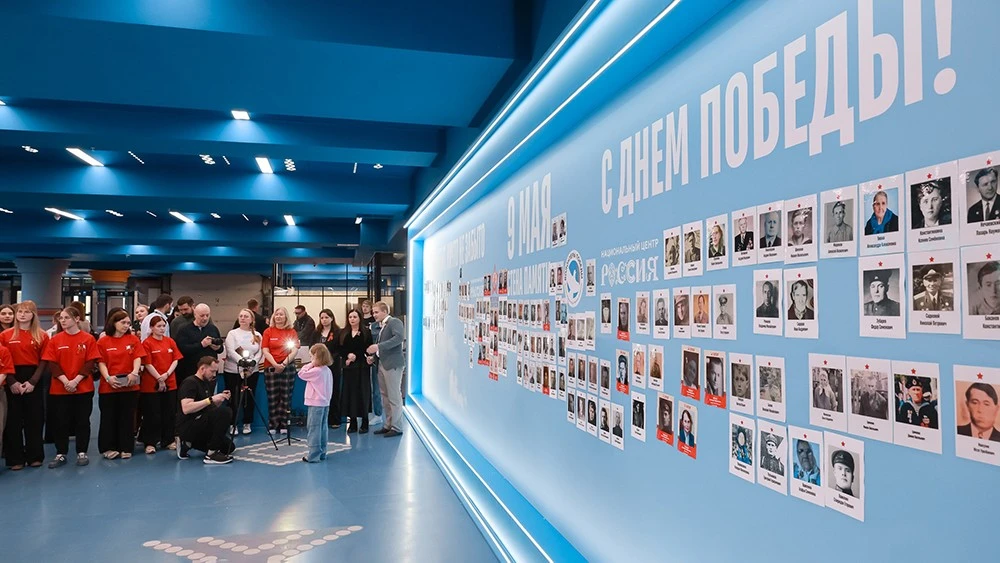
The National Centre RUSSIA has launched a virtual panorama of the "Memory Wall" exposition, created to mark the 80th anniversary of Victory in the Great Patriotic War.
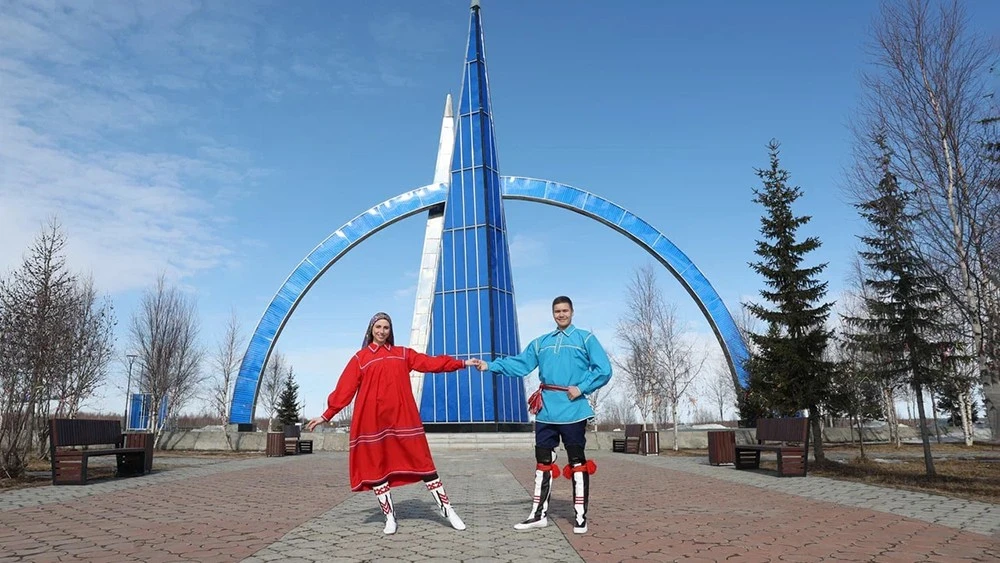
The III All-Russian Wedding Festival "Russia. Uniting Hearts" will bring together couples in love from across the country on 8 and 9 July.

Exactly 85 years ago, at four o'clock in the morning, the life of our country was divided into a "before" and an "after". A war that would last 1,418 days and nights began.


