


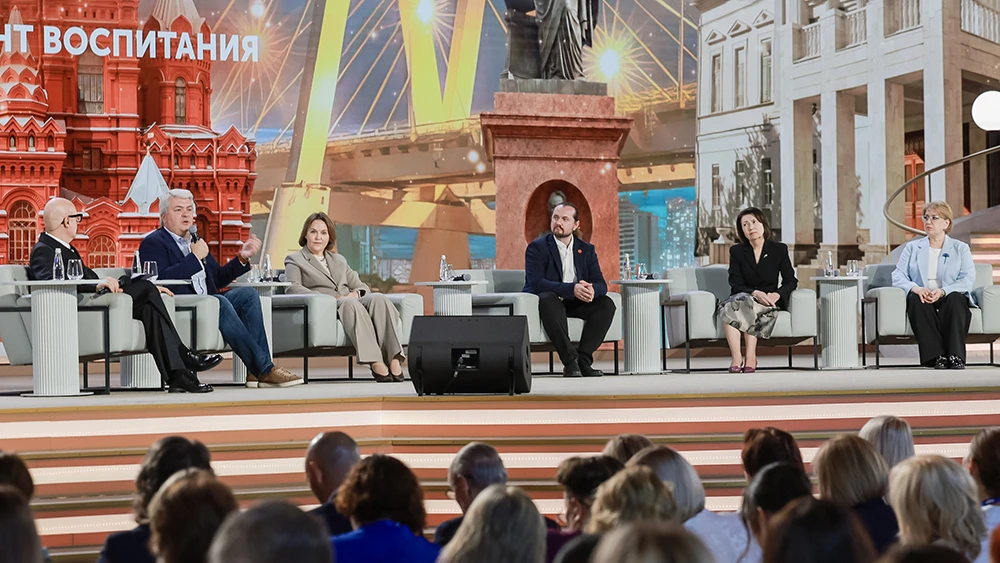
Alexei Goreslavsky at the National Centre RUSSIA: a child should not be left alone in the digital environment
Artificial
intelligence is opening up new opportunities for educational content: it can be
used to create visual materials more quickly and explain complex topics through
stories and game mechanics. However, neural networks will not replace traditional
animation and works of art, while the digital environment should not become a
space where a child is left alone with information. The Director General of the
Internet Development Institute, Alexei Goreslavsky, discussed this at the
National Centre RUSSIA during the panel session "The Teacher’s Role in
Personal Development: Meanings and Tools". The event was held on 1 October
as part of the VI Homeroom Teachers’ Forum and the I School Principals’ Forum.
According to Alexei Goreslavsky, digital content has already become part of the
environment in which children are raised, alongside their families and schools.
The task facing adults is therefore not to ignore new formats, but to help
children engage with them thoughtfully, including by using technology for
education and learning.
"We need to try to make content engaging and accessible. A new tool has
emerged: AI-generated content. It will never replace genuine artistic or
hand-drawn content, but it can be useful for animating simple examples and for
teaching. It is faster and cheaper to produce and can illustrate processes. At
present, AI-generated content plays a supporting role and will most likely
continue to do so," noted Alexei Goreslavsky.
As an example, he presented the educational project "Paradoxiki", a
series of short science videos for primary school children created using neural
networks. According to Alexei Goreslavsky, such materials can help spark an
interest in science when complex phenomena are explained through clear visual
imagery and accessible stories. He also emphasised that the videos are reviewed
by specialists in the relevant fields, who assess the accuracy of the facts and
images.
The expert also highlighted the potential of video games as an educational
tool. In his view, game mechanics make it possible to combine a child’s desire
to compete and achieve results with learning objectives. As an example, he
cited the "Smuta" project and its free educational modules, which
allow users to explore historical locations and learn about the architecture
and events of the Time of Troubles in an interactive format.
Discussing the digital environment, the head of the Internet Development
Institute placed particular emphasis on experiencing content together. Watching
and discussing videos, games and other materials with adults helps children not
only acquire information, but also develop their own understanding of what they
have seen. He also identified educational projects featuring characters
familiar to children and game-based formats that help them explore art, history
and other fields of knowledge as promising areas.
The panel session "The Teacher’s Role in Personal Development: Meanings
and Tools" was held as part of the VI Homeroom Teachers’ Forum and the I
School Principals’ Forum at the National Centre RUSSIA. The discussion also
featured the First Vice-Rector of Moscow Pedagogical State University, Natalia
Sklyarova; the Scientific Editor of the multimedia historical park "Russia
— My History", Ivan Privalov; writer and Honoured Teacher of the Russian
Federation Lilia Kandybovich; and the Deputy Director General of the State
Russian Museum, Anna Tsvetkova. The discussion was moderated by the Deputy
Director for Public Relations at the Chekhov Moscow Art Theatre, Vadim Vernik.
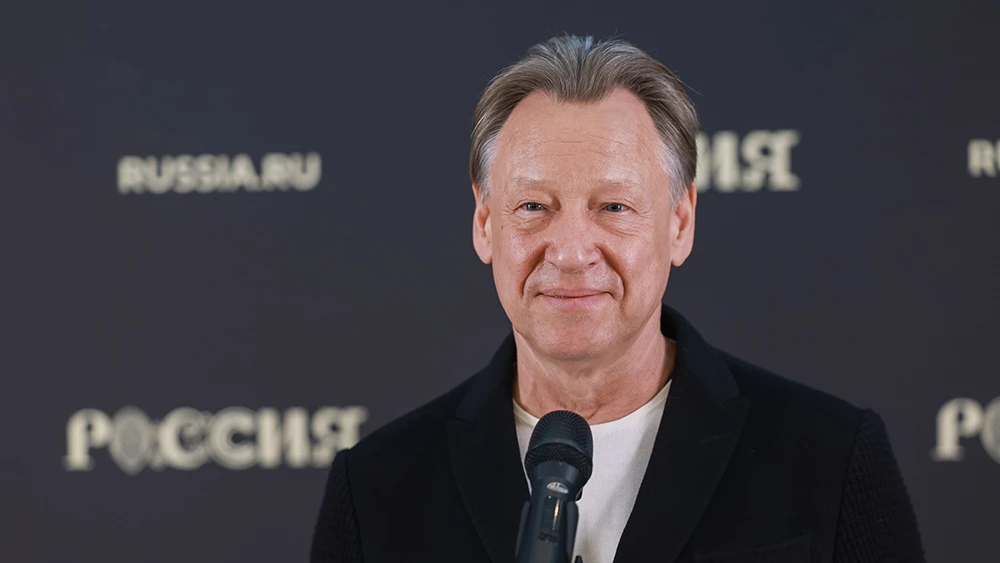
People’s Artist of the Russian Federation Dmitry Kharatyan took part in the All-Russian campaign "What Does the Motherland Begin With?".
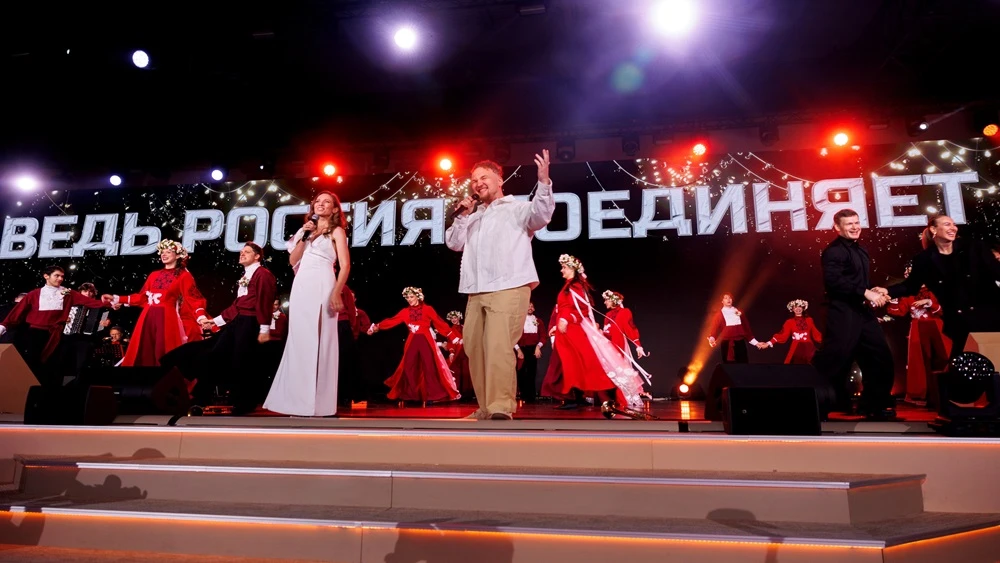
The International Week "Peoples of Russia" will be held in Moscow from 2 to 8 November in accordance with Presidential Decree.
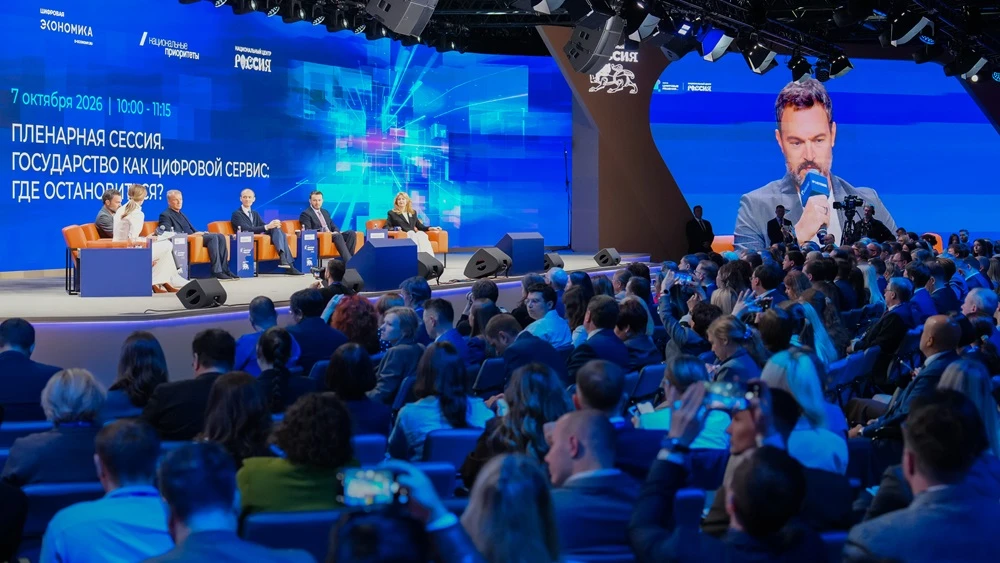
Today, government digital services are increasingly comparable to commercial solutions in terms of speed, convenience and the range of options they offer.


