

Catherine Forum at the National Centre RUSSIA brings together more than 1,300 participants from 55 countries
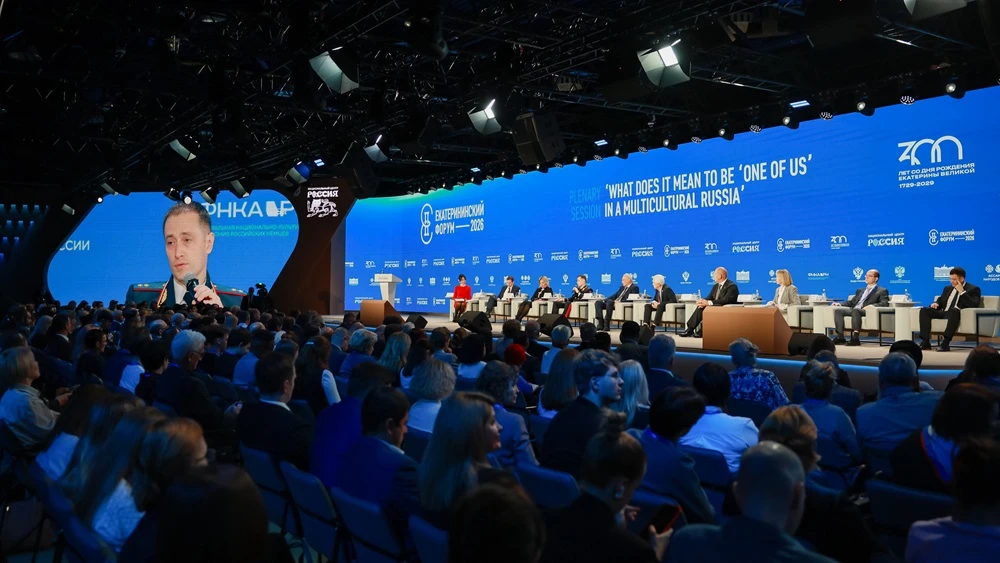
Russia is an open civilizational state and a guardian of traditional values. It is ready to welcome those who consciously choose to make it their home, and the authorities intend to simplify the process of relocation and integration for such people. These and other issues are being discussed at the III International Catherine Forum, which is taking place at the National Centre RUSSIA on 13 October. The event has brought together more than 1,300 participants from 55 countries, including representatives of the Presidential Executive Office and federal government bodies, regional heads, ambassadors of friendly countries, corporate executives, foreign nationals who have relocated to Russia, and experts in history and interethnic relations.
Russian President Vladimir Putin sent his greetings to the participants and guests of the Forum. His message was read out by Magomedsalam Magomedov, Deputy Chief of Staff of the Presidential Executive Office of the Russian Federation and Chairman of the Presidium of the Presidential Council for Interethnic Relations.
"It is encouraging that this important public-and-state initiative has once again brought together representatives of government bodies, interethnic and national cultural organisations, the academic and expert communities, and international guests at the National Centre RUSSIA. The agenda of this year's meeting gives prominence to pressing issues of our time, including the development of international humanitarian cooperation and people-to-people diplomacy, support for foreign nationals who see their future in Russia, and attracting skilled professionals to our country. Of course, your discussions will also address the historical significance of the manifestos issued by Catherine II, which opened the way for people from European countries to come to Russia, find a new homeland here and serve it faithfully for centuries," Vladimir Putin said in his address.
The President noted that Russia will continue to support compatriots and citizens of other countries who share its traditional spiritual and moral values. The country will create conditions for their professional and creative fulfilment and give priority to improving the relevant legislation and its implementation.
In turn, Magomedsalam Magomedov noted that, over the past few years, the Catherine Forum had become an important public and state event. He also recalled that it forms part of a dedicated action plan for implementing the Strategy for State National Policy, making it particularly relevant in the current year, designated the Year of Unity of the Peoples of Russia.
"When our leader, Vladimir Vladimirovich Putin, says that Russia is a civilisation in its own right but remains an open country, this means that we, the multinational and multi-faith people of Russia, see ourselves as one nation. We are united, and this is the principle underpinning our state national policy: strengthening the unity of the Russian nation while preserving the ethnic and cultural diversity of its peoples. We want everyone to be citizens of one great country, while ensuring that every people preserves its identity, language, history, culture and traditions," Magomedsalam Magomedov said.
Sergei Naryshkin, Director of the Foreign Intelligence Service of the Russian Federation and Chairman of the Russian Historical Society, also addressed the participants. He said that Russia had attracted people from all over the world for centuries, and that its ability to unite representatives of different peoples while preserving their traditions and culture was a vital foundation of Russian statehood, a civilisational advantage and an integral part of the national character.
"During the reign of Catherine II, tens of thousands of people from Europe moved to Russia in response to her invitation. It is encouraging that, on the eve of the 300th anniversary of the Empress's birth, the Catherine Forum is drawing on this historical experience. Russia is open to all who share its spiritual and moral values, respect its culture and traditions, and wish to build their future here. I am confident that the proposals developed here will carry forward a centuries-old tradition through which people from different countries have found a new homeland in Russia," Sergei Naryshkin said.
The day's main event was the plenary session "What Does It Mean to Be 'One of Us' in Multinational Russia?", devoted to Russia's role in preserving and promoting traditional spiritual and moral values. Maria Zakharova, Director of the Information and Press Department of the Russian Ministry of Foreign Affairs, spoke about Russia's openness to the world. She stressed the importance of ensuring that the country is portrayed objectively abroad.
"Remarkably, people who move to Russia do not need to be persuaded with arguments. They already hold these convictions themselves, so there is no need to convince them further. What they need is access to information and a clear explanation of the opportunities available and the areas in which they can realise their potential. That is precisely what we are working on," Maria Zakharova, the official representative of the Russian Ministry of Foreign Affairs, said.
According to her, Russian diplomatic missions are at the forefront of this work, including not only embassies and general consulates but also permanent missions to international organisations. She noted that, in the face of the pressure being exerted on Russian diplomacy, all available channels are being mobilised, including permanent missions to international bodies and Rossotrudnichestvo, the federal agency responsible for international humanitarian cooperation.
"If we are not represented, those who promote Russophobic and anti-Russian narratives will fill the gap. We do not shut ourselves off from anyone, nor do we close our country. Just look at international forums: foreign correspondents attend practically all of them. In other words, we engage with our target audiences both directly and indirectly, in the latter case doing it through the media," she added.
Vladimir Vasilyev, Deputy Chairman of the State Duma of the Federal Assembly of the Russian Federation, member of the Presidium of the Presidential Council for Interethnic Relations and Chairman of the Assembly of the Peoples of Russia, spoke about the legislative measures being taken to facilitate the integration of foreign nationals. He noted that the Russian parliament had adopted 32 laws in recent years aimed at improving migration policy.
"By his decree, the President approved the State Migration Policy Concept for 2026–2030. The main task is to strike a balance between the economy's need for labour and the protection of national security. Those who come to Russia must obey our laws, know the Russian language and respect our culture and traditions. The State Duma continues to work in this area, and that work is producing results. The more negative factors we eliminate, the stronger our multinational society becomes," Vladimir Vasilyev said.
One of the Forum's highlights was the formal presentation of Russian passports to new citizens of the Russian Federation. For them, the ceremony marked an important symbolic milestone in their conscious decision to make Russia their home. Participants said the day would remain in their memories for the rest of their lives.
Among them was Aida Maralova, who was born in Kazakhstan. She had devoted herself to ballet since childhood and received professional training at the Agrippina Vaganova Academy of Russian Ballet in St Petersburg, one of the world's best-known institutions for choreographic arts, which has trained generations of great ballet performers.
"Dear participants and guests of the Forum, I am very happy to be here and to receive Russian citizenship. Russia has become the place where I received my education, acquired my profession and found the opportunity to fulfil myself in the arts. As a ballet dancer, I am delighted that I can now officially consider myself part of the great Russian culture and its rich legacy. I am deeply grateful for this trust and will continue to serve Russian art with pride," Aida Maralova said.
In a formal ceremony, Russian passports were also presented to Eduardo Beas Iniesta, who was born in Spain and heads the video content production department of RT's Spanish-language online broadcasting service, and Karin Martina Stemmler-Gerusel, who was born in Germany and is a professional horse trainer and riding instructor.
The Forum hosted thematic sessions throughout the day. Participants discussed practical experience in integrating foreign nationals, support measures for highly qualified specialists, strategies for promoting Russia's image in international media, the role of the Assembly of the Peoples of Russia in strengthening national unity, the development of international humanitarian cooperation, young people's involvement in preserving ethnic and cultural legacy, and stories of foreign nationals who have made significant contributions to strengthening and defending the country.
The International Catherine Forum has been held in Russia since 2023. It is organised by the Assembly of the Peoples of Russia, an all-Russian public-and-state organisation, and the Federal National Cultural Autonomy of Russian Germans, with support from the Presidential Council for Interethnic Relations, the Federal Agency for Ethnic Affairs and the State Duma Committee on International Affairs. The Forum focuses on successful practices for integrating foreign nationals who have chosen Russia, the country's role in preserving and promoting traditional spiritual and moral values, and the historical significance of Catherine the Great's legacy.
The first Forum brought together more than 750 participants from 35 countries and 50 Russian regions. The Forum has been included in Russia's Strategy for State National Policy through to 2036. In 2025, the event was also held at the National Centre RUSSIA.
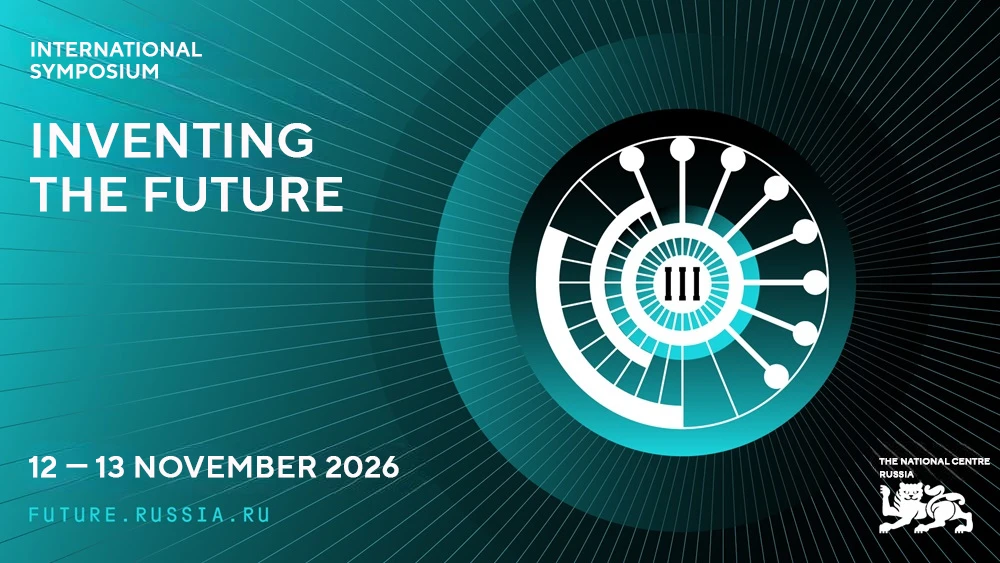
The programme of the III International Symposium "Inventing the Future" will include three thematic tracks: "People and Values," "Progress," and "Culture and Art."
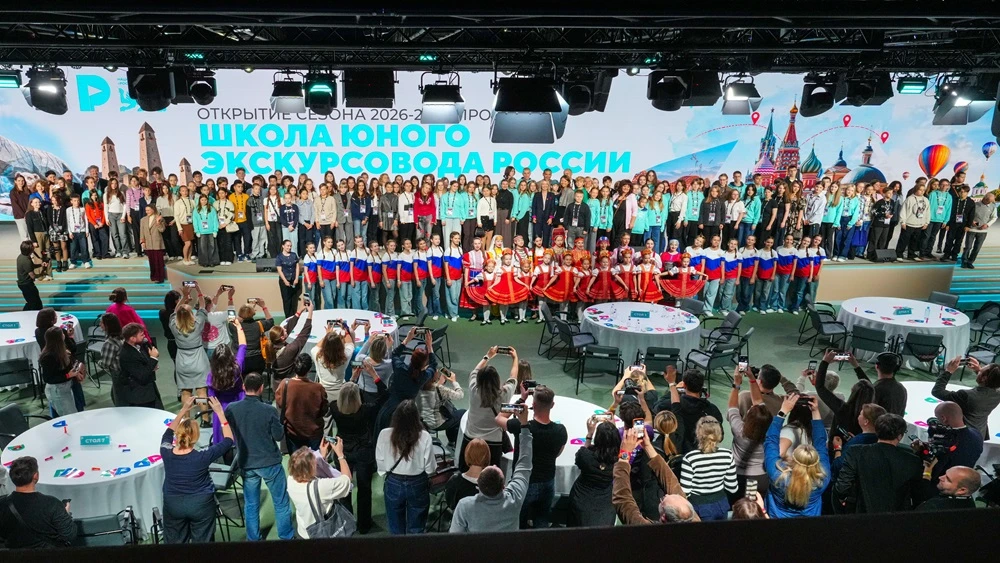
A ceremony marking the launch of the new season of the Young Tour Guides School of Russia, the National Centre RUSSIA's signature educational project for young people.
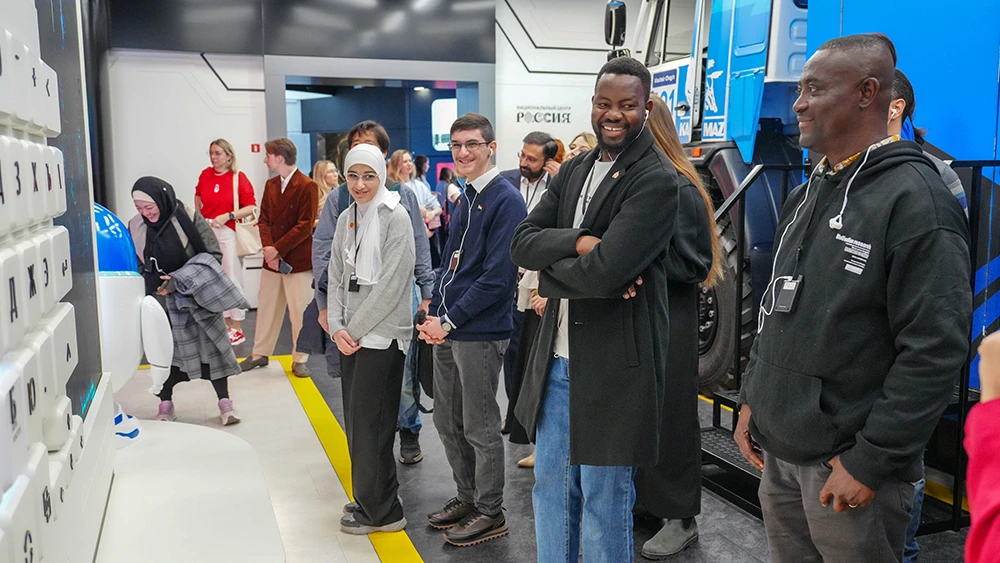
The tour was attended by diplomats from 12 countries: Turkey, Ghana, Ethiopia, Brunei, Mongolia, Pakistan, Iraq, Sudan, Cameroon, Cuba, the Republic of Korea and Morocco.


