


Denis Manturov: people are the foundation of Russia’s technological sovereignty
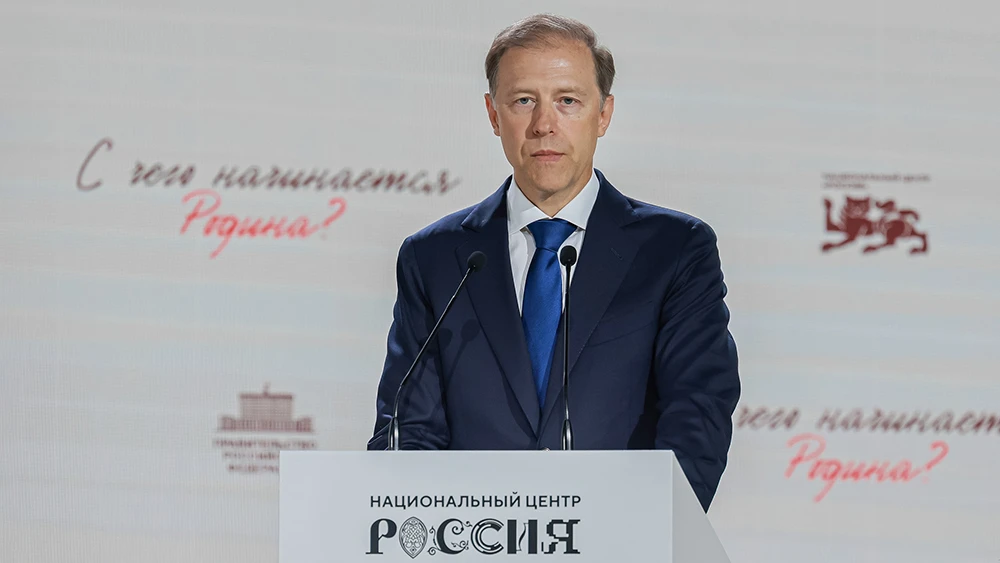
The event
"Motherland Is People. Technological Sovereignty", dedicated to the
development of Russian technologies and strengthening the country's scientific
and technological leadership, was held at the National Centre RUSSIA. The First
Deputy Prime Minister of the Russian Federation, Denis Manturov, took part in
the event. The discussion focused on key areas of Russia's technological
development, including scientific and technological leadership, aviation and
shipbuilding, the revival of machine-tool manufacturing, and expanding
opportunities for Russian companies in international markets. The project is
being held at the National Centre RUSSIA with the support of the Government of
the Russian Federation as part of the Year of Unity of the Peoples of Russia,
declared by President Vladimir Putin.
"Today's
session provides an opportunity to discuss the state's priorities in terms of
how they affect people's quality of life. It also allows us to highlight the
role of our citizens in achieving the goals that have been set. This topic is
particularly relevant during the Year of Unity of the Peoples of Russia. The
unity of the nation, its cultural diversity and shared responsibility for the
future create a strong foundation for our country's development. They make it
possible to bring together the knowledge, experience and creative energy of
millions of professionals and thousands of workforces. When we talk about
technological sovereignty, we usually mean the ability to independently
manufacture products needed by the economy and the social sector, relying on
our own technologies, raw materials, materials and components. But the main
purpose of this work is always to improve people's comfort, well-being and
safety. This is the principle underlying all national projects," Denis
Manturov said.
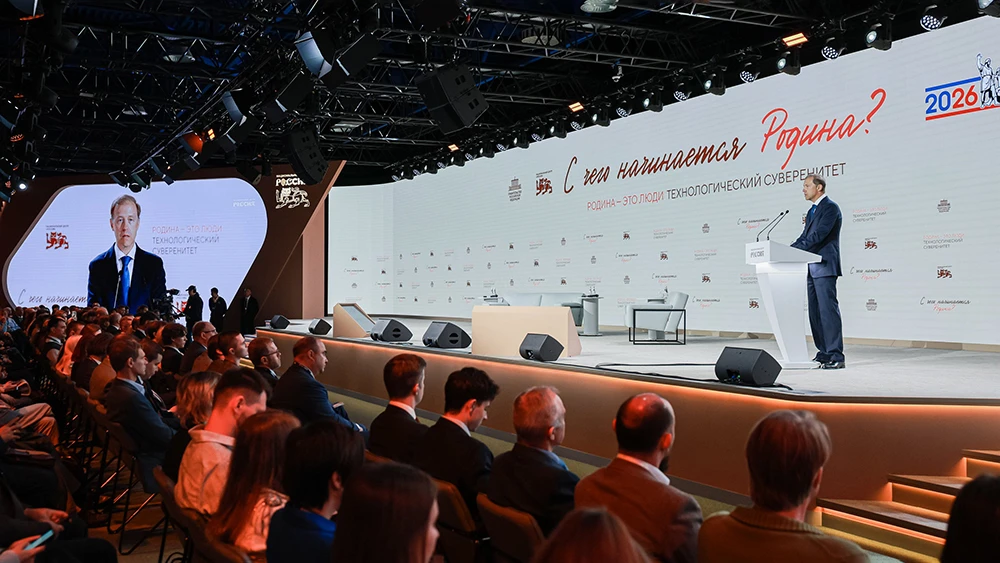
The First
Deputy Prime Minister of the Russian Federation also noted that Russian
enterprises and research institutes are creating a complete development and
production cycle for sophisticated medical products. At the same time, production
is expanding for equipment used in diagnostics, rehabilitation, cardiac surgery
and the treatment of chronic diseases, while new radiopharmaceuticals and
strategically important medicines are being developed. According to him, this
work is centred on patients' needs and access to high-tech medical care
throughout the country.
In his speech, Denis Manturov discussed key areas in the
development of Russian technologies — healthcare, agriculture, aviation,
shipbuilding, railway engineering, energy and the space industry — emphasising
that people remain the foundation of the country's technological independence.
"Technological sovereignty is not only created in the
interests of citizens — it is achieved through their own efforts. That is why
advanced human capital is an integral part of our independence. These are
scientists and researchers, designers, engineers and technologists, foremen,
adjusters, assemblers and test engineers. They are specialists working in
laboratories and design bureaux, at machine tools, on production lines and at
testing grounds. These people are the main creative force of our Motherland.
Their knowledge, talent and daily work turn scientific ideas into mass-produced
goods and large-scale projects into tangible improvements in the quality of
life of millions of citizens," the First Deputy Prime Minister added.
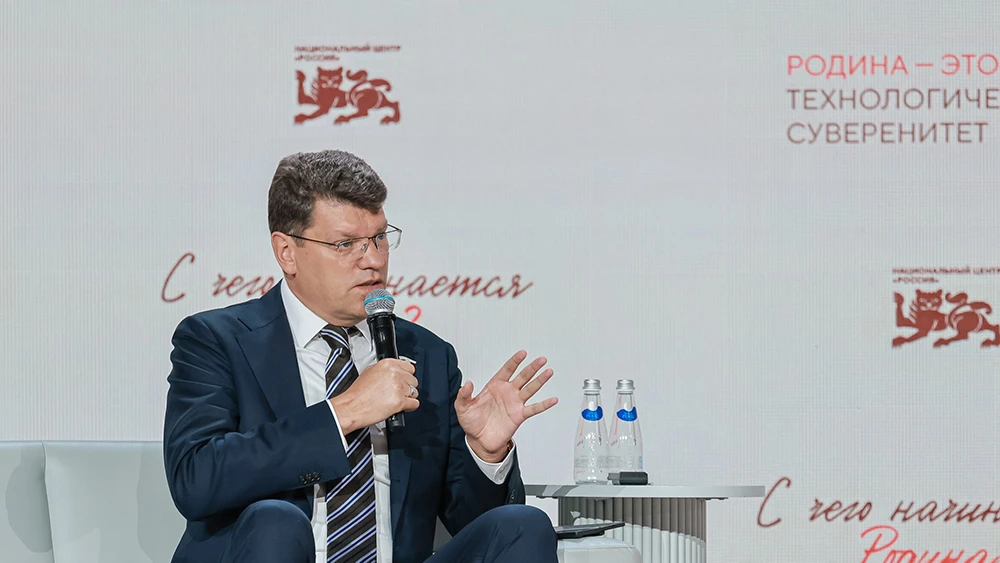
State Duma deputy and First Deputy Chairman of the Committee
on Economic Policy, Denis Kravchenko, spoke about the development of key
technological sectors and noted that what the country needs above all is
qualified specialists.
"Shipbuilding, unmanned systems, the space sector,
microelectronics and other areas — none of this is possible without people.
People are at the heart of the task of achieving technological sovereignty. In
the State Duma, we are actively adopting laws aimed at creating the conditions
needed to achieve it. In just the past year and a half, we have adopted a major
and highly important systemic law on technological policy in the Russian
Federation, which, I am certain, will occupy a very important place — just as
the federal law on industrial policy did when we adopted it ten years
ago," the parliamentarian said.
Denis Kravchenko also addressed the training of personnel
for technological sovereignty. According to him, it is important to introduce
school students to the natural sciences at an earlier age — not through complex
formulas, but through experiments and practical activities that spark interest
and engage children. He said this approach should help create a broader pool of
future engineers and technologists: "It is very important for us to build
as broad a pipeline as possible, so that more young people aspire to pursue
engineering education and as many as possible go into science and engineering."
The first part of the event was dedicated to scientific and
technological leadership — how modern developments are turned into specific
products, jobs and export solutions. Svetlana Linnik, Director General of
Pegas-Agro LLC, spoke about the creation of unique multifunctional agricultural
machinery that allows a single machine to perform different tasks throughout
the season, reducing pressure on the soil and costs for farmers. She also
highlighted the development of unmanned technologies, effective state support
for research and development, and the company's growth from garage-based
production to a plant employing more than 700 people. Pavel Stepanov, Director
General of Geoscan Moscow LLC, in turn spoke about the company's own high-tech
solutions, ranging from unmanned geological exploration and drone shows to
satellite technologies: over five years, the company has placed 17 satellites
into orbit, while its drones have carried out more than 300 projects across
four continents.
The event also covered aviation and shipbuilding — strategic
industries that determine the country's transport connectivity, regional
development and technological independence. The discussion included import
substitution of equipment for the fishing fleet and the development of Russian
shipbuilding, presented by Pavel Zubkov, Director General of MKS LLC. In
addition, the Director General of UEC-Saturn (Rostec) discussed the development
of Russian aircraft engines, including the PD-8 for the Superjet and Be-200
aircraft.
"The PD-8 is an entirely Russian engine, with all
imported components fully replaced, and it has already been certified. We
received the type certificate in June and are now preparing for serial
deliveries. We have already launched serial production of the engine. What lies
behind this? Of course, painstaking work by engineers, designers and
technologists. It is the work of research institutes and design bureaux. And
behind all these competencies and all this experience is, ultimately, the
individual — their expertise, experience and contribution to the project,"
Ilya Konyukhov said.
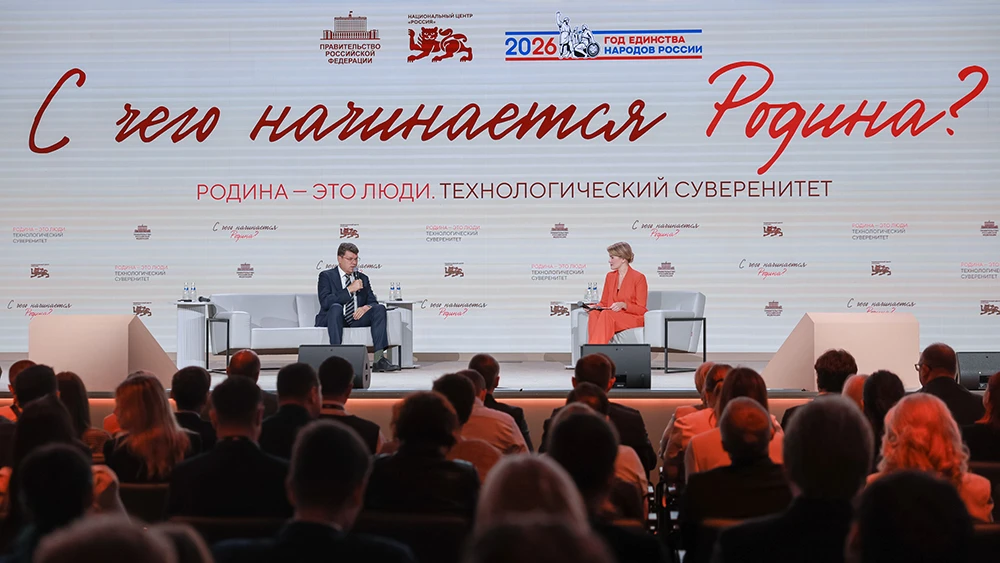
The third part focused on the revival of machine-tool
manufacturing as one of the foundations of modern industry. The discussion
centred on new production technologies, the development of pilot and digital
solutions, specialist training and raising the prestige of engineering
professions.
Yury Koval, Director of the Lead Competence Centre for the
Machine Tool and Tool Industry at STANKIN Moscow State University of
Technology, spoke about the key role of machine-tool manufacturing in the
development of Russian industry as a whole and the centre's work on creating
modern metal-cutting equipment, including types of machinery that had not
previously been manufactured in Russia. He also focused on engineering
education: the centre has established a youth design bureau where students take
part in designing real machine tools under the guidance of experienced mentors.
He also noted growing interest among young people in engineering professions
and spoke about projects aimed at promoting them, including industrial tourism
and the launch of the branded "The Country Needs Engineers" train on
the Moscow Metro.
The fourth part was devoted to new horizons in international
trade and how Russian companies can enter foreign markets not only with
finished products, but also with technologies, expertise and standards.
Viktoria Yermakova, Commercial Director for International Sales at the Motorika
Group, spoke about the company's development, its expansion into more than 15
foreign markets and its unique innovations, including prostheses for children
from the age of two and osseointegration technologies. She also highlighted the
organisation's international expansion: the company has opened an office in
India and begun localising the production of bionic prostheses, with plans to
use the country as a hub for the Asian market. She also emphasised the role of
the company's ambassadors, who help people adapt to prostheses and return to a
full life.
Throughout the event, guests took part in an interactive
quiz devoted to Russia's technological achievements and records. Each
participant received a special wristband that allowed them to select one of the
possible answers. The host read out statements, and guests had to decide
whether they were true or false. This format not only gave participants an
opportunity to test their knowledge, but also introduced them to interesting
facts about Russian technologies and achievements.
The National Centre RUSSIA project "What Does the
Motherland Begin With?" is aimed at strengthening every person's sense of
unity with the country, regardless of their ethnic background. The series of
events consists of several stages involving representatives of the Government
of the Russian Federation, heads of federal executive authorities, regional
leaders and opinion leaders. The next stages of the project will include
motivational open dialogues and lectures entitled "Motherland Is
Service", as well as a series of meetings called "Motherland Is Home",
dedicated to regional development, the preservation of traditions and the unity
of the peoples of Russia.
Event photobank
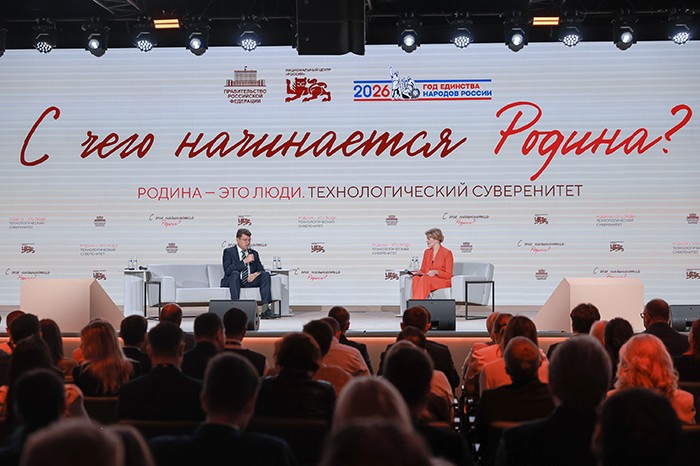

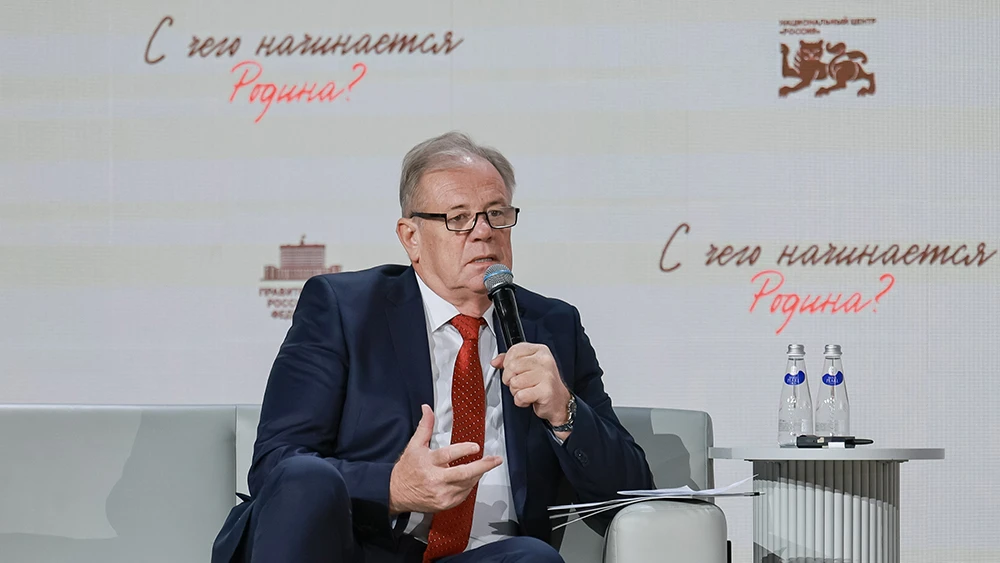
The importance of the industry, the training of engineers and the development of next-generation equipment were discussed at the National Centre RUSSIA during the "Motherland Is People" meeting dedicated to technological sovereignty.

The first issue of the National Centre RUSSIA magazine, "The Lion" ("Lev"), is now available to readers: it can be purchased at the Department Store RUSSIA or downloaded in digital format.

The first expedition of the International Volunteer Arctic Corps has concluded in Yugra.


