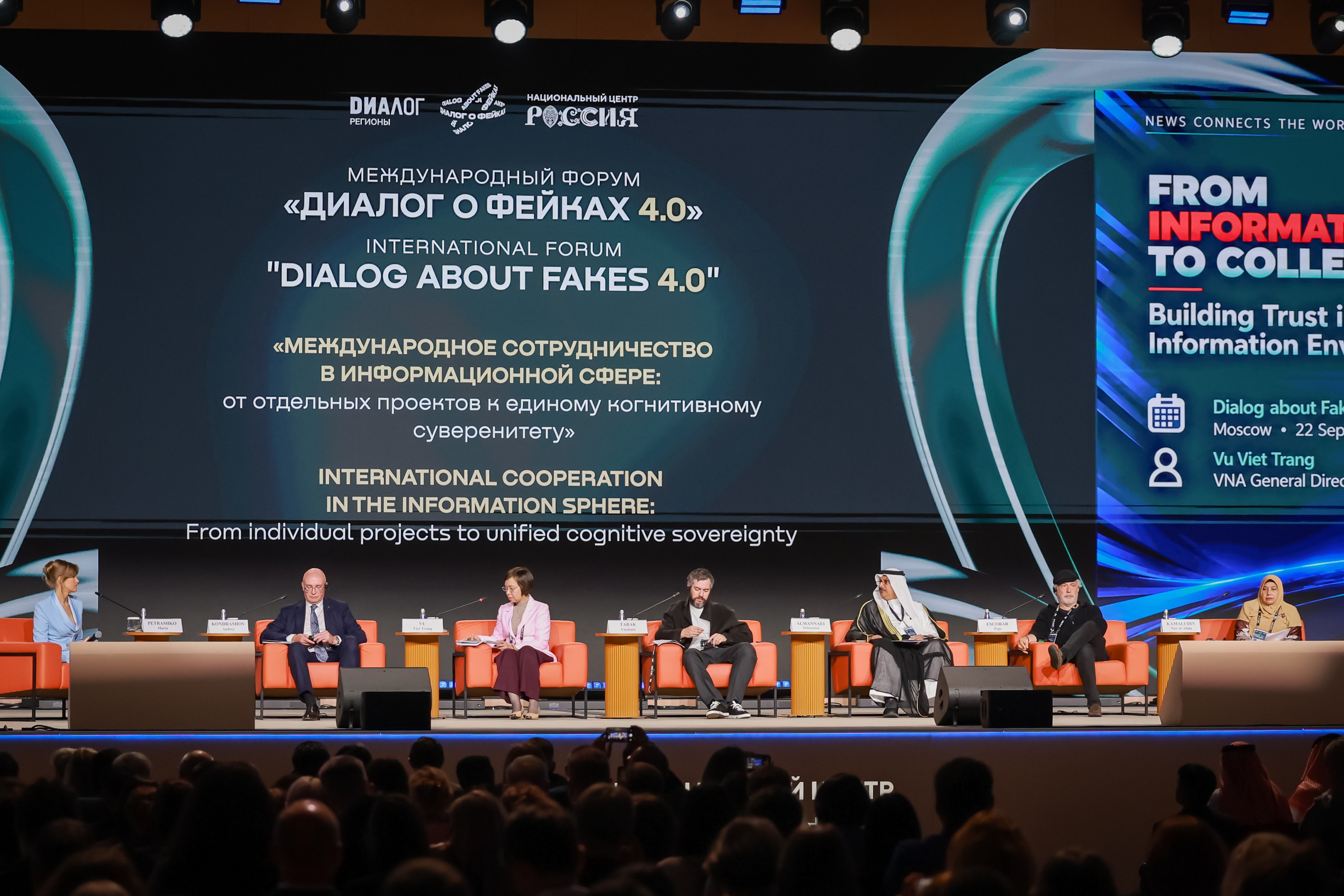


"Dialogue on Fakes 4.0": forum with representatives from 80 countries held at the National Centre RUSSIA
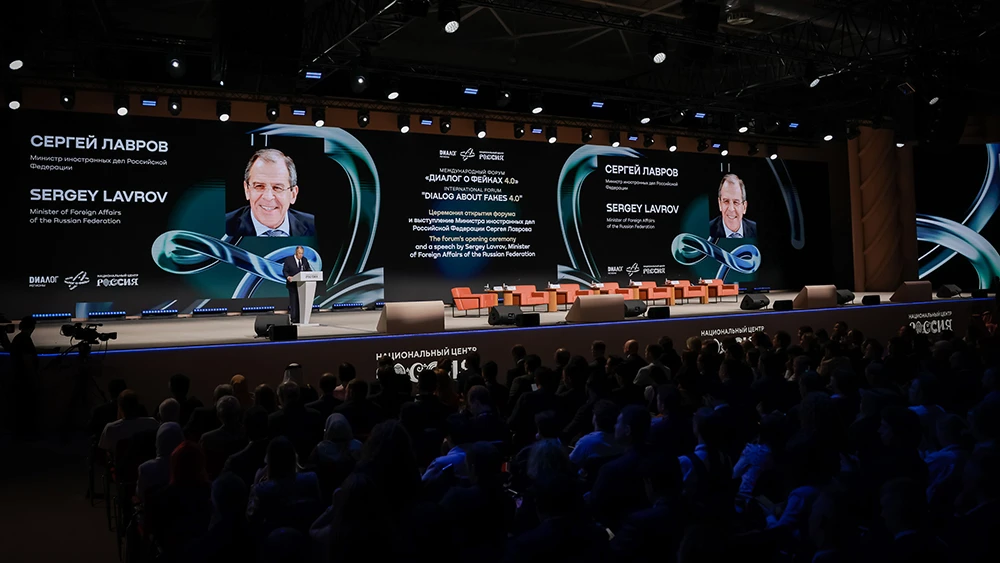
More than 2,000 participants from 80 countries gathered at the National Centre RUSSIA on 22 September for the IV International Forum "Dialogue about Fakes 4.0", bringing together representatives of federal executive authorities, international experts, the media and the business community. The forum focused on countering disinformation in the electoral process, the impact of unreliable information on politics, the economy and business, as well as trends in the development and use of artificial intelligence in the creative industries. The event also addressed fraud targeting minors and efforts to prevent teenagers from becoming involved in cybercrime.
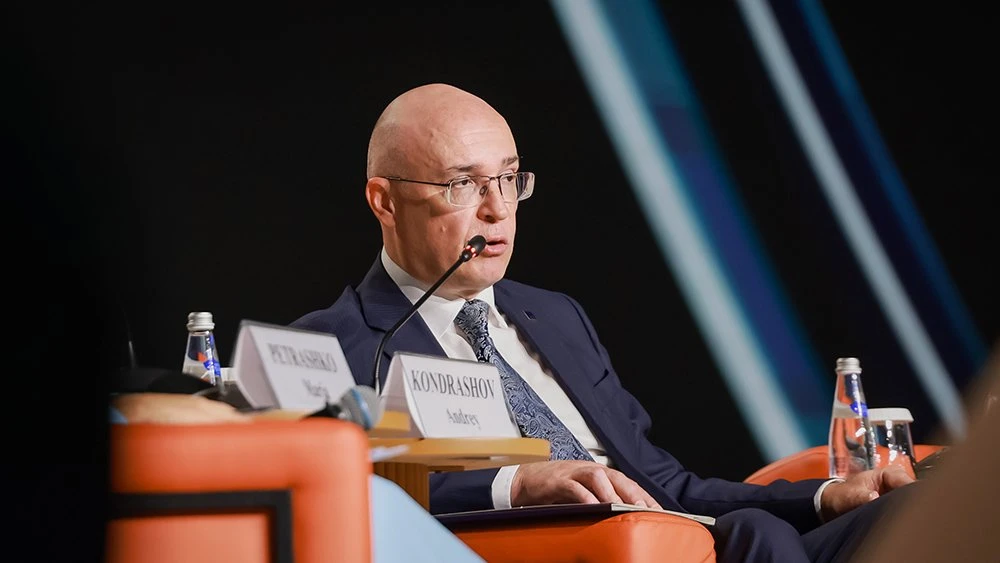
"One of the serious challenges in the field of information and communications is the rapid spread of artificial intelligence technologies and the threats associated with them. In this context, the development of modern standards and rules aimed at ensuring reliable protection and confidentiality of information and improving the effectiveness of efforts to counter digital risks is becoming particularly important," TASS Director General Andrei Kondrashov read out in a message from Russian President Vladimir Putin.
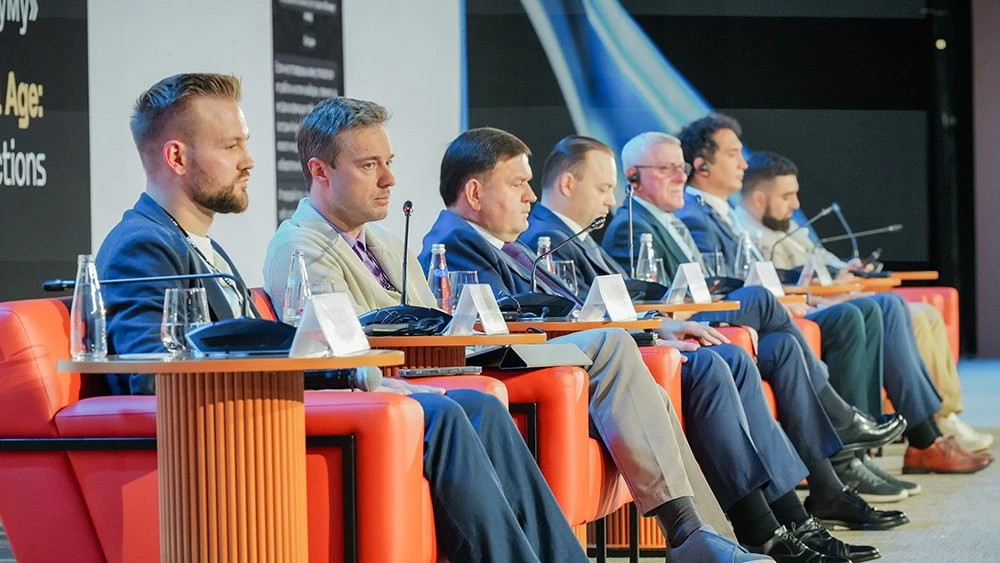
The head of state stressed that the forum traditionally brings together representatives of relevant government agencies, the academic community from Russia and many other countries, as well as experts from the Global Fact-Checking Network (GFCN), established by TASS, ANO "Dialogue Regions" and the New Media Workshop. Vladimir Putin added that the decisions and recommendations developed at the event would be put to practical use.
"Russia encourages professional dialogue in all areas, including efforts to counter the use of information as a weapon. This is particularly relevant today, when information is flooding every aspect of human life, and with modern technologies, any news, even if unverified or outright false, can very quickly become accessible to millions or even billions of people," Sergei Lavrov, Minister of Foreign Affairs of the Russian Federation, told participants in his address.
The minister said that the West's information war against Russia had begun long ago, well before the start of the special military operation. According to him, in the early 2000s, after Vladimir Putin came to power, Russia began moving away from neo-colonial forms of cooperation with Western partners and pursuing an independent policy, returning to its traditions, foundations and roots. Sergei Lavrov shared that Russia subsequently faced increasingly intensive efforts to contain it, resulting in more than 30,000 sanctions being imposed against the country — more than against any other country in the world.
Sergei Lavrov said that on 17 September the International Public Tribunal on the Crimes of Ukrainian Neo-Nazis published its first investigative materials concerning falsification surrounding Bucha. According to him, contrary to statements by the Kyiv authorities that those commemorated at the Bucha memorial were all peaceful civilians, an analysis of open sources shows otherwise: among the names are dozens of Ukrainian Armed Forces personnel, Security Service of Ukraine employees, territorial defence personnel, police officers and National Guard members, while more than 70 names have no digital footprint at all. He said that the silence of the UN Secretariat and Western media about this falsification was not accidental but part of an operation to conceal the truth. He noted that the information had been checked primarily against Ukrainian sources and stressed that each point in the investigation was supported by data from several resources and could be independently verified.
The session "Fighting Fraud — 2026: New Threats and Protection Strategies" focused on cyber fraud targeting children, cybercrime among teenagers and efforts to prevent young people from becoming involved in unlawful activities. Experts discussed how the state and public organisations are addressing such destructive phenomena and what else could be done to strengthen the information shield protecting today's internet users.
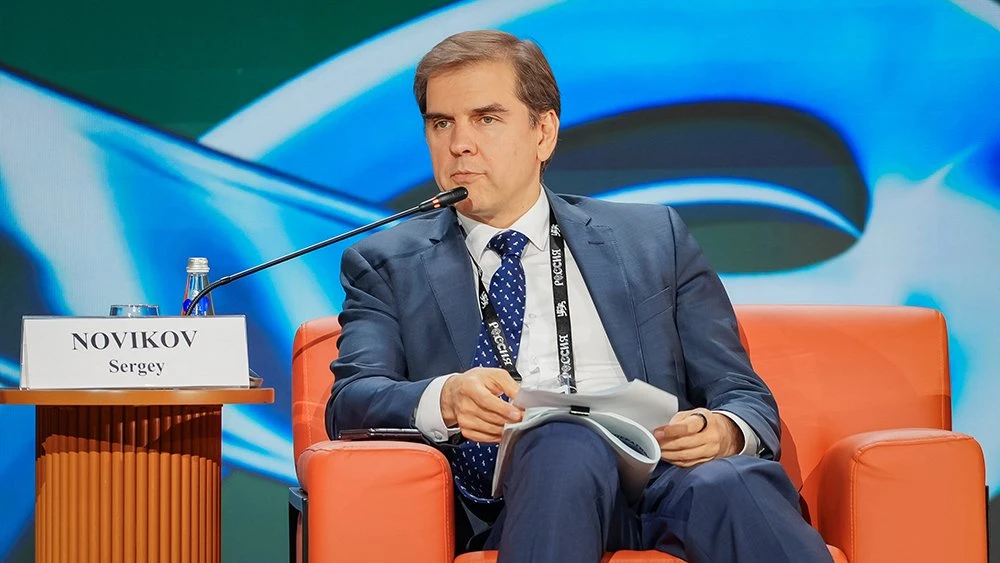
Sergei Novikov, Head of the Presidential Directorate for Social Projects of the Russian Federation, noted that the world is developing rapidly and threats are changing, but society has learned to deal with them. At the same time, he said, fraudsters are also adapting and using social engineering techniques to involve children in fraudulent activities or crimes. He said that a large-scale media campaign is currently being conducted together with ANO "National Priorities". Its overall slogan is based on Article 31 of the Criminal Code of the Russian Federation, which states that a person is not a criminal before committing a crime. He added that both children and parents should know this.
The speaker also highlighted the risk of teenagers becoming dependent on artificial intelligence. He noted that children are increasingly turning to AI not only for ready-made answers but also for advice and emotional support.
"What can we do to counter this? Remember, we are talking about children and teenagers. The most important remedy is to involve them in active pursuits. We have the Movement of the First, Yunarmiya and all our volunteer organisations — naturally, they need to involve teenagers even more actively in offline activities and projects, so that a child does not become isolated with their AI assistant, but communicates with their peers and has a broad horizon in front of them," said Sergei Novikov.
The event also featured the results of research by ANO "Dialogue Regions" on fraud and use of AI tools among adults and teenagers aged 10–17. According to the survey, 76% of adult Russians consider themselves aware of existing fraud schemes, while 29% of them or their close relatives have personally encountered fraudsters. Among children and teenagers, 95% of respondents are aware of various fraud schemes — most commonly calls from a "security service", hacked accounts and messages claiming that a relative is in trouble. At the same time, the main sources of information about fraud for adults remain personal communication, social media and messaging apps rather than educational materials, while for children they are parents and teachers. The study also showed that younger children aged 10–11 are more likely to categorically refuse to communicate with strangers, while older teenagers tend to assess risks independently.
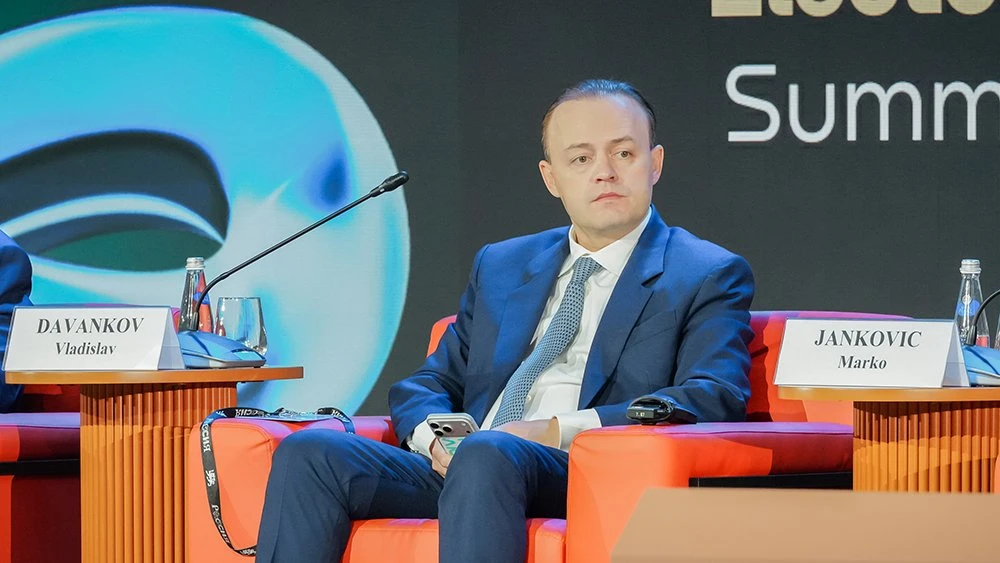
Another topic discussed at the "Dialogue on Fakes 4.0" forum was how states protect electoral processes from digital threats and information interference while preserving national characteristics and independence in organising elections. Experts also discussed the results of the State Duma elections.
"The storm we had to withstand was truly unprecedented, and we had anticipated it. There were no risks that we had not considered. That is precisely what enabled us to hold these elections successfully. We encountered fake information on voting day. A mass mailing began to election commissions and heads of the regions, saying that preparations should urgently be stopped. Our internal communications system is structured in such a way that we were able to respond to this fake quickly and clearly and disseminate information that it was untrue. From 18 to 21 September this year, we recorded more than 4,000 waves of DDoS attacks against digital infrastructure — several times, orders of magnitude more than what we encountered during the presidential election. Yes, there were some disruptions, including the suspension of electronic voting in Moscow, but we managed to deal with them. Not a single vote was lost," said Pavel Andreyev, a member of the Central Election Commission of the Russian Federation.
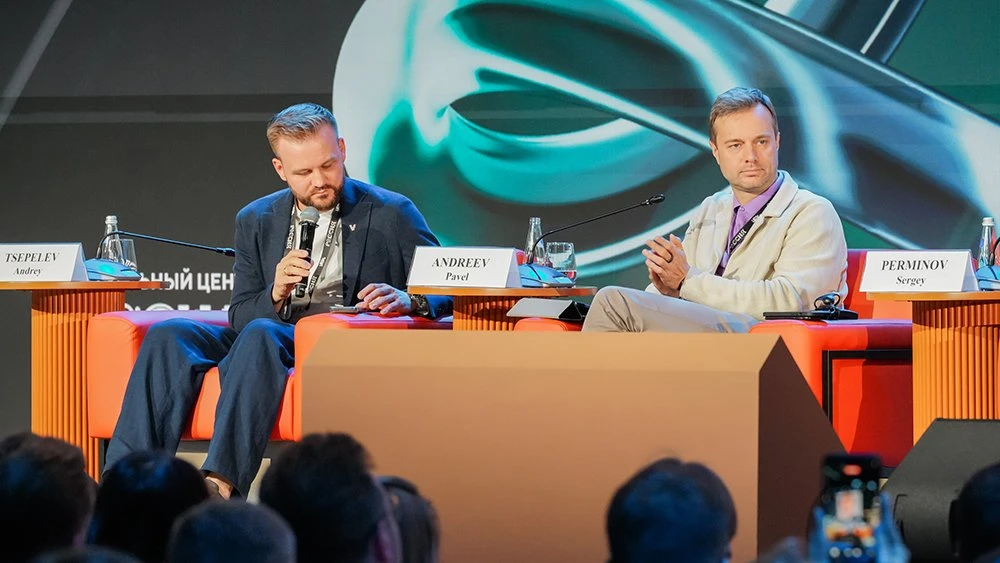
Throughout the day, the National Centre RUSSIA hosted discussions as part of the "Dialogue on Fakes 4.0" forum on international cooperation in the information sphere and cognitive sovereignty; electoral sovereignty and protecting elections from digital threats; digital platform security; society's immunity to disinformation; fraud and the involvement of teenagers in cybercrime; the impact of generative AI on business and the economy; the role of AI in the creative industries; teenagers' trust in artificial intelligence; and the future of media professions by 2030.
The forum is traditionally held with the support of the Ministry of Foreign Affairs of the Russian Federation. It is organised by ANO "Dialogue Regions" with the participation of the Global Fact-Checking Network, an international fact-checking association, whose co-founders are the TASS news agency and the New Media Workshop. More than 2,000 participants and specialist experts from 80 countries are taking part in the event, including the United States, China, Brazil, Argentina, France, Spain, the Netherlands, Kazakhstan, Venezuela, Slovakia, the Republic of Korea, Pakistan, India, Iran, Iraq, Indonesia, Nigeria, Egypt, Belgium, Tanzania, Mexico, Kyrgyzstan and others.