


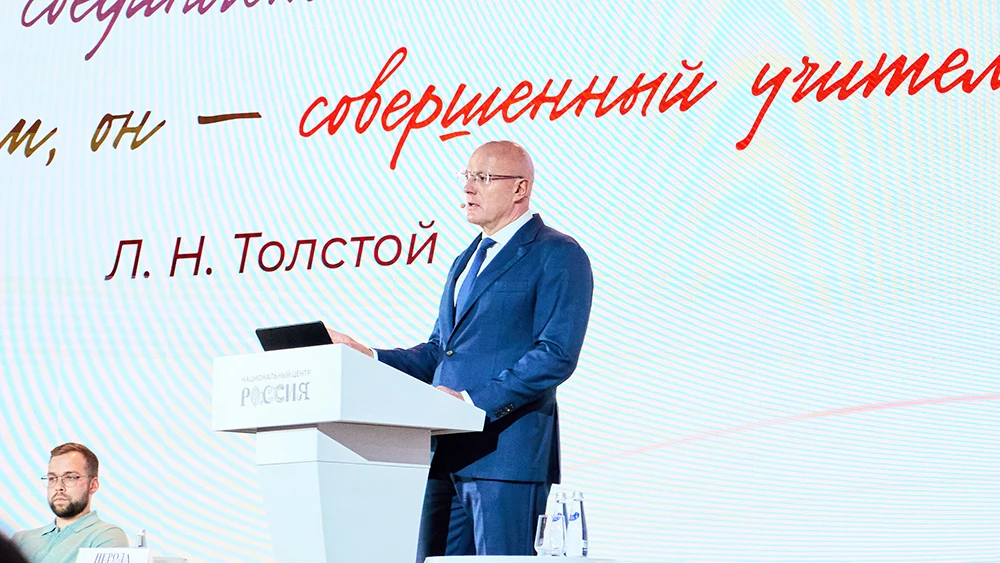
Dmitry Chernyshenko: "We are guided by the principles of mutual support and carefully preserving and passing on our traditions and values to younger generations"
Russia is systematically building a unified environment for
discovering and supporting talent — from school through to the start of a
professional career. It brings together quality education, engineering and
vocational training, support for invention and technology entrepreneurship, as
well as special status and social guarantees for teachers. On 15 September,
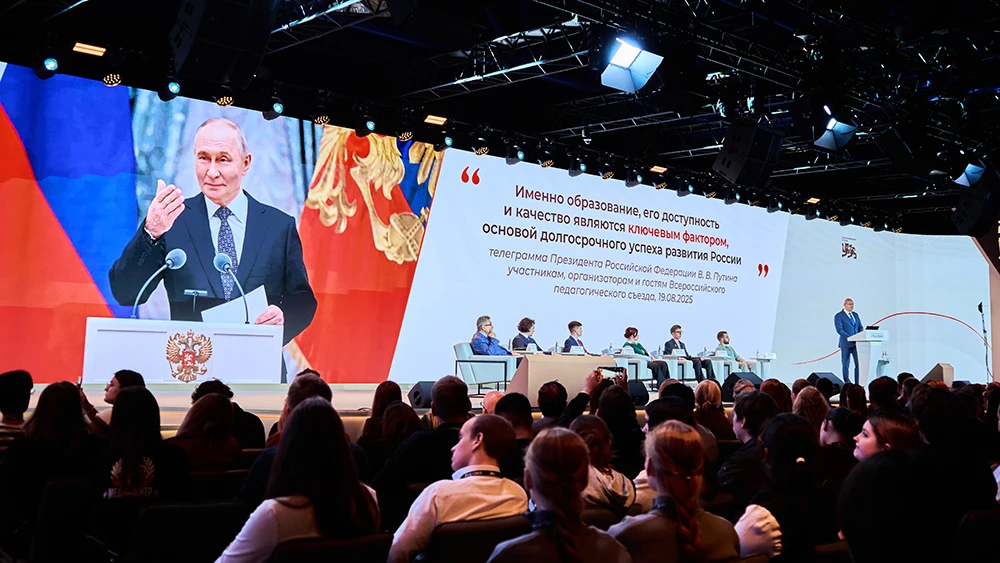
National Centre RUSSIA hosted a meeting in the "Motherland Is People" series entitled "Professionals of the Future", as part of the
All-Russian project "What Does the Motherland Begin With?" Deputy
Prime Minister of the Russian Federation Dmitry Chernyshenko joined
representatives of the education sector, young professionals, teachers and students
to discuss how an environment for developing talent and training in-demand
professionals is being created in modern Russia.
"Our meeting is taking place in the Year of Unity of the Peoples of
Russia, declared by President Vladimir Putin. The drive towards unity was
forged in response to major challenges. Thanks to the efforts of Soviet
engineers led by the chief designer of the space age, Sergei Korolev, the first
artificial satellite in history, Sputnik 1, was launched. It not only ushered
in the era of space exploration and made our country a leader in the space
race, but also created a legacy and a foundation that oblige us to provide a
worthy response to today's challenges. Here, we are guided by the principles of
mutual support and carefully preserving and passing on our traditions and
values to younger generations. We have formalised 17 spiritual-and-moral
values. Over the 12 centuries of our state's history, they have been passed
down through proverbs, epics, religious texts and legends," said Dmitry
Chernyshenko.
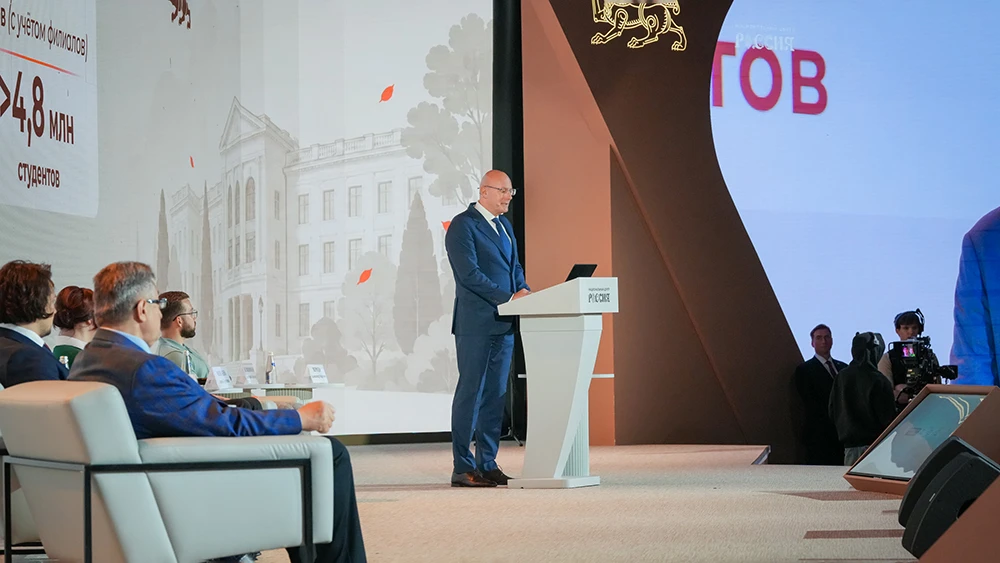
Speaking about Russian education, the Deputy Prime Minister highlighted its
sovereignty and popularity among international students. In accordance with an
instruction from President of Russia Vladimir Putin, at least 500,000
international students are expected to be studying in Russia by 2030. Today,
almost 18 million schoolchildren and 9 million college and university students
study in the country. This year, 1.5 million children started school, while
around 3 million young people entered universities and colleges. They are
taught and mentored by more than 1.4 million teachers, lecturers and
professors.
He said that, since 2025, the national project "Youth and Children"
has been implemented on the President's instructions, reaching more than 52
million people. Its measures are aimed at supporting schoolchildren, students
and teachers, as well as training specialists in demand in the labour market.
Particular attention is being paid to engineering education and skilled trades,
including the development of advanced engineering schools, student design
bureaus and clusters established jointly with enterprises as part of the
"Professionalitet" project.
Dmitry Chernyshenko also spoke about other tools that help young people develop
professional and entrepreneurial skills while they are still studying. As part
of the "Professionalitet" project, skills competitions are gaining
momentum, bringing together three separate competitions for different
categories of participants.
Another area focuses on developing technology entrepreneurship among students.
As part of the University Technology Entrepreneurship Platform project, the
Student Startup competition covers a wide range of fields, from medicine and
biotechnology to the creative industries. The latest selection round will
conclude this autumn, with winners receiving grants of 1 million roubles to
implement their projects. According to Dmitry Chernyshenko, students are
actively taking part in the competition, and the state expects to support new promising
ideas.
Russia is also reviving the tradition of invention and scientific-and-technical
creativity that existed during the Soviet era. Today, this work is continued by
the All-Russian Society of Inventors and Innovators (VOIR). As the Deputy Prime
Minister noted, work is currently under way to establish regional branches.
Dmitry Chernyshenko noted that many of the challenges and achievements of the
Soviet era were driven by a shared goal and dedication to a common cause.
According to him, this principle remains relevant today: the national goal set
by President of Russia Vladimir Putin — "realising the potential of every
person, developing their talents and raising a patriotic and socially
responsible individual" — provides the direction for the entire education
system.
Teachers and lecturers play a key role in training future professionals. On the
President's instructions, the Russian Government is systematically working to
raise the prestige of this profession, which is so important to the country.
Vladimir Putin supported an initiative to establish a special status for
teachers, which has now been enshrined in a corresponding presidential decree.
The legislation provides for protection, recognition of professional experience
and social guarantees for teaching staff.
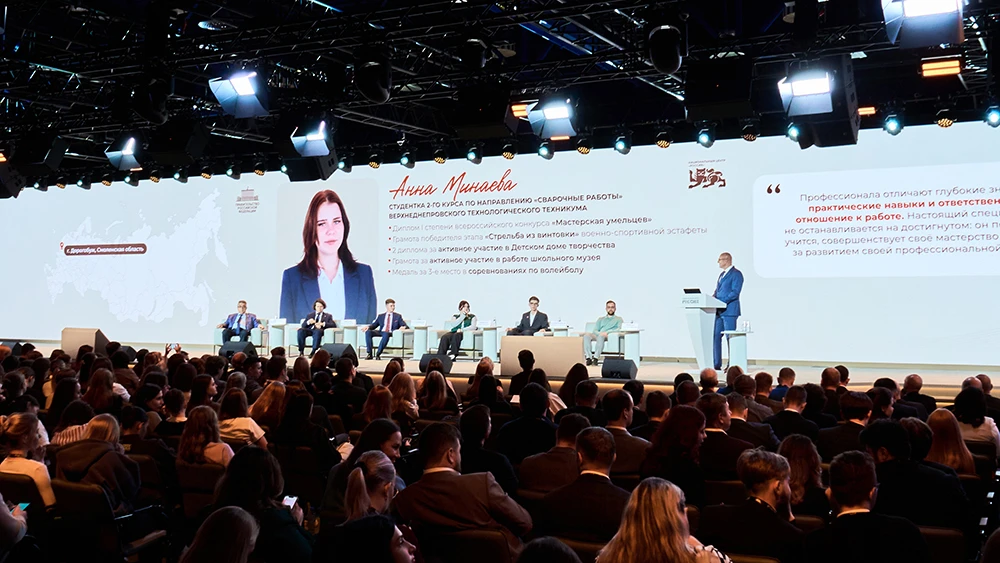
Work also continues to improve the pay system for teachers and lecturers,
particularly in rural areas. The large-scale project titled "Zemsky
Teacher" provides support for teachers working in the country's smallest
and often remote communities. The Deputy Prime Minister added that an
increasing number of young people are dreaming of becoming teachers.
Dmitry Chernyshenko discussed with participants the role of artificial
intelligence in education and science, the development of advanced engineering
schools and training specialists for technology-intensive industries, as well
as support for young researchers and the introduction of their developments
into industry.
Yevgeny Tonkov, Associate Professor at the Department of Criminal Law and
Procedure at the Law Institute of Belgorod State National Research University
(BelSU) and a member of a teaching dynasty, shared his family's traditions of
choosing a profession, spoke about his calling as a teacher and the challenges
he faces in his work. He said that his grandfather, father and other relatives
had been teachers, and that from his earliest years he had been immersed in a
school environment.
"I did not believe in fate, but I came to realise that divine providence
does exist. Even before I was born, my professional calling as a teacher had
been determined by my family. My grandfather began teaching in 1924, and my
father later continued in the profession. In 1958, when I was born, our family
lived right in a classroom at a rural school where my parents taught. They
would conduct their lessons and at the same time could come and see how I was
doing. My father later became a Candidate of Sciences, and the teaching
profession continued to be passed down through our family," said Yevgeny
Tonkov.
He also noted that this family tradition is now being continued by a new
generation, although his son has chosen a different career path. At the end of
his address, he invited the participants to Belgorod on 26 September to
celebrate the university's 150th anniversary.
The opportunities discussed at the meeting are also available to people with
disabilities. Anatoly Kholshchevnikov, winner of the 2026 regional Abilympics
Championship in St Petersburg in the Industrial Robotics competence, shared the
story of his success. Last year, he graduated from a college of shipbuilding
and information-and-applied technologies and began working as an installer of
radio-electronic equipment at the "Sistema Upravleniya i Pribory"
("Control System and Devices") enterprise. Taking part in the
Abilympics championship gave him an opportunity to develop his professional
skills and test himself in a competitive environment.
"My journey with Abilympics began when my teacher, Olga Valeryevna
Zhigulskaya, suggested that I take part in the championship. I did not believe
I would achieve anything. We trained extensively: I learned to programme, read
technical drawings, assemble circuits and complete tasks within a set time. Of
course, I did not get everything right straight away — we analysed my mistakes
and kept working. In the end, I came first in St Petersburg, took fourth place
at the national final in Moscow, and a year later came third in the final of
the Electric Drive and Automation competence. The Abilympics championship final
will take place in Moscow from 31 October to 3 November, and I will compete in
the Electro and Future Architect: Neural Network Art competences," said
Anatoly Kholshchevnikov.
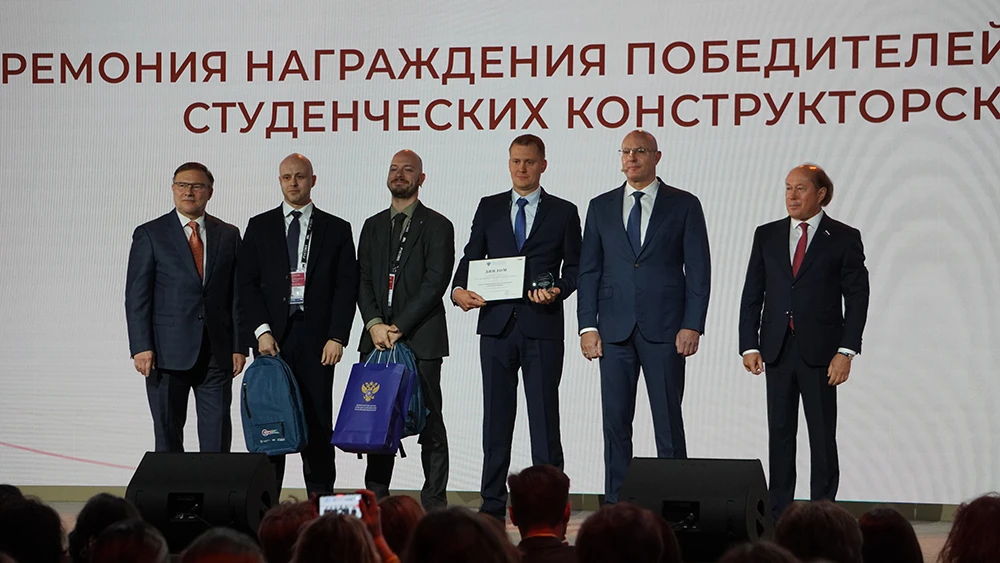
The final part of the meeting saw the results announced of the 2026 competition
to select student design bureaus. Diplomas, commemorative gifts and statuettes
bearing the inscription "Student Design Leadership" were presented in
a ceremony to 15 teams from different regions of the country. The awards were
presented by Deputy Prime Minister of the Russian Federation Dmitry
Chernyshenko; Deputy Minister of Science and Higher Education of the Russian
Federation and Chair of the selection committee Dmitry Afanasyev; and VOIR
Chairman and Deputy Chair of the State Duma Committee on Science and Higher
Education Vladimir Kononov.
"Motherland Is People" is part of the original project "What
Does the Motherland Begin With?", launched by the National Centre RUSSIA.
The series consists of several stages involving representatives of the Russian
Government, heads of federal executive bodies, heads of Russian regions and
public opinion leaders.
Event photobank
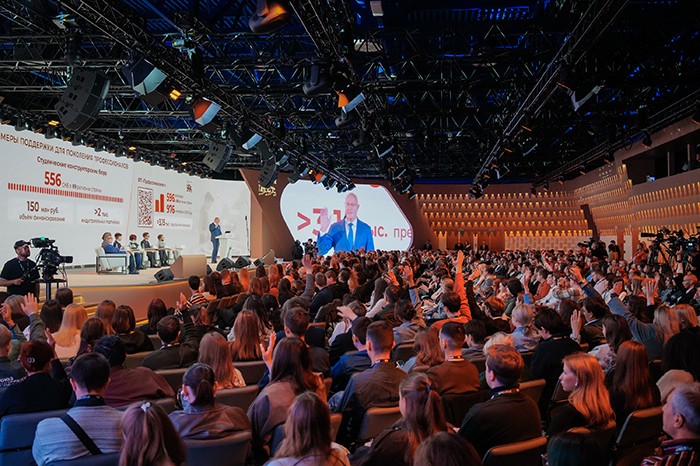

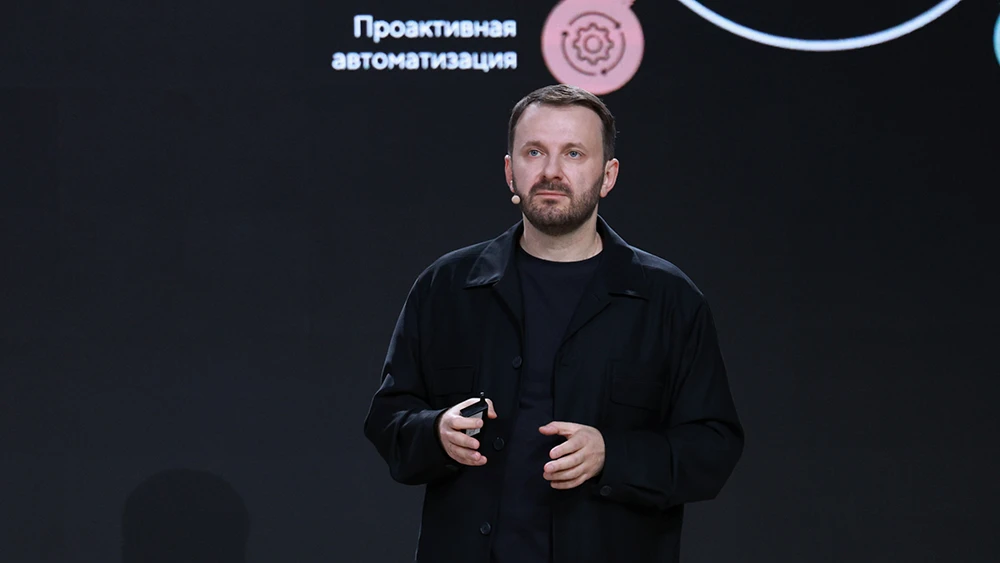
The new session of the international expert project by the National Centre RUSSIA, titled "The World of the Future: What World Will We Invent?", was held on 15 September at the Yekaterinburg-EXPO International Exposition Centre.
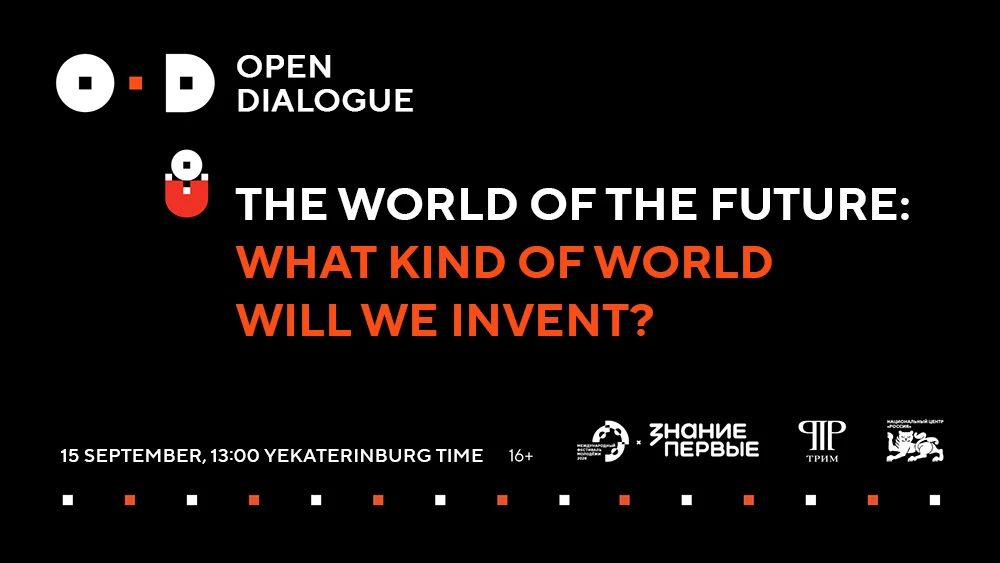
A discussion as part of the Open Dialogue "The Future of the World. A New Platform for Global Growth" has begun at the session "The World of the Future: What Kind of World Will We Invent?"
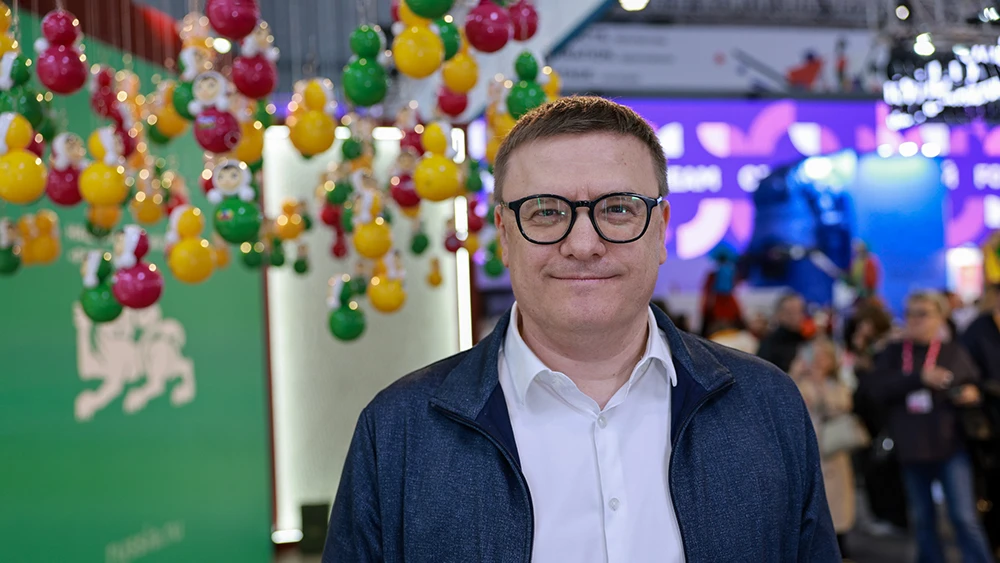
At the International Festival of Youth — 2026 (IFY-2026) in Yekaterinburg, the Chelyabinsk Region Governor Alexei Teksler visited the National Centre RUSSIA stand.


