


Maxim Oreshkin at International Festival of Youth — 2026: "The future is not predicted — it is designed"
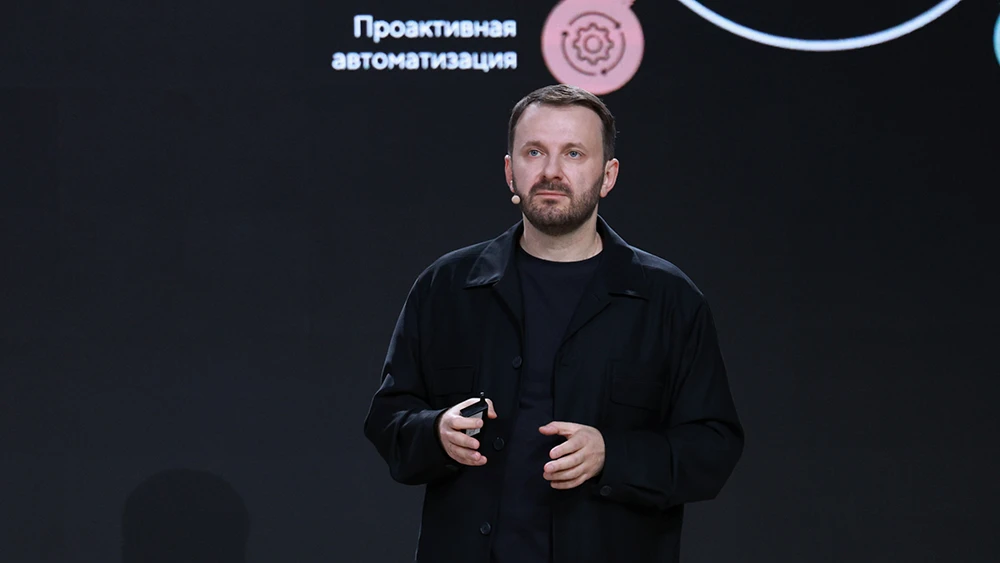
At the International Festival of Youth – 2026, Maxim
Oreshkin, Deputy Chief of Staff of the Presidential Executive Office of the
Russian Federation, presented key points on shifts in global economic and
demographic balances, technological transformation and the role of people in
the new economy as part of the Open Dialogue "The Future of the World. A
New Platform for Global Growth". The new session of the international
expert project by the National Centre RUSSIA, titled "The World of the
Future: What World Will We Invent?", was held on 15 September at the
Yekaterinburg-EXPO International Exposition Centre.
The economy is no longer unipolar
Opening his speech, Maxim Oreshkin highlighted the emerging global trend
towards a multipolar world economy. According to him, until recently, the G7
countries accounted for almost half of the global economy, while the BRICS
countries accounted for only one fifth. Today, the proportions have reversed:
the company of emerging-market economies is gradually moving ahead, while the
share of traditional economic centres is declining.
The global economy increasingly resembles a network of interconnected centres
of growth rather than a hierarchy with a single dominant centre. As the
economic balance changes, so does the architecture of international relations.
"The G7 countries and Western countries used to dominate the creation of
new technological solutions, but the situation is changing. China has already
taken first place, while Russia is moving up the rankings. The BRICS countries
are also beginning to play an increasingly important role in this area, first
of all India, Pakistan, Bangladesh, Indonesia and Egypt. At the same time, most
of the economic growth and development by the end of the 21st century will come
from African and Southeast Asian countries, which occupy advantageous economic
positions as connectors and centres for the development and flow of goods,
capital, knowledge and technology," Maxim Oreshkin stressed.
Speaking about the impact of sanctions on economic dynamics, he also noted
that, based on the experience of recent years, those imposing sanctions are the
first to suffer from them. Maxim Oreshkin recalled that Russia is subject to
more sanctions than any other country, while its economy has grown by 10.3%
over the past three years — above the global rate overall.
Maxim Oreshkin also highlighted three key levels of sovereignty for every
country: state sovereignty, associated with territorial integrity and the
security of citizens; societal sovereignty, encompassing national values,
history, religions and the cultural code; and socio-economic sovereignty, bringing
together the country's resources and human capital.
Demography changes everything
Speaking about the new demographic picture of the world, Maxim Oreshkin
stressed that forecasts have changed significantly over recent decades.
According to current research, the world's population is now expected to reach
its peak as early as 2046. At the same time, the familiar demographic structure
of the planet is gradually changing: the share of the working-age population is
declining, which will have a significant impact on global economic processes.
"The older population is growing step by step, and this trend will
continue. Africa's share of the world's population is increasing. The number of
people above working age is growing significantly, which means that the burden
on the working-age population will increase considerably. At the same time,
fertility is declining unevenly: in some places it is falling, while in others
it remains high. According to our forecasts, by the end of this century, most
of the working-age population will be concentrated in African countries,"
Maxim Oreshkin stressed.
The Deputy Chief of Staff of the Presidential Executive Office of the Russian
Federation noted that while Africa will be home to the majority of the world's
working-age population by the end of the century, the ratio of older to working
people in Asia will change dramatically. Today, most births take place in Asia,
primarily India, and Africa, and according to Maxim Oreshkin, these regions
will be home to most of the world's population in several decades.
He also stressed that demographic shifts would bring major changes to the
global economy, primarily increasing the burden on pension systems regardless
of their model, since the goods and services consumed by pensioners are
ultimately produced by the working-age population. As the working-age
population shrinks, financial assets and real estate will become less valuable.
As an example, he cited China, where, according to him, the population will
fall from the current 1.4 billion to 500 million by the end of the century,
with a significant decline in the urban population as well. Changes in the age structure will also increase the importance of healthcare
and reduce education's share of the economy. According to the speaker, this
process is already visible in South Korea and China, where schools are closing
because of a sharp decline in birth rates. Overall, this trend will change the
structure of international economic ties, as centres of working-age and elderly
populations will be located in different parts of the world.
Technology is becoming widespread and accessible
According to Maxim Oreshkin, amid the global transformation of socio-economic
processes, AI, digital platforms and autonomous systems will play a major role
in shaping the new technological stack of the economy. The capabilities of
models are expanding, while the cost of using them is falling by orders of
magnitude. Artificial intelligence is already being used in medical
diagnostics, the analysis of large volumes of data, content production and
other areas. Increasingly, the question is not whether to use AI, but how
quickly and effectively it can be integrated into real economic processes.
"Fifteen years ago, we spoke only about specialised AI — machine learning.
Today we are entering the era of generative artificial intelligence, which is
already based on all of humanity's knowledge. Individual agents can easily
perform certain functions and interact with the outside world, and we are
getting closer to the era of artificial general intelligence. One of the main
trends is the falling cost of using models. As they develop, they become
higher-quality and more efficient; computing becomes cheaper, and the energy
consumption of computing per unit of processing decreases. All of this means
that artificial intelligence is beginning to play a role in an increasing
number of processes in our lives," Maxim Oreshkin added.
Another technology actively changing the world, he said, is digital platforms.
Maxim Oreshkin noted that they represent a fundamentally new way of organising
industries, combining the best features of market and planned economies. As an
example, he cited the taxi industry, where the use of platforms has increased
the utilisation of drivers in Moscow's taxi sector from 30% to more than 80% of
their working time. According to him, this approach makes it much easier to introduce artificial
intelligence, since a digital platform is built from the outset around data on
all participants and transactions. In the coming decades, this process will
extend to areas such as healthcare and education. The speaker placed particular emphasis on digital sovereignty. According to
him, sovereignty can be at a zero level when data is stored on a foreign
platform outside the country. In such a case, economic activity can be halted
from outside at any moment. There is also a basic level of digital sovereignty,
when the platform belongs to another country but data is localised within the
state. The advanced level, which Russia has achieved across all areas,
according to Maxim Oreshkin, involves using domestic solutions and platforms,
with all data stored within the country.
The role of people is changing, but not disappearing
As technology develops, the set of key human competencies is also changing.
Critical thinking is becoming more important than simply being able to delegate
tasks to algorithms. Technological literacy and soft skills are gaining
increasing value.
"First and foremost, the use of AI today is affecting not the automation
of manual labour, but intellectual work. The areas where AI is being actively
integrated include management, law, business and services, administrative
support, mathematics, and the natural and social sciences. At the same time,
manual labour, construction and agriculture are being automated to a much
lesser extent. We need to keep all this in mind and understand that the
principles of work will change, but a balance should be maintained. Complete
reliance on artificial intelligence leads to a decline in people's critical
thinking and overall level of knowledge. However, if people manage this process
properly, AI will help us achieve the best possible results when it comes to
flexibility, creativity and curiosity," Maxim Oreshkin stressed.
Four areas shaping quality of life
The changes affect not only the economy but also people's everyday lives. Maxim
Oreshkin highlighted four areas that are becoming particularly important in the
new reality:
Education — a continuous development system based on platforms, data and the
capabilities of artificial intelligence.
Health — a shift from episodic treatment to managing a person's health
throughout their lifetime. The quality of work and the analysis of research are
improving.
Culture — not only content, but also competition for attention, identity and
behavioural patterns. Composers, producers, screenwriters and writers are
actively using AI to create content. According to research, around 50% of audio
tracks are generated with the help of AI, while only a few people are able to
distinguish music written by humans from AI-generated works. The structure of
content consumption on social media is changing: the volume of English-language
content is declining, while interest in short-form formats is growing.
The city — not a collection of individual technologies, but an interconnected
system of services built around people. According to the speaker, Moscow is the
world's most comfortable city, while other cities with populations of more than
one million are also developing rapidly thanks to digital services.
Russia's own model of the future
What Russia is now designing for itself and its citizens, Maxim Oreshkin noted,
is essentially a platform for the future that the country is ready to share
with the world. According to him, Russia has strong sovereign solutions both in traditional
sectors — energy, agriculture, logistics and industrial production — and in
advanced areas such as artificial intelligence, digital platforms and
autonomous systems, as well as healthcare, human development, culture and
modern urban life. He stressed that Russia not only uses these solutions itself but is also ready
to share them with any country in the world on the principles of equal
partnership — unlike Western countries. In particular, according to him, when
Russian platforms enter foreign markets, full data localisation and joint work
with local companies are envisaged.
"In a world where sovereignty is becoming crucial, it is precisely the
combination of each country's history, culture and uniqueness with
technological solutions such as artificial intelligence and digital platforms
that makes it possible to respond to today's challenges. And this, of course,
shapes the future of every country. And we, as Russia, which is leading this
global development, are ready to build the future of every country together for
the benefit of every person on this planet," Maxim Oreshkin concluded.
The international expert project Open Dialogue "The Future of the World. A
New Platform for Global Growth" is implemented by the National Centre
RUSSIA in partnership with the Centre for Intersectoral Expertise "The
Third Rome". The project provides an independent platform for an open
exchange of ideas among representatives of business, science, government
institutions and expert communities from different countries.
The importance of the project has been recognised at the highest level.
President of Russia Vladimir Putin has highlighted its role in shaping a new
global agenda and developing international dialogue. The expert session in
Yekaterinburg continued the international discussion on shifts in global
economic and demographic balances, technological transformation and the role of
people in the new economy. Since its launch, the project has brought together
more than 3,000 essay authors and experts from more than 120 countries, who
have presented their ideas, projects and proposals.
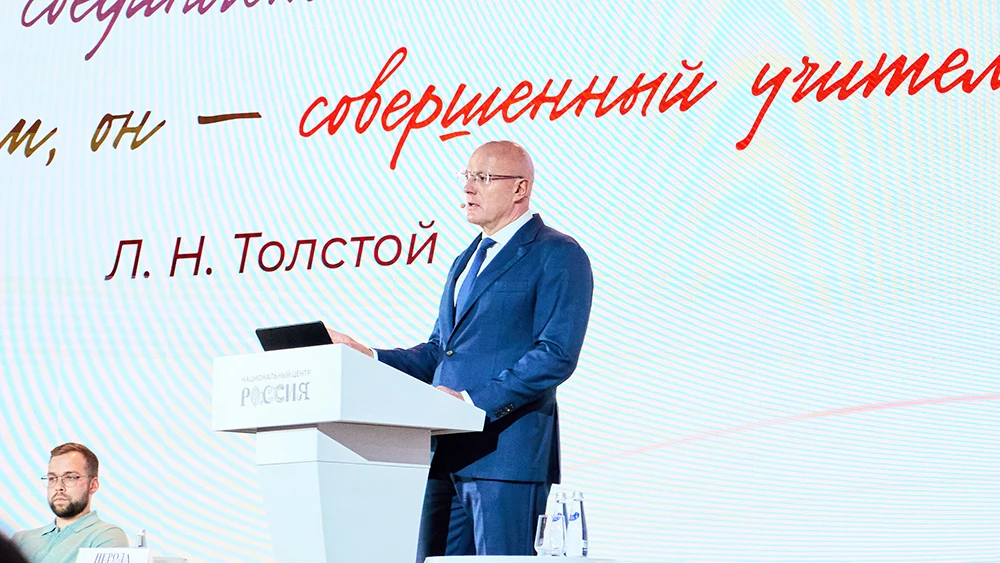
On 15 September, National Centre RUSSIA hosted a meeting in the "Motherland Is People" series entitled "Professionals of the Future".
A discussion as part of the Open Dialogue "The Future of the World. A New Platform for Global Growth" has begun at the session "The World of the Future: What Kind of World Will We Invent?"
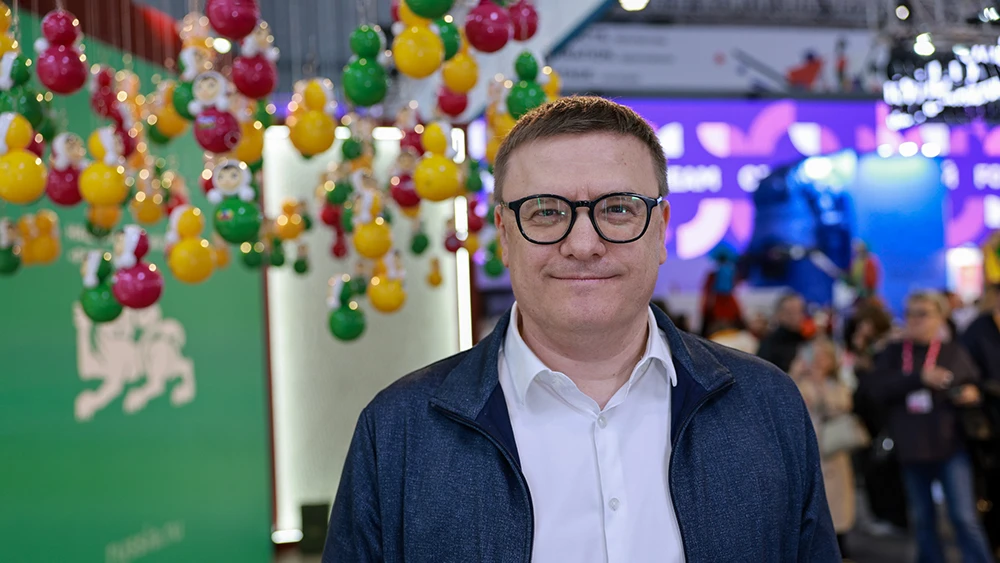
At the International Festival of Youth — 2026 (IFY-2026) in Yekaterinburg, the Chelyabinsk Region Governor Alexei Teksler visited the National Centre RUSSIA stand.


