


History and traditions of May Day: the National Centre RUSSIA congratulates you on Spring and Labour Day
Spring and Labour Day is celebrated on 1 May in Russia. This day combines several meanings at once: the renewal of nature, respect for labour, and the memory of a long history of struggle for fair working conditions. The holiday received its current name in 1992, replacing the International Workers' Solidarity Day.
The history of the holiday is rooted in the depths of centuries. Long before the emergence of trade unions, 1 May was a spring festival associated with the land and fertility. People decorated houses and squares with green branches, wove wreaths, chose a "May King and Queen," and danced around the Maypole, believing this would bring a good harvest and prosperity. Similar traditions existed in Rus: spring festivals were accompanied by rituals, bonfires, and songs in honour of nature's renewal.
In Russia, May Day demonstrations began in the pre-revolutionary period. In 1891, the first "mayovka" was held near St Petersburg, organised underground: workers and students gathered outside the city to discuss their rights and the country's future. By the beginning of the 20th century, May Day rallies and demonstrations became mass events, and in 1917, after the February Revolution, the holiday was celebrated openly for the first time. In 1918, 1 May became a state holiday called International Day, and in the Soviet era, it turned into one of the primary days on the calendar.
In the USSR, May Day was associated with demonstrations of thousands, banners, the "Peace! Labour! May!" slogans, labour achievements, and a festive mood. In addition to the processions in cities, 1 and 2 May became a time of family tradition for millions — trips to the countryside, socialising with friends, and informal mayovkas that remained in the folk memory even after the change of eras.
Following the dissolution of the USSR, the holiday remained but changed its name and emphasis. Since 1992, the Spring and Labour Day has been officially celebrated in Russia. The political component has taken a back seat, while themes of respect for the working person, the opportunity to rest, spend time with family, be outdoors, and engage in a favourite hobby have gained greater significance. 1 May remains a non-working public holiday, as enshrined in the Labour Code, and for many Russians, it is the symbolic start of the long-awaited warm season.
In the Year of Unity of the Peoples of Russia, May Day acquires additional meaning. Our country is home to more than 190 peoples, each contributing to common development and cultural wealth. In this context, spring and labour are not only about personal renewal and work but also about shared responsibility for the country and the preservation of peace, harmony, and respect between people of different nationalities and traditions.
The National Centre RUSSIA, established by the Order of President of the Russian Federation Vladimir Putin to demonstrate the country's achievements, becomes a special platform for unity on such days. Here, the themes of labour, history, and cultural diversity are revealed through expositions, creative programmes, educational meetings, and masterclasses. At the National Centre RUSSIA, one can see how the image of the working person has changed across different eras, how modern technologies sit alongside traditional crafts, and how the culture of a metropolis and the lifestyle of small nations merge in one territory.
Spring and Labour Day is a reminder that respect for labour, mutual support, and solidarity remain relevant today. The National Centre RUSSIA congratulates everyone on Spring and Labour Day and invites you to spend the May days usefully. Throughout the festive days, the "Geography Lessons" exposition will be open to visitors. This is a unique journey through cartographic treasures from the country's leading repositories, which can be visited either as part of a guided group or independently with an audio guide. Memorial and patriotic campaigns will complement the May holiday programme. On 1 May, the "Wall of Memory" nationwide campaign will open at the National Centre RUSSIA, where everyone will be able to place a photograph of their hero.

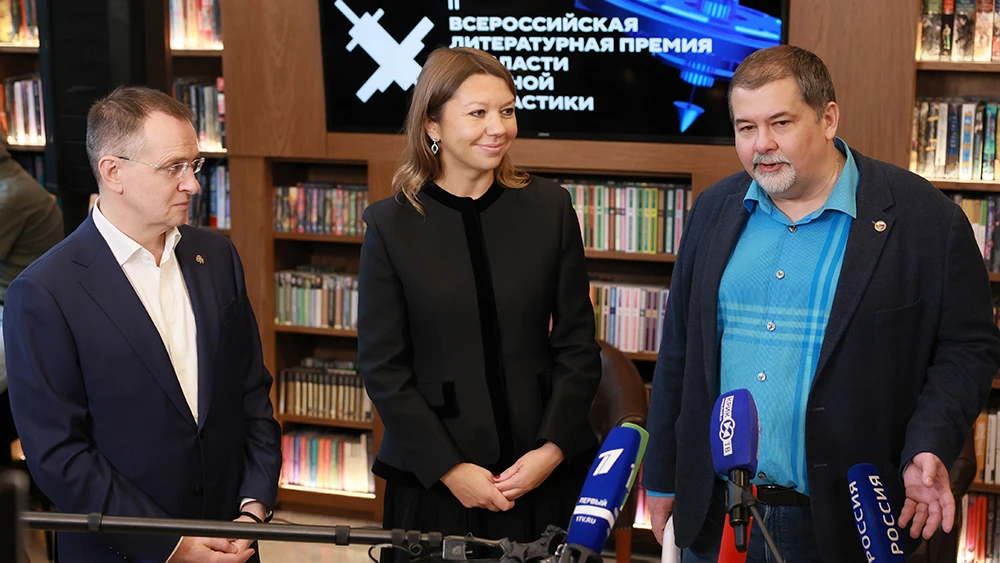
Thirty-nine literary works published in 2025 have been included in the longlist for "Fiction", the main category of the II All-Russian Science Fiction Literary Award.


