


How to explain Russia to foreigners: tour guide Dmitry Tyrkov’s approach

Is it possible to explain Russia to someone who has never seen snow, never read Pushkin and never drunk tea from a samovar? Dmitry Tyrkov believes it is — if you speak to a person in their own language and within their own frame of reference. The tour guide has worked at the National Centre RUSSIA since it opened. By training, Dmitry is an Orientalist specialising in Chinese studies. For many years he lived in China, representing Russia there.
The main focus of his work today is conducting tours in Russian and Chinese. If a group speaks Chinese, he gives the entire tour in their language. When guests arrive who speak other foreign languages, Dmitry structures his narrative so that it can be easily translated by an accompanying interpreter. He also knows English but deliberately does not conduct tours in it: the centre has specialised English-speaking guides who work with their own methodology and approach.
"When delegations visited us, I often had to accompany them and speak about the life and culture of Russia. That was when I first realised how important it is to be able to ‘explain’ your country in another language and within another frame of reference — that experience helps me a lot today. When I conduct a tour in Chinese, I always remember that for guests it is not just a walk through an exposition. For them it is an opportunity to see Russia as we see it ourselves. That is why it is important to choose clear images, comparisons and historical parallels — so that a person does not simply remember facts but feels the atmosphere of the country," says Dmitry Tyrkov.
A particular topic is Russian fairy tales — images and storylines that are not obvious to foreign audiences. Figures such as Yemelya, the pike, or the Mistress of the Copper Mountain require additional explanation. Guests from China need more than a literal translation of the names; it is necessary to find similar ideas in their own cultural tradition — magical helpers, guardians of treasures, epic heroes. Each such tour requires preparation, yet it also becomes a source of new experience: unexpected questions encourage guides to expand their material and search for new explanations.
"It is important not simply to retell the plot but to convey the principle: this is a magical helper, this is a guardian of treasure, this is a hero who undergoes trials. When that happens, a person finds a parallel in their own epic tradition — and Russian history becomes closer and easier to understand," the guide notes.
Asked whether it is easier to work with foreign guests or Russian-speaking visitors, Tyrkov says he tries to ‘live’ in the language of the group. When a guest speaks in their native language, it becomes easier to sense nuances, mentality and mood and to build a relationship of trust. At the same time, foreign visitors often prove more open: they are in another country, hear the story in their own language and enter into dialogue more readily.
According to Dmitry, the emphasis of a tour also differs depending on the audience. With Russian visitors it is possible to rely on familiar cultural codes, while for foreign guests it is important first to explain what exactly is being shown and why. "I always try to work with a person in their own language — then it becomes easier to feel the audience. With our guests we can joke more and rely on shared cultural references, while with foreigners it is important first to build a bridge of understanding. But in any case the goal is the same: that a person leaves with the feeling that they truly understand Russia a little better."
The work of a tour guide requires concentration and places a serious strain on the voice, especially when tours follow one after another and in different languages. Dmitry admits that the best way to recover is silence and hot tea: after a demanding day it is important simply to sit quietly. Sometimes rest also comes from a change of audience — after lively groups of children, a calm tour for adults offers an opportunity to look again at familiar material and experience it anew.
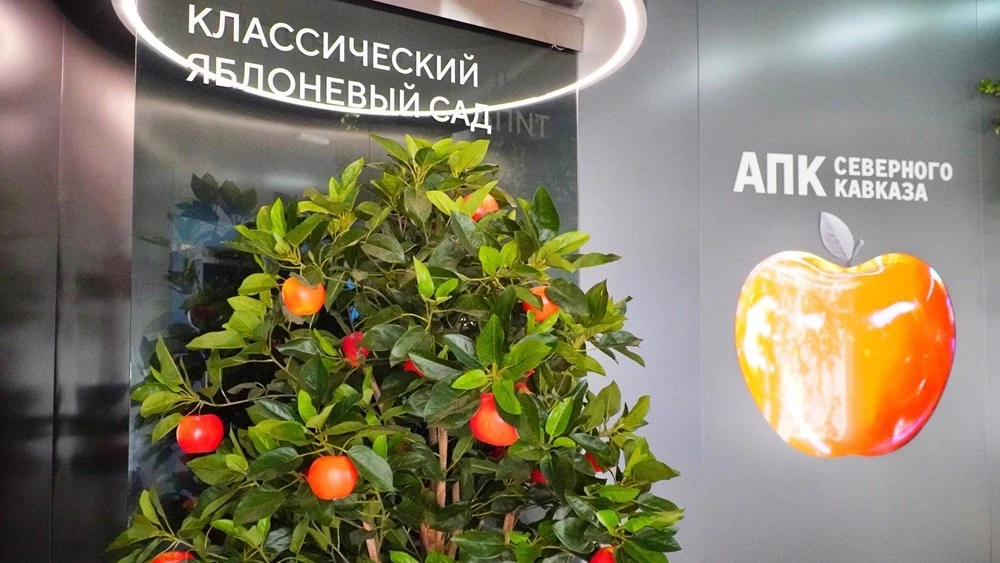
A large-scale exposition "Geography Lessons" is preparing to open at the National Centre RUSSIA — a journey through centuries along the maps of our country.

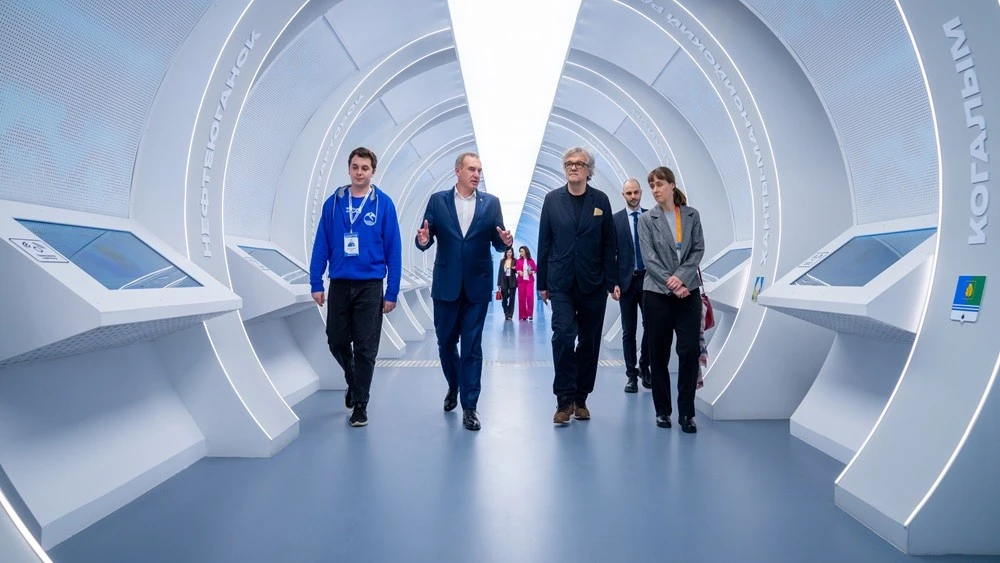
The tour for the guest was led by the Governor of Yugra, Ruslan Kukharuk.


