


How ornament on rovduga is born: the National Centre RUSSIA showcases northern peoples' craft at the trade fair "INNOPROM"
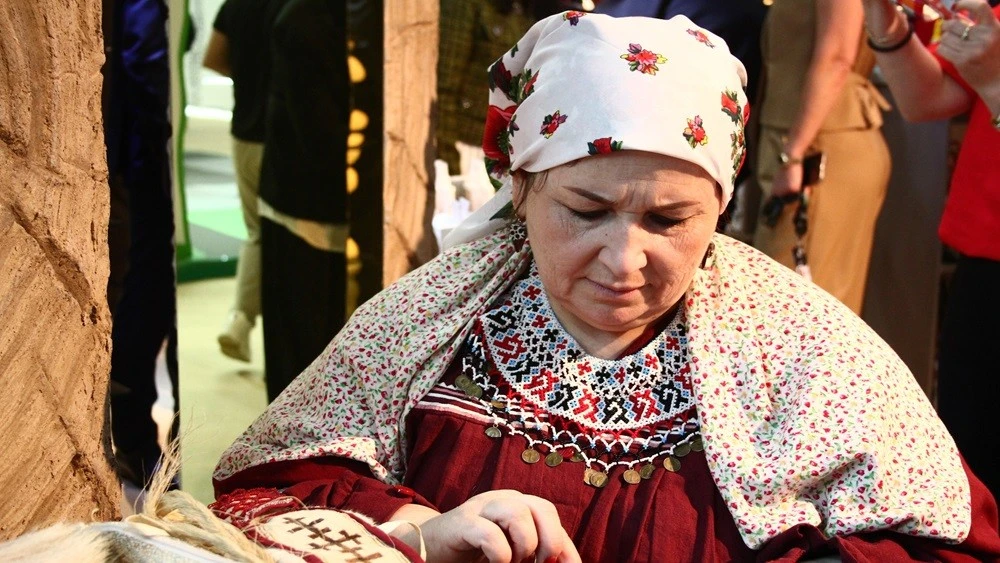
One of the most ancient crafts of the indigenous peoples of the North — the making of items from rovduga (soft tanned hide) — was presented by the National Centre RUSSIA at the International Industrial Trade Fair "INNOPROM. Central Asia" in Tashkent. Craftswomen from the Khanty-Mansi Autonomous Area — Yugra showed how durable, warm, and yet elegantly decorated items are created from reindeer and elk hide. The craft demonstration offered visitors an opportunity to see a preserved Russian tradition and understand how ancient crafts continue to live and develop in the modern world.
The making of items from rovduga, a type of rawhide, is a traditional craft of the Khanty, Mansi, Evens, and other northern ethnic groups. Rovduga is valued for its softness, strength, and ability to retain heat even in harsh climatic conditions. The material is prepared by hand: the fur is removed from reindeer or elk hide, the flesh is scraped off, then the hide is dried, and treated using natural components. This lengthy and labour-intensive process yields a flexible, durable base for clothing, bags, and accessories.
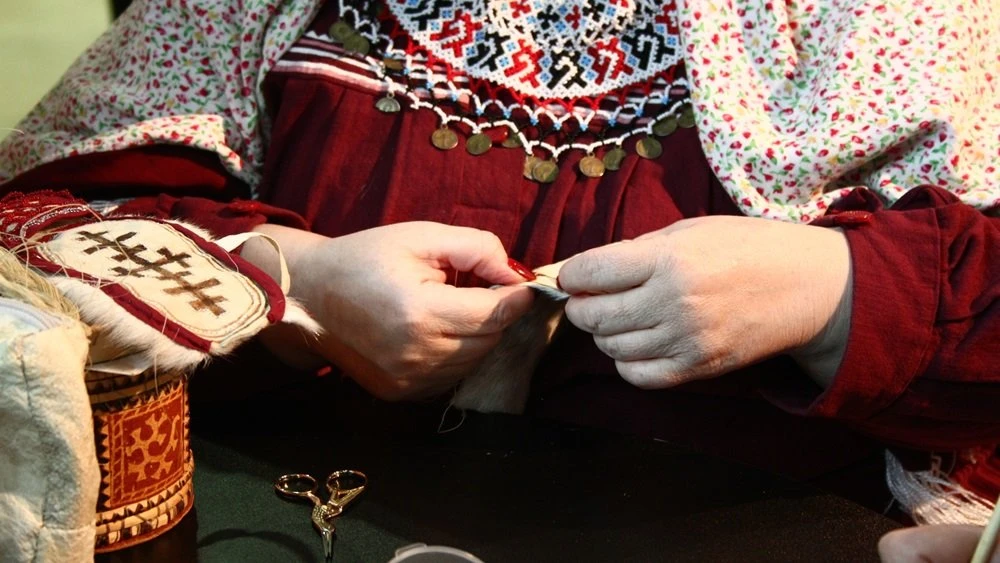
In Tashkent, masters Maria Igisheva and Yelena Fedotova demonstrated the technique of making a small but illustrative item — a needle cushion from rovduga. Before the guests' eyes, they sequentially performed several stages of artistic treatment. First, the ornament is applied to the rovduga using natural birch paint, followed by embroidery on the leather using under-neck reindeer hair. This is how a unique, signature item is born, combining knowledge of natural materials, the aesthetic of northern peoples, honed craftsmanship, and deep symbolism.
"For example, the pattern that we call 'hare's ears', and elsewhere known as 'deer antlers', actually belonged to our greatest goddess, Kaltash. Women apply it so that the family line continues and so that the children are safe. And if it is a bird — it symbolises spring and a connection with heaven. That is why there are many birds on clothing. Also, it is very important to understand that every craftswoman puts something of her own into the pattern: in one family, it might be, for example, deer antlers, while in another — a cedar cone. So, there is a lot of personal, family meaning here," Yelena Fedotova explained and demonstrated.
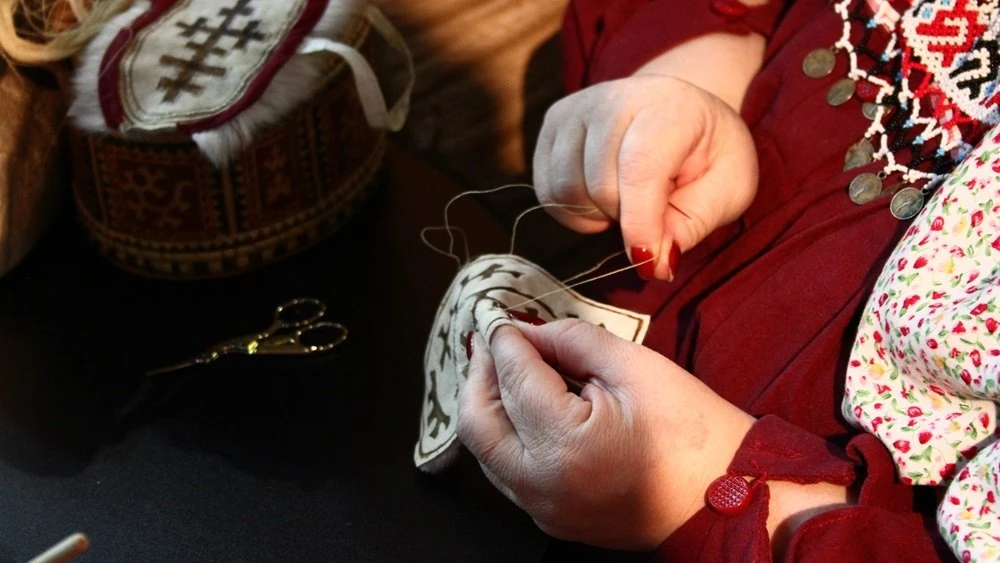
The finished needle cushion is not just a decoration. In traditional life, it was sewn onto a fur bag and was always within easy reach of the mistress of the house. The shape, placement, and pattern of such items were part of a larger image, helping to organise the daily life of a nomadic or semi-nomadic people and simultaneously highlighting the craftswoman's individuality.
The demonstration of making items from rovduga was part of the programme offered by the Department Store of the National Centre RUSSIA, which is being presented abroad for the first time. The stand showcases products from dozens of Russian manufacturers — from delicacies to folk arts and crafts — and each product contains a living narrative about the culture and traditions of the country's regions. All items can be not only examined but also purchased immediately.
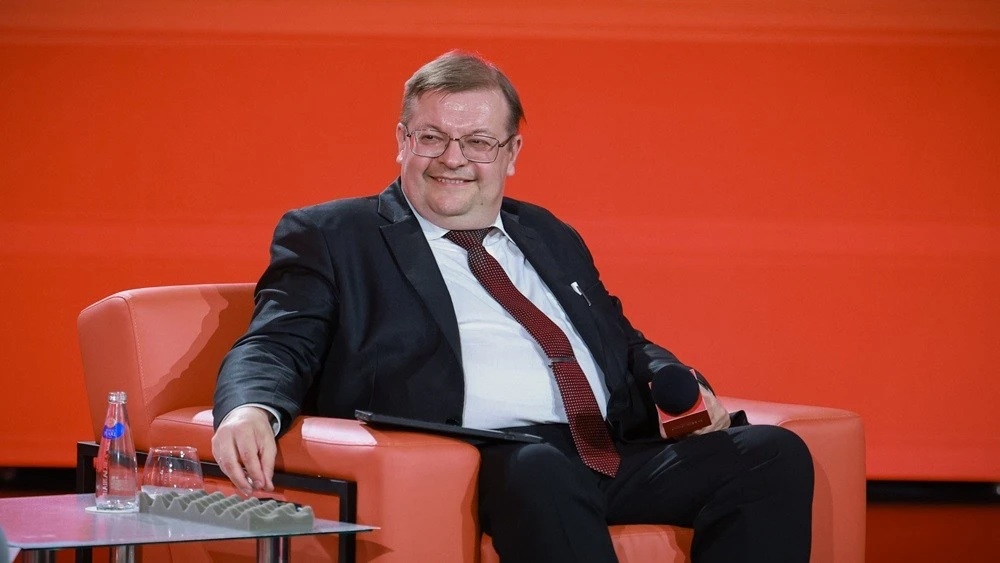
During the first lecture of a new series of historical meetings at the National Centre RUSSIA, experts examined persistent myths surrounding the storming of Berlin.
The Motherland is not just a point on a map, nor only the city where you were born or raised.

The international exposition-forum ARCH MOSCOW will open at Gostiny Dvor (the Old Merchant Court) on 27 May.


