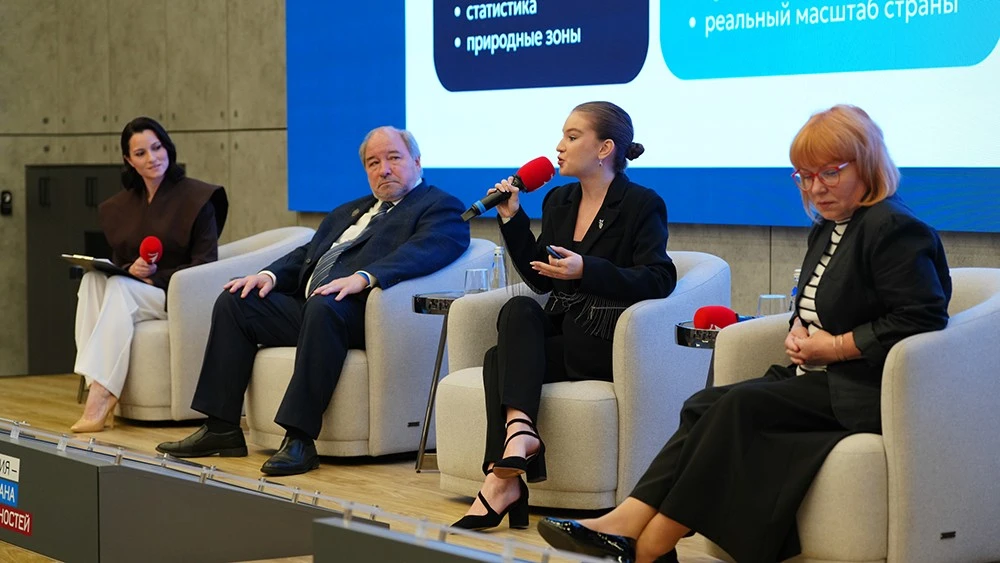
How a weather forecast is made: "Meteorological Station" workshop held at the National Centre RUSSIA
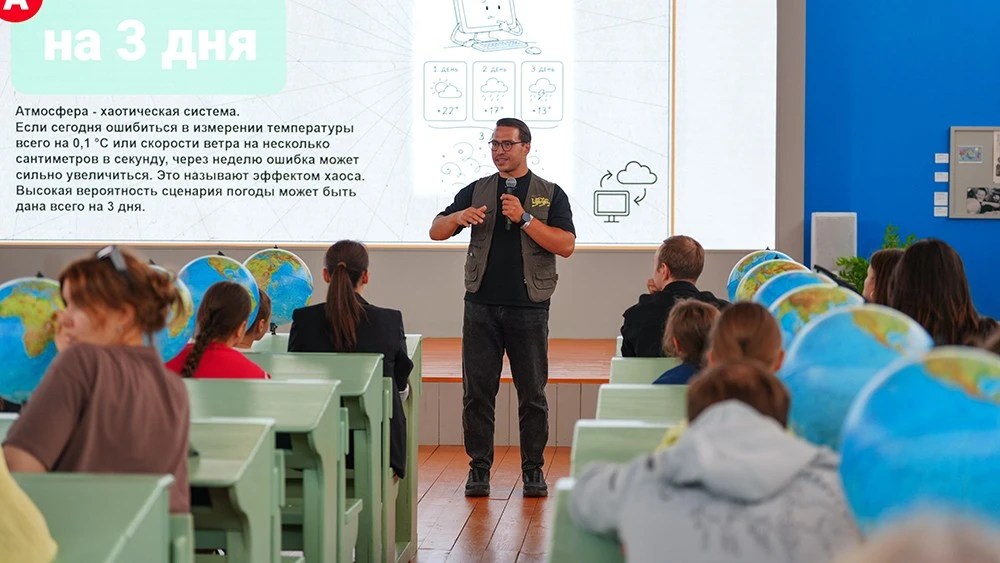
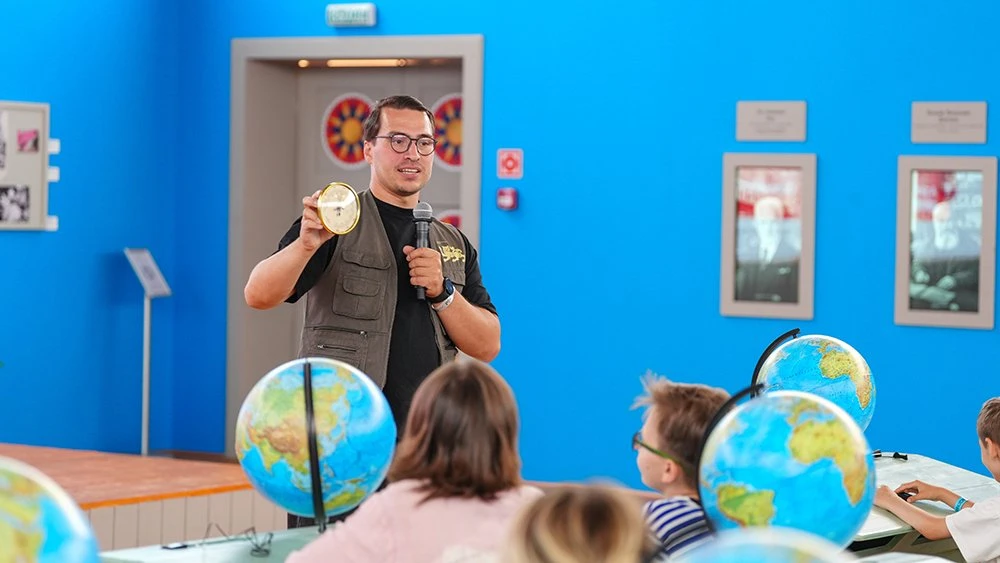
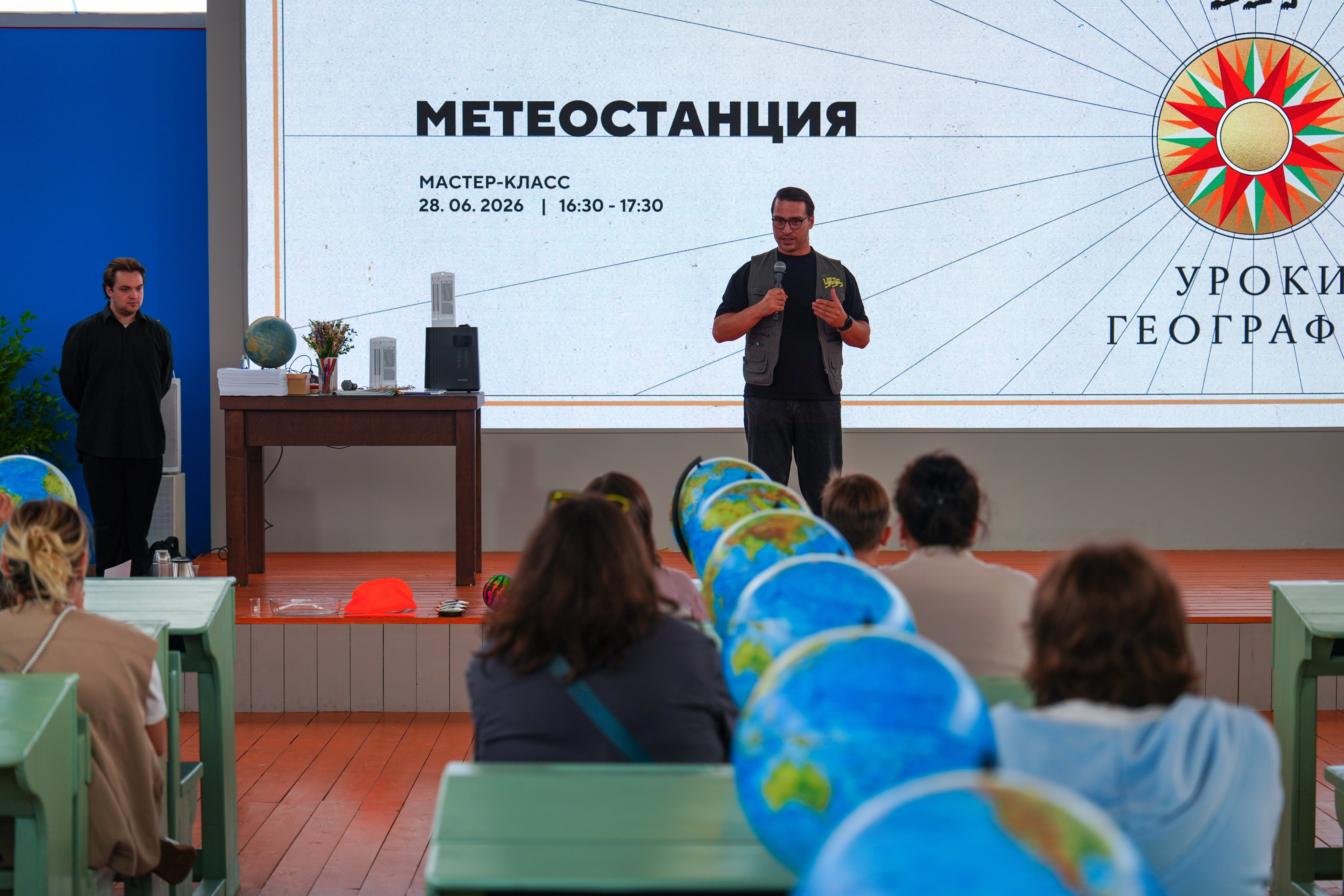
How to create clouds, make a ball "float" in the air and predict rain were among the things participants learned at the "Meteorological Station" workshop in the "Geography Class" lecture hall at the National Centre RUSSIA. The event was led by Fail Gubaidulin, leading specialist at Lomonosov Moscow State University, engineer physicist and research associate. The expert explained how to measure temperature, pressure, humidity and wind speed using professional instruments and make a weather forecast of one’s own.
The session began with an interactive quiz about the properties of the atmosphere and weather records. Participants guessed how much a cloud measuring one kilometre by one kilometre weighs, what the highest and lowest recorded temperatures on Earth are, how fast the wind can blow at its maximum speed and how accurately supercomputers can predict the weather. For correct answers, the schoolchildren received unusual pencils with a "secret": plant seeds are hidden inside and can be planted in the ground.
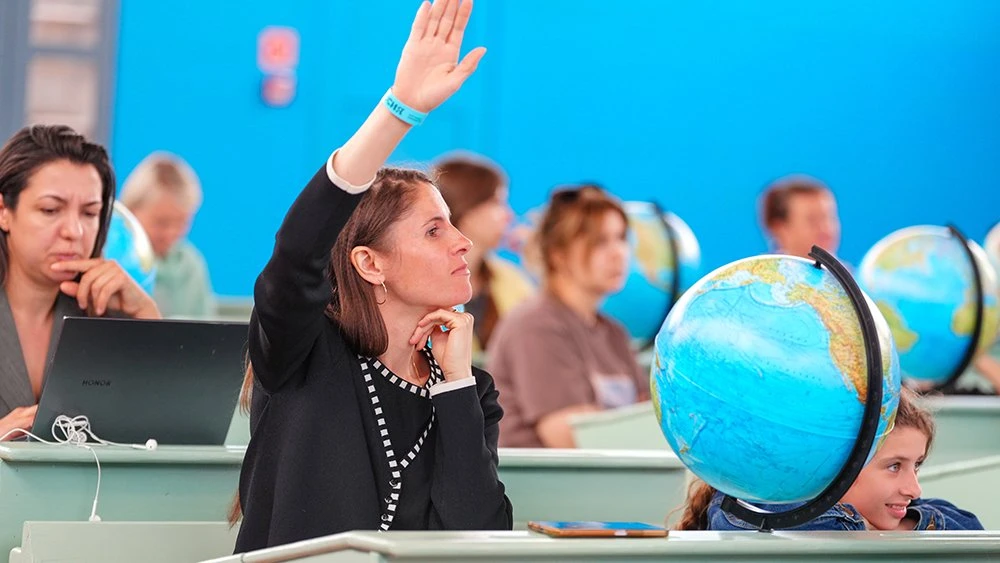
After the warm-up, the participants moved on to exploring the tools of a real meteorologist. The children worked with electronic and liquid thermometers, barometers, hygrometers and instruments for measuring wind speed and the direction of air flows. The schoolchildren measured the air temperature in the classroom, compared the readings of "dry" and "wet" thermometers, learned how to determine relative humidity using a special table and recorded the data in a meteorological log.
"A meteorologist never relies on just one instrument. It is important to look at temperature, humidity, pressure, wind and clouds at the same time. That is when the readings turn into a clear picture of the weather, rather than simply a set of numbers on a screen," Fail Gubaidulin explained.
In the practical part, guests saw visual experiments. Using hot water and a cryogenic liquid, the expert showed how moisture can be "extracted" from the air and a cloud can literally be created right in the classroom — it could be seen and even carefully touched. The children observed how cold vapour sinks and warm vapour rises, learning in practice how dense cold air differs from lighter warm air.
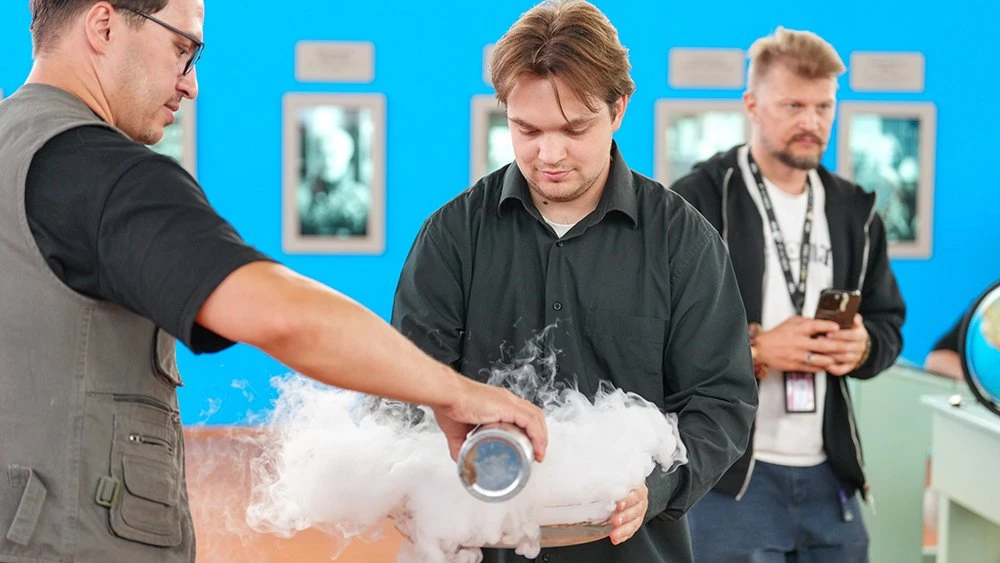
"We are used to thinking that air is empty and invisible. But as soon as it is cooled, it becomes clear how much water there is around us and even in our breath. This helps us understand where clouds, fog and precipitation come from," the expert explained.
Another experiment focused on atmospheric pressure and air movement. Using a special fan and a light ball, the expert demonstrated the Bernoulli effect: a strong air flow held the ball in the air stream, showing how pressure differences create upward and downward movements in the atmosphere and influence the weather.
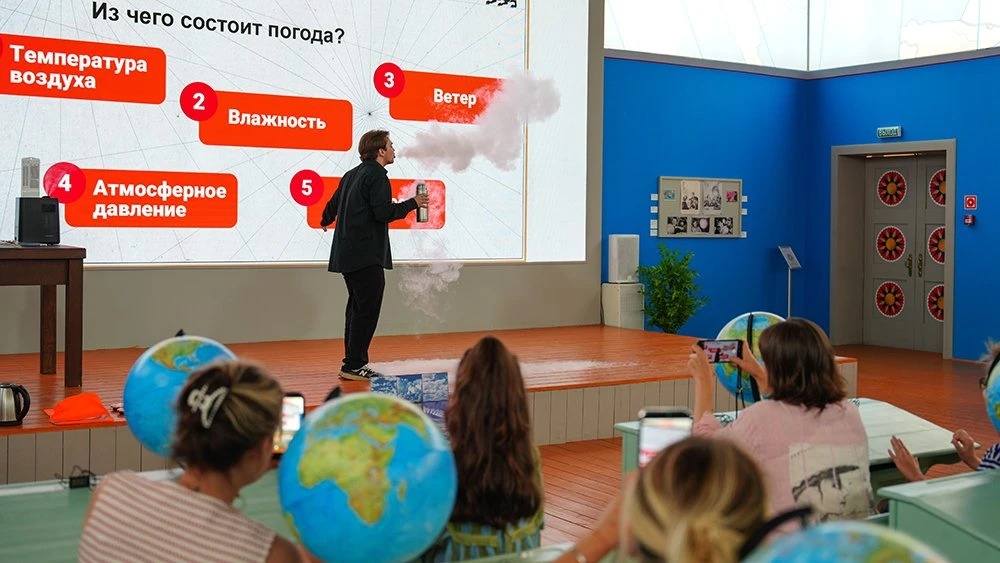
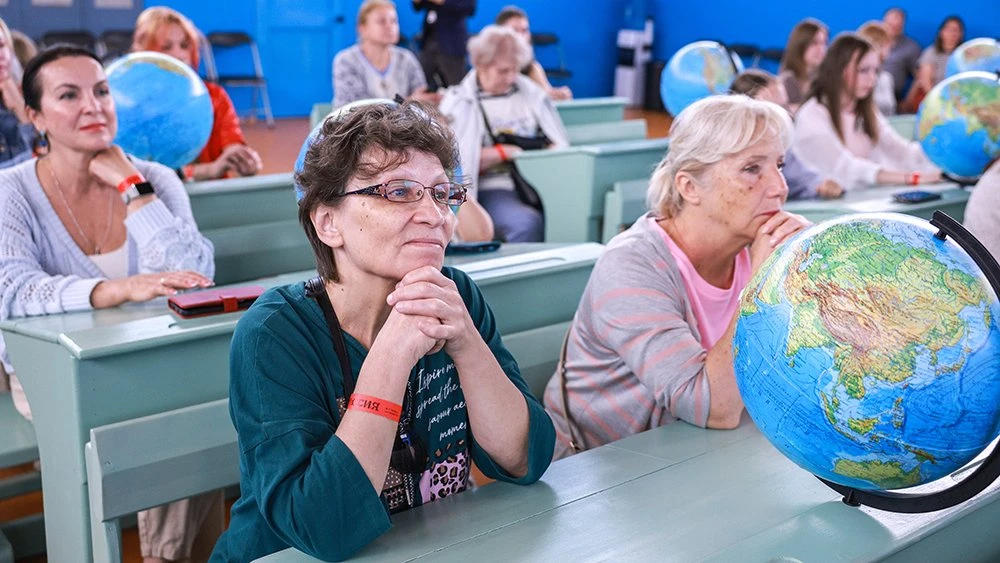
In the final part of the workshop, the participants tried their hand as weather forecasters. Using the measured values of temperature, humidity, pressure, wind direction and strength, as well as observing the shape and height of clouds in the sky, the schoolchildren learned to make a short-term forecast: whether it would rain, whether fog was possible in the morning and whether sunny weather would continue.
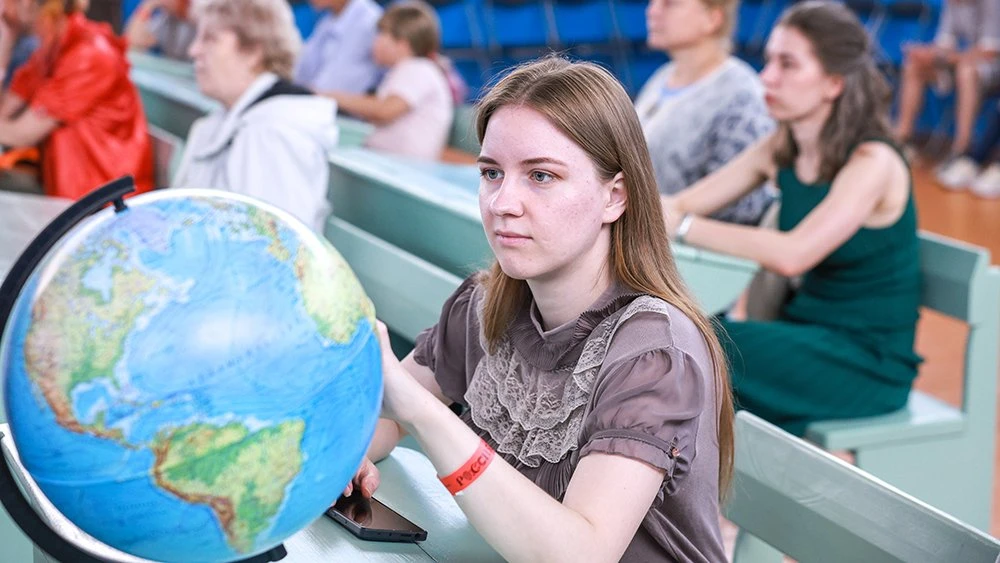
"We have essentially described the work of one small weather station — a point on the map from which supercomputers collect data across the planet. Even basic skills already allow you not merely to look at a beautiful sky, but to understand what exactly it is 'telling' us," Fail Gubaidulin emphasised.
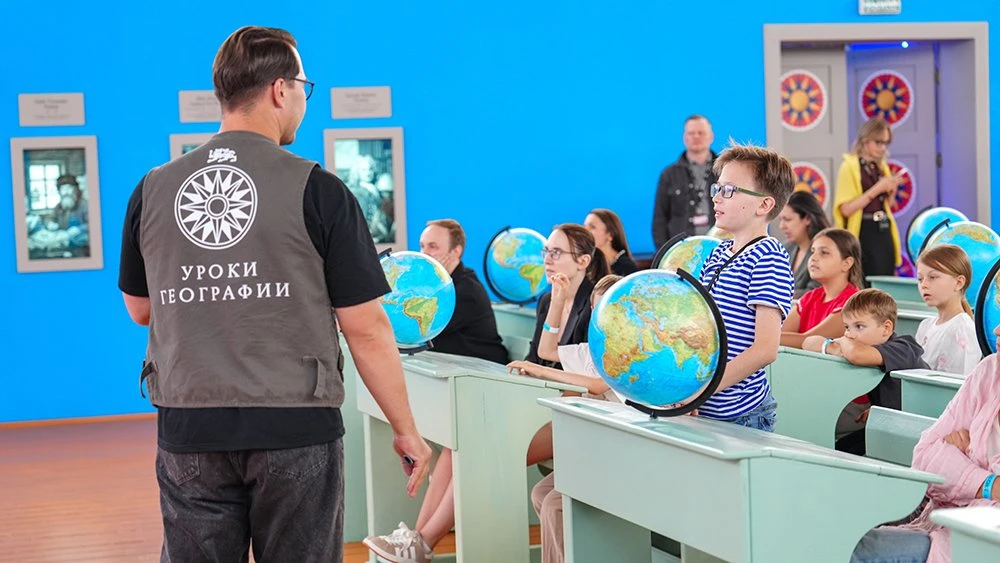
The "Meteorological Station" workshop was held as part of the educational programme of the "Geography Lessons" exposition at the National Centre RUSSIA. Guests have already attended sessions on creating filters for water purification, lectures on Arctic exploration, practical classes in tourist training and first aid. The event schedule is available on the russia.ru website in the "Events" section, as well as on the social media pages of the National Centre RUSSIA.
Event photobank

The expert shared a list of five books that help readers better understand politics, society and the cultural environment in which a journalist works.