


Maxim Oreshkin: Russia needs a strong and sovereign Africa
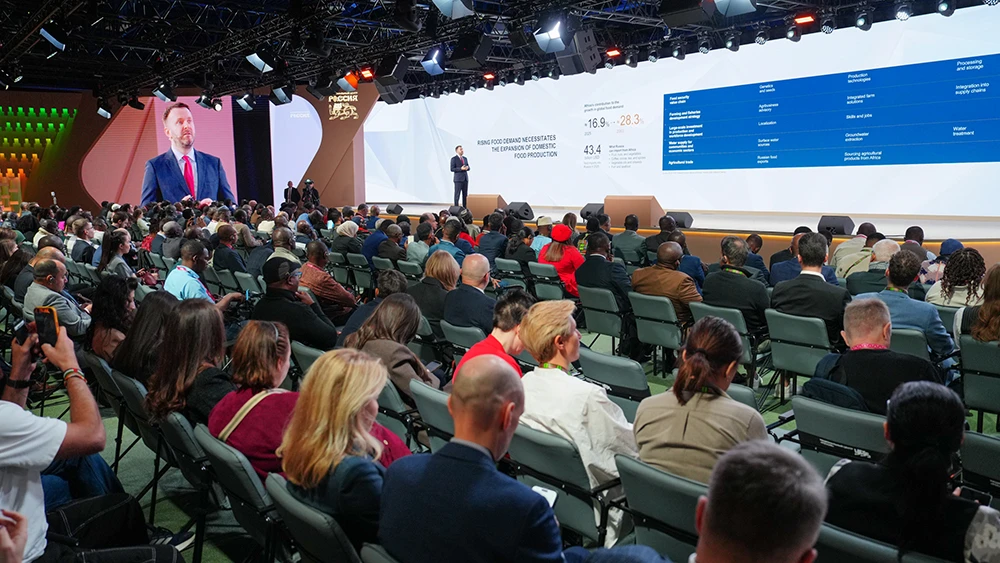
Russia
offers African countries a partnership of equals founded on sovereignty.
Together with businesses, it is ready to develop solutions in energy, food,
digital technology and education, while ensuring that control, data and
revenues remain in the partner country to help Africa grow stronger. Maxim
Oreshkin, Deputy Chief of Staff of the Presidential Executive Office of the
Russian Federation, outlined this approach during a meeting with foreign
journalists at the National Centre RUSSIA. The event formed part of the
business programme of the Russia–Africa Media Forum and was held with the
support of the television channel Russia Today and with the participation of
the Sputnik and TASS news agencies.
"The
African continent is the future of the global economy, both in terms of
demographics and economic dynamism. The figures already show this. Today,
Africa is home to 20% of the world's population, and by 2063 this share will
rise to 30%. Africa's share of the world's working-age population will grow
even faster. Twelve of the world's 20 fastest-growing economies are on the
African continent, and by 2063 that number will reach 17 out of 20. More than a
third of the world's births take place in Africa, and in the future almost
every second baby in the world will be born on the African continent,"
said Maxim Oreshkin.
Demographic,
technological and other shifts taking place around the world are changing the
structure of the global economy, the Deputy Chief of Staff of the Presidential
Executive Office believes. According to him, while the G7 accounted for the
largest share of global GDP 20–30 years ago, the BRICS countries now lead.
These states already account for 40% of global GDP. The group includes three
African countries, with more states serving as BRICS partners or within its
orbit.
"The
changing structure of the global economy is causing considerable volatility. It
is at times like these that the importance of sovereignty becomes particularly
clear. And in today's world, this goes beyond familiar issues such as food and
energy sovereignty and a country's own transport and financial logistics. A new
layer — digital sovereignty — is playing an increasingly important role. This
encompasses information systems, social networks, messaging apps, artificial
intelligence and the digital platforms we use every day," he continued.
According
to Maxim Oreshkin, this is precisely where significant risks of platform
colonialism arise: platform owners gain control over certain economic processes
and thereby extract platform rents from those economies. This gives rise to a
new, digital layer of sovereignty. It can take different forms depending on the
degree of dependence on foreign solutions. In many countries, digital
sovereignty remains minimal. For example, if an American company controls
e-commerce, most of the benefits leave the country. The data on which the
platform operates also goes abroad and is processed there, raising security
concerns as well. At a basic level, sovereignty requires, at the very least,
that data be stored within the country. An advanced level involves developing
proprietary solutions owned by companies based in the country, including those
established jointly with foreign partners, and retaining the revenues they
generate within the country.
"All
elements of sovereignty can be represented through this model, and this is the
methodology we use in Russia. The first layer comprises the fundamental
elements: key state institutions, as well as defence and security. Next comes
the sphere of traditional sovereignty: food, water availability, energy,
communications and logistics, and finance. The third, new layer is digital
sovereignty: social networks, messaging apps, artificial intelligence,
government digital infrastructure, urban services, e-commerce and tourism. This
also includes platforms for human development, healthcare and education, as
well as modern technological solutions, primarily unmanned autonomous systems
operating around us in the air, on land and in water. Each of these elements is
important for ensuring sovereignty in the modern world," he said.
Russia's
approach to international cooperation differs substantially from what countries
have become accustomed to seeing from Western nations, for example, Maxim
Oreshkin noted. According to him, when working with foreign partners, Moscow
does not insist on the exclusive use of its own services, instead emphasising
joint work, the development of solutions and sovereign control over them within
the partner country. The second principle is a comprehensive approach to
project implementation. Another distinction is localisation: involving local
companies as fully as possible in joint projects, whether in traditional
sectors such as energy and food or in digital services. Russia is also ready to
take local circumstances into account as fully as possible in implementing each
project. He cited artificial intelligence technologies as an example.
"Russia
is a leader in AI technology alongside the United States and China. Our models
are approximately 6–12 months behind American and Chinese models, but they are
much better at taking local circumstances into account, whether in Russia or
any other country in the world. We know how to prioritise local content in
native languages, with a more accurate and deeper understanding of cultural and
historical characteristics. That is why the Russian market for AI assistants is
led by domestic solutions rather than Western or Chinese ones: they perform
best in Russian and understand our context. Our friends and partners abroad are
actively drawing on this experience, training models locally and jointly
developing solutions that provide a more accurate and nuanced understanding of
local circumstances," Maxim Oreshkin explained.
Meanwhile,
according to him, Russia's food import market is worth $43 billion, and African
suppliers currently account for around 8% of it. Maxim Oreshkin expressed
confidence that African countries are ready to secure a larger share of the
Russian market by increasing production and making joint investments,
presenting an excellent opportunity for African producers. In this regard,
Russia is ready to work with African countries to build balanced food trade:
buying more from African producers and, of course, supplying Russian food
exports on the most favourable terms for African partners, the Deputy Chief of
Staff of the Presidential Executive Office emphasised.
"Joint
efforts to develop agriculture in African countries are closely linked to the
availability of water resources. This is one of the key issues for the
continent. Russia is ready to provide a range of technological solutions for
managing water resources, locating water, monitoring its quality and other
purposes. The second area is energy supply. Here, Russia is ready to partner
with African countries to develop long-term energy strategies together. Each
country has its own characteristics, and whenever Russia begins working in a
country, it always takes careful account of its specific circumstances. When we
talk about energy security, this requires detailed consideration of the
country's available energy resources, import needs, grids and logistics — in
other words, a comprehensive approach to developing a long-term energy
strategy. We are ready to do this in partnership with local energy agencies,
enabling us to formulate a sound long-term development strategy," he
added.
According
to the speaker, developing an energy strategy for each country and region is
one of the most important factors in the African continent's development. Maxim
Oreshkin stressed that Russia, with its large reserves of conventional energy
resources, is ready to supply fuel to African countries and establish logistics
for liquefied natural gas. In green energy, the nuclear industry remains the
key area of promise today, and Russia is building Egypt's first nuclear power
plant, equipped with four Generation III+ power units. The El Dabaa nuclear
power plant project involves local contractors and helps create high-tech
infrastructure not only in energy but also, for example, in medical research.
He stressed the fundamental importance of developing grids and ensuring access
to electricity for the population, as many people in Africa still live without
a continuous electricity supply, while the continent's share of global electricity
consumption, currently around 5%, could grow to 10%.
"We
want our partners to be strong. We take great satisfaction in knowing that,
with our help or independently, they are implementing projects in energy, food
and the digital economy and becoming stronger. A strong, sovereign Africa with
a leading role in the world is in Russia's interests. For our part, we are
ready to do everything we can to support this process. We understand the
African continent's national priorities, strategy and aspirations, and we
believe that all solutions must be implemented under local sovereign control.
We are ready to work towards comprehensive development. Russia does not simply
come with an individual investment project: it is ready to invest in education,
healthcare and human capital development. We are ready to share all the
technologies we use ourselves and, of course, to work in partnership with local
companies to achieve the main goal — unlocking the potential of every African
country together. I think 'together' is the most fitting word to describe
Russian–African relations: together, as equal partners," he emphasised.
During the
meeting, foreign journalists and bloggers asked Maxim Oreshkin about
sovereignty and how Russia had coped with sanctions, cooperation projects with
Egypt and Algeria, import substitution, the role of universities and young
people's education. They also asked how resilient the partnership is, how
investment and payment issues would be addressed under the threat of sanctions,
and what needs to be done in the coming years to make Africa stronger. A
brochure containing a catalogue of the comprehensive solutions Russia offers
African countries is available via this link.
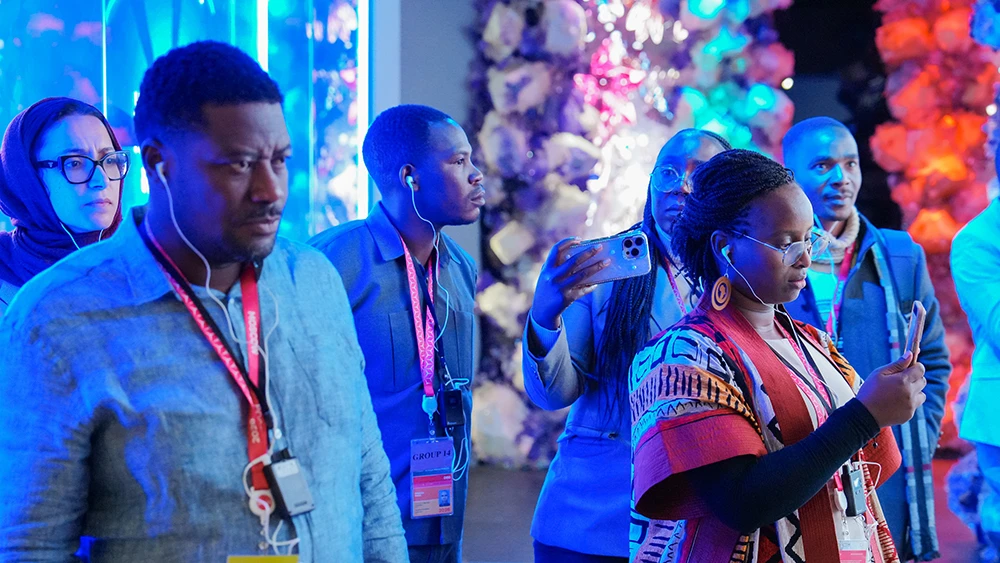
For the Tanzanian journalist, the journey across Russia is only beginning — as it is for many of his colleagues who are discovering our country for the first time at the National Centre RUSSIA.
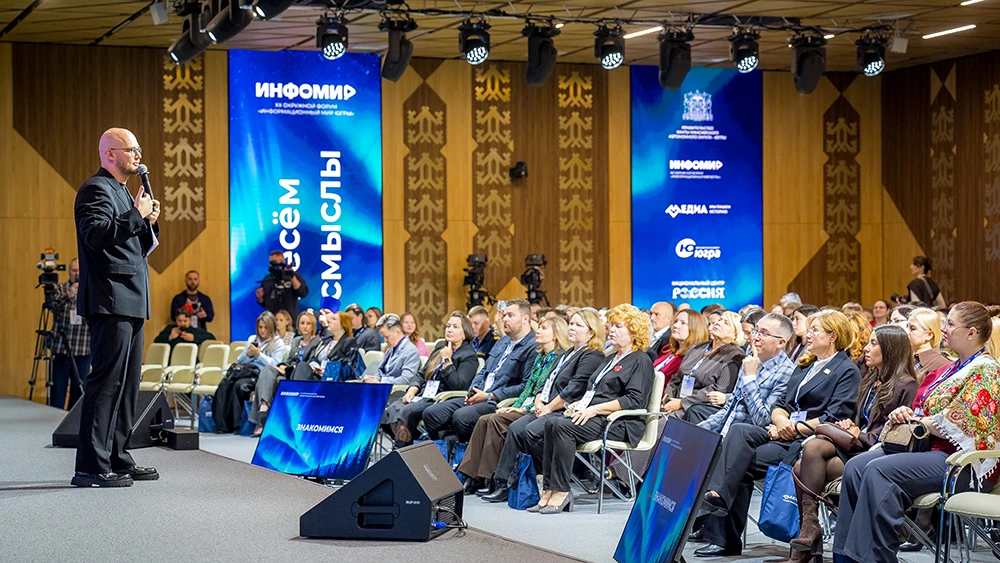
The 20th District Forum "Information World of Yugra" opened at the National Centre RUSSIA in Yugra on 28 October.
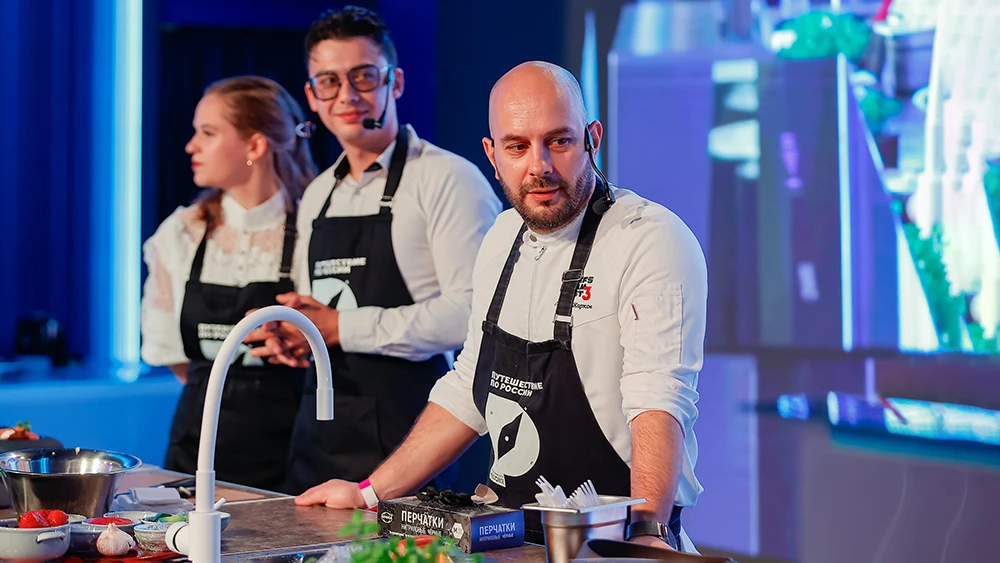
The Gastronomic Rows are part of the large-scale "Journey Across Russia. Food" project at the National Centre RUSSIA.


