New approaches to the development of the space industry discussed at the National Centre RUSSIA
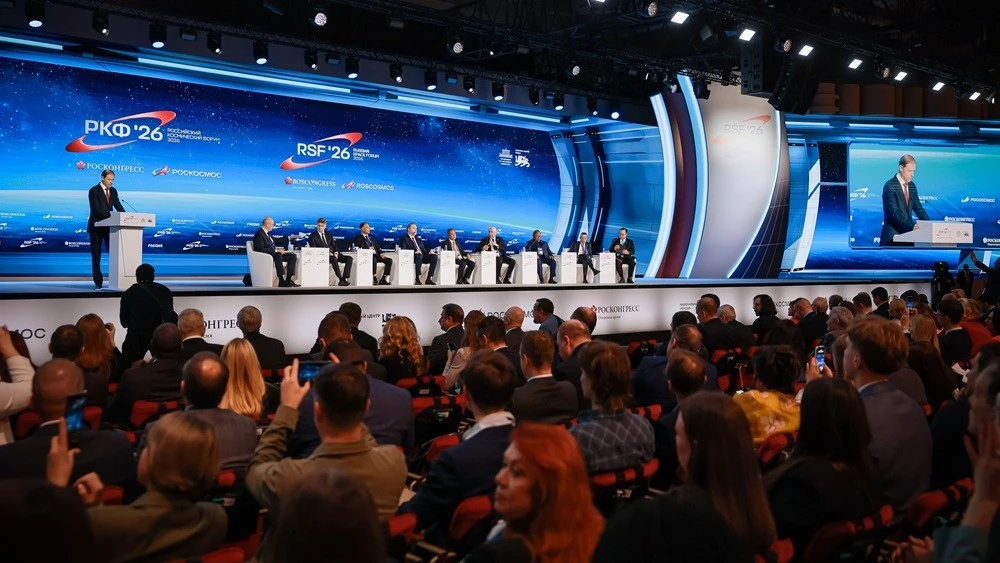
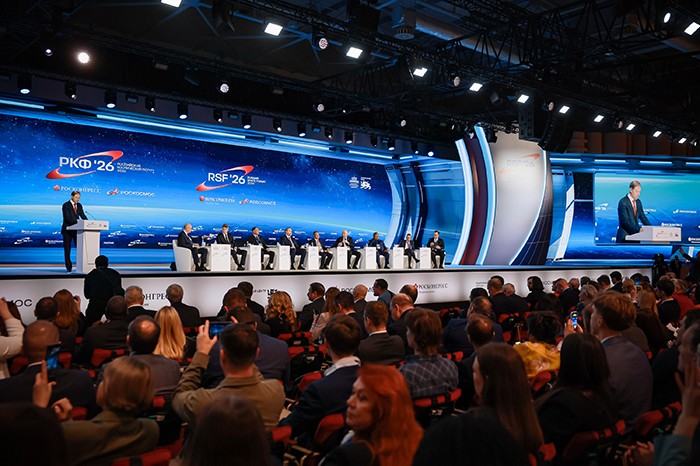
The history of space exploration is a story of how rivalry drove breakthroughs, while cooperation ensured sustainability. Space remains a theme that brings countries from different continents closer together. On 9 April, ahead of the 65th anniversary of Yuri Gagarin’s flight, the first Russian Space Forum was held at the National Centre RUSSIA. The large-scale event took place as part of Space Week, declared in accordance with a Decree of the President of the Russian Federation, Vladimir Putin.
"In the current year, Russia and the entire world mark the 65th anniversary of the legendary flight of Yuri Alekseyevich Gagarin. This historic launch became one of the great events of the twentieth century and opened a new era in the history of civilisation. We are sincerely proud of several generations of talented scientists, designers, cosmonauts, military and civilian specialists who stood at the origins of the national space programme and wrote vivid, heroic pages in the chronicle of its victories and achievements," President of the Russian Federation, Vladimir Putin, said in his address. The message was delivered by First Deputy Prime Minister of the Russian Federation, Denis Manturov.
The head of state emphasised that among the country’s priorities are the development of the rocket and space sector and the strengthening of its scientific, human resource, and technological potential. According to him, to move forward and maintain leading positions in space exploration, it is essential to unite the efforts of the state, business, and research teams in this strategic area, and to jointly address large-scale challenges demanded by the times in improving the production base and ground infrastructure of the industry. This includes expanding satellite constellations and widely introducing new materials, digital and nuclear technologies.
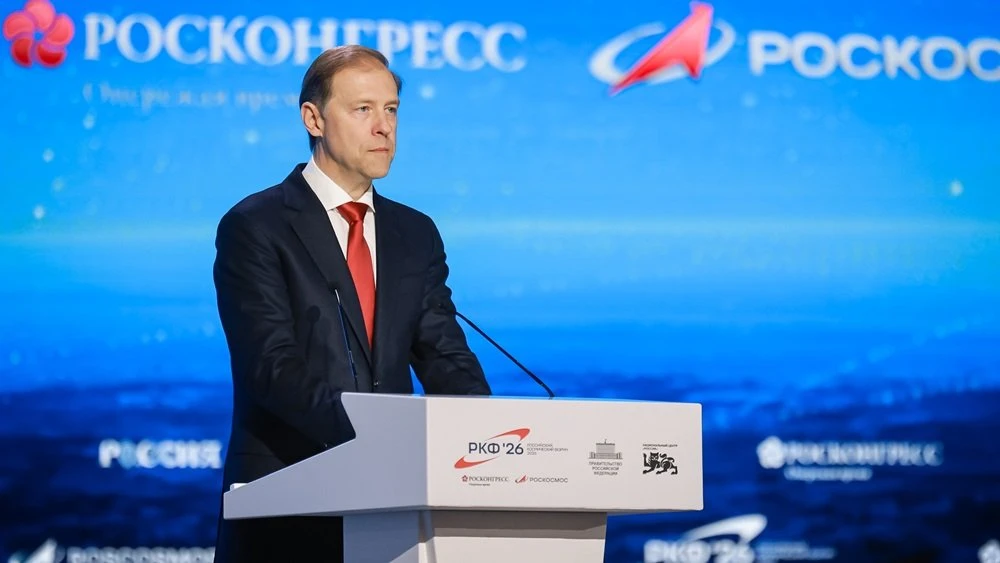
In his speech, Denis Manturov noted that the Russian Space Forum will serve as an additional source of ideas for advancing Russia along the strategic directions of modern space exploration. He also stressed the importance of increasing the efficiency of rocket and space industry enterprises to strengthen positions in the global space race.
"Space remains a theme that brings countries from different continents closer together. Russia has always been committed to openness across the full spectrum of space activities. This cooperation must deepen on the principles of equal access to space, respect for national interests, and preserving outer space for long-term peaceful use. Russia is firmly committed to ensuring the technological sovereignty of the space industry — this is our fundamental priority. At the same time, we are ready and always open to mutually beneficial and respectful partnership. I expect that our forum and Space Week as a whole will contribute to accelerating positive changes in the industry and the implementation of new joint international projects," said Denis Manturov.
Today, despite global geopolitical changes, space remains an area of international cooperation where national interests do not contradict one another but instead become the basis for finding joint responses to global challenges of the future.
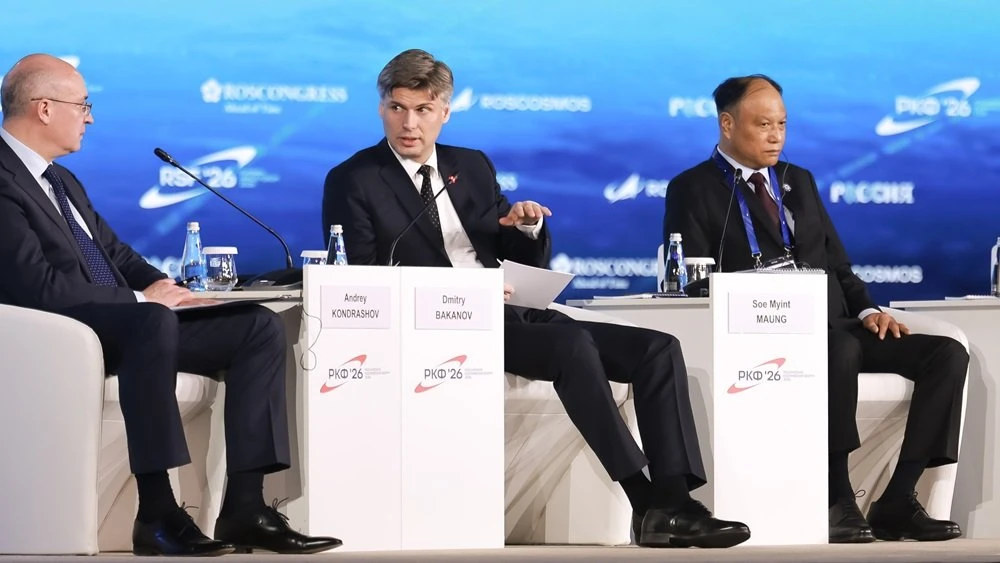
Russia has played a special role in the history of space exploration, and today the country is not only building on the rich legacy of past decades but also actively developing it, engaging the world in joint projects. This was noted by the Director General of the Roscosmos State Corporation, Dmitry Bakanov: "Space Week, established for the first time by presidential decree, is a sign of respect and a tribute to the legacy created by our predecessors. The first words in space were spoken in Russian, and today the Russian language continues to sound confidently from orbit. We are proud of our predecessors — from the legendary cosmonauts Yuri Alekseyevich Gagarin, Alexei Arkhipovich Leonov, Valentina Vladimirovna Tereshkova to the engineers and designers Sergei Pavlovich Korolev, Valentin Petrovich Glushko, Vladimir Nikolayevich Chelomey. Our task is not simply to live on this legacy, but to create a great future."
The Director General of Roscosmos State Corporation, Dmitry Bakanov, noted that today only three countries — Russia, the United States, and China — are present across all key segments of the space sector, and Russia is confidently maintaining its position. Despite sanctions, the International Space Station continues to operate with the participation of Japan, Canada, the European Union, and the United States, and from 2028 it will be gradually replaced by the Russian Orbital Station. He emphasised that the country has a fully sovereign Vostochny Cosmodrome, where launch complexes for the Angara-A5 and the reusable Amur rocket are under construction, as well as capabilities across all classes of launch vehicles. Among the achievements, the head of Roscosmos highlighted the GLONASS navigation system of 24 satellites, the Yamal communications constellation, another 16 production satellites of a low-orbit broadband internet system, the development of Earth remote sensing with the involvement of private investors, an unprecedented number of 22 meteorological satellites, as well as international cooperation with the United States (cross-flights and the ISS), China (global infrastructure), Kazakhstan (Baiterek), Belarus (an ultra-high-resolution satellite), Myanmar, the United Arab Emirates, Zimbabwe, and other countries.
Chairman of the Presidium of the National Academy of Sciences of Belarus, Vladimir Karanik, highly praised cooperation between the two countries in the space sector: "The challenges we face require the pooling of efforts and technologies of different countries. Together with the Russian Federation, we have achieved this: the level of cooperation with Roscosmos allows a country that does not have its own launch complexes and launch vehicles to actively participate in space exploration. We value this highly. Such cooperation helps identify new points of contact and set ambitious goals. I am confident that together we will be able to achieve them."
In addition, on the sidelines of the forum, a presentation was held of the first International Space Games and a scale model of a space settlement that is planned to be built for engineering contests. The unique contest of top young engineers modelling the exploration of the planets of the Solar System will take place in Russia in summer 2026 with the participation of national student teams from the CIS, SCO, and BRICS+ countries.
The mission of the Russian Space Forum is to create a safe space for open dialogue among all participants in the space industry. The event is organised by Roscosmos State Corporation, with the Roscongress Foundation acting as the operator, with the support of the Government of the Russian Federation.
Event photobank

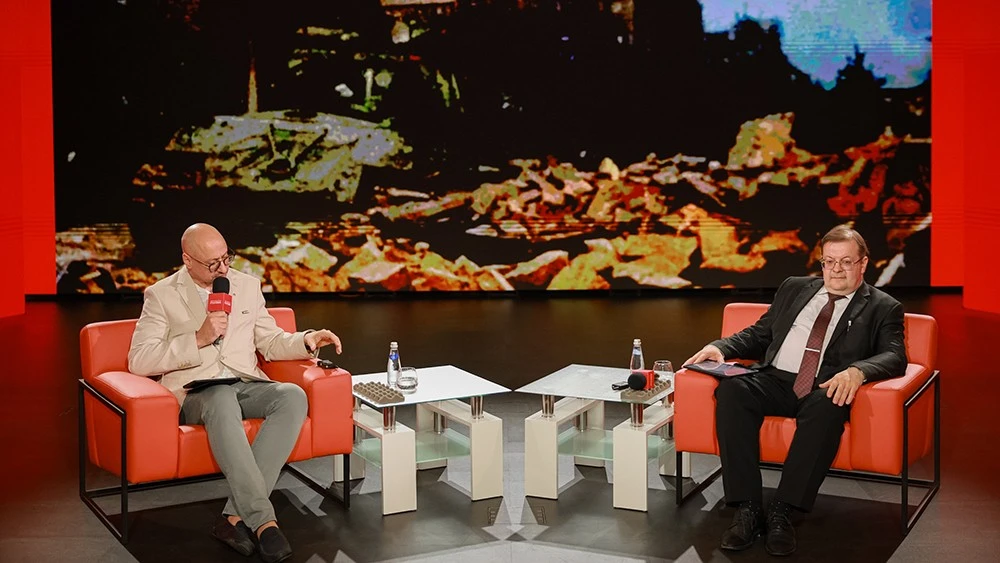
A new cycle of historical meetings and lectures dedicated to great events of our past began on 22 May at the National Centre RUSSIA.