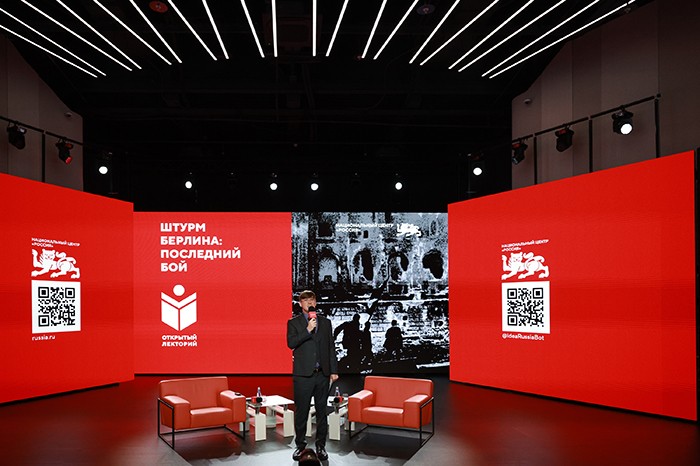
A new series of historical meetings at the National Centre RUSSIA opened with the lecture "The Storming of Berlin: The Last Battle"
A new monthly series of historical meetings has launched at the National Centre RUSSIA with the lecture "The Storming of Berlin: The Last Battle." The project is being organised with the support of the Russian Military Historical Society, the "I Remember" Foundation, and the Presidential Foundation for Cultural Initiatives. Leading military historians and invited experts will discuss key events in Russian history, examine the most persistent myths, and answer audience questions.
"Together with the Russian Military Historical Society and the 'I Remember' Foundation, we are launching a new series of historical meetings that will take place monthly at the National Centre RUSSIA. Their main goal is to tell the story of our country as accurately and engagingly as possible, inspiring participants to feel connected to the great events of the past and building a bridge between the heroes of previous eras and modern generations. We will not allow anyone to rewrite or distort our history, which is why it is necessary to speak about it, discuss it, and pass the truth on to future generations. The first meeting is dedicated to an event of great significance not only for our country but for world history as a whole — the storming of Berlin in May 1945. It is an important subject for understanding Russia's place in the common historical process and its role in the development of world civilization," said Anastasia Zvyagina, Deputy Director General of the National Centre RUSSIA.
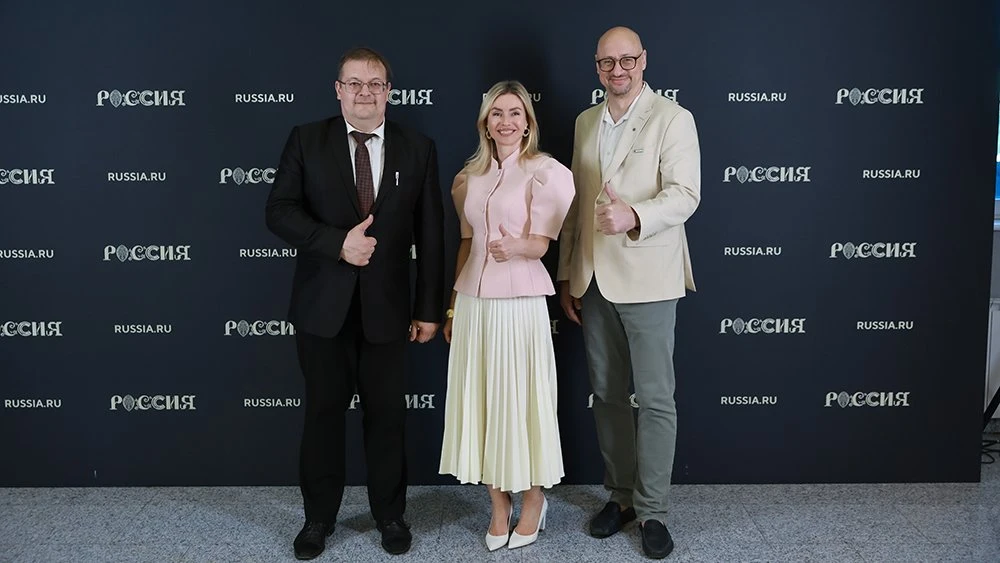
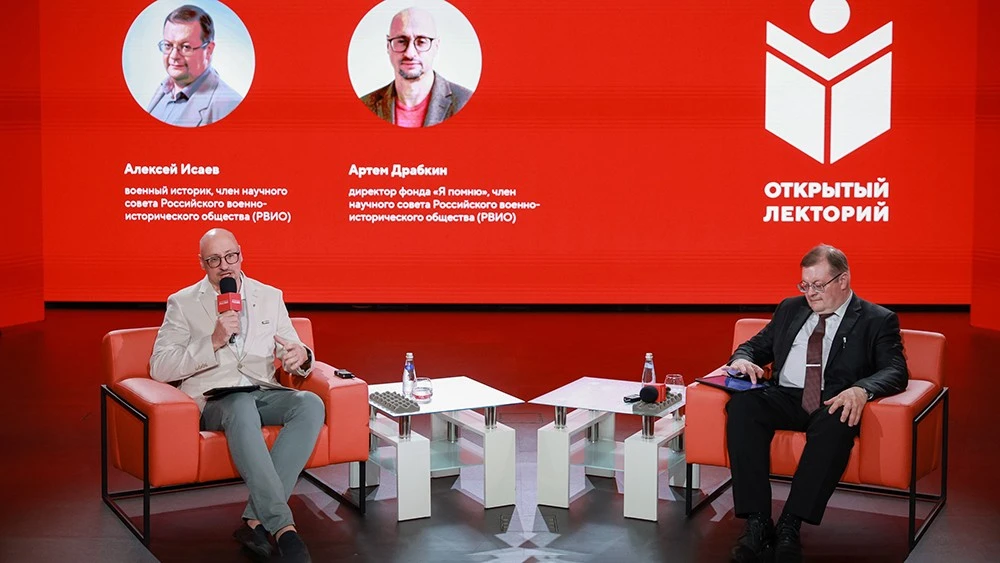
The first lecture, "The Storming of Berlin: The Last Battle," focused on the decisive battle of May 1945 that changed the course of world history. Speakers included Artyom Drabkin, Director of the "I Remember" Foundation and member of the Scientific Council of the Russian Military Historical Society, and military historian Alexei Isayev, also a member of the Society's Scientific Council. During the event, participants reconstructed an authentic picture of the events and explained why the final stage of the war still provokes debate in both Russian and international historiography.
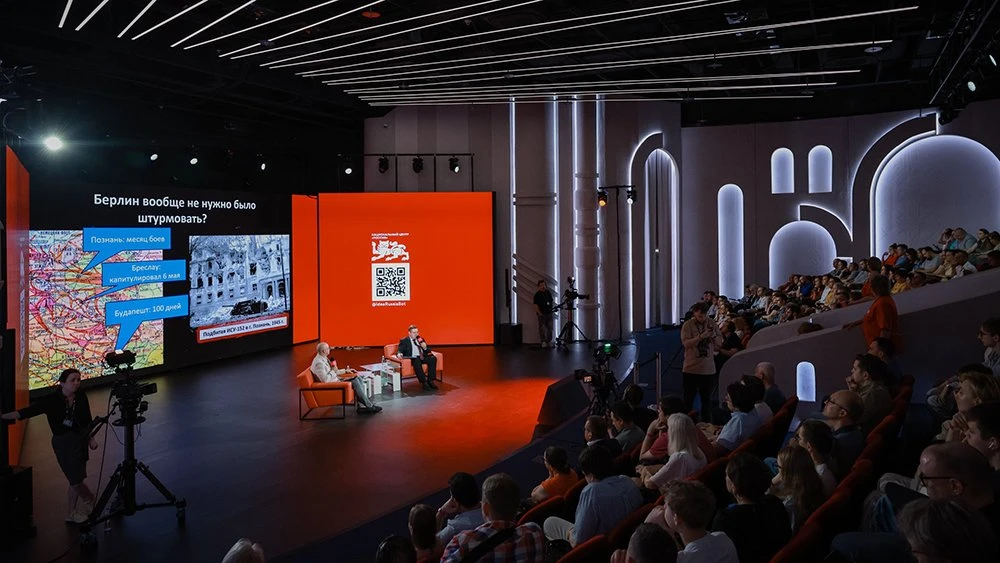
The lecture began with an analysis of the geography of the military operations: the crossing of the Oder River, the role of the Dnieper Military Flotilla, and particularly the truth about the operation at the Seelow Heights — one of the best-known and most mythologised parts of the campaign.
"Soviet troops had to travel a long road. First, they were forced to retreat for quite a long time, and then advance westward, crossing a huge number of rivers. Geography does not so much help overcome challenges as determine where battles take place. That is why many of the battle sites in today's special military operation correspond to the locations of combat during the Civil War and the Great Patriotic War. We are still tied to the same heights, terrain, and water barriers. That is to say, geography determines the nature of military operations and how a particular landscape can be used," explained Artyom Drabkin.

According to him, the value of the new historical lecture series at the National Centre RUSSIA lies in popularising history and creating opportunities for direct communication with readers and listeners. Artyom Drabkin added that such meetings allow speakers to share their views on historical issues directly and engage with people who are open to dialogue.
The lecture program covered key topics that remain surrounded by myths. Speakers discussed the significance of the Berlin Operation in the historical memory of our people and the efforts made by Western countries to diminish the USSR's contribution to the defeat of Nazi Germany.
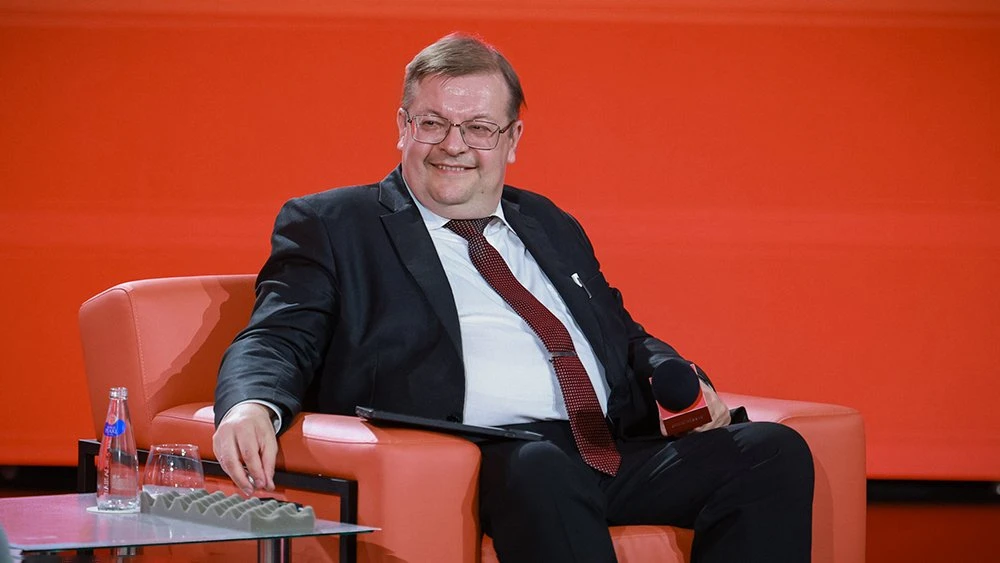
"Soviet forces had to hold a massive 2,000-kilometre front, while the enemy's transfer of large mechanised formations often became an unpleasant surprise. Yet the road to Victory was completed: Moscow — Vyazma — Smolensk — Brest — Warsaw — Poznan — Berlin. Our soldiers advanced along this route while also fighting on the flanks — in East Prussia and Hungary. It was strategy and operational skill that made it possible to reach Berlin: a generation of titans achieved this," emphasised Alexei Isayev.
He noted that one of the most widespread myths about the storming of Berlin concerns supposedly disproportionate and unjustifiably heavy Soviet losses. However, according to him, Soviet and German military documents paint a very different picture: the victorious army acted professionally, skillfully, and effectively both in strategic planning and in battlefield improvisation. As Alexei Isayev explained, the Berlin Strategic Offensive Operation became a complex combination of pre-planned decisions and real-time responses, which ultimately led to victory.

The experts also examined the popular claim that Stalin allegedly staged a competition between Marshals Zhukov and Konev, explaining how cooperation between the fronts was actually organised. Besides, they discussed the history of raising the Victory Banner over the Reichstag: how the idea emerged, why the Reichstag was chosen, how events really unfolded, and why so many people later claimed to have been first. In addition, they addressed one of the most widespread pseudo-historical myths — Hitler's alleged escape to Argentina.
In the final part of the event, participants discussed the humanitarian mission of the Red Army, examining how perceptions of the role of the Soviet military in Europe changed over time, why the word "liberation" was increasingly replaced by "occupation," and what historical meanings are lost in the process. The lecture concluded with a question-and-answer session, during which audience members were able to speak directly with the speakers about topics beyond the scope of their presentations.

The next meeting in the series will take place on 23 June. The Open Lecture Hall titled "Myths and Truth About 22 June 1941" will debunk the main myths surrounding the first day of the Great Patriotic War using facts and figures. Admission is free with prior registration on the russia.ru website in the "Events" section.