


Experience other countries are drawing on: how digital platforms are changing Russia's economy
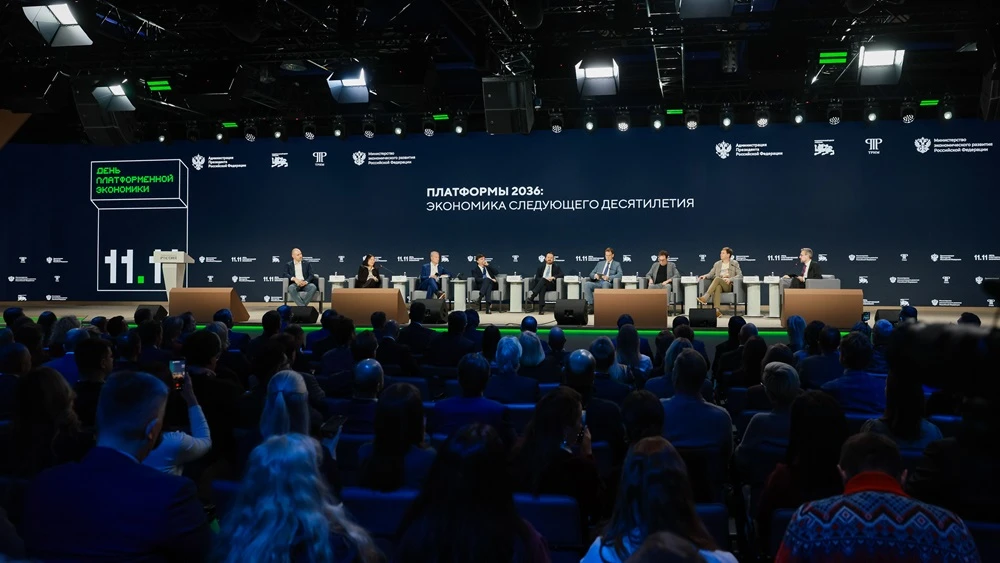
Digital platforms are becoming the new infrastructure of the Russian economy, and the national strategy should create the conditions for their further development, expansion into new sectors and fair distribution of the benefits among all market participants. This was the conclusion reached by experts at the Platform Economy Day plenary session, which was held on 11 November at the National Centre RUSSIA. Participants discussed how creating the conditions for the platform model to spread would help open up new markets, foster cooperation across industries, drive economic growth and improve people's quality of life.
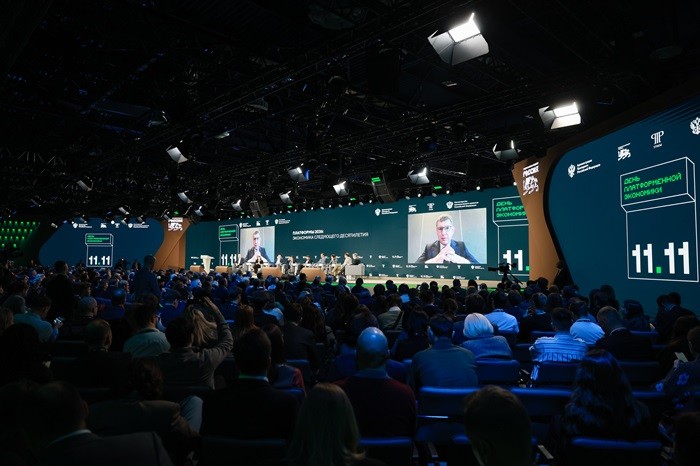
Vladimir Putin, President of the Russian Federation, addressed the participants and experts at Platform Economy Day. He wished them a productive meeting and expressed confidence that government, business and public organisations could work together to strengthen Russia's economic and technological sovereignty.
"I am pleased to welcome you to Platform Economy Day at the National Centre RUSSIA. Representatives of government and business, researchers and experts will discuss a wide range of issues relating to digital platforms. In recent years, these platforms have given Russia's economy a major boost and become part of everyday life for millions of people. The platform solutions offered by our companies have already proved effective and are in demand in many foreign markets. Advanced technologies make it possible to process large volumes of data, exchange information quickly and carry out transactions securely. This opens up new opportunities for businesses, makes goods and services more accessible and makes producers more competitive. It is important to improve platform infrastructure and create fair conditions that make it easy for everyone to participate, including small and medium-sized enterprises. The national strategy for developing digital platforms, now being drawn up in Russia, will help achieve these goals. It covers a wide range of sectors, including healthcare, education and the labour market," the head of state noted. His message of greetings was read out by Maxim Oreshkin, Deputy Chief of Staff of the Presidential Executive Office of Russia.
He noted that the platform economy should be developed with people's convenience as the first priority. Technology should make everyday life easier, improve access to services and meet people's actual needs. He said it was important for people to be able to buy the goods they need easily, safely and quickly. The government should also ensure that the interests of everyone in the platform economy are balanced.
"People must, of course, be at the heart of everything. This principle underpins our country's policy and guides the government in making sure the platform economy develops in ways that benefit people. It is important to protect the interests of both consumers and suppliers when they use a digital platform. That, I think, is the main point. What ultimately matters is that people benefit," he explained.
The Deputy Chief of Staff of the Presidential Executive Office of Russia said it was important to give new technologies room to develop before imposing restrictions. As Maxim Oreshkin noted, however, shopping on platforms has already become the main way people in Russia buy goods. That raises more difficult issues and makes the impact on people's lives much greater. He said the government should leave businesses to do their job. Private initiative remains the main driver of new tools and approaches. The Deputy Chief of Staff of the Presidential Executive Office of Russia sees three roles for the government. The first is to draw up regulations that will reduce platforms' internal costs. The second is to manage data. There is a great deal of personal and sensitive information, and it makes more sense, for example, to store medical data in government systems to protect its confidentiality. The third is to maintain competition among platforms and reduce the risks of monopolisation and "platform feudalism".
"A platform needs to retain the incentive to develop. If competition and that incentive disappear, the platform loses its ability to operate effectively. That's the first point. The second is who gets to share in the benefits the platform generates. If there is no competition and a platform starts keeping all the benefits for itself, society as a whole gains nothing. The benefits of platformisation should reach everyone involved — the platforms themselves, producers and suppliers of goods and services, and above all the people who live in our country. Ensuring that those benefits are shared fairly is an important task for the government," said Maxim Oreshkin.
The discussion focused on how platforms are becoming the new infrastructure of the modern economy, which sectors are already changing and which are next, what is holding back platformisation and how those barriers can be removed, how platforms and AI agents will work together, and what the national strategy for developing digital platforms will deliver. Maxim Reshetnikov, Minister of Economic Development of the Russian Federation, set out the strategy's aim and the key choices that will need to be made.
"The aim of the strategy is to realise the full potential of the platform economy as a sharing economy. Platforms make it possible to use available resources efficiently, whether in logistics, taxi services or resale, where individuals use classified ads sites to sell nearly new items that technically count as second-hand. Platformisation encompasses all the gains made possible by new technologies, which significantly increase returns on investment for large and medium-sized businesses and for individuals. We therefore need to look across the whole economy to see where the barriers are and what is holding things back. In some areas, it may make sense to let the market sort much of this out for itself. I think there are several key choices to make as we develop the strategy," noted Maxim Reshetnikov, Minister of Economic Development of the Russian Federation.
The minister said the first choice concerns where to draw the line between the government and the private sector. The market creates the platforms themselves, while government systems should make available the information that private businesses can use to build them. The second concerns data. It is necessary to make data portable across platforms while preserving companies' incentives to invest, and to set the terms under which platforms can access government data. The third concerns regulation. Decisions are needed on what counts as a platform, whether messaging apps and services that sell content need to be regulated, and how government oversight should be adapted to platforms.
Sergei Kravtsov, Minister of Education of the Russian Federation, noted that artificial intelligence opens up major opportunities for education while also creating serious risks. In his view, introducing new technologies means rethinking how students are taught, paying attention to information security, developing critical thinking and preserving foundational knowledge.
"We are now at a point where we need to rethink the education system as we know it. We have to get this right because we will feel the consequences of any mistake for a very long time. Artificial intelligence opens up major opportunities and also poses serious risks, particularly for children of preschool and school age. That's why we need to explain to pupils the opportunities and risks that come with using artificial intelligence, and teach them to think critically and use technology properly. No technology can replace a teacher. What comes first is the development of each child — their foundational knowledge and their moral, spiritual and physical development," said the minister.
Tigran Khudaverdyan, a member of the Management Board of Yandex Rus, believes artificial intelligence will change how the platform economy develops in the coming years. He said AI would make it possible to create new services for goods and services where making a choice involves many factors. It would also help platforms move from simply finding information to solving specific problems for users.
"In the 2010s, the spread of smartphones and mobile internet made it possible for platforms to develop. In this decade, artificial intelligence will play that role. It will make it possible to build new platforms for goods and services that were previously difficult to offer through a user-friendly platform. Booking a taxi, for example, is fairly straightforward. You enter where you are and where you want to go. Marketplaces are somewhat more complicated, but they work on a similar principle. With many goods and services, though, you have to weigh up a number of factors that are far from obvious. Artificial intelligence will help with those decisions. That will give rise to new types of platforms for goods and services," explained Tigran Khudaverdyan, a member of the Management Board of Yandex Rus.
He added that another important change would be the shift from finding information to helping users get specific things done. For example, a platform could help someone find a suitable nursery or school, check the admission requirements, contact the institution and get help enrolling their child.
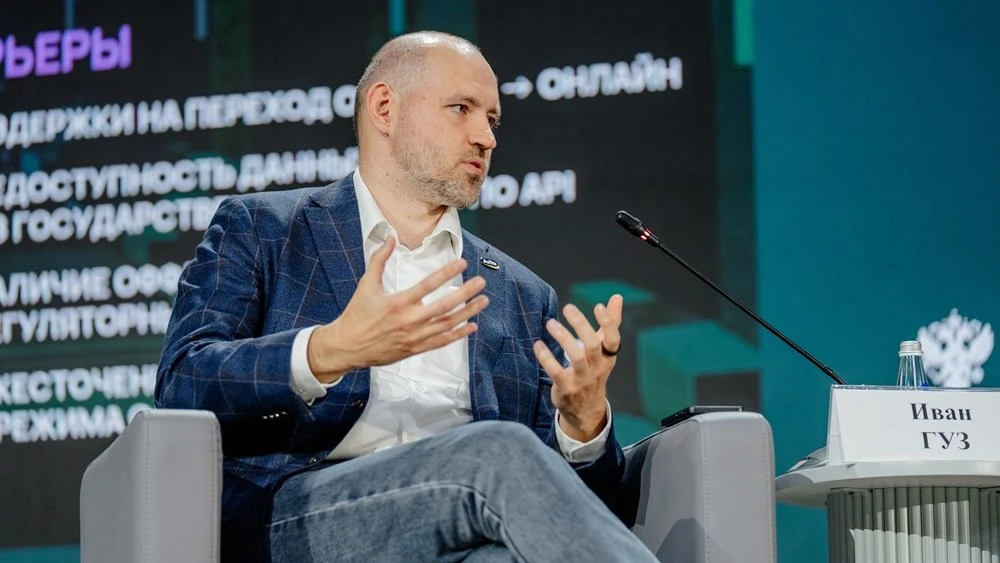
"Moving from offline to online is the biggest phase transition in the platform economy. It's like starting a nuclear reaction. A lot of things have to come together in one place. As platforms, we lower that barrier through investment, cashback and subsidies. It's also very important to keep regulatory barriers as low as possible," emphasised Ivan Guz, Managing Partner at Avito.
Tatyana Kim, founder of Wildberries and head of RWB, noted Russia's considerable potential to develop its platform economy. "Our country has a lot to be proud of. Looking around the world, only America and China have managed to build as many platform businesses as Russia. Here we have Wildberries and other companies across different sectors that are growing successfully in international markets and actively developing other technologies of their own. Thank God we managed to do it, and that shows how much potential Russia has."
Other participants included Pavel Malkov, Governor of the Ryazan Region and Chair of the State Council Commission on an "Efficient and Competitive Economy", German Gref, President and Chairman of the Executive Board of Sberbank PJSC, Stanislav Bliznyuk, co-founder of Central University, and Ivan Guz, Managing Partner for Business Development at Avito.
Platform Economy Day is being held on 11 November at the National Centre RUSSIA. Representatives of government, business and the expert community will discuss the main areas of platformisation in the Russian economy, from solutions for individual sectors to common approaches to developing digital markets.
The exposition "A Person’s Day in the World of Digital Platforms" was presented at the National Centre RUSSIA as part of Platform Economy Day. It showed how people use technology throughout the day, from waking up to going to bed. In the "Morning" zone, Yandex demonstrated a driverless taxi and technology that lets it recognise its surroundings, the Moscow Department of Transport showed how passengers can pay fares using biometrics, and T-Bank demonstrated how biometrics can be used in everyday life. There was a particular focus on medicine and health. Visitors could simulate a patient consultation using solutions from the Celsus platform, explore EMIAS digital services and try Sber's "Smart Mirror", which measures 17 health indicators in 15 seconds.
Prosveshcheniye, Magnit and X5 presented education and retail platforms. Ozon showed how goods travel from the warehouse to the customer, while "Virtual Factory" demonstrated the full digital manufacturing process using 3D printers and a robotic arm. The evening section focused on travel, leisure and content. Avito, Tutu, RUTUBE and Ostrovok presented digital solutions for planning trips, finding leisure options and creating content.
Visitors also explored cybersecurity technologies from Positive Technologies, RWB's digital ecosystem and platform solutions for agribusiness. The exposition concluded with robotics demonstrations, including a four-legged Sber robot that showed how it could move across difficult surfaces.
Event photobank

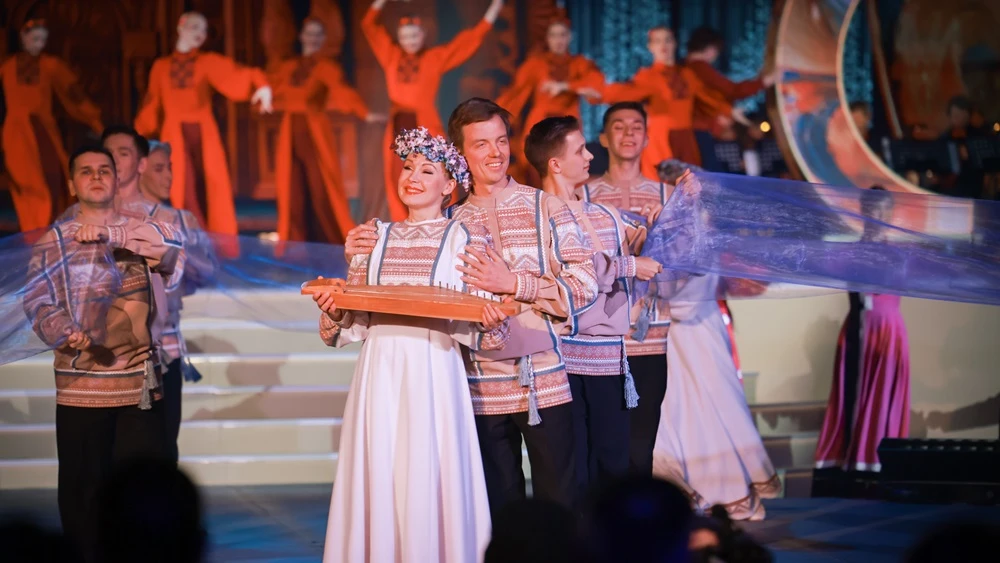
The event marked the culmination of the cultural programme for the Year of Unity of the Peoples of Russia, declared by the President of the Russian Federation, Vladimir Putin.
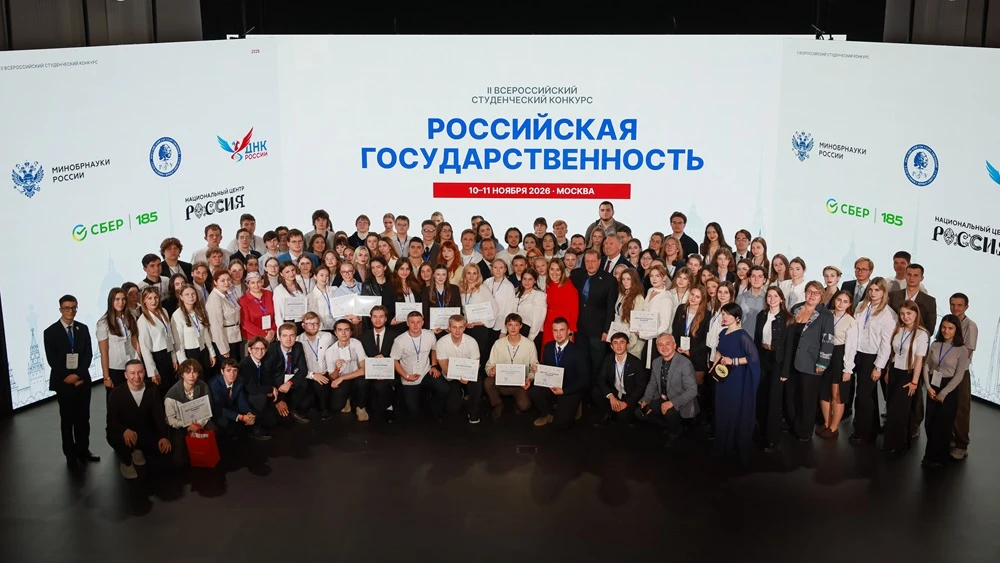
The closing ceremony of the All-Russian Contest of Student Projects on "Russian Statehood" was held on 11 November at the National Centre RUSSIA.
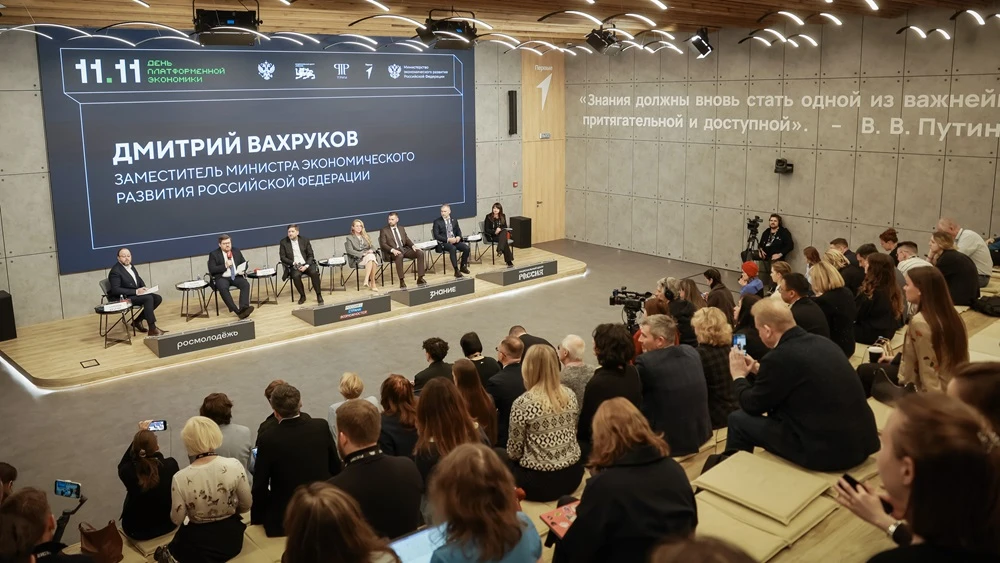
According to the experts, the model adopted for platformisation in tourism affects sales, the structure of the labour market itself and productivity.


