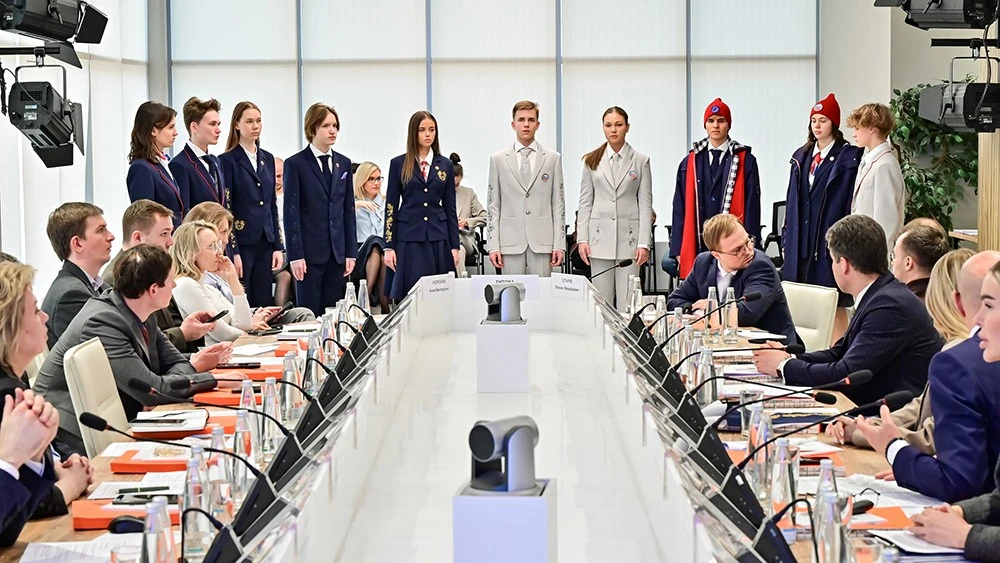
Third meeting of the Council Board at the National Centre RUSSIA on Developing and Promoting the New Russian Style in the Public Sphere held

The meeting on 10 December 2025 brought together Director General of the National Centre RUSSIA, Natalia Virtuozova, Adviser to the President of the Russian Federation, Yelena Yampolskaya, Deputy Head of the Presidential Directorate for Social Projects, Alexei Zharich, members of the Board of the Council and invited experts, including representatives of federal and regional executive authorities, business, education and professional communities. The participants summed up the results of the year and presented key projects aimed at strengthening national and state identity, which have taken on particular relevance today.
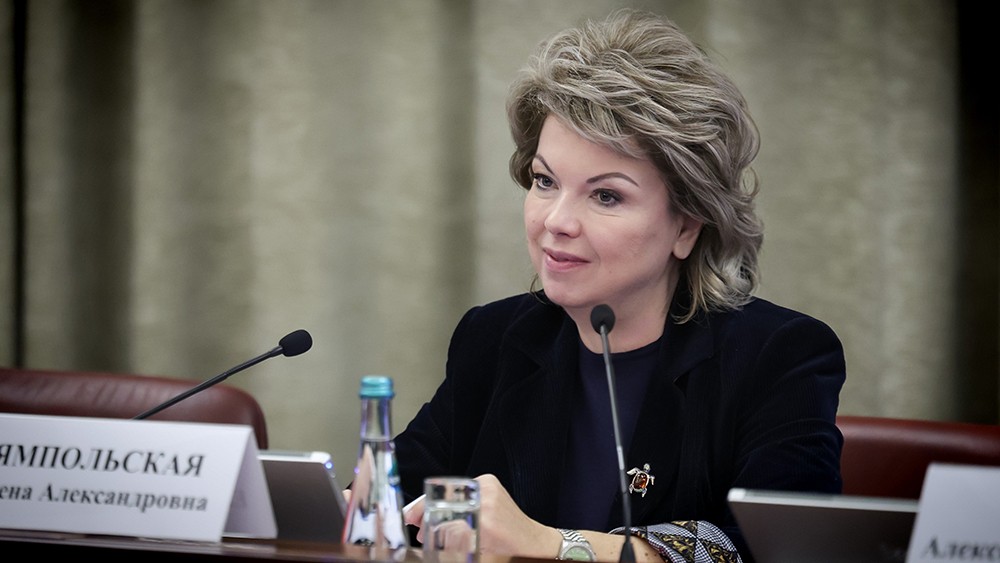
Chair of the Council, Yelena Yampolskaya, stressed the importance of the Council’s work: "The Council has done a great deal to build dialogue between the state and business: projects have been launched and are being implemented that aim to shape a nationally oriented environment. This work has already brought together creative teams, civil society institutions and public authorities. A number of projects are in an active phase of development, and we will see the first results as early as next year."
Key initiatives and contributions:
Organisational system of the Council’s work
Head of the Directorate for Oversight of State Visual Communications of the National Centre RUSSIA, Andrei Melentyev, noted that more than 150 specialists have already contacted the Council and that applications continue to come in: "In the near future, a special section dedicated to the Council’s activities will be launched on the official website of the National Centre RUSSIA. It will serve as an open platform for everyone who is ready to contribute to shaping the visual image of modern Russia. Applications to take part in the Council’s work can be submitted via the official email address sovetdesign@ano-dea.ru."
Next-generation children’s playgrounds
Head of the working group "Environmental Design and Architecture", Vladislav Preobrazhensky, announced that a pilot 600 sq. m children’s playground themed around the Dymkovo toy will be created by June 2026 next to the Tula Kremlin: "Work is now being completed on the design of the first playground, in cooperation with the ‘Step into Life’ corporate charitable foundation of the Koldi development company and Zabava Group, a producer of educational children’s playgrounds. For future scaling of these playgrounds, a request was sent to the Ministry of Construction, Housing and Utilities of the Russian Federation to determine the total number of children’s playgrounds in the country. The Ministry of Construction of Russia has identified around 50,000 playgrounds in public spaces and more than 100,000 courtyard playgrounds."
Uniforms for school and university students – participants in international Olympiads
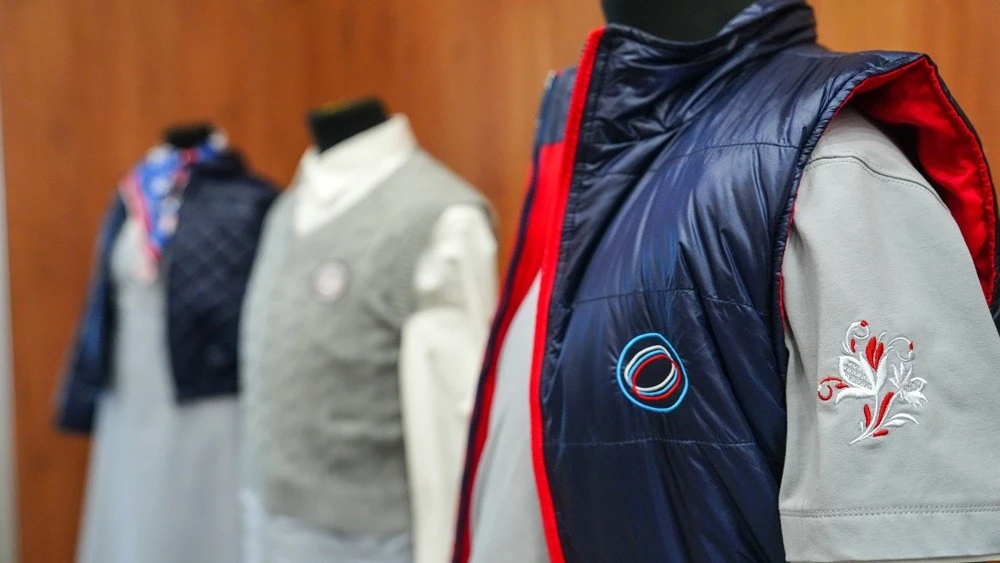
Founder of the Neva brand, Alisa Lobanova, presented a comprehensive concept for uniforms for school and university students who represent Russia at international Olympiads.
"This project is of great importance for the country," said Alisa Lobanova. "It is the most talented and brightest minds of Russia who successfully represent our country on the international stage, winning prizes and confirming the high level of Russian education and science. This is not just clothing, but a visual embodiment of the achievements of Russian education that should be recognisable internationally."
Head of the working group "Industrial Design", Alexei Maslov, presented the concept of school uniforms – both for everyday wear and for participation in subject-specific Olympiads and public events.
"Our concept combines thoughtful functionality with a distinctive aesthetic," said Alexei Maslov. "It is built on cultural codes, the philosophy of modern education and an understanding of the role of school students as future representatives of the country’s scientific, creative and engineering communities."
Popularising Cyrillic and Russian cultural codes in children’s clothing
CEO of Gulliver Group LLC Natalia Ryzhkova noted that children’s clothing becomes an important educational tool when Cyrillic and domestic cultural codes are woven organically into its design.
"Popularising the native alphabet turns everyday items into a subtle, modern way of fostering patriotism and civic identity in young people. Every inscription, proverb or stylised letter on a T-shirt becomes not merely a learning aid but a vivid element of everyday life – a symbol clear and relatable to a child. In this way, Cyrillic, as a bearer of cultural codes, acquires a contemporary and relevant language for communicating with the new generation."
Development Director of SHUPET LLC, Anastasia Vasilkova, drew attention to the growing international interest in Russian culture, noting that for the past 15 years many leading fashion houses have taken inspiration from Russian traditions, creating the "Sovietique" and "A la Russe" trends.
"As a national children’s clothing brand, our DNA carries traditional values – the best moments in life are linked to children and family," said Anastasia Vasilkova. "We pay special attention to the use of Cyrillic in capsule collections, window displays and advertising materials, which reinforces our national identity."
School notebooks featuring state symbols and Russian cultural heritage
Director General of Hatber-M LLC Arkady Kostenko, shared the company’s long-standing experience in producing items that foster love for the Motherland and respect for state symbols. He noted that nurturing patriotism in children requires support from the older generation, and that visual images on notebooks, notepads and other items play an important role in this. According to him, such symbols as the Moscow Kremlin, Saint Basil’s Cathedral, Swallow’s Nest, the main building of Moscow State University and others should form part of the everyday visual environment.
"To address this issue systematically, I propose creating an open state photographic database of historical and cultural sites that is free from complex legal restrictions," said Arkady Kostenko. "It is also necessary to launch state recommendations or programmes that encourage retail chains and marketplaces to promote patriotic products."
National typeface family
Head of the Council’s working group "Communication Design", Vyacheslav Kuteyev: "Work is under way to create the National Typeface Family ‘Russia’. The first typeface in this family will be an Antiqua serif font intended for official documents and communications where tradition, refinement and expressiveness are essential. Particular attention is being given to supporting the country’s linguistic diversity. In addition to modern Russian and Latin alphabets, figures and punctuation marks, the typeface will include characters of all languages used for official documentation and teaching in Russia. A Russian company – a leader in professional typography – has been engaged for this work."
Youth opinion research
Head of the Council’s working group "Concept Design and Foresight", Aleksandra Sankova, reported that a large-scale survey will be conducted among students of creative and technical universities to study their understanding of the new Russian style: "We will learn how young people visualise their future and which meanings and images, in their view, should shape the modern Russian style."
Department of Design
Vyacheslav Pravdzinsky, Head of the "State Design Workshop" at Senezh Management Workshop (Presidential Platform "Russia – Land of Opportunity"), noted that over the next five years more than 15,000 social facilities (schools, hospitals, cultural centres and others) will be renovated or newly built as part of national projects. This will require interior design and navigation systems for these facilities. In addition, more than 8,000 events and projects will need logos and brand identities, while about 6,000 websites and digital services will require design development or updates.
He stated: "To help regions work more effectively with design when implementing their projects, the Senezh Management Workshop has consolidated existing best practices and developed the ‘Design Department’ methodology. This is a methodology for launching and developing existing design teams within regional and municipal authorities. Such teams, which have already proved their effectiveness in several regions (the Udmurt Republic, the Khanty-Mansi Autonomous Area – Yugra, the Nizhny Novgorod and Amur regions) and cities (Tyumen, Yaroslavl), respond promptly to design requests and serve as centres of expertise, acting as competent design customers for other structural units. The presence of such internal design teams will raise the quality of national project implementation on the ground and help shape regional design systems."
A comprehensive approach to establishing a state design system
Vitaly Stavitsky, President of the Union of Designers of Russia, proposed developing a comprehensive approach to forming a state design system through the creation of a new professional and methodological foundation.
"Shaping the identity of Russian design is becoming an important agenda item and a soft power tool for promoting national products, projects and services on domestic and international markets, serving as a key and forward-looking direction within a values-driven economy," emphasised Vitaly Stavitsky.
Design Museum
Speaking on the search for a site for the future Moscow Design Museum, Aleksandra Sankova proposed creating a Design Museum in Moscow similar to those in world capitals, with subsequent branches in major industrial cities.
In conclusion, Yelena Yampolskaya expressed her gratitude to all members of the Council and invited experts for their productive work and professional contribution to the development of the new Russian style.
"I am confident that through joint efforts we will be able to create a harmonious visual environment that reflects the strength, diversity and spiritual richness of our country," said Yelena Yampolskaya.
The Council at the National Centre RUSSIA for the Development and Promotion of the New Russian Style in Public Sphere, established pursuant to the instruction of the President of Russia, continues its work to shape a nationally oriented visual environment, counteract excessive Latinisation of urban space and convey traditional values through visual language. The Council’s Collegium is a permanent body responsible for overseeing the Council’s current activities.
Event photobank
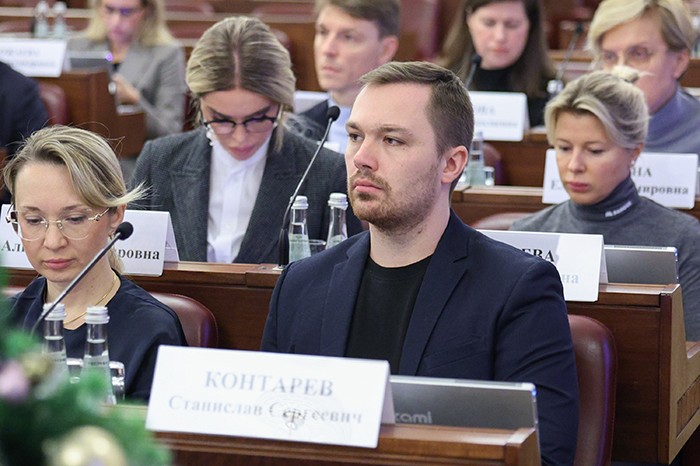

Its central theme was the development of visual culture through educational projects, public spaces and new approaches to environmental design.
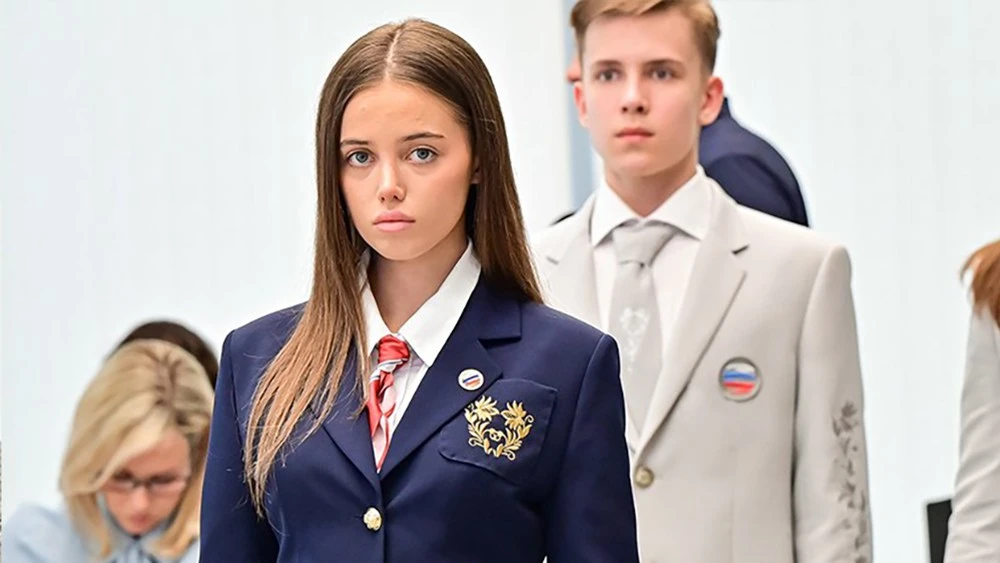
The formal line will form the basis of the representative wardrobe of Russian teams at international contests.