


Modern people: between family and the digital world
For
Russians, family is the main source of support in life, a source of love and
security, as well as the key environment for raising children and passing
values on to them. But the family's influence on individuals is increasingly
being challenged by a new environment — the digital one. The VCIOM Analytical
Centre, together with the National Centre RUSSIA, presents the results of a
survey of Russians and participants in the III All-Russian Wedding Festival
"Russia. Uniting Hearts", conducted to mark the Day of Family, Love
and Fidelity.
The main
source of support in life
Family
rightfully occupies a special place in people's lives: it is associated with
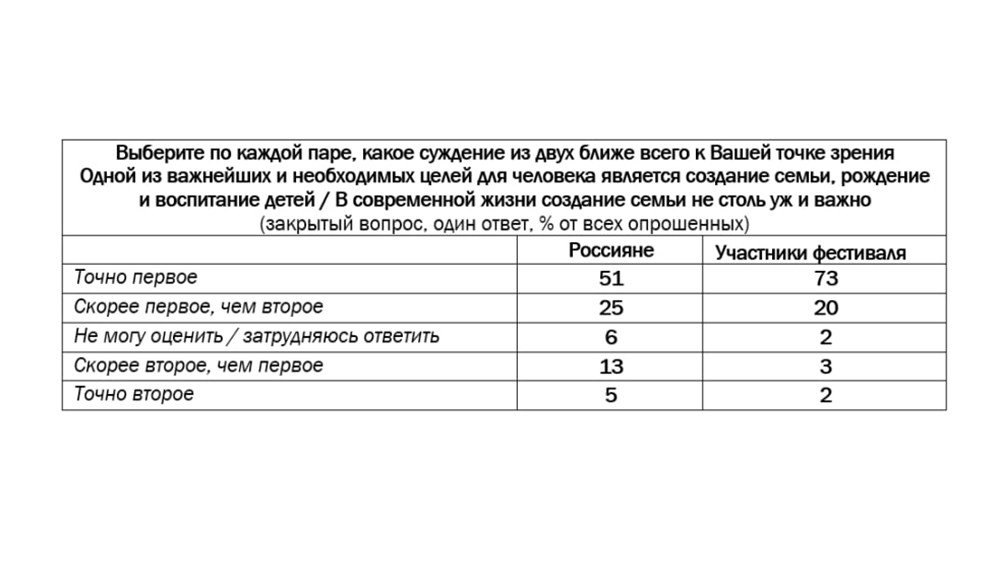
care, warmth, support and a sense of closeness. A significant majority of
Russians share the view that starting a family and having and raising children
are among the most important and essential goals in life: 76% of respondents
hold this view. Family is therefore seen not only as a personal value, but also
as a socially approved path in life.
Participants
in the III All-Russian Wedding Festival express this view even more strongly:
93% consider starting a family and having and raising children to be one of the
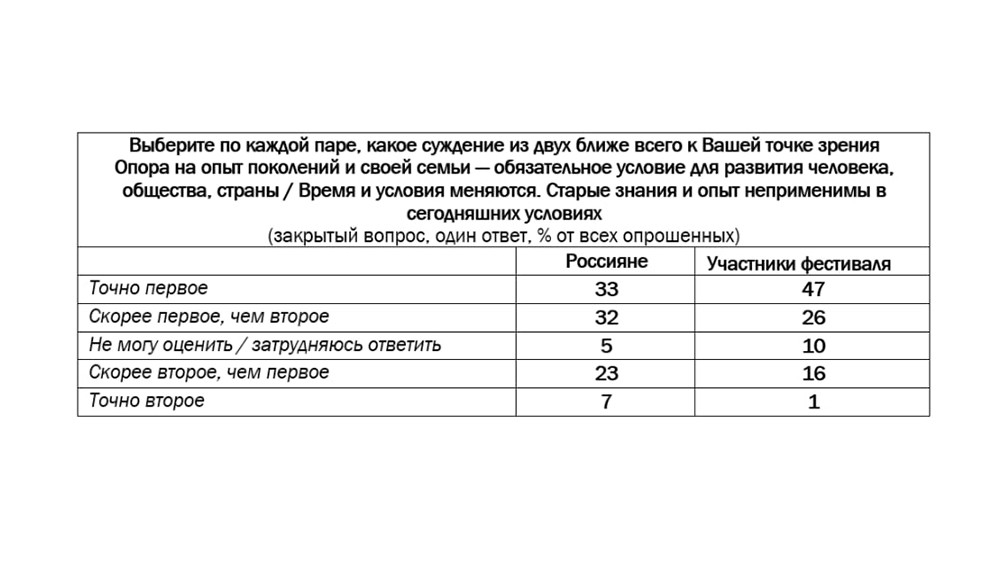
most important goals in life. They are also more likely than Russians as a
whole to draw on the experience of previous generations and their own family:
73% compared with 65% of Russians. In other words, the model of values based on
family continuity is more pronounced: festival participants are more likely to
see family as a continuation of family history and traditions, as well as
responsibility towards future generations.
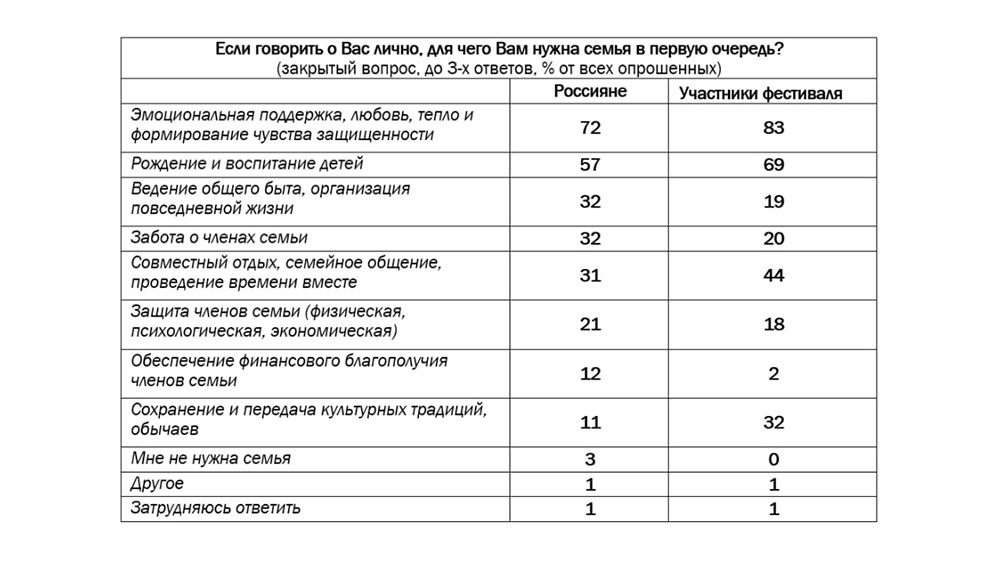
In terms of
its meaning, family is seen above all as a space of love, security and
child-rearing. For most Russians and festival participants, its primary purpose
is to provide emotional support, love, warmth and a sense of security — 72% and
83% respectively. The second most important role of the family is having and
raising children — 57% among Russians and 69% among festival participants. In
the public mind, the family retains two key functions: emotional support and
raising children. At the same time, the space of everyday closeness is
noticeably more important for festival participants: 44% mention spending
leisure time together, family communication and time spent together.
Who raises
children?
The ideal
of child-rearing held by Russians and festival participants is broadly similar
and centres on a moral core. Family is seen as the primary environment for
upbringing — the place where a child's character, attitude towards other people
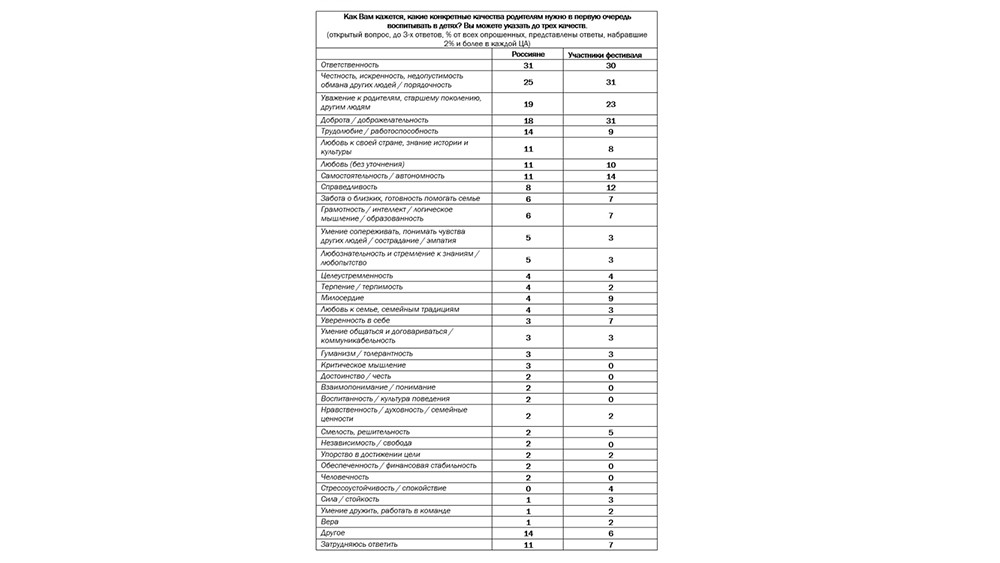
and basic ideas about kindness, honesty and responsibility are formed. Among
the qualities that parents should above all instil in their children,
responsibility is mentioned most often — by 31% of Russians and 30% of festival
participants — along with honesty, sincerity and the unacceptability of lying —
25% and 31% respectively. Other important qualities include respect for
parents, older generations and other people, kindness and goodwill, diligence
and a strong work ethic. In other words, upbringing begins with the formation
of a basic moral framework rather than with developing the skills needed for
success or competitiveness.
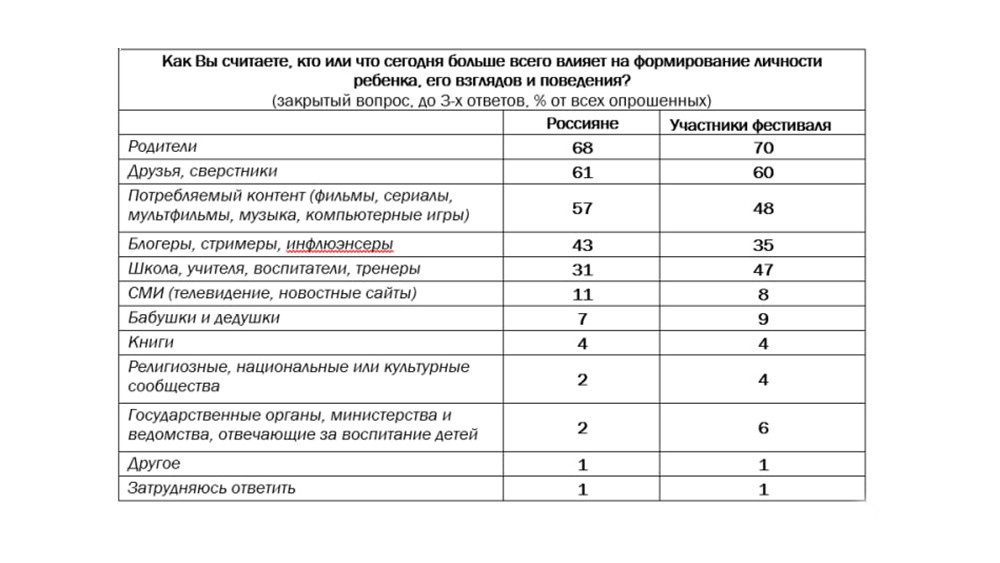
Parents
remain the main influence in shaping a child's personality: their role is noted
by 68% of Russians and 70% of festival participants. Today, however, this
influence is developing amid strong competition from peers and the digital
environment — the content children consume, bloggers, streamers and influencers.
Although the family retains its key role, it no longer has a monopoly on
upbringing. A child is shaped not only within the family and at school, but
also in the broader social and media environment, where digital content and
online authorities become independent participants in the upbringing process.
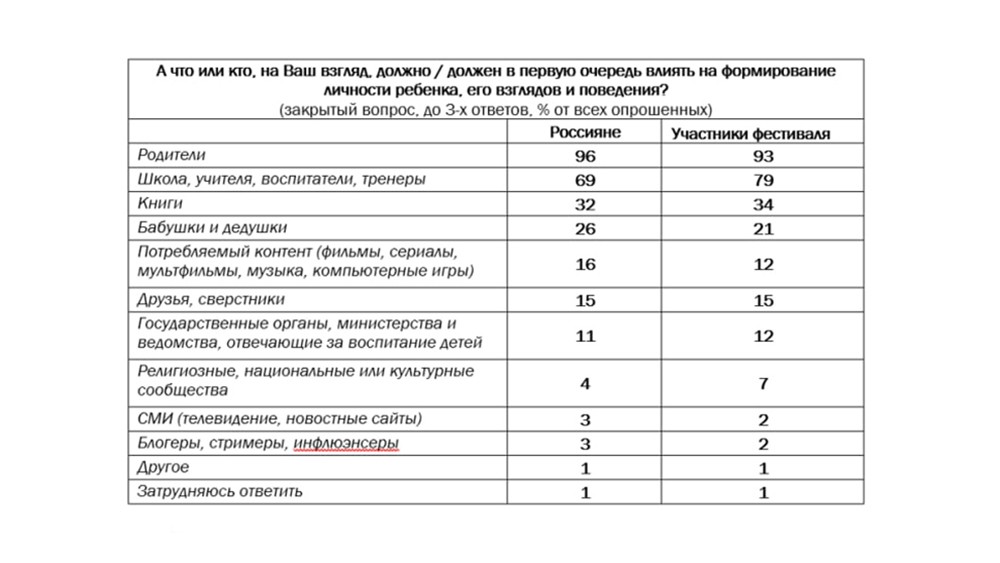
At the same
time, in the preferred model of upbringing, the main role is still assigned to
adult institutions — the family and school. The overwhelming majority of
Russians and festival participants believe that parents should have the primary
influence on the formation of a child's personality, views and behaviour — 96%
and 93% respectively. The expected role of the educational environment is also
high: schools, teachers, educators and coaches are mentioned by 69% of Russians
and 79% of festival participants. Unlike the real picture, in which peers,
content and bloggers have a noticeable influence, the normative model of
upbringing relies on parents, teachers, the experience of older generations and
books as more stable sources of values, knowledge and guidance in life.
The
responsibility of the family
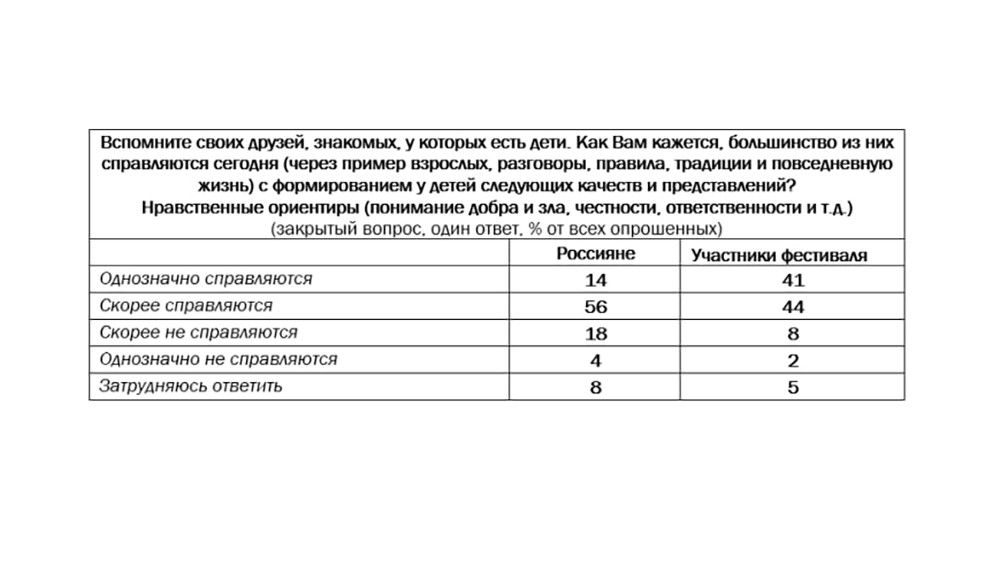
According
to Russians, families are most successful at instilling basic moral principles
— honesty, responsibility and an understanding of good and evil: 70% believe
that most families with children they know generally cope with this task. More
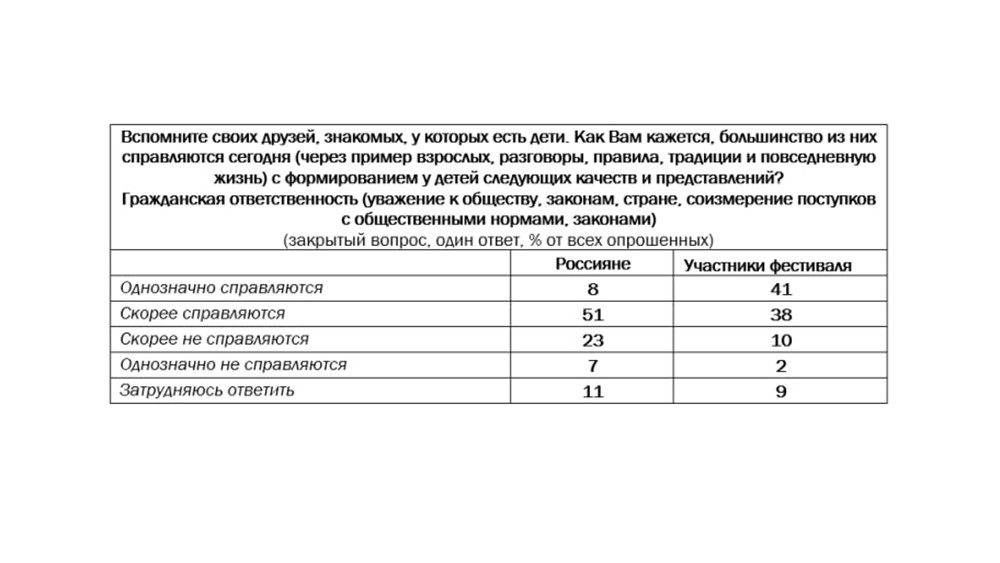
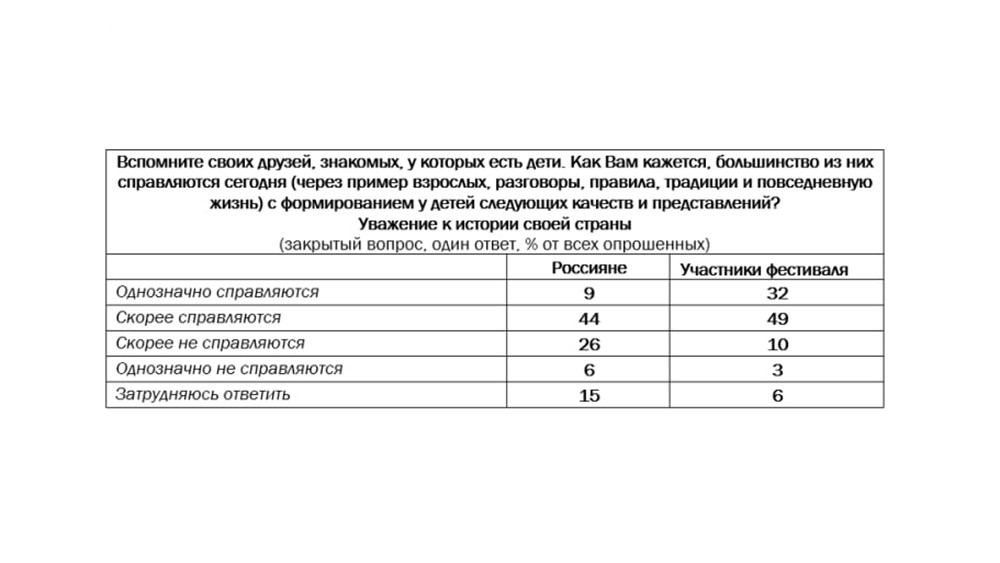
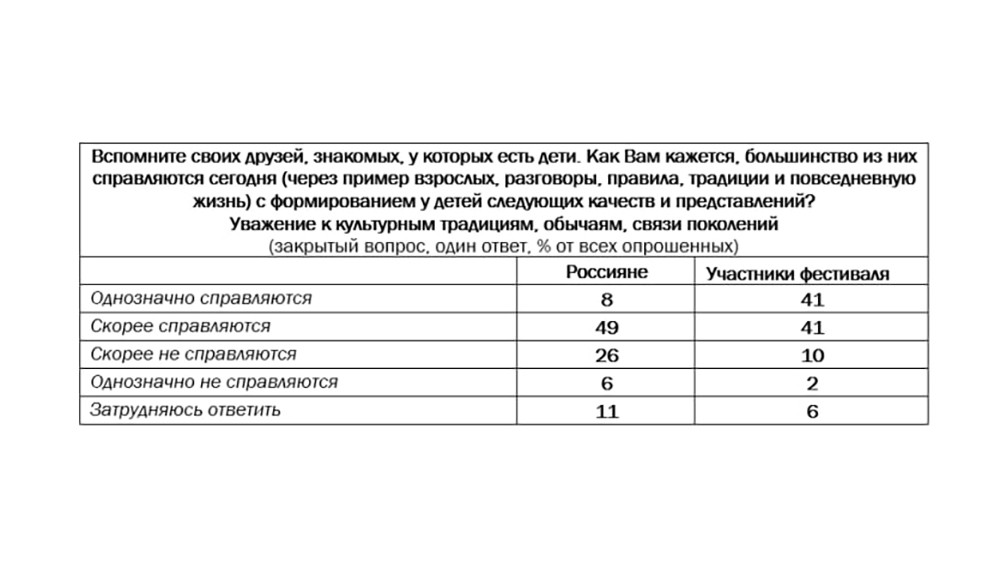
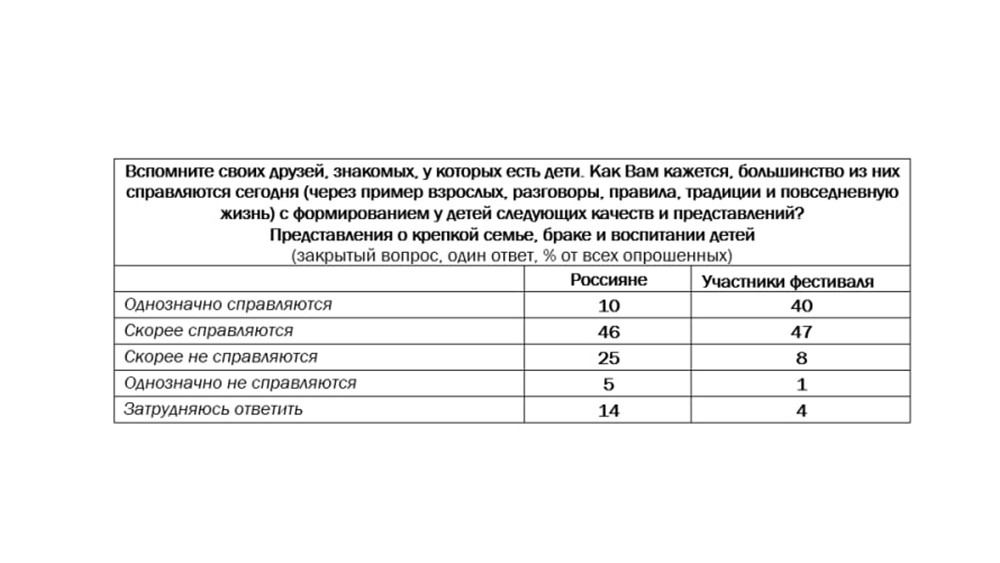
complex social and cultural areas — civic responsibility, respect for the
country's history, cultural traditions and ideas about a strong family — are
also associated with family upbringing, but are assessed less confidently:
positive assessments in these areas do not exceed 59%. In other words, the
family is seen as the main source of moral upbringing, but when it comes to
civic, historical and cultural socialisation, it probably needs support from
other institutions.
Assessments
among festival participants are noticeably more confident: around 80% or more
believe that families cope with all of the specified areas of upbringing, from
moral principles to ideas about a strong family, marriage and raising children.
Festival participants demonstrate greater confidence in the family's potential
to raise children.
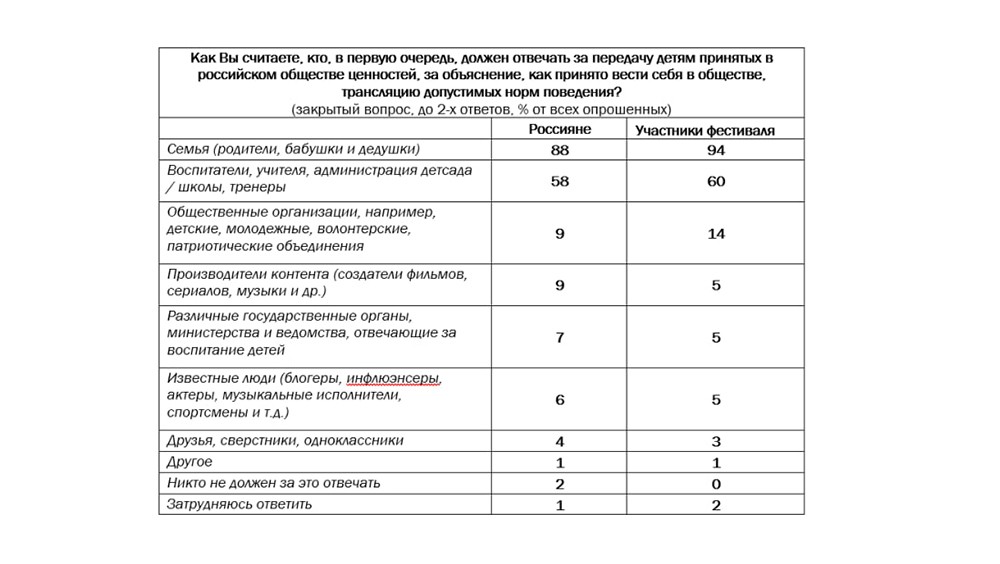
Passing
social values and norms of behaviour on to children is seen primarily as the
family's responsibility. The overwhelming majority of Russians and festival
participants believe that the family — parents and grandparents — should be
responsible for explaining to children the values, norms of behaviour and
acceptable rules of interaction adopted in Russian society: 88% and 94%
respectively. An important role is also assigned to the educational environment
— educators, teachers, kindergarten and school administrations and coaches.
Thus, in the minds of respondents, the preferred model of upbringing is built
around two basic institutions: family and education.
The nationwide online survey "VCIOM-Online" was conducted from 29 June to 1 July 2026. A total of 1,699 Russians aged 18 and over took part. The survey method was an online survey using a structured questionnaire based on the "VCIOM-Online" probability panel. Panel participants are recruited through the daily nationwide "Sputnik" telephone survey (CATI), conducted using a random digit dialling (RDD) sample of mobile phone numbers from the complete list of telephone numbers in use in the Russian Federation. The nationwide online survey data were weighted by socio-demographic parameters. For this sample, the maximum margin of error does not exceed 3.1% at a confidence level of 95%. In addition to sampling error, survey data may be affected by the wording of questions and various circumstances arising during fieldwork.
Survey of
participants in the III All-Russian Wedding Festival. A total of 99 people took
part. Data on festival participants are provided for reference purposes because
of the small size and heterogeneity of the subsamples; the statistical margin
of error is 9.8%.
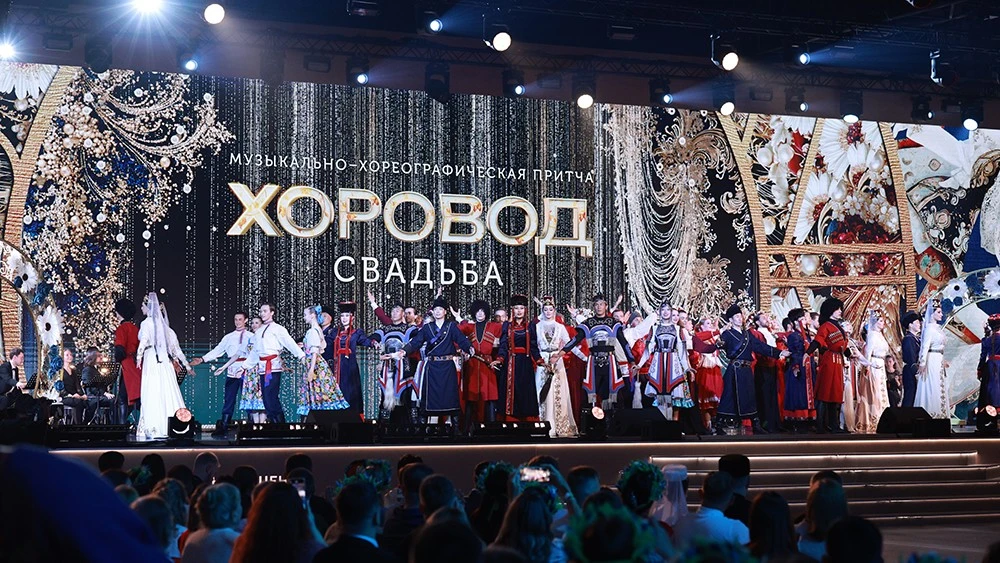
The musical and choreographic parable "Khorovod. Wedding" became the culmination of the III All-Russian Wedding Festival "Russia. Uniting Hearts".
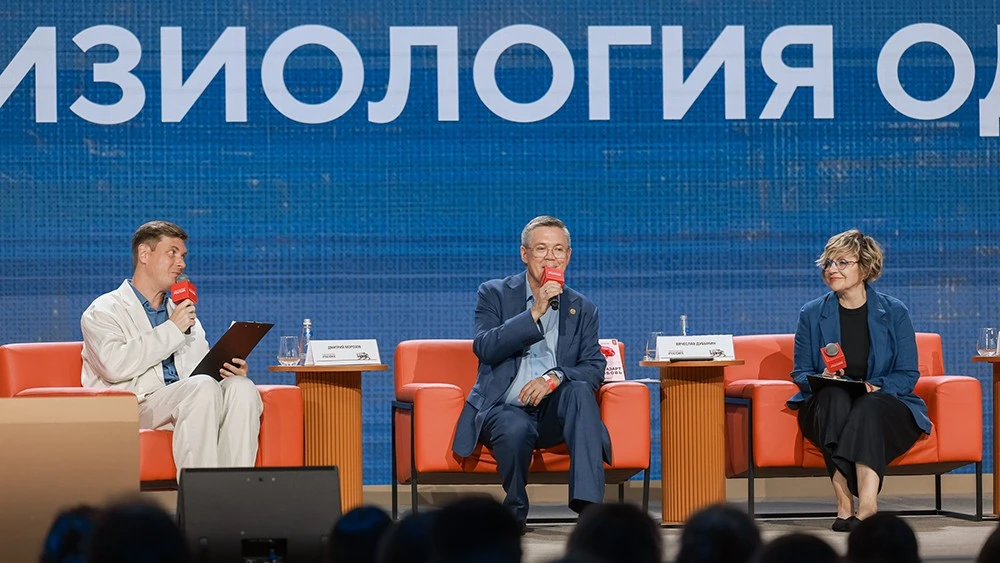
Fashion and physiology, science and centuries-old rituals came together during the educational programme of the III All-Russian Wedding Festival "Russia. Uniting Hearts".
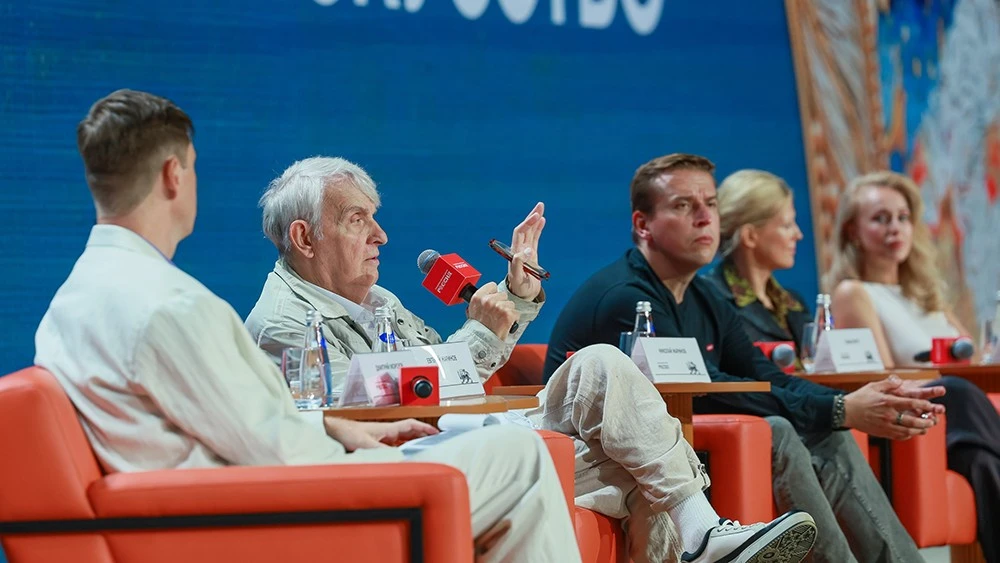
The Open Dialogue "Forms of Love: Literature and Art" was one of the events in the business programme of the III All-Russian Wedding Festival "Russia. Uniting Hearts".


