Storytelling instead of advertising: why companies are looking for more than just marketers

Brand authenticity and the speed of working with content are
becoming key competitive advantages in the new "attention economy".
At the same time, niche stories are turning into mass products thanks to
algorithms. These emerging trends were discussed by participants of the panel
discussion "Stories in Advertising and Consumption", which was held
on 7 February as part of the Open Lecture Hall "Inventing the Future:
Plots and Stories" at the National Centre RUSSIA.
Business storytelling expert and founder of the Historia
Academy, Artyom Mushin-Makedonsky, noted that expectations that stories would
“dissolve” in the overall information noise amid the development of large
language models had not come true. On the contrary, demand for meaningful
storytelling is growing.

"Companies still need people who know how to tell
stories. In December, The Wall Street Journal published a piece showing that
businesses are actively searching for storytellers. This is a very clear
signal: authenticity is becoming more valuable," said Artyom
Mushin-Makedonsky.
According to the expert, two key trends will intensify in
the near future. First, more and more companies will rely on genuine stories of
real people — top managers, executives, employees and customers. Second,
advertising will increasingly feature stories that speak about something bigger
than the product itself. He added that consumers will not merely observe
brand-created content from the sidelines, but will live through it, relating it
to their own values and life situations.

"Companies of today, if they want to become companies
of the future, face the task not only of talking about themselves, but also of
highlighting the things they want to bring to life — or that already exist but
often go unnoticed. This helps to find new sources of inspiration and build
communication bridges with different people, including those who were
previously hard for us to understand. Sooner or later, we will arrive at a
model of the world in which business seeks not only to earn money, but also to create
something greater for everyone. And, in my view, by doing what genuinely
inspires us, we can gradually make this world a reality," Artem
Mushin-Makedonsky concluded.

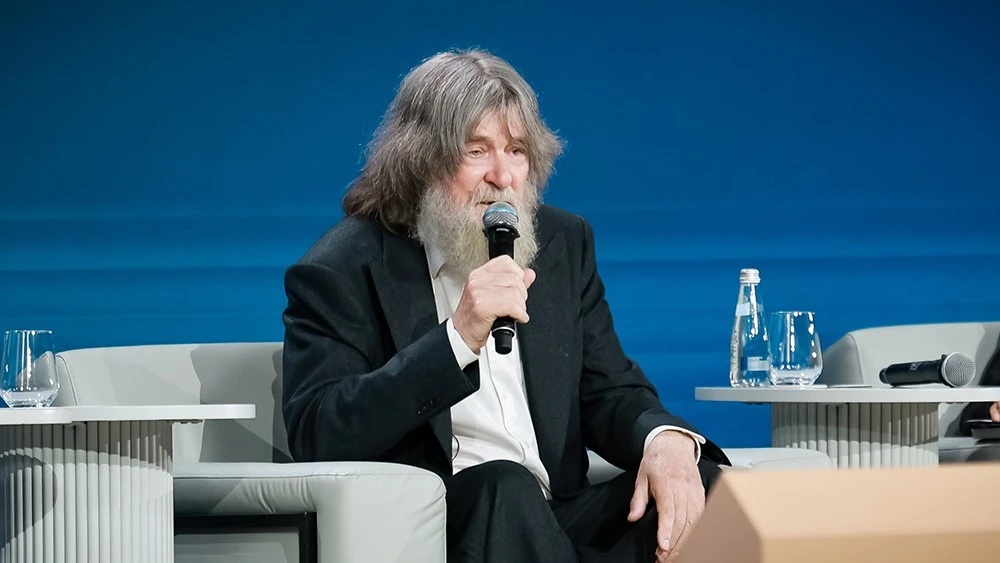
Co-founder of NorthStar Media Group and former executive at
Google and Verizon, Ivana Kirkbride, focused her remarks on the transformation
of the media market under the influence of platforms and user behaviour. She
noted that many technological solutions and formats that initially seemed
unsuccessful were, in fact, simply ahead of market readiness and
infrastructure.
"Platform evolution almost always runs ahead of the
market rather than being mistaken. Many formats fail not because the idea is
wrong, but because the audience and ecosystem are not yet ready. Those who
closely observe real user behaviour can see the future earlier than others
<…> We live in an attention economy where speed and adaptability often
matter more than production value. It is not necessarily the most expensive
projects that win, but those who can create content quickly and adapt just as
fast to cultural shifts. Context has become more important than the abstract
notion of quality. We are fighting for attention with every second of our
content, so the future belongs to storytellers who keep pace with the times,"
said Ivana Kirkbride.

Ivana Kirkbride added that new content formats are emerging
alongside mobile consumption: short vertical stories, micro-dramas and other
compact narratives are designed for specific "moments of the day" and
a global audience. Algorithms are turning niche interests into mass phenomena,
and a story’s effectiveness now depends not on budget, but on how well it fits
the moment, the device and the user’s mood. She noted that the future of
storytelling lies at the intersection of creativity and data — stories will
increasingly be optimised not for an "average viewer", but for
specific content consumption scenarios.
"Artificial intelligence technologies will increase the
speed of content production and help reach target audiences, but they will by
no means replace human creativity," the guest from the United States said.

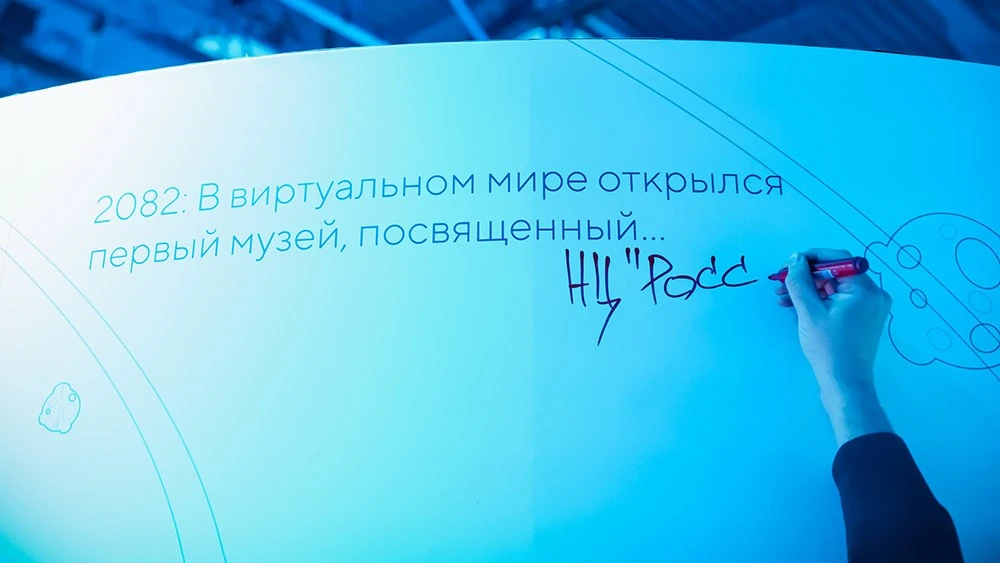
The Open Lecture Hall "Inventing the Future: Plots and
Stories" is an original project of the National Centre RUSSIA. Within its
framework, Russian and international experts discuss how storytelling
influences key spheres shaping public consciousness and innovative development
— education, advertising, cinema and video games. The talks are accompanied by
AI visualisation created on the basis of the speakers’ future scenarios, while
a single character in the videos guides viewers into the world of tomorrow.
Event photobank

 23
23