


Winners of the second season of the "Native Toy" Contest announced at the National Centre RUSSIA
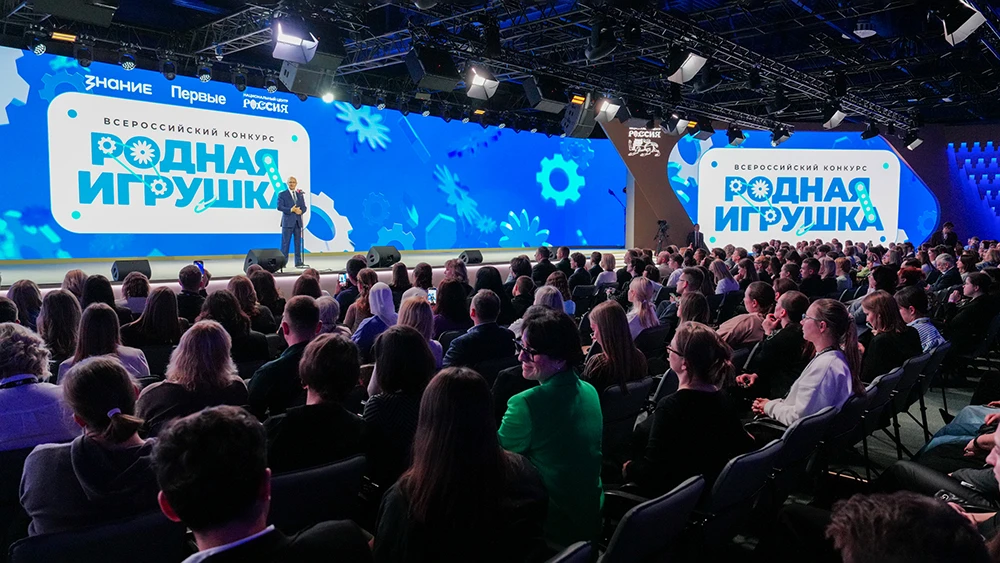
The final
of the second season of the All-Russian Contest "Native Toy" took
place at the National Centre RUSSIA on 19 October. The contest was organised by
the Russian society Znanie and the Movement of the First on the instructions of
the President of the Russian Federation, as part of the national project
"Youth and Children". The organising committee reviewed the results
and announced the winners in the "Game and Toy Prototypes" and
"Finished Games and Toys" categories. The products are expected to
appear in shops and preschools across Russia soon.
The event
brought together more than 1,500 participants, including members of the
contest's expert and children's juries, parents and children, school pupils and
students specialising in creative industries and entrepreneurship, as well as
representatives of businesses and the children's goods industry. President of
the Russian Federation Vladimir Putin sent a greeting to the participants. His
message was read out by Sergei Kiriyenko, First Deputy Chief of Staff of the
Presidential Executive Office and Chairman of the Supervisory Board of the
Russian society Znanie.
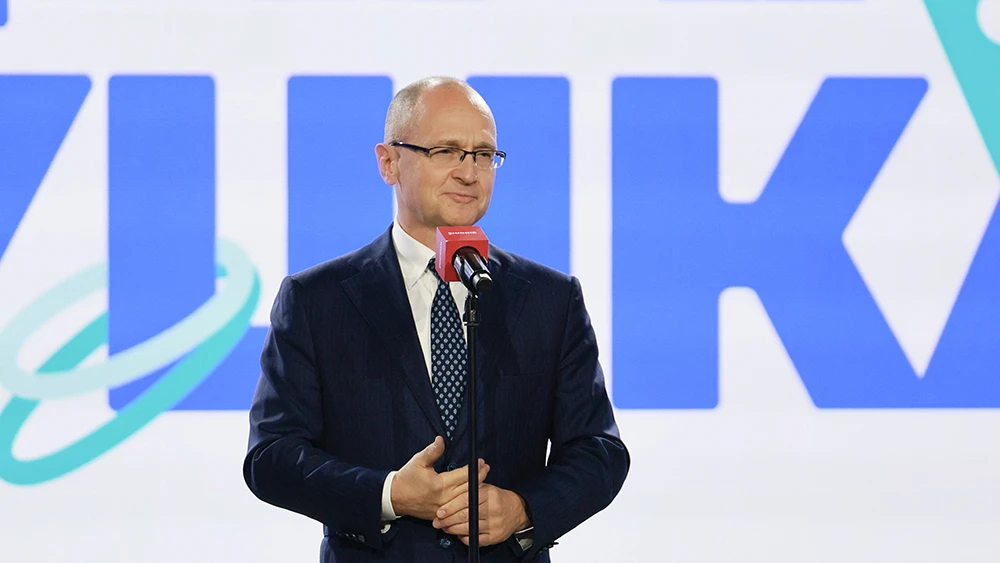
"Dear
friends, I
welcome you to the National Centre RUSSIA for the final of the second season of
the All-Russian Contest "Native Toy", which is being held as a
festive event featuring an exposition of children's games and toys. Your
engaging and meaningful project strengthens its traditions year after year,
once again bringing together enthusiastic, skilled and energetic people of all
ages and professions, young people and entire families. I know that
this year's contest, dedicated to games and toys created for preschool
educational institutions, features a vibrant array of outstanding and truly
unique works. All of them have been made with love for children and are
intended to develop their artistic taste and interest in creativity, foster
respect for enduring spiritual and moral values, and introduce them to our rich
historical and cultural legacy, as well as the distinctive traditions and
customs of Russia's peoples. I am
confident that the best games and toys will become a valuable resource for
parents and educators and a source of joy for boys and girls. I wish you
every success and all the very best."
The entries
were assessed by experts, members of the children's jury representing the
Movement of the First, and representatives of the "Rodnye-Lyubimye"
("Dear Ones – Loved Ones") family community. The judging criteria
included, among others, educational and developmental value, originality,
design quality, technological innovation, aesthetic appeal and alignment with
traditional Russian values. Based on the assessments, the jury compiled a ranking,
and 45 winners were recognised at the awards ceremony, including 15 creators in
the "Game and Toy Ideas" category.
Sergei
Kiriyenko presented the awards in the "Story-Based and Figurative
Toys" group. In the "Game and Toy Ideas" category, the winning
projects were "Baby Animals of Traditional Crafts" (the Ivanovo
Region), "Road Stories" (the Chelyabinsk Region) and
"Chudesye" (the Arkhangelsk Region). In the "Finished Games and
Toys" category, the winners were "Street of Good Neighbours" and
"My Heroes" (the Kirov Region), "Wooden Cartoon Characters"
(the Kemerovo Region), "The Northern Land" (the Moscow Region) and
"Nursery Rhymes" (Moscow). In the "Game and Toy Prototypes"
category, the winner was "Who Lives in the Little House?" (the
Leningrad Region).
"The
'Native Toy' contest, held on the instructions of the President of the Russian
Federation, has already seen more than 2,000 projects, toys and games awarded
the quality mark. There have also been several changes this year, with many
more toys designed specifically for preschool children. It is wonderful that
the creators of these toys and games range in age from three to 80. Looking at
the presentations of the projects at the exposition, you could feel that these
toys were alive: you wanted to hold them, give them to your brothers and
sisters, your children and your grandchildren, because each one had been made
with heart and genuine love," said the First Deputy Chief of Staff of the
Presidential Executive Office.
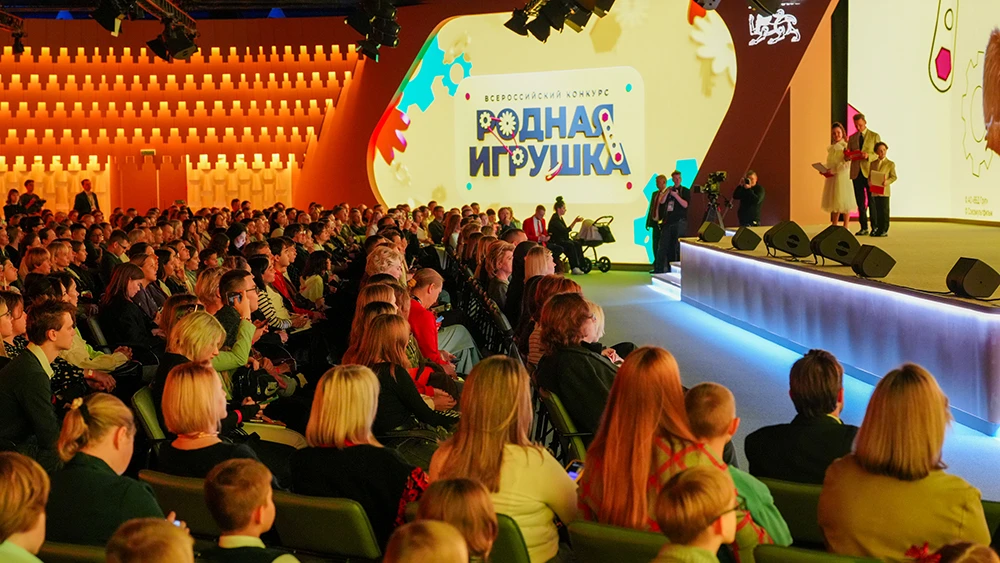
Yelena Yampolskaya, Adviser to the President of the Russian Federation, presented awards in the "Board Games" group. The winners in the "Game and Toy Ideas" category were "A Great Round Dance of Friendship" (the Krasnoyarsk Territory), "Letters of the Motherland" (the Tyumen Region), "Star Atlas" (the Chuvash Republic), "In Search of the Firebird" (the Pskov Region) and "Our Motherland" (Moscow). In the "Finished Games and Toys" category, the awards went to "Safety Academy" (Moscow) and "Taimyr: Peninsula of Treasures" (Moscow). The winners in the "Game and Toy Prototypes" category were "Bunny-Rescue" (the Republic of Bashkortostan), "AgroMaster" (St Petersburg), "Excavations at Chersonesus" (Sevastopol), "Ural Pick-up Sticks" (the Sverdlovsk Region), "Russia Here and There" (Moscow), "Teremok" (the Stavropol Territory), "Heavenly Squad" (Moscow), "Chitariki-Zvukariki" (the Republic of Bashkortostan), "Know Ours" (Moscow), the quiz "Get Ready for School: Important Questions" (Moscow) and "A Journey Across Russia" (the Tomsk Region).
"Today,
we are officially announcing that the third season of the All-Russian Contest
"Native Toy" will focus on science, engineering, technology and
industry. Our country's leader regularly emphasises the importance of
addressing scientific and technological challenges. We understand that, in
today's world, staying ahead in engineering and technology is the key to
safeguarding our national identity. It is the foundation on which we can
preserve our values, traditions and everything passed down to us by our ancestors. Progress is
in the service of tradition. The President consistently reminds us that our
country must develop at an accelerated pace and that we need to encourage
engineering, design and scientific and technological thinking in
children," Yelena Yampolskaya said.
Artur Orlov, Hero of Russia, graduate of the presidential personnel programme "Time of Heroes" and Chairman of the Board of the Movement of the First, congratulated the winners in the "Construction Sets and Model Kits" group. In the "Game and Toy Ideas" category, the awards went to "Native Landscapes" (the Samara Region), "Russia's Architectural Legacy" (the Republic of Tatarstan), "RUBRIK: The Largest Country" (Moscow), "Dymkovo Toy Workshop" (the Moscow Region) and "Painted Window Frames" (the Krasnoyarsk Territory). In the "Finished Games and Toys" category, the winners were "Brick House" (the Moscow Region), "Cartoon Characters Bringing Generations Together: Maxi-Prostokvashino Construction Set" (the Ulyanovsk Region), "Teremok: The No-Book" (Moscow), "A Journey Across Russia: Amazing Buildings" (Moscow), "KAMAZ" (the Ulyanovsk Region), "Smeshariki" (Moscow) and "Vostochny Cosmodrome" (Moscow). In the "Game and Toy Prototypes" category, the awards went to "Krokha" (the Tambov Region), the "Chitariki-Zvukariki" activity board (the Republic of Bashkortostan) and "The Secrets of the Five Mountains" (the Stavropol Territory).
"The
Contest 'Native Toy' offers a unique opportunity to support Russian creators
and manufacturers who contribute to developing modern, high-quality and
engaging games and toys. The Movement of the First actively promotes the
principle of children and adults co-creating projects through this contest.
That is why, alongside experts, the finalists' entries were assessed for the first
time by a special children's jury organised by the Movement of the First. It
consisted of 30 young people aged 12 to 17 from Moscow and the Moscow Region. Their
assessments helped us understand how interesting the proposed game and toy
prototypes are to children and teenagers. This is an important part of the
process, as the toys are intended for mass production and should become a
meaningful tool in raising a new generation of Russian citizens," Artur
Orlov said.
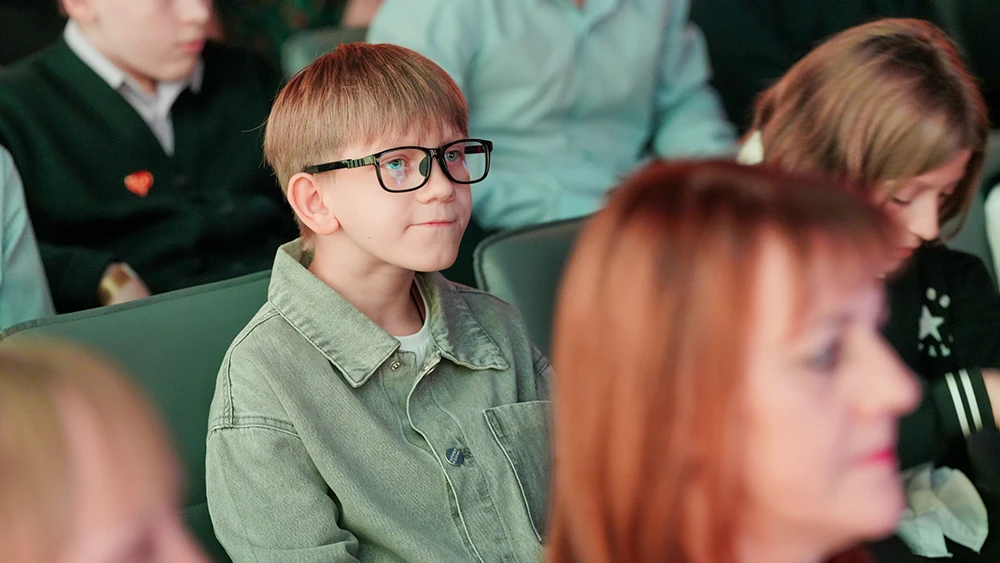
Maxim
Dreval, Director General of the Russian society Znanie, presented awards to the
winners in the "Technical and Technological Toys" group. In the
"Game and Toy Ideas" category, the winners were "Smart
Fairy-Tale Home: The Hut of the Future" (the Murmansk Region) and
"Firefly City" (the Krasnoyarsk Territory). In the "Finished
Games and Toys" category, the award went to the animated film studio
"I Create the World" (Moscow).
The second
season also featured several special categories, including a public vote. From
28 September to 11 October, people across Russia voted for their favourite
projects. More than 28,000 unique users took part, casting over 44,900 votes
through the MAX messaging app. The winner, receiving a special prize from the
contest's strategic partner VK, was "Beaver Lab", Episode 8,
"Levshonok Dam: A Workshop of the Microcosm", by Valeria Ustinskaya
from Moscow.
The winner
of the "Fairy Tale Will Come True" special category, organised in
partnership with the Solntse ("the Sun") TV channel, was "The
Firebird", a drawing by Darina Galiakbarova from Chelyabinsk. The
"Game of the Future" prize from Detsky Mir company went to
"Street of Good Neighbours" (the Kirov Region). Tatyana Konovalova,
Deputy Director General of ELTI-KUDITS JSC, received the "Children's Radio
Choice" award, organised by the Russian society Znanie and Children's
Radio. The special prize from the Four Paws company went to Ksenia Gorbunova
from the Ivanovo Region for her concept of a story-based and figurative toy,
"Baby Animals of Traditional Crafts".
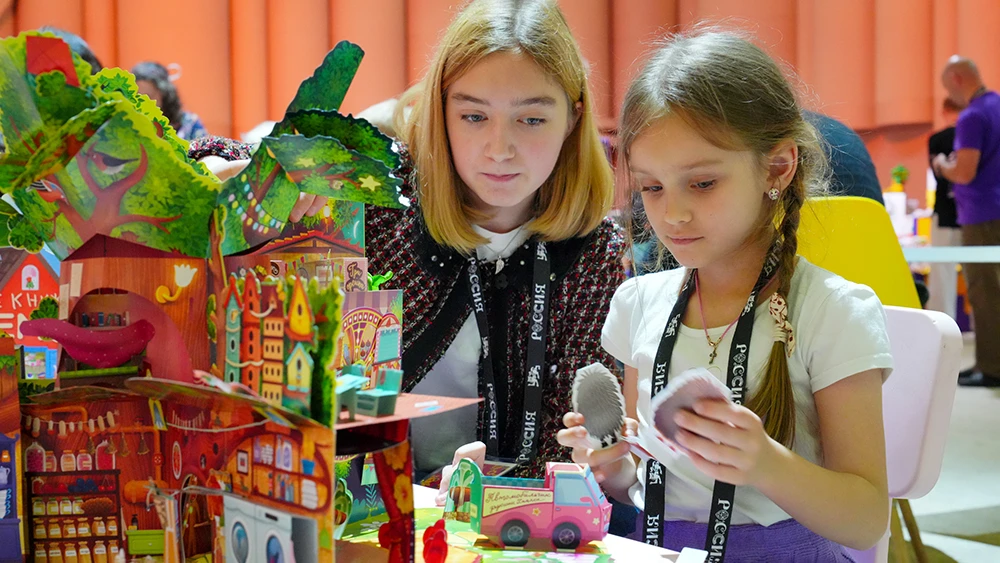
The competition
winners will have the opportunity to produce their first manufacturing runs in
partnership with technology companies. Production is scheduled to begin in
December 2026. The projects will receive promotional support through retail
chains and online platforms, including dedicated "Native Toy" shelves
from November 2026. They may also be included in recommendations from the
Ministry of Education of the Russian Federation on equipping kindergartens and
schools; these recommendations are expected to be sent to preschools by the end
of the year. The winning products will also be eligible for inclusion in the
register of products bearing the "Native Toy" quality mark.
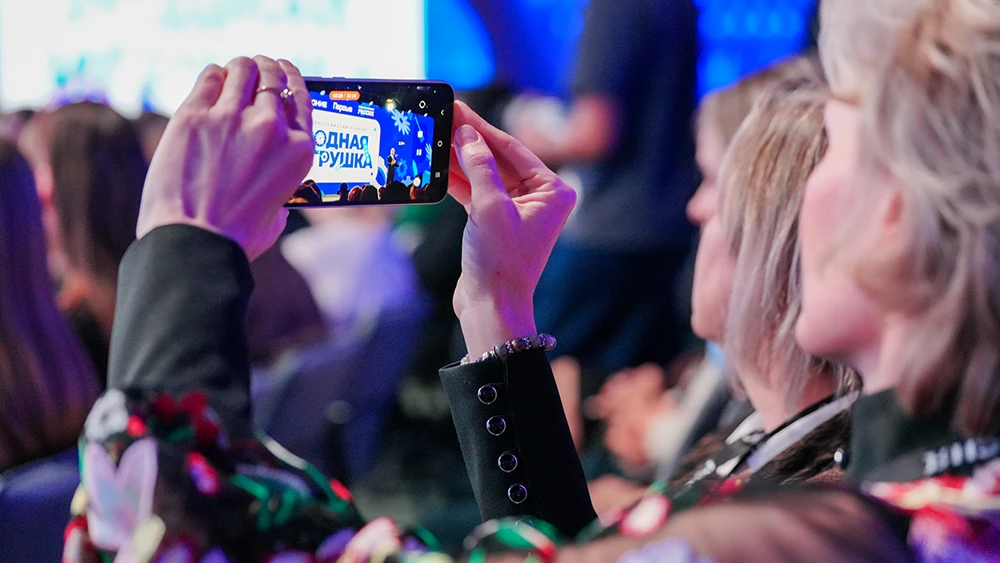
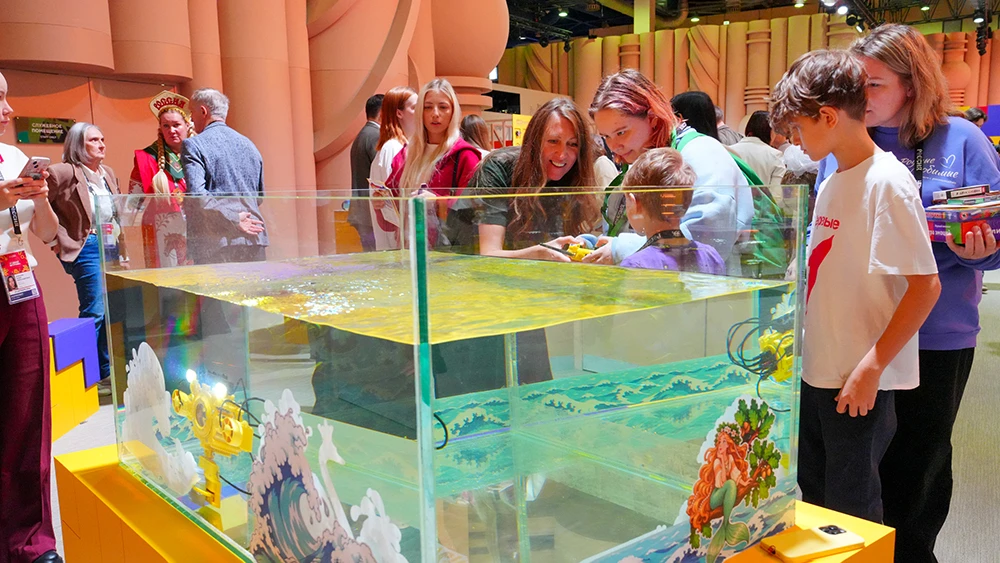
Another highlight of the day was an exposition featuring the 15 winners in the "Game and Toy Ideas" category, 80 finalists in the "Game and Toy Prototypes" and "Finished Games and Toys" categories, and 320 products awarded the "Native Toy" quality mark. Maria Lvova-Belova, Presidential Commissioner for Children's Rights, shared her impressions of the exposition and her views on modern toys. She said toys must be safe and beneficial to children's development, but, above all, they must appeal to children, spark genuine interest and meet the expectations of the younger generation. This is why it is particularly important that children themselves helped choose the winners of the "Native Toy" Contest.
"Of
course, we value, among other features, the patriotic focus of toys and their
ability to tell children about the traditions, cultures and different peoples
who live in our vast country. At the same time, a child's interest and desire
to play with a toy are extremely important! I toured the exposition, and it was
wonderful to see how engaged the children were — playing with wooden toys,
puppet theatres and construction sets, and driving KAMAZ vehicles and other
models from Russia's domestic automotive industry. We
understand that we can now promote everything that is native and dear to us in
kindergartens and families through these wonderful games and toys," Maria
Lvova-Belova said.
The second
season of the competition began on 11 March 2026 and focused on creating games
and toys for the preschool education system. Professional manufacturers,
creative teams and independent creators aged 14 and over were eligible to
participate. The "Game and Toy Ideas" category received 4,330
applications from 89 regions. A further 2,687 applications were submitted in
the "Game and Toy Prototypes" category, while the "Finished
Games and Toys" category received 7,375 applications — more than half of
all entries this season.
The Contest
"Native Toy" is supported by companies and organisations working in
manufacturing, retail, technology and media. Its official partners are the
Detsky Mir Group, Four Paws company, the Central Children's Store on Lubyanka, the
"My Business" Centre and the "Moscow Small Business"
Agency. VK is the strategic partner, while the TASS News Agency of Russia is
the general information partner. Other information partners include Children's
Radio, the Solntse TV channel and Tricolor. Technology and industry partners
are Vesna, Desyatoye Korolevstvo, Russky Stil, SmolToys, Okeanika, Ty i Ya,
Volshebny Mir, Rubrik and Alatoys.
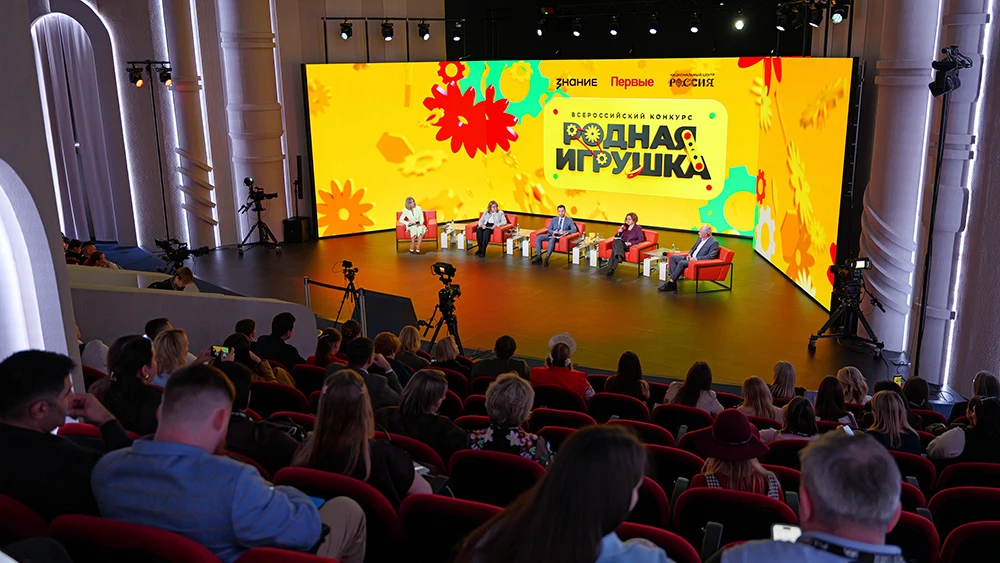
The final of the second season of the All-Russian Contest "Native Toy" is being held as an exposition of games and toys.
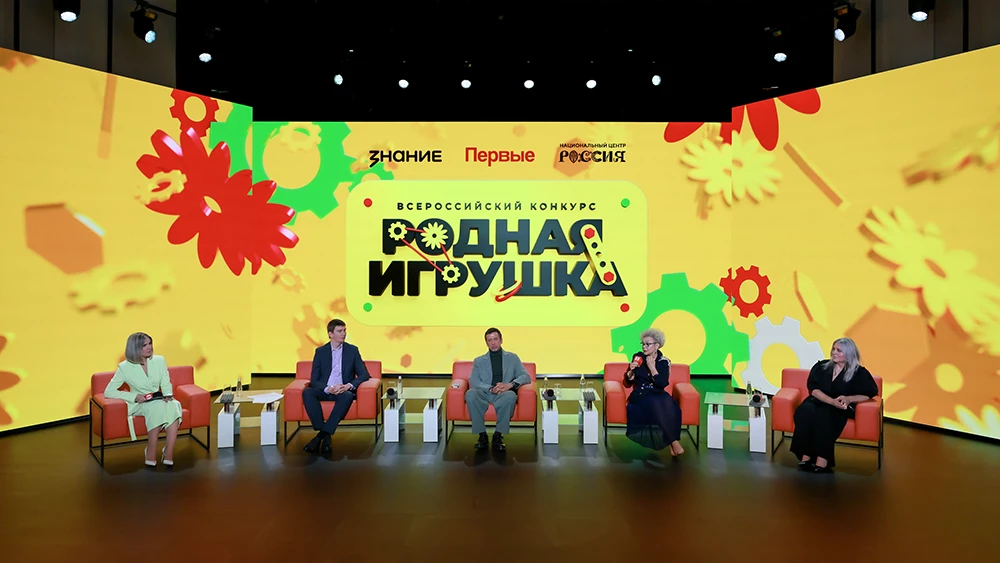
The panel discussion "More Than Just a Toy: The Educational Potential and Teaching Practices in Early Childhood Education" took place on 19 October at the National Centre RUSSIA.
How has the Russian metro evolved over the decades? Why are its stations often called underground palaces, and what secrets and legends lie behind the history of the metro.


