


As part of the "Treasury" project, experts discussed the role of toys as part of the cultural code
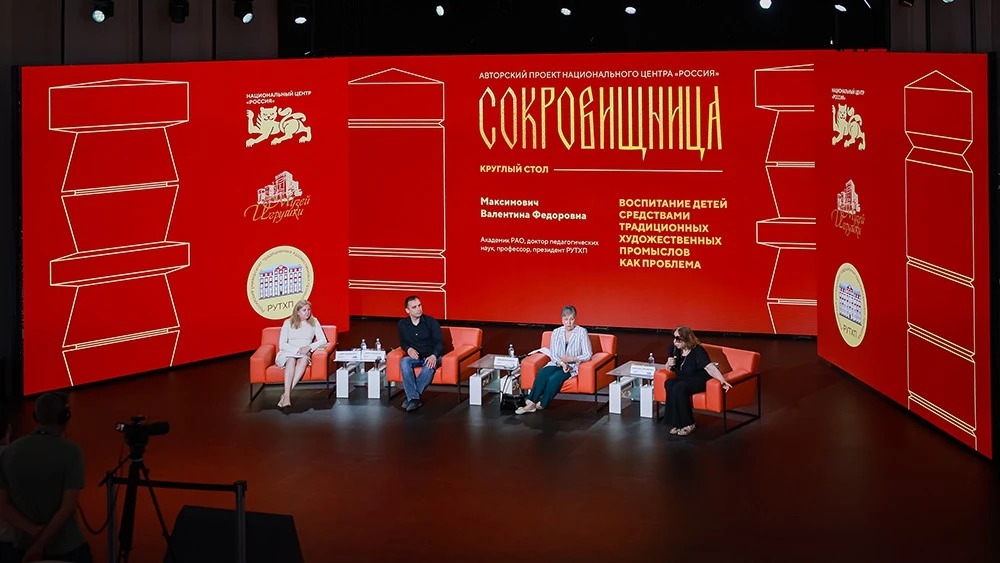
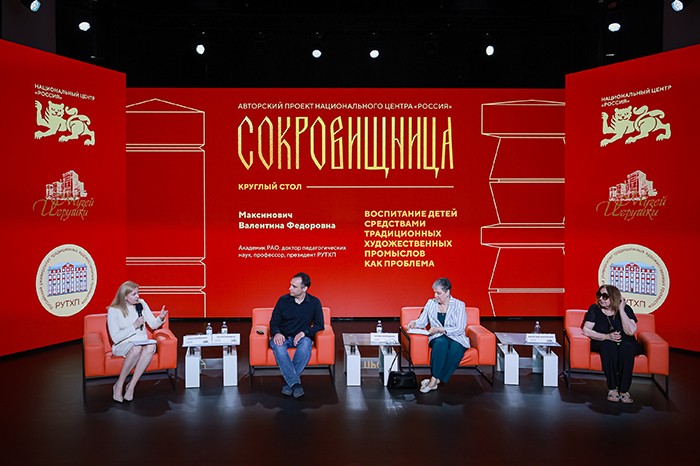
On 22 May, as part of the opening ceremony of the new original exposition project "Treasury", a round table dedicated to the role of toys and traditional arts and crafts in raising children and preserving cultural memory was held at the National Centre RUSSIA.
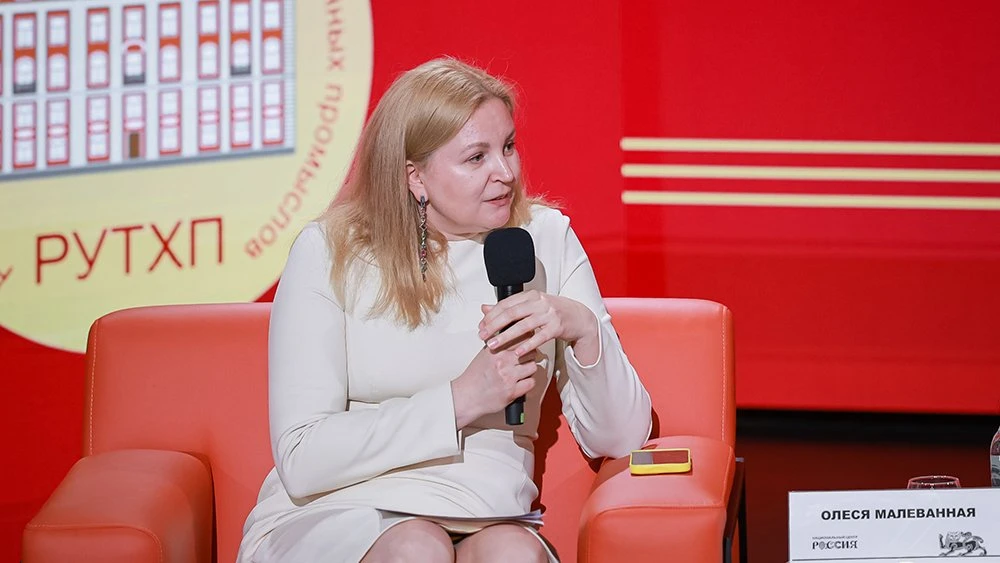
The moderator was Head of the Laboratory of Cultural and Educational Projects at the National Centre RUSSIA Olesya Malevannaya. She gave a detailed account of what the "Treasury" project is dedicated to: "Our round table is devoted to an important event for the National Centre RUSSIA: the opening of the "Treasury" project. It is a touching and significant project aimed at popularising the richest museum holdings of our country. We want people here, in the centre of Moscow, to be able to see the treasures that Russian museums have carefully preserved for many years in every corner of our country. "Treasury" begins with an amazing exposition — with the most important thing, with childhood. It is a story about toys."
During the round table, Valentina Maksimovich, Academician of the Russian Academy of Education, Doctor of Pedagogical Sciences, Professor, and President of the Russian University of Traditional Arts and Crafts, gave a lecture titled "Raising Children Through Traditional Arts and Crafts as a Problem". She outlined the key challenges faced by teachers and parents amid rapid digitalisation, and spoke about how turning to crafts and traditional toys helps shape children’s attitude towards work, history and culture not as an abstraction, but as a living personal experience.
"The word 'treasury' itself needs no explanation. Everyone who comes here will surely see something they have never seen before and perhaps have never even heard of. What are childhood and national culture? What connection exists between them, between beauty, intelligence and happiness? Children and parents are always at the heart of everything. I often say that smart parents mean happy children. And happy children are brought up well, develop, become wise parents and, in turn, bring happiness to their own families. This is a natural circle of life that has always existed and cannot be abolished. A great deal depends specifically on parents. School and everything else are subsequent factors. First and foremost, it is the family," Valentina Maksimovich said.
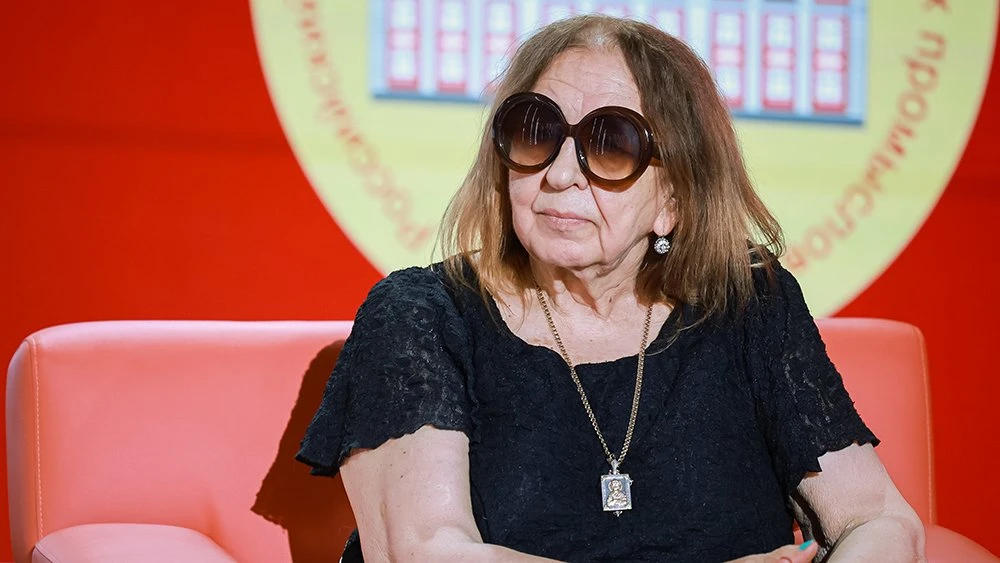
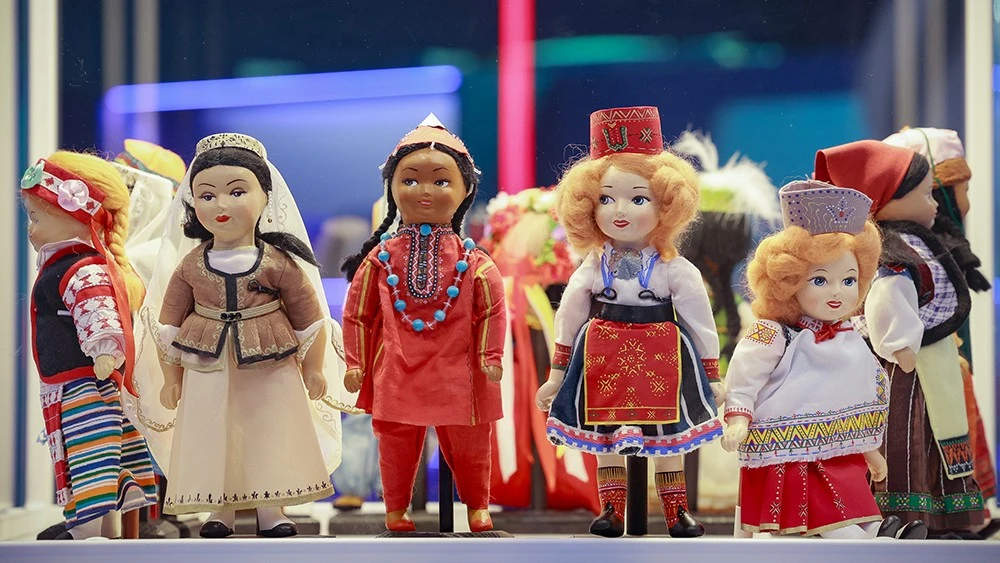
The speaker noted that the objects surrounding a child from childhood should form a sense of beauty and aesthetic perception. According to Valentina Maksimovich, traditional arts and crafts help children see harmony and meaning in details, and teach them to perceive the warmth and emotional content of images. Such items should attract attention and inspire a desire to examine and interact with them. Valentina Maksimovich also drew attention to the close connection between traditional crafts and the creation of children’s images and dolls, since without lace, embroidery and textile art, it is impossible to convey their artistic expressiveness. In her view, it is through ornament, texture and costume elements that a child begins to understand beauty.
Representatives of the Russian University of Traditional Arts and Crafts also delivered reports. Lyubov Vanyushkina, Doctor of Pedagogical Sciences, Associate Professor and Head of the Department of Art History, presented the topic "Museum and Childhood: This Is Not a Toy". According to Lyubov Vanyushkina, a toy museum today is not only a repository of objects, but also a space for dialogue with childhood, where attitudes towards play, work and culture are formed.
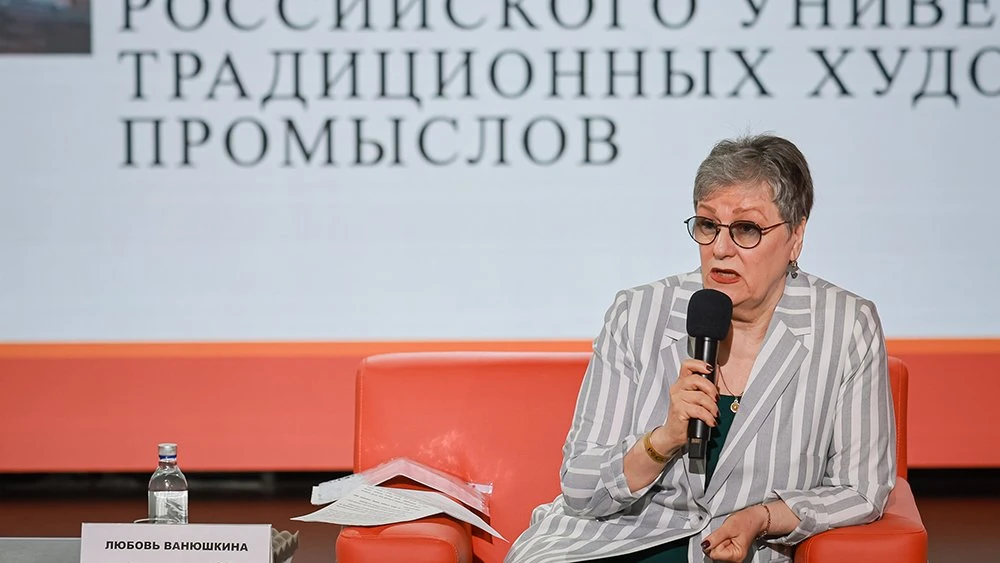
"If you ask a hundred people what a toy is, the answer will be obvious: it is something children play with. And that is, of course, true. A child comes into this world very small, and some of the first objects they see beside them, along with the face of their mother bending over them, are toys — hanging toys, funny toys, toys with sound. A toy accompanies us throughout life. It seems like a simple "trinket", but in fact it is not. A huge number of grown-up, serious people have reflected on the role a toy plays in human life in general, and not only in a child’s life. Because it accompanies us throughout life, even if in other forms — as souvenirs, interior elements and keepsakes. But it always remains nearby," Lyubov Vanyushkina believes.
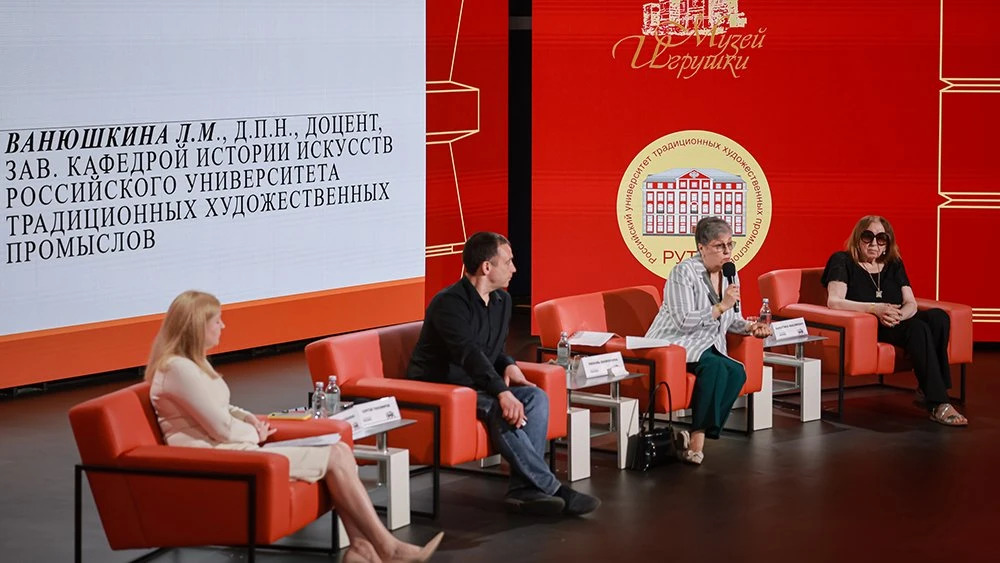
According to Lyubov Vanyushkina, a toy plays a crucial role in shaping a child’s personality. She recalled the contribution of artist and collector Nikolai Dmitrievich Bartram, thanks to whom the Toy Museum was created, now numbering more than 160,000 exhibits. More than a hundred years ago, Nikolai Dmitrievich Bartram laid down the principles of an interactive museum where children were allowed to touch the exhibits and play with them. In this way, the toy is a form of cultural memory and a link between generations. Lyubov Vanyushkina added that children continue to play today with exhibits from the Romanov dynasty collection, Soviet toys and their modern counterparts.
Sergei Tikhomirov, Candidate of Cultural Studies, Associate Professor and Vice-Rector for Research, spoke about the N.D. Bartram Art and Pedagogical Toy Museum as a scientific space. He noted that the museum’s collections serve as a basis for research, teaching methods and creative experiments, while the practice of renovating toys helps young masters gain a deeper understanding of the historical context, technology and imagery of objects.
"A museum is a space for scientific research, where the attribution of objects, their history and the people connected with their creation and existence are important. It is a kind of "detective work", when we find out where an object came from and how it ended up in the collection. Many items are still insufficiently studied. Therefore, the museum becomes not only a space for adult scientific discoveries, but also a space for students who can carry out real research," he said.
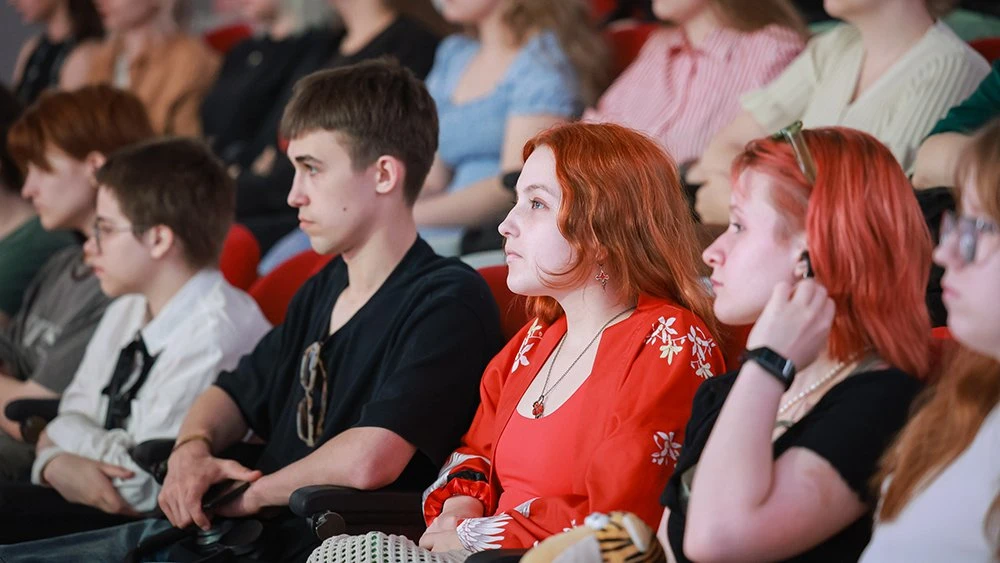
During the discussion, experts and round table participants discussed how the museum environment and exposition projects can become a bridge between generations, help children and teenagers take a fresh look at traditional values, and which formats of interaction, from workshops to interactive expositions, are most effective today. Special attention was paid to how a toy created in the logic of traditional arts and crafts can become an instrument of gentle but profound educational influence.
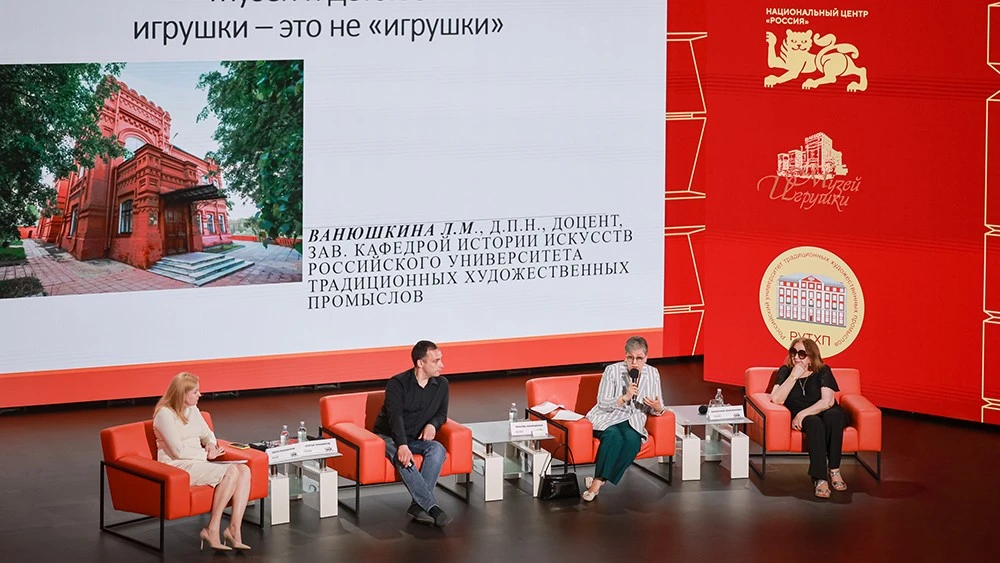
The new original exposition project "Treasury" is a renewable cultural space where expositions will change throughout the year. Each of them will be dedicated to one vivid theme or collection and will allow visitors to discover the diversity of our country’s material legacy through unique artefacts. The first institution to present its exhibits was the N.D. Bartram Art and Pedagogical Toy Museum of the Sergiev Posad Toy Institute, a branch of the Russian University of Traditional Arts and Crafts. The exposition space is located in the West Entrance area of the National Centre RUSSIA. The "Treasury" project can be visited daily from Tuesday to Sunday, from 10:00 to 20:00. The exposition is located in the foyer of the West Entrance. Admission is free.
The organiser is the National Centre RUSSIA. The technology company VK is the partner of the "Treasury" project.
Event photobank

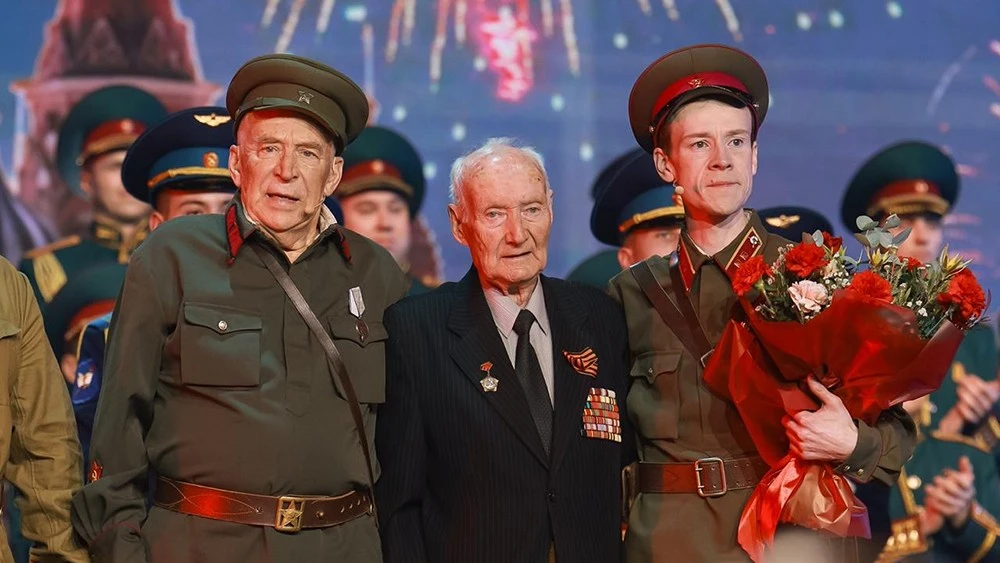
This year, the veteran took part in the National Centre RUSSIA project "Soldiers’ Dreams" and handed over a copy of the Victory Banner to new generations of defenders.


