


VII Russia–China Media Forum opens at the National Centre RUSSIA
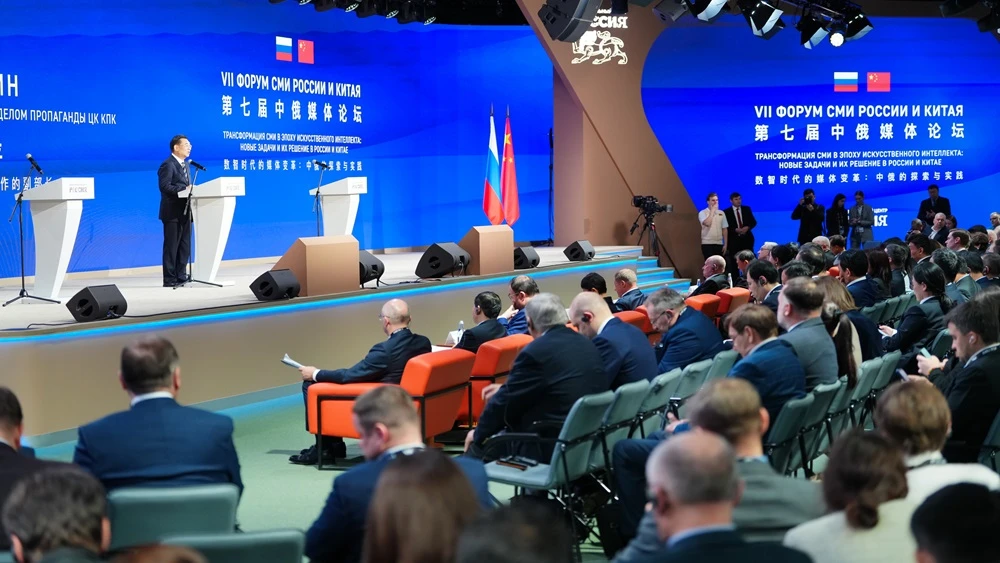
The main working day of the VII Russia–China Media Forum began on 25 November at the National Centre RUSSIA. Organised by the Russian news agency TASS and China's Xinhua News Agency with support from the Presidential Executive Office of Russia and the Publicity Department of the Central Committee of the Communist Party of China, the event brought together more than 200 representatives of leading media organisations and federal and regional news outlets, as well as heads of relevant government agencies and experts. This year's main theme is "Media Transformation in the Age of Artificial Intelligence: New Challenges and Responses in Russia and China". Participants will discuss the impact of AI on the media and the role of Russian and Chinese media in promoting tourism and communication between people.
The opening plenary session was chaired by the Director General of the Russian news agency TASS, Andrei Kondrashov, and the Editor-in-Chief of Xinhua News Agency, Lyu Yansong. The First Deputy Chief of Staff of the Presidential Executive Office of Russia, Alexei Gromov, welcomed participants on behalf of the Russian side.
"Russia and China are moving forward hand in hand, and covering that journey is a responsibility we share. Each of you brings a unique set of experiences. The more candid and specific our discussions, the stronger our media will become and the more weight Russia and China's collective voice will carry. Yesterday, we held our first meeting with the leaders of the Chinese delegation and had a very useful, constructive and open exchange of views in a friendly atmosphere. I am sure today's event will proceed in the same spirit. I wish all forum participants a productive day, engaging discussions, new ideas that break ground and new joint projects," Alexei Gromov told those present.
The Minister of Digital Development, Communications and Mass Media of the Russian Federation, Maksut Shadayev, drew participants' attention to the role of digital platforms in developing media cooperation and strengthening national sovereignty.
"Russia and China are now successfully turning bilateral dialogue into large-scale joint projects in media and film that reach millions of people. Today, however, even the highest-quality content depends on digital platforms. They are what enable us to promote and monetise content and reach audiences. A lasting partnership between our countries on digital platforms depends on technology of our own. If a country lacks full sovereignty over its information sphere and cannot control the digital platforms and social networks operating on its territory, then in today's world it has no sovereignty at all. In Russia and China, we have seen fully developed, independent digital ecosystems take shape on national platforms. That is a very good result, and we see considerable scope for cooperation in this area," Maksut Shadayev emphasised.
The First Deputy Head of the Publicity Department of the Central Committee of the Communist Party of China, Hu Heping, noted that the internet had revolutionised people's lives and that the media were becoming one of the main means of transmitting data, opening up new opportunities. This also brings serious problems, such as the spread of fake news and of information that is unverified or deliberately false. These problems can only be tackled by working together.
"The internet has turned our lives upside down. That profound change has affected every part of our lives. New digital media and platforms are now becoming one of the main ways we share information, and this opens up new opportunities. At the same time, we face the problem of fake news and of information that is unverified or deliberately false. The only way to counter this is to respond with verified information and work together. Innovation must guide our work, but the fundamentals of how the media develop have not changed. Technology cannot replace people — journalists and correspondents — or media outlets themselves. They must be the ones to guide the flow of information," Hu Heping emphasised.
Turning again to the spread of false information, the Director General of the Russian news agency TASS, Andrei Kondrashov, urged Russian and Chinese media representatives to work together more quickly so they can respond promptly to challenges and prevent false information from spreading faster than the truth.
"Those who wish us ill are increasingly trying to put our relations to the test. They make no effort to hide it, and any achievement of ours, whether it is record bilateral trade, rising tourist numbers or a joint scientific project, is met with a flood of distortions. Russia and China must therefore work together to develop ways of countering disinformation and act before a lie has time to travel around the world," Andrei Kondrashov said.
The Editor-in-Chief of Xinhua News Agency, Lyu Yansong, recalled that Russia and China had marked two significant anniversaries in 2026 — 77 years since the establishment of diplomatic relations and 30 years since the establishment of their strategic partnership.
"Russia and China's ties are unbreakable, and we firmly believe we must continue to develop them. As China's state news agency, we must continue to be a trusted voice that brings the people of our two countries closer together. In July this year, our President Xi Jinping attended the World AI Conference and set out the guiding principle that all technology should put people first. In the media, we are already seeing a 70% increase in efficiency among editors who use AI, along with new opportunities to produce and distribute more news. We must therefore continue to promote the use of AI for good and uphold the principle that it should expand what people can do rather than replace them. At the same time, we must work together to develop standards for the safe use of AI," Lyu Yansong noted.
The main plenary session also included the Director General of VGTRK, Oleg Dobrodeyev, the Editor-in-Chief of "Rossiyskaya Gazeta", Vladislav Fronin, the Head of China Media Group's Eurasian Bureau, Wang Bin, the Deputy Editor-in-Chief of "Qiushi" journal, Bo Zeping, and the Head of the International Department at "People's Daily", Ma Xiaoning.
In the panel sessions on the media forum's business programme, participants will discuss in detail the role of digital media in supporting strategic cooperation between the two countries, the development and training of national AI models, and the media's impact on trade, tourism and communication between people. More than 10 cooperation agreements are also expected to be signed between Russian and Chinese media organisations.
The VII Russia–China Media Forum is being held in Moscow from 24 to 25 November, with leaders of major media organisations from both countries and representatives of relevant government agencies and research institutes taking part. The previous forum was held in Beijing in December 2025 under the theme "Building a New Future of Russia–China Media Cooperation: Consensus and Actions". Russia and China have taken turns hosting the forum since 2015.
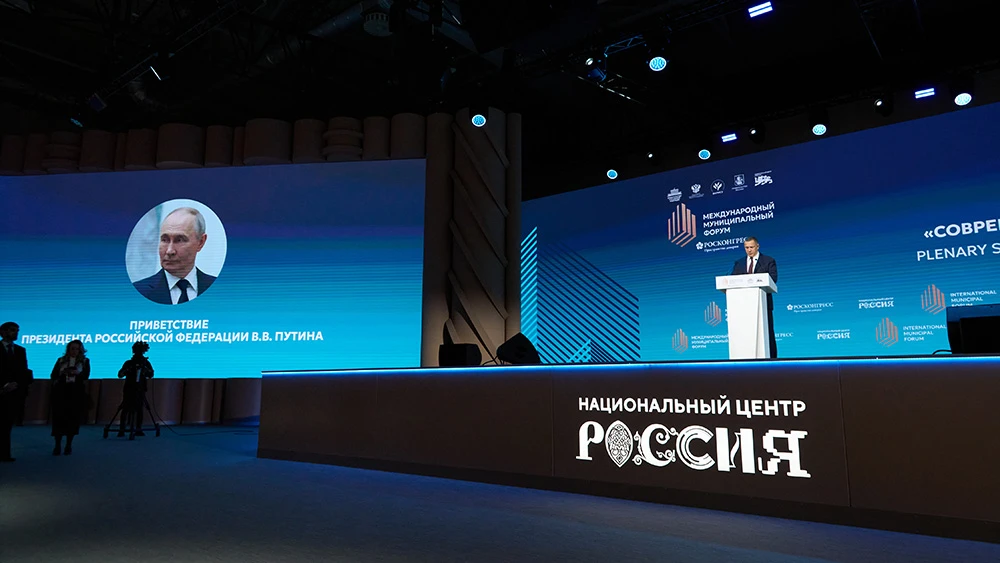
The main event in the business programme of the First International Municipal Forum took place at the National Centre RUSSIA on 24 November.
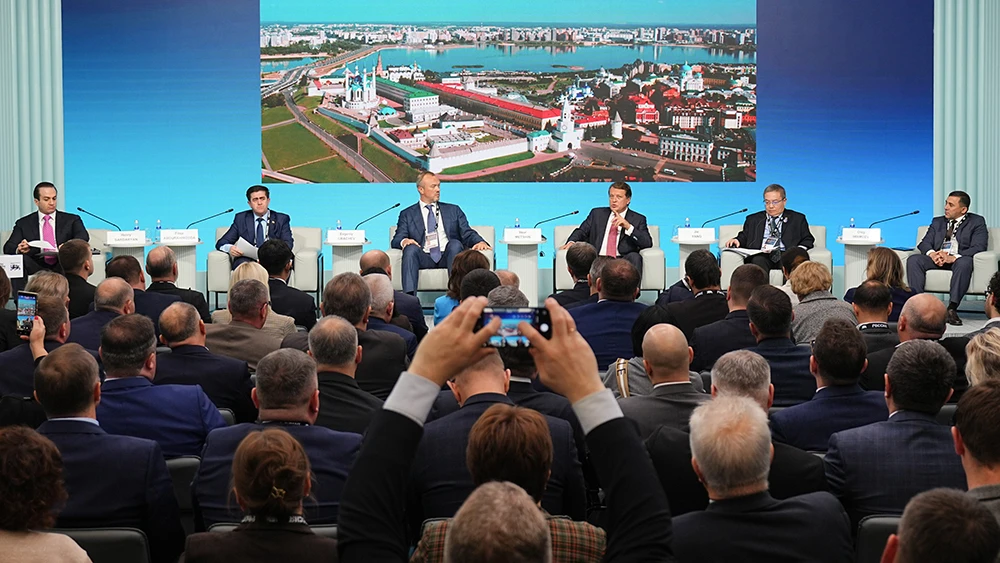
In a multipolar world, international ties are increasingly being developed at the level of cities and regions.
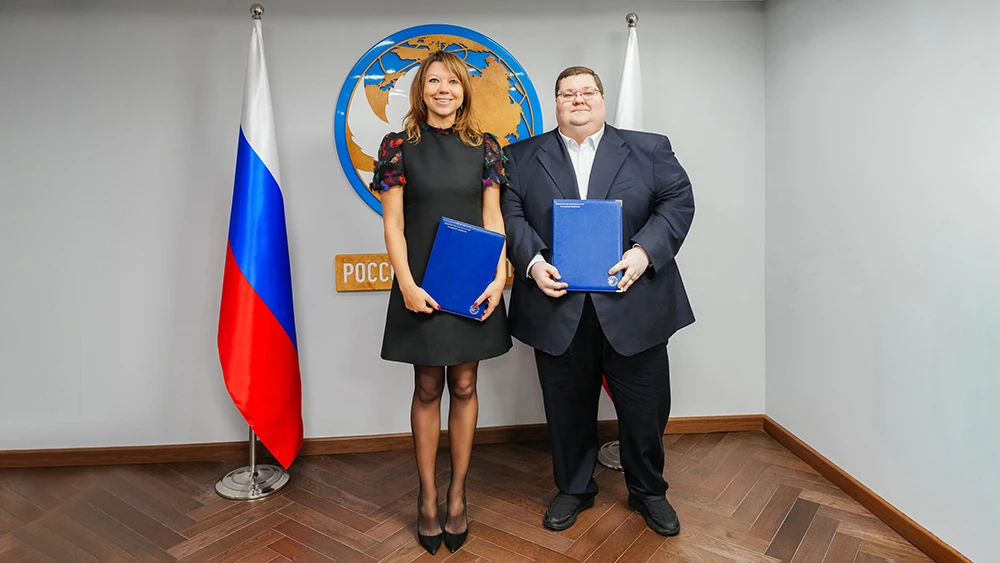
The agreement opens up new opportunities for joint projects in Russia and abroad, as well as for the exchange of professional expertise and the development of information partnerships.


