

Vladimir Medinsky: "The future lies in processing raw materials"
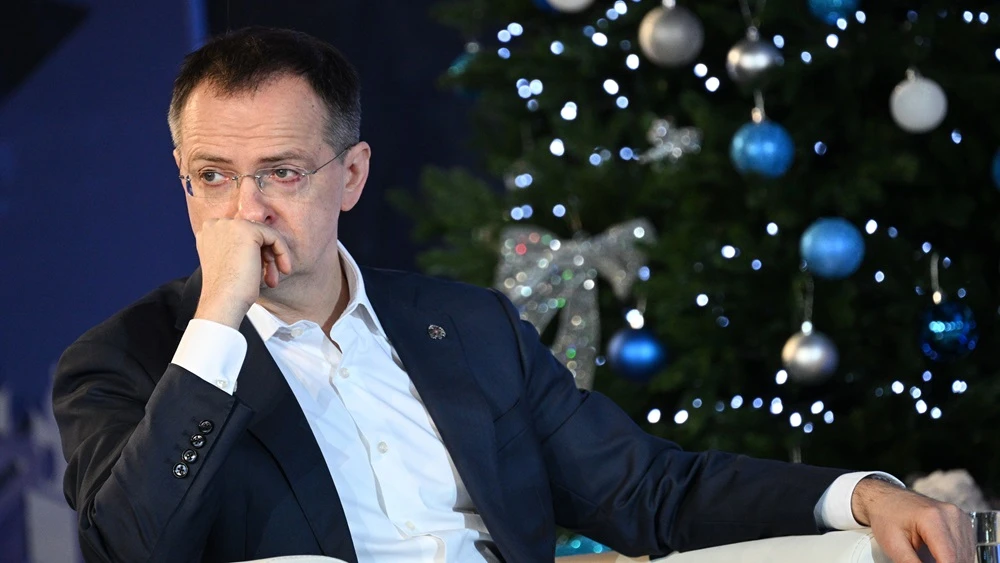
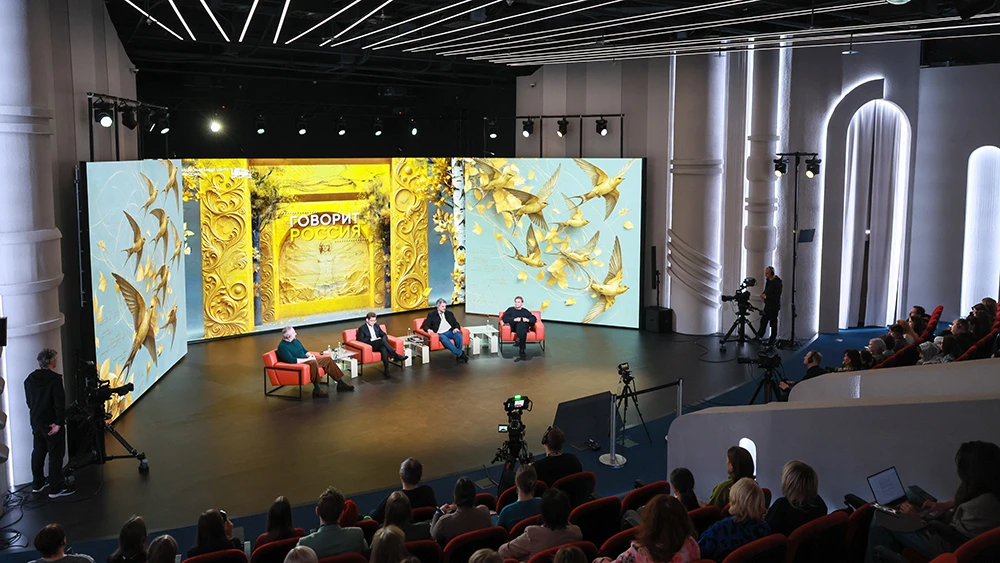
Russia's historical experience and its significance for addressing today's national development challenges and strengthening the country's sovereignty were the central themes of an open dialogue with Vladimir Medinsky, Aide to the President of the Russian Federation and Chairman of the Russian Military Historical Society. The meeting took place at the National Centre RUSSIA on 16 November as part of the International Export Forum "Made in Russia".
The discussion focused on key turning points and lessons from the past, the role of foreign trade in ensuring Russia's economic independence, the balance between free trade and protectionism, and issues relating to cultural legacy. Vladimir Medinsky noted that, in today's economic environment, entrepreneurs play a crucial role in the country's development: they provide the foundation for the work of other professions and create new opportunities.
He also highlighted the dual nature of entrepreneurship. On the one hand, it is a special talent that needs to be nurtured; on the other, capital is not tied to any particular country. This, he said, gives rise to one of the state's key responsibilities towards businesses.
"Entrepreneurial spirit is a rare quality that needs to be cultivated and developed in people. It is like the ability to draw, play music or write poetry. As Karl Marx said, capital has no nationality. Ultimately, entrepreneurs do not care where they live or where they pay taxes. What matters is that their businesses operate and make money. The state's task, therefore, is to make it profitable for them to work here, pay taxes here and develop their businesses here. We must create the right conditions, and that is what state protectionism towards entrepreneurs is all about," the Presidential Aide stressed.
Turning to history, he added that Russian foreign trade had traditionally sought a balance between protectionism and free trade. Raw materials from Russia were sold cheaply, while processed goods commanded prices many times higher abroad. This was why one of the prominent statesmen of the 17th century, Afanasy Ordin-Nashchokin, introduced a ban on foreign merchants engaging in retail trade in the New Trade Charter.
Vladimir Medinsky also recalled that politics in Russia was closely intertwined with diplomacy. For example, Tsar Alexei Mikhailovich revoked the privileges granted to the English following the execution of Charles I. When the monarchy was restored in England, the former privileges were not reinstated, so as not to offend other trading partners. Peter the Great sought access to the Baltic Sea in order to trade without intermediaries and reduce costs. Until 1822, Russia also maintained free trade: Britain secured this arrangement from Alexander I in exchange for recognition of Poland as part of the Russian Empire.
Speaking about Russia's natural wealth, he noted that it was not only a source of pride but also a tremendous responsibility towards past and future generations. In this regard, Vladimir Medinsky said, the country's main task is not merely to use its natural resources, but to increase their value, including through technological development.
"When it comes to natural resources, we are undoubtedly a fortunate country, blessed by God. I believe this is a kind of compensation for our harsh climate and difficult history. That is why we owe it to both our ancestors and our descendants to preserve our entire territory and all the natural wealth entrusted to us by those who came before. But we must not focus solely on exporting raw materials. The future lies in processing them. The less oil, gas and grain we export, the better. We should be exporting flour, pasta, petrochemical products and fertilisers instead. And the deeper the processing, the better," Vladimir Medinsky concluded.
The International Export Forum "Made in Russia" is an annual key platform for dialogue between businesses, government representatives and experts on the development of Russian exports of goods and services. The event is organised by the Russian Export Centre (REC, part of the VEB.RF Group) and has been held since 2012.
The Forum brings together representatives of large, medium-sized and small businesses, banks, regional export support centres, federal and regional government authorities, industry associations, the media and experts. The main theme of the 2026 event is "The Future of Russian Technology Exports in the Midst of a Global Storm".