

Digital platforms could help tackle labour shortages
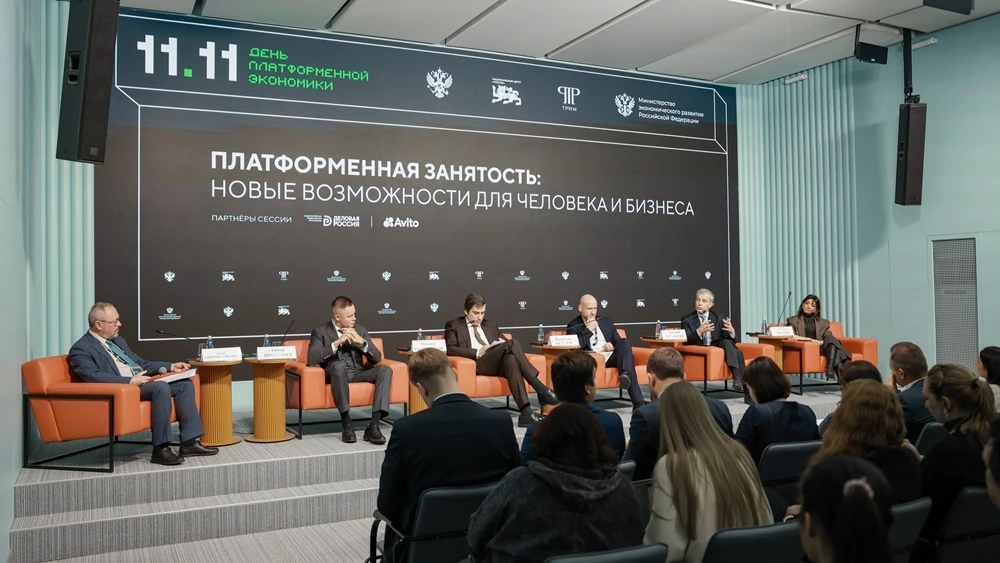
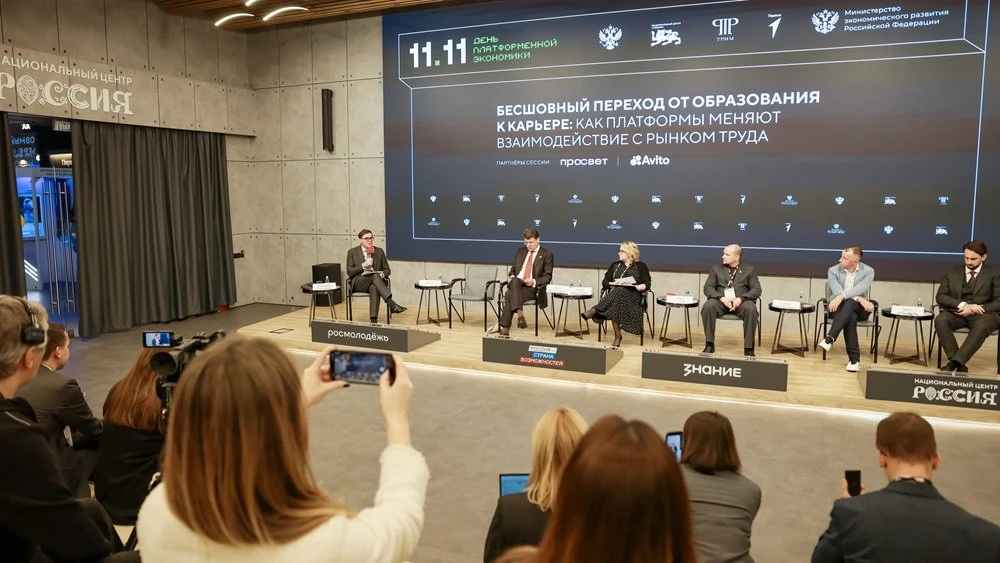
Digital platforms could help tackle labour shortages and make Russia's labour market more efficient. The use of platforms makes employment more transparent: they help people find jobs and extra work, businesses find employees and contractors, and both sides formalise their working arrangements. The industry group's estimates suggest that platform development between 2025 and 2036 could help bring the earnings of more than 7.5 million people into the formal economy. These estimates were presented at the session "Platform Work: New Opportunities for People and Businesses", held as part of Platform Economy Day at the National Centre RUSSIA.
The discussion brought together Maxim Kolesnikov, First Deputy Minister of Economic Development of the Russian Federation; Dmitry Platygin, Deputy Minister of Labour and Social Protection of the Russian Federation; and Timur Shinaliev, Deputy Commissioner of the Federal Tax Service. Anton Danilov-Danilyan, Deputy Chairman of "Business Russia", moderated the session.
A nationwide survey of large businesses, cited in the report "Target Employment Model — 2036", found that 62% of companies face staffing shortages and 57% face peaks in workload. In these circumstances, businesses need to widen their search for staff and reduce the time it takes to select candidates, verify information and formalise working arrangements. Platform services are already helping: 54% of large companies have used them to recruit from a wider range of locations.
Implementing this strategy will help address the problem, but will require clearer, more consistent rules. According to the survey, the risk that working arrangements could be reclassified as employment relationships moderately or significantly limits the use of platform services for 52% of companies. A further 45% cited regulatory uncertainty and liability risks.
At the session, participants discussed the need for common criteria for identifying self-employed work and ways to verify that those criteria are met. When assessing the relationship between contractors and clients, the freedom to choose assignments, working hours and platforms should be taken into account consistently.
Another area of focus is how government registers and digital platforms can work together. Allowing information to be submitted just once, recognising one another's checks and setting clear rules for access to government data would help avoid duplicating procedures. This matters to a range of market participants, including small and corporate platforms, as it would give them more predictable conditions in which to operate.
Platforms give people ways to earn that fit their circumstances. For one in three students who work through platforms, this was their first source of income. Among those who use these services, 76% of pensioners and 73% of people with disabilities report earning more since they started working through platforms. Among parents with large families who work through platforms, 42% say this way of working helps them balance work and family life. In addition, 46% of users in small and remote communities work for large companies through platforms without having to move.
"Platforms can make hiring, candidate selection and staff sourcing more efficient in the Russian labour market. Digital services already cover the whole employment process, from finding a job or a contractor to verifying qualifications, formalising working arrangements and making payments. Bringing these stages together reduces costs for businesses and makes it easier for people to find the types of work they are looking for. The industry group estimates that the contribution platforms make to gross value added could rise from 1.5% of GDP in 2025 to 3.4% by 2036," said Vladislav Fedulov, Managing Director of Avito and co-chair of the "Employment" expert group.
Vlad Fedulov paid particular attention to the future of the tax on professional income after 2028. Seven in ten students, pensioners and people with disabilities who work through platforms are registered as self-employed. Among students who work through platforms, 88% registered specifically for that work. It is therefore important to consider in advance how the tax regime might develop, taking into account the tax burden, social protection and the option of taking on freelance assignments alongside work under an employment contract.
"The platform model works in such a way that the more contractors take part, and the sooner they join a platform, the faster and more effectively it can meet demand from clients. […] Platforms help people who need temporary work to earn some extra money, whether because of family commitments, their studies or simply how much free time they have. Clear, consistent rules for everyone involved could give platform work a push, so to speak, and bring more contractors into the formal economy. They would give everyone involved a reason to use this model to meet their needs," explained Rimma Chichakyan, Deputy Director for Corporate and Government Relations at Yandex.
Platform Economy Day is being held on 11 November at the National Centre RUSSIA. Representatives of government, business and the expert community will discuss the main areas in which Russia is adopting platform-based models, from solutions for individual sectors to broader approaches to developing digital markets.
The signing of the Memorandum on Fair Practices for Digital Platforms was the centrepiece of the first Platform Economy Day in 2025. The document formalised commitments by several of the largest platforms to implement certain provisions of the law on the platform economy ahead of schedule. In 2026, the main focus will be on the national strategy for the development of digital platforms through to 2036, which is now being drafted. Platform Economy Day 2026 is an important milestone ahead of the Future Technologies Forum 2027, which will showcase the progress made by Russian platforms and set development goals through to 2036.
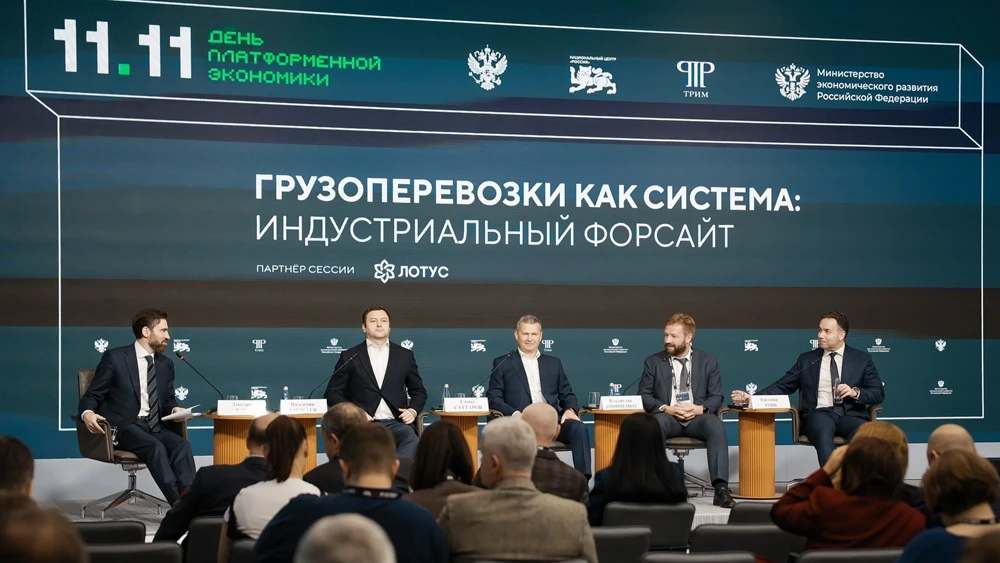
The foresight session "Freight Transport as a System: Industry Foresight" was held on 11 November at the National Centre RUSSIA.