


Maxim Oreshkin presented five megatrends shaping the future
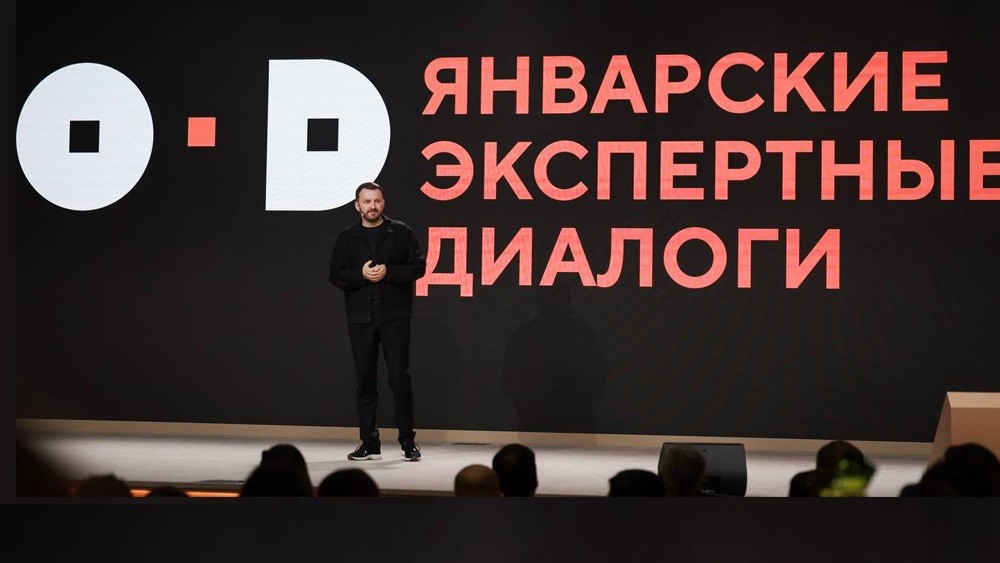
For the first time, the January Expert Dialogues were held as part of the Open Dialogue. The event took place on 30 January at the National Centre RUSSIA. The Deputy Chief of Staff of the Presidential Executive Office of the Russian Federation, Maxim Oreshkin, presented five megatrends that are already determining the trajectory of global development for the coming decades. The January Expert Dialogues were initiated by the National Centre RUSSIA in partnership with the Centre for Cross-Industry Expertise "Third Rome", with the support of the Presidential Executive Office of the Russian Federation.
"We are opening the January Expert Dialogues as part of the Open Dialogue project. By 2026, it has become an international platform bringing together experts from around the world to discuss the future of the planet, the global economy and the social sphere. Today, many substantive presentations will be delivered on how the world is changing and which global trends are shaping this future. Understanding these processes is essential in order to be prepared for change and to use it in the interests of states and, above all, people. In my presentation, I will focus on five key megatrends. At the same time, we do not single out artificial intelligence as a separate trend — AI has already become an integral part of our lives," Maxim Oreshkin said.
The first megatrend is "The New Global Economic Paradigm: Globalisation 2.0". According to the Deputy Chief of Staff of the Presidential Executive Office of the Russian Federation, the world is entering a new phase: the familiar model of globalisation no longer works, and it is being replaced by a more decentralised system. BRICS+ countries already account for a significant share of the global economy, lead in terms of birth rates and are increasingly advancing technologically, while economic uncertainty and sanctions are accelerating these changes. Countries of the Global South are moving towards direct trade with one another and settlements in national currencies, bypassing previous financial centres. Russia remains one of the world’s largest economies and plays an important role in shaping a new settlement system. At the same time, the influence of digital platforms, decentralised systems and non-state actors in the global economy is increasing, Maxim Oreshkin believes.

"Globalisation has not ended — it has become different. The form of globalisation that we observed over recent decades has, in effect, come to an end, but this does not mean that globalisation has ceased altogether. It continues on new principles, with different countries now taking the lead. Today, the key word is sovereignty: only countries that possess sovereignty will be able to compete and lead in a multipolar global system. We identify three levels of sovereignty — state, societal and socio-economic. Full sovereignty is only possible when all three levels are preserved. The loss of any one of them weakens a country," Maxim Oreshkin emphasised.
He noted that the key players on the global stage remain the four largest economies — China, the United States, India and Russia — which ensure their sovereignty. At the same time, new centres of economic growth are emerging, such as Indonesia, which is forming its own sovereignty and already exerting a noticeable economic influence. A special role is played by so-called "connector countries", such as the United Arab Emirates, which link major economic centres, as well as by new global actors — decentralised networks and social platforms that are becoming independent participants in the global economy and politics.

The second megatrend is "The Platformisation of the Global Economy and a New Level of Autonomy". According to Maxim Oreshkin, the development and active implementation of modern technologies across all spheres of life make it possible to automate an ever-growing number of interactions between people and the surrounding world. At the same time, platformisation serves as a fundamental prerequisite for a new economic revolution, which is accompanied by a new stage of automation in economic relations — the automation of institutions. Platforms and algorithms are becoming permanent participants in decision-making at the system level.
"Platform-based solutions make our lives better. A platform is something that will affect every sector of the economy and the social sphere — education, healthcare, finance, trade, tourism and others. Gradually, all these sectors will be built around a platform-based model, and the countries that move along this path more quickly will be able to achieve a higher level of economic efficiency <…>. A distinctive feature of platforms is their ability to increase the efficiency of the traditional market mechanism or even move away from the traditional market altogether. This becomes possible through the introduction of algorithms — self-adjusting systems that dramatically reduce transaction costs. <…> If a country is not technologically sovereign and does not have its own platform-based solutions, it is doomed to become a user of other people’s platforms. What does this mean? It means that the country becomes dependent: it has to pay for the use of platforms, and in the event of conflicts between countries, the platform can be switched off at any moment," shared the Deputy Chief of Staff of the Presidential Executive Office of the Russian Federation.
In the third block, dedicated to the decline of traditional finance, Maxim Oreshkin outlined the reasons and prerequisites for the transformation of the financial system. The current model is facing clear limits: budget deficits and government debt are growing, while inequality is increasing, as the main financial benefits are concentrated among a narrow circle of people and countries. The transformation of the financial system, he noted, is possible through technological progress, in particular technologies such as blockchain, artificial intelligence and digital platforms. In the new model, some functions of commercial banks, including money creation, may shift to states and to the decentralised finance segment.

"A large number of sanctions, tariff barriers and other restrictions are leading to the fact that the traditional model — for example, making payments through key Western banks — no longer works. New connections are emerging through decentralised systems and cryptocurrencies. All this forces the payment function to seek new solutions instead of relying on the traditional banking system. Blockchain technologies are of great importance here, as they make it possible to carry out automated transactions and verify them without human involvement. Artificial intelligence and platform-based solutions also play a key role — these three technologies are already operating today and are highly developed. It is precisely they that will significantly transform the functioning of the entire financial system," he said.
The fourth megatrend was identified as "The Demographic Catastrophe After the Peak of Population Growth". Maxim Oreshkin noted that 30 years ago the global average number of births per woman stood at 2.8, whereas by 2024 this figure had fallen to 2.2. According to the Deputy Chief of Staff of the Presidential Executive Office of the Russian Federation, the situation has become critical in a number of countries: in South Korea the fertility rate has dropped to 0.7, and in Japan to 1.2, with experts already predicting the year in which the "last child" will be born. Humanity has come very close to the threshold of simple population replacement, beyond which natural population decline begins. One of the reasons for this, he explained, is the rational limitation of the number of children in families: a child is increasingly perceived as a long-term investment requiring significant resources to raise a successful individual. Values are also influenced by the social media environment, where attitudes are often formed that are far removed from the idea of starting a family and having children.

"The demographic burden will increase. The working-age population, having reached a peak of around 6 billion people, may decline to 4 billion by the end of the 21st century. At the same time, the number of elderly people will rise sharply, and their ratio to the working-age population will change: even in Africa this figure will increase to 30%, while globally it will reach 56%. Particularly serious changes are expected in Asia, where the ratio of elderly to working-age population will nearly equalise <...>. These changes represent an extremely serious challenge for the pension systems of all countries. Pension systems are generally based on the principle that those who work support those who have retired. Disrupting this balance means that the output produced will be insufficient to maintain the previous standard of living for older people. The growing demographic burden will also lead to significant changes in the social sphere. Spending on education will decline due to a reduction in the number of children, while overall demand for social services and healthcare will rise sharply. This will directly affect budgets, deficits and financing needs. All these trends are interconnected and will reinforce one another," continued Maxim Oreshkin.
The fifth megatrend is "The Development of Human Capital in a New Technological Era". Technologies are changing a person’s life trajectory. Autonomous systems and robots are moving beyond industry, entering everyday life and taking over physical routine tasks. Digital platforms are becoming a familiar environment, integrating different sectors into unified ecosystems and significantly reducing costs across various activities. Artificial intelligence simplifies and devalues standard intellectual labour carried out according to rules and templates — from writing code to creating standard documents. At the same time, biotechnology is expanding human physical and cognitive capabilities.

"Artificial intelligence is not only a challenge, but also an opportunity. It makes it possible to create individual development trajectories for children, step by step forming a plan to unlock their potential, and also provides significant support to teachers. The introduction of artificial intelligence will not be without difficulties, but it is the main change that will affect general education systems in all countries in the coming years. Changes within professions will require a new approach. If previously a person graduated from university, started in junior positions and gradually progressed, this path is now shortening: the labour market will need not junior, but mid-level specialists. Companies must understand that they will have to train mid-level specialists from junior positions <...>. The social sphere as a whole will also undergo transformation: healthcare, platform-based solutions, improving the efficiency of routine operations and the introduction of artificial intelligence — all of this is necessary to ensure active longevity in the new demographic era," he added.
The presentation of each megatrend was accompanied by examples of people from different continents: a manager from Asia, a farmer from Africa and a housewife from Eastern Europe. He noted that the proposed solutions would improve education and healthcare in Africa, giving the continent a chance to take a leading position in the new world. In Eastern Europe, the megatrends will raise living standards and improve the efficiency of social systems, while in Asia the innovations will change demand for specialists and require retraining and adaptation to a rapidly changing environment.

"The world has entered a period of profound change in finance, demography and other spheres. States, companies and individuals must be prepared for these changes. If you are ready for the future, understand it and change yourselves, that future will be yours," concluded Maxim Oreshkin.
This year, the Open Dialogue is introducing a new format, "Open Dialogue on Air". It consists of podcast-style conversations with leading global experts on the most pressing trends in global development. Thus, the well-known Chinese science fiction writer, President of the Chinese Science Fiction Writers Association and co-author of the bestseller "AI 2041", Chen Qiufan, will speak about the future of artificial intelligence. Selina Neri, Doctor, Co-Founder and Rector of the Future Readiness Academy and Visiting Professor at the SKOLKOVO School of Management, will discuss prosperity in the new conditions of the labour market. Doctor Rais Hussin, Chief Executive Officer of EMIR Research from Malaysia, will present his vision on "The Architecture of Sovereignty: Platforms, Automation and the Grammar of a New Global Growth Model". Wang Feng, Distinguished Professor at the University of California, Irvine, will deliver a lecture entitled "Uncharted Territories: Global Demographic Shifts and What They Mean for Us". Global strategist, bestselling author and cosmopolitan, Founder and Chief Executive Officer of AlphaGeo, Doctor Parag Khanna, will speak about "The New Phase of Globalisation: Urbanisation, Connectivity and Migration".
The Open Dialogue was first held in April 2025 at the National Centre RUSSIA and brought together more than 3,000 experts from dozens of countries. By decision of the President of the Russian Federation, Vladimir Putin, the Open Dialogue will be held annually.
Event photobank


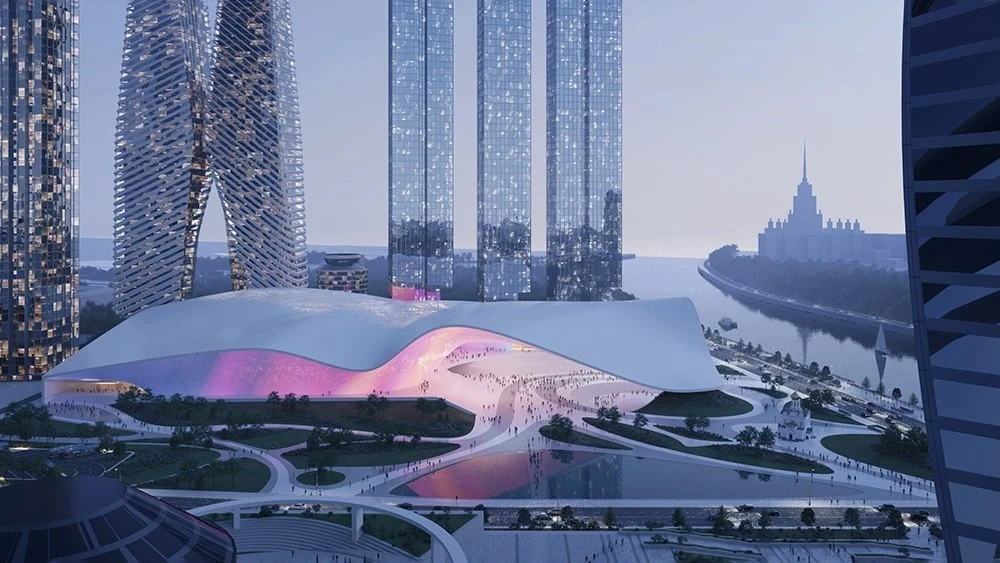
The new building of the National Centre RUSSIA, the construction of which was officially launched by the President of Russia, Vladimir Putin, will feature a unique self-supporting roof.
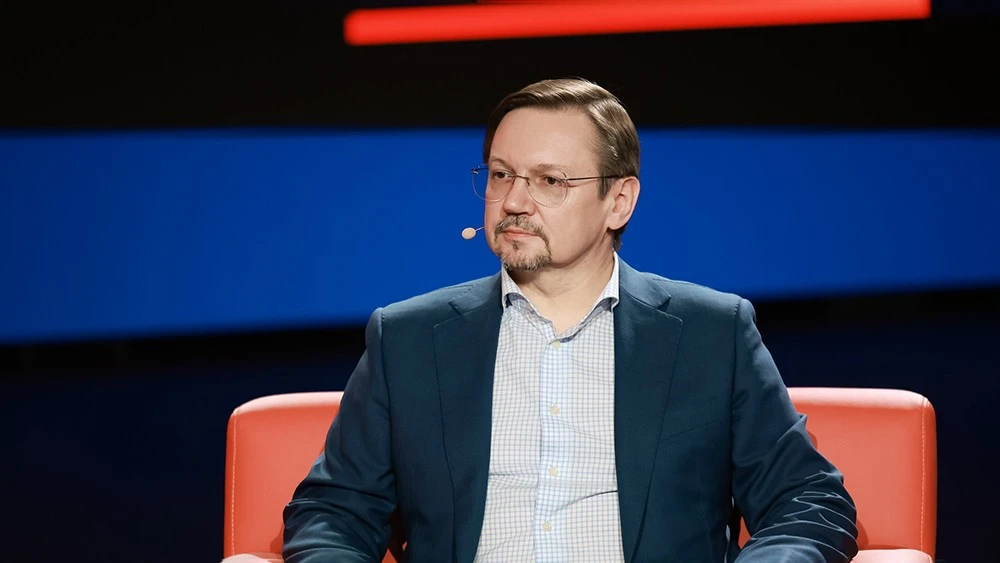
The event included a presentation of the original futurological novel "Alternative".

Employees and volunteers of the National Centre RUSSIA joined the official launch ceremony of the nationwide campaign "Memory Wall", which was held at the National Centre RUSSIA this year.


