


From the school desk to the starry sky — at the exposition "Geography Lessons" at the National Centre RUSSIA
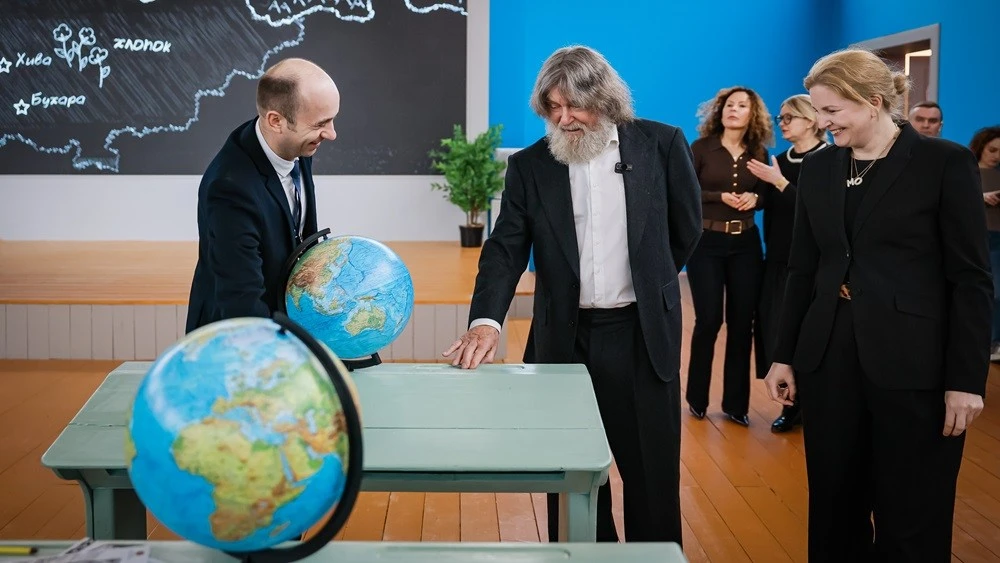
The exposition "Geography Lessons" is an educational project of the National Centre RUSSIA created for children and their parents. It invites visitors on a journey through the centuries: from ancient scrolls to digital maps, from the first geographical discoveries to the exploration of space. For the first time, the space brings together rare cartographic treasures from the country’s leading collections, including the Russian State Library, the Russian Geographical Society, the State Historical Museum, the Central Naval Library, as well as major archives, universities and research centres.
The exposition immerses visitors in the world of geographical discoveries and reminds them that interest in how the world is structured begins at school — with the first maps and globes, lessons and dreams of travel. This connection between generations and continuity of knowledge is vividly reflected in the impression of renowned traveller and member of the Russian Geographical Society, Fyodor Konyukhov. After the tour, he shared his emotions: "I felt as though I had returned to my childhood, to the world of geography. When I was at school in the 1960s, I had three favourite subjects — geography, physical education and drawing. I thank everyone who created this exposition and brought this idea to life: it confirms that a person cannot live without this science. At school, I took mathematics seriously because I knew I would become a navigator, a sailor — and without knowledge of higher mathematics it is impossible to determine coordinates by the Sun and the stars. This is how mathematics intertwines with geography."
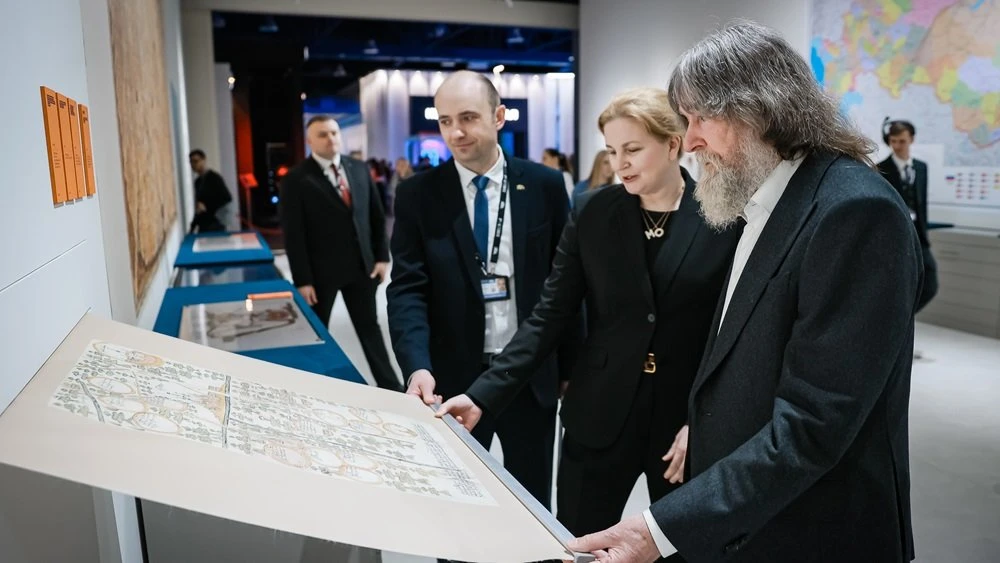
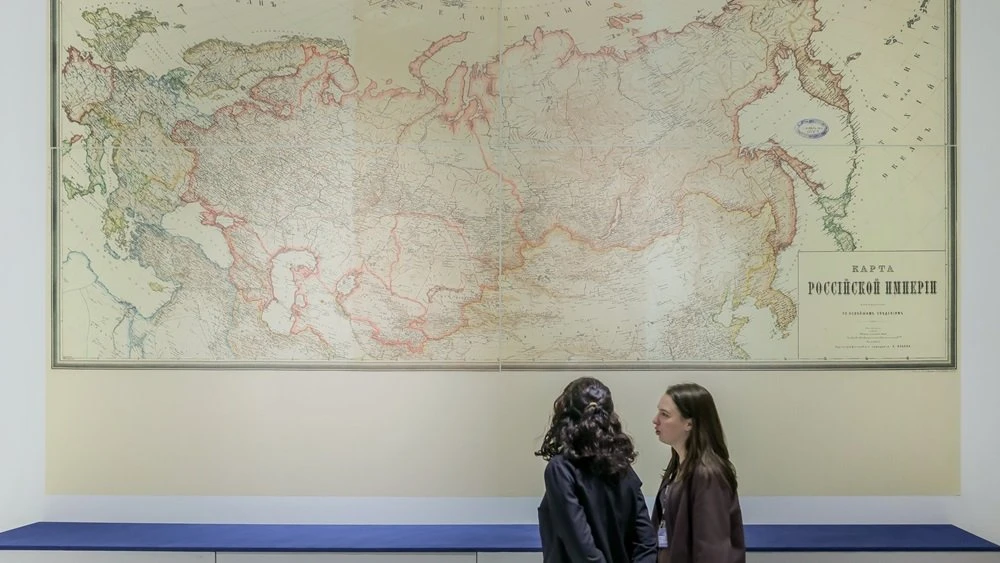
The exposition "Geography Lessons" includes eight thematic halls. In the "Gallery of Maps", visitors can see how Russia’s borders changed on historical maps and city plans. The hall "Courage. Expeditions and Discoveries" introduces the routes of Russian pioneers, while "Distances. Overcoming Vast Spaces" presents the development of transport routes — from trade roads to railways — and allows visitors to compare travel time between cities in the past and today. Here, history stands alongside the future: next to imperial sleighs and the phaeton of Alexander II is a model of a future high-speed train, allowing visitors to compare how people travelled across the country in the past and how they will travel in the coming decades.
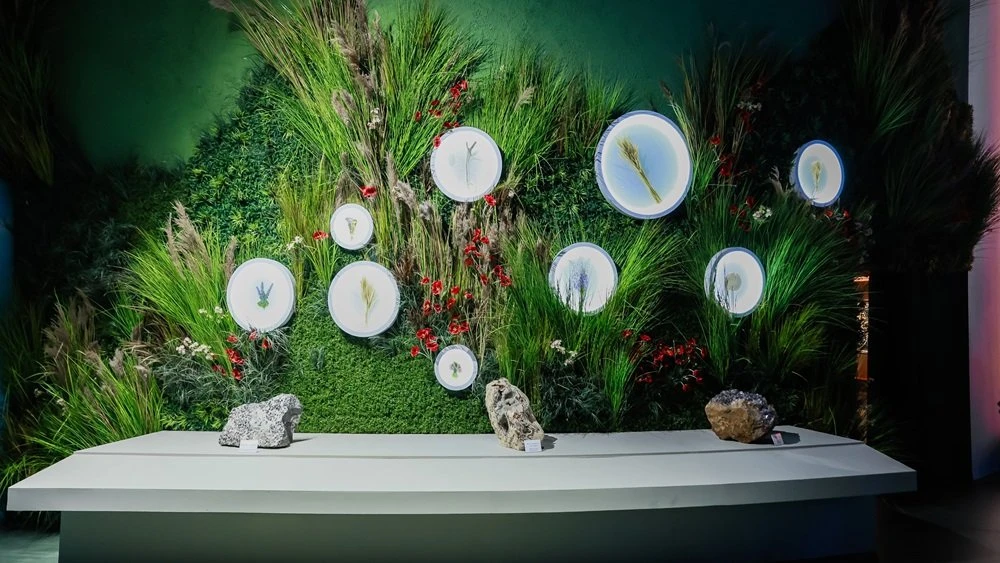
In the hall "Aspiration. Guiding Star", visitors will find constellation maps and images of Earth from space, where they can "travel" into outer space and explore the mysteries of the Universe. The hall "Resources. The Gifts of Geography" features geological maps and mineral samples, "Sovereignty. A Foreign View of a Great Country" presents foreign maps and caricatures of Russia, while "Power. Battles for Geography" reveals the role of terrain in key historical battles.
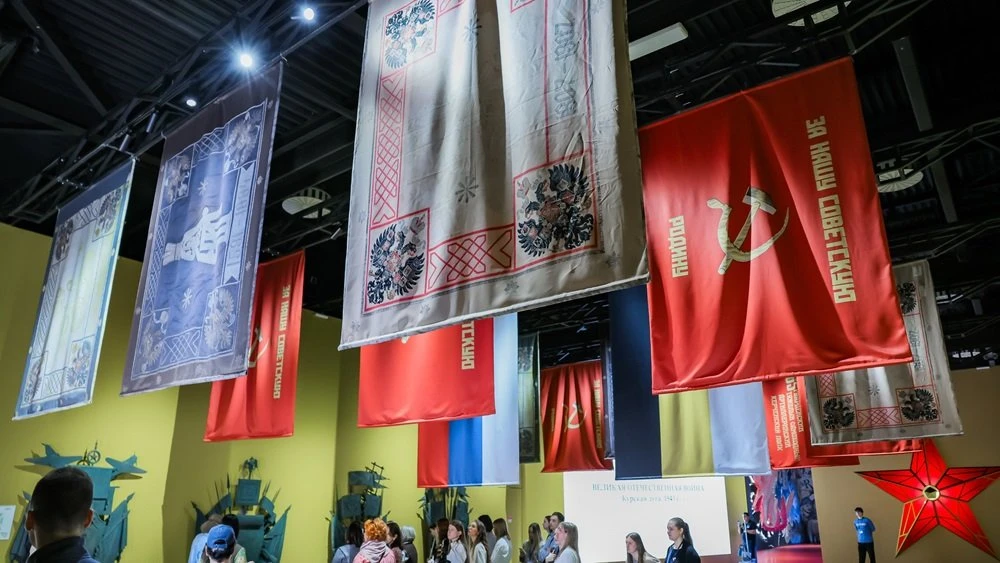
"For centuries, maps depicting vast lands — crossed by rivers, adorned with seas and lakes, with elevations and plains, outlined by red borders of a huge territory — have been a familiar feature of classrooms and scientific studies. Such maps served as symbols of the greatness and power of the state, and the image of a vast country captured on them still amazes the imagination today," said the curator of the exposition, Semyon Mikhailovsky.
The exposition recreates the atmosphere of school years. In the "Geography Classroom", visitors will find Erismann desks from the 1960s–1970s, where they can sit, study old maps and textbooks, and see how school atlases and perceptions of the world have changed. Visitors can also "interact" with great travellers and scientists of the past: their voices have been recreated using artificial intelligence — guests can ask questions and receive answers.
Among the unique exhibits are the work of the Dutch geographer Bernhardus Varenius, "Geographia Generalis…", published by decree of Peter the Great as a textbook for the Naval Academy, as well as the "Mars Globe" from 1993 — a model clearly showing craters, plateaus, valleys and volcanoes of the Red Planet.
Visitors’ attention is also drawn to the model of the sloop "Nadezhda", on which Ivan Krusenstern completed the first Russian circumnavigation. A small narrator mouse "lives" on board: it quotes diaries of expedition participants and shares fascinating stories.
The general partner of the project is the Russian Geographical Society. Among the key partners are the Russian State Library, the State Historical Museum, the Polytechnic Museum, the Faculty of Geography of Lomonosov Moscow State University, the Moscow State University of Geodesy and Cartography (MIIGAiK), the Federal Archival Agency, the Central Naval Library and other leading institutions. The technology partner is VK. The industry partner is the Roscosmos State Corporation. The general information partner is the magazine "Vokrug Sveta" ("Around the World"). Literary partners include AST Publishing House and Eksmo Publishing House.
The exposition "Geography Lessons" at the National Centre RUSSIA will run until 9 July. Admission is free. Further details are available on the website russia.ru in the "Events" section.

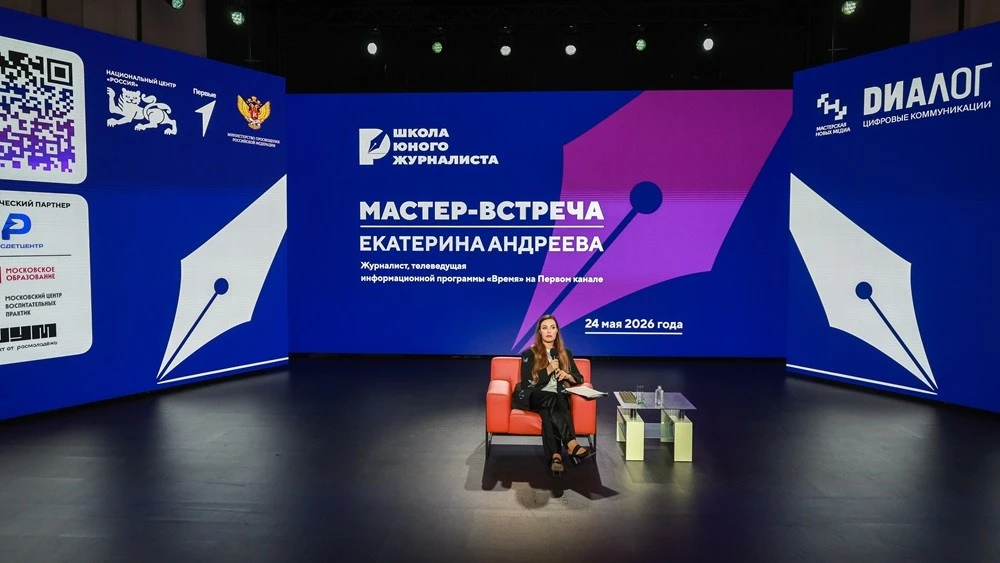
The expert shared with the students not only professional secrets, but also her personal success story.
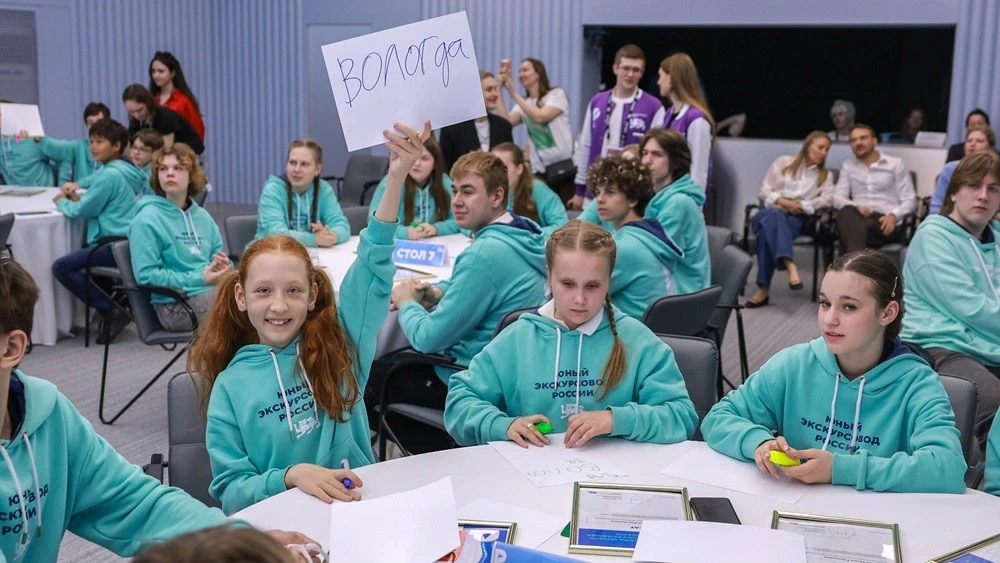
The results of the 2025-2026 season of the Young Tour Guides School of Russia project were summed up at the National Centre RUSSIA.


