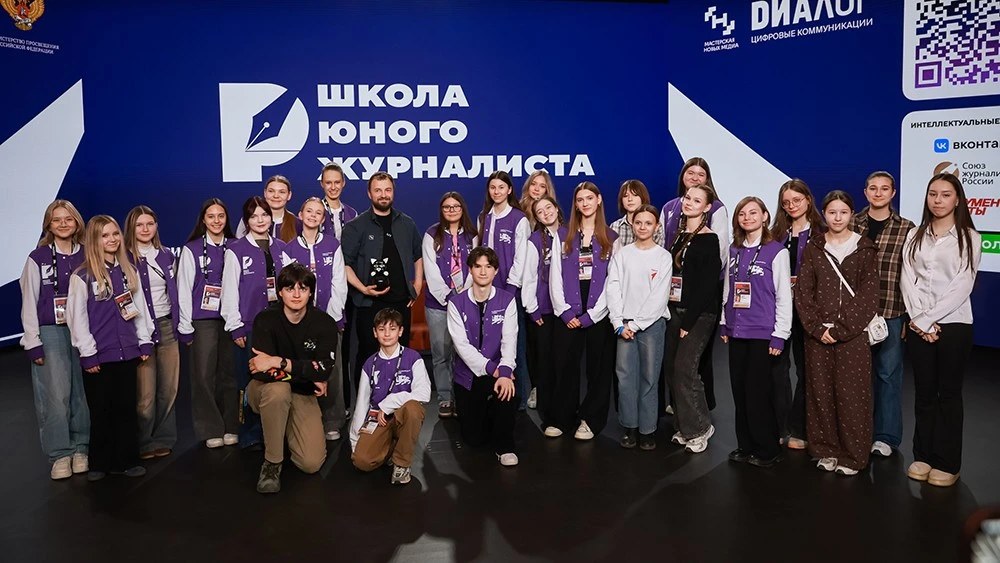
"Translating from the incomprehensible": young journalists at the National Centre RUSSIA learned how to write about science in simple language
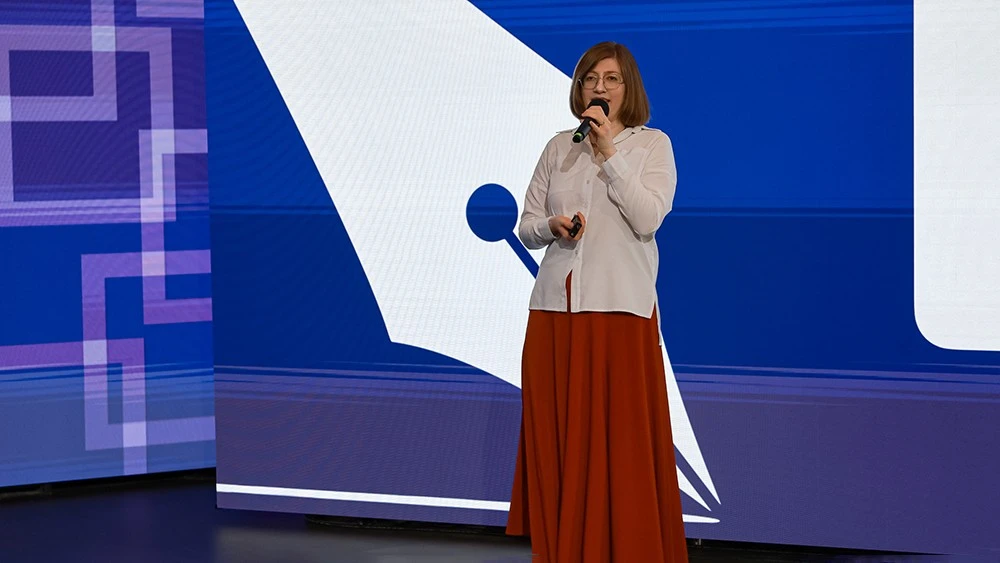
A session titled "Science Journalism: How to Tell Simple and Interesting Stories about Complex Technologies and Discoveries" was held at the National Centre RUSSIA as part of the Young Journalists School project. The discussion proved wide-ranging, dynamic and even fun. The lesson was led by Polina Menshova, a journalist at Naked Science, a lecturer at HSE University, Editor-in-Chief of Izbornik, a popular science publication about the Russian language, and a computational linguist.
The participants explored how to find something interesting where people usually see only boring formulas, graphs and terms, why they should not be afraid of "silly" questions, and how not to drown in a sea of unreliable information. It turned out that science journalism is not a stuffy field at all. On the contrary, it can be useful even for those who write, for example, about fashion, travel or gastronomy.
"The goal of a science journalist is not to write about research just for the sake of it, but to help people understand that scientific discoveries concern them too. You could say that a science journalist acts as a translator from the complex language of scientists, which is difficult for an unprepared audience, into the language of journalism, accessible to a wide range of people," Polina Menshova explained.
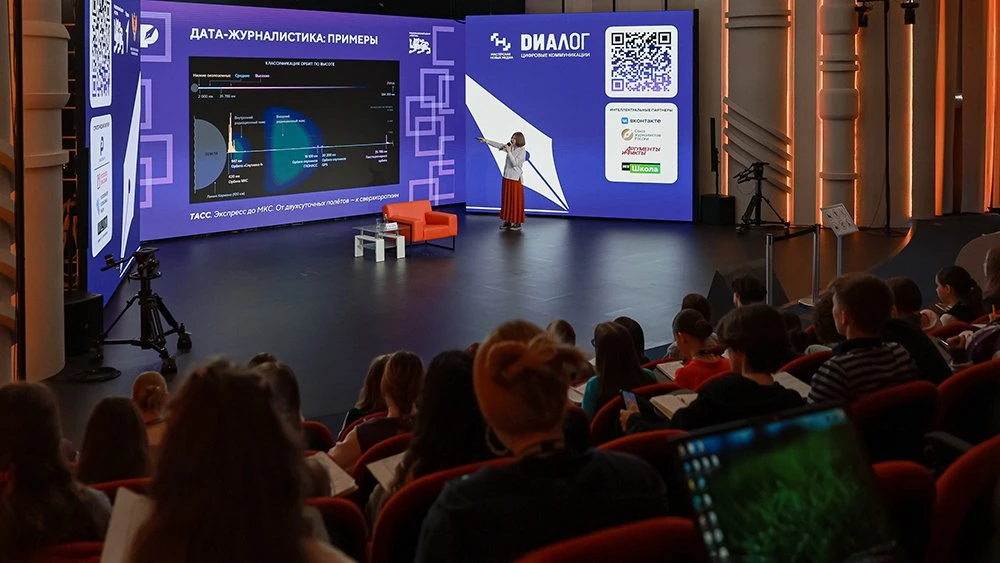
According to the expert, there is an endless number of topics for science publications, because almost everything we encounter every day can be explained through science: from the "phenomenon" of paper curling in a printer to the path a domestic cat takes across a room. But there is another side to this: many readers are already tired of overly simple materials, so there is a growing demand for in-depth, highly specialised content for those who want to understand particular subjects in detail.
At the same time, Polina Menshova believes that science journalists constantly face a dilemma. On the one hand, a text must be understandable to a broad audience. On the other, simplifying must not distort the meaning; otherwise, journalists risk criticism and a loss of respect from scientists and from readers who understand the subject in depth. This is a fine line, and one that journalists need to learn to feel, the expert emphasised.
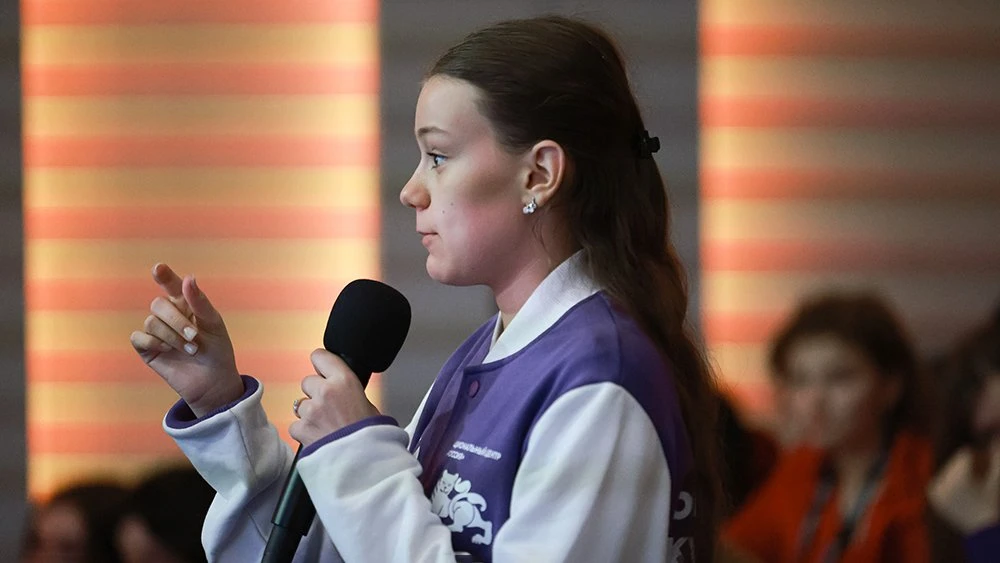
The session also touched on an important issue: how to distinguish a real scientist from a pseudoscientist, and a genuine discovery from a pseudoscientific sensation.
"Scientists often lose to pseudoscientists in the fight for the audience’s attention and trust, and that is rather sad. People believe pseudoscientists because many of them are highly charismatic: they can be good showmen and skilled public speakers. So if you want to write about science, it is very important to be far more convincing, so that reliable, scientifically proven information spreads thanks to you," Polina Menshova advised.
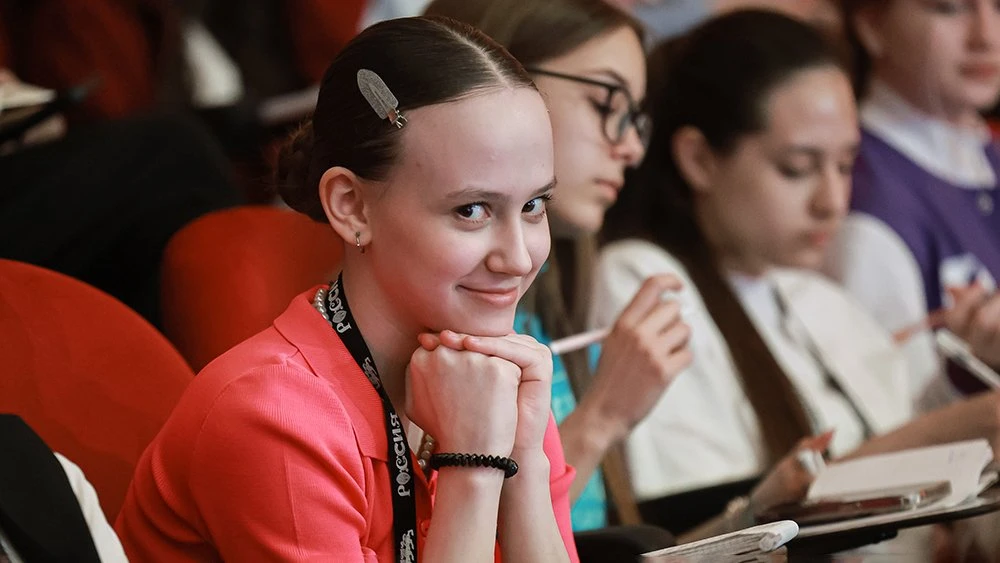
The expert also shared tips with the young journalists on where to find reliable information. According to Polina Menshova, these sources primarily include open statistical data, scientific articles and press releases, the results of their own surveys, and large datasets they collect themselves. As the speaker noted, knowing how to programme and work with spreadsheets is useful for collecting and analysing such data. Sources, of course, also include representatives of the scientific community themselves, although they too should be treated with healthy scepticism: journalists need to verify the reliability of what they say and, where possible, look for a narrow specialist on a specific topic instead of blindly trusting scientists whose names are widely known.

The participants analysed successful and unsuccessful examples of popular science texts in practice and received specific recommendations for their future work. They found that being a popular science journalist is a useful and engaging activity, provided you develop professional skills, approach the work with curiosity and do not forget about critical thinking.
The Young Journalists School is a multi-format original project of the National Centre RUSSIA. It is implemented jointly with the Movement of the First, with support from the Ministry of Education of the Russian Federation. Teenagers gain basic professional skills, learn to understand the modern media environment and take their first steps in the profession.
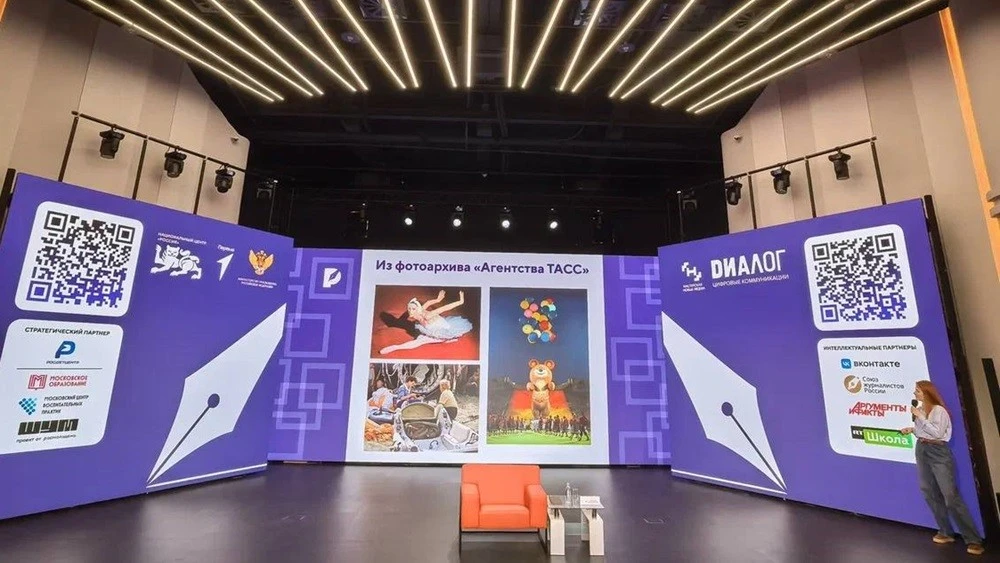
A session of the Young Journalists School titled "Photojournalism: Composition, Light, Moment.
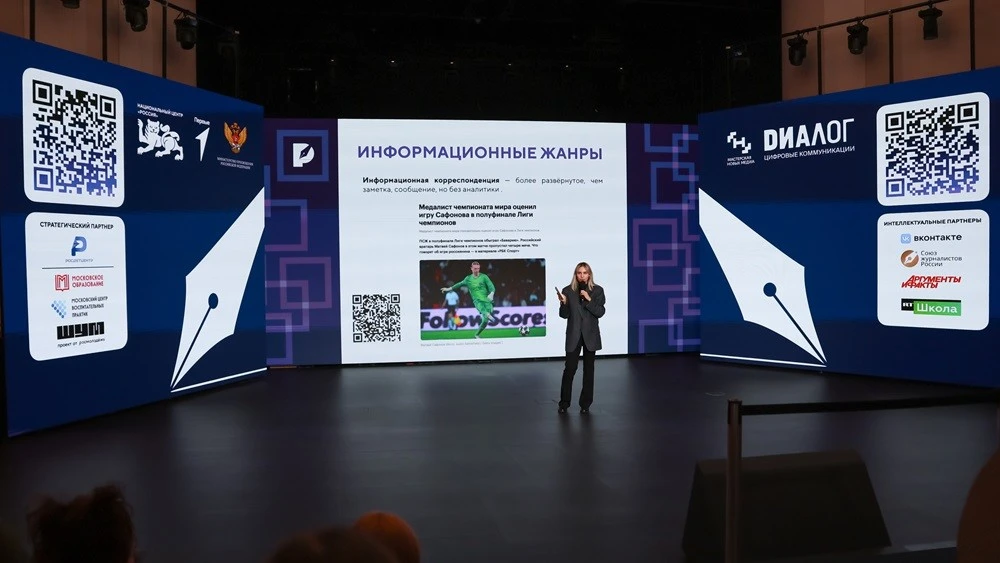
The session was conducted by Sofia Kovalevich, Programme Director and teacher at the Young Journalists School.