
A servant of the empire with a quill of the satirist: on the 200th birth anniversary of Mikhail Saltykov-Shchedrin

The history
of Russian literature knows masters of word who serve not only as a source of
pride for posterity but also as severe critics of society. Among such classics
is Mikhail Saltykov-Shchedrin, whose 200th birth anniversary is being marked. A
diligent public official who had meticulously studied the mechanisms of power
from within, and at the same time a brilliant satirist, he managed to discern
in these mechanisms eternal stories about human stupidity, arrogance, and
hypocrisy. His pen was like a scalpel, and his tales for adults, written almost
two centuries ago, surprise with their relevance today.
The Russian
writer, one of the most famous satirists of the 19th century, journalist, and
statesman Mikhail Yevgrafovich Saltykov, who entered history under the
pseudonym Shchedrin, was born on 27 January 1826 in the Tver province, into a
family of impoverished nobleman from an ancient family. The peculiarity of his
life path and creative destiny was that he became both a part of the state
machine and its critic. His entire biography became a paradoxical blend of
loyal civil service and literary activity permeated with free-thinking.
After
graduating from the Tsarskoye Selo Lyceum, where his writing career began,
Saltykov-Shchedrin made an impressive career as a public official. He rose to
the positions of vice-governor and then head of the Treasury Chamber in Penza,
Tula, and Ryazan. The world the writer would later dissect mercilessly in his
works was one he knew from the inside.

Satire
became Saltykov-Shchedrin's primary literary weapon. Under the mask of a
good-natured "narrator of the tales", he created sharp and merciless
parables for adults. His "The History of a Town" is not just a
grotesque image of Russia. It is a philosophical investigation into the nature
of power, and a discourse on the amazing submissiveness and other traits of an
ordinary Russian person’s character. And his tales "The Wise Minnow",
"The Wild Landowner", and "The Bear in the Voivodeship" are
a genuine collection of human vices, where behind the images of animals,
allegories, and folkloric plots, we see the condemnation of selfishness,
cowardice, and social injustice.
While
speaking about contemporary issues, the writer masterfully dodged censorship,
and every thoughtful reader became a kind of a co-author, deciphering the
hidden meaning of his works. The legacy of this remarkable classic retains its
relevance today. Sometimes we discover that his "Judas" and
"city governors" have not disappeared anywhere, and this makes
Shchedrin one of the most in-demand and quoted Russian writers in the digital
age.
The eternally relevant Mikhail Saltykov-Shchedrin will be the focus of the literary club meeting "What to Read?!" on 31 January at the National Centre RUSSIA. The audience will be helped to see the writer's legacy as a tool for comprehending modern realities by Alexei Chesnakov, club's host, professor at the High School of Economics, and author of the popular Telegram channel "Chesnakov. Library"; Sergei Dmitrenko, Vice-Rector for Research and Creative Work, Head of the Department of Modern Russian Literature at the Maxim Gorky Literature Institute, Candidate of Philology; and Sergei Shaulov, Head of the Department "Mikhail Lermontov House-Museum" at the State Museum of the History of Russian Literature named after V.I. Dal, Candidate of Philology.
You can join
the meeting free of charge by registering on the website russia.ru.
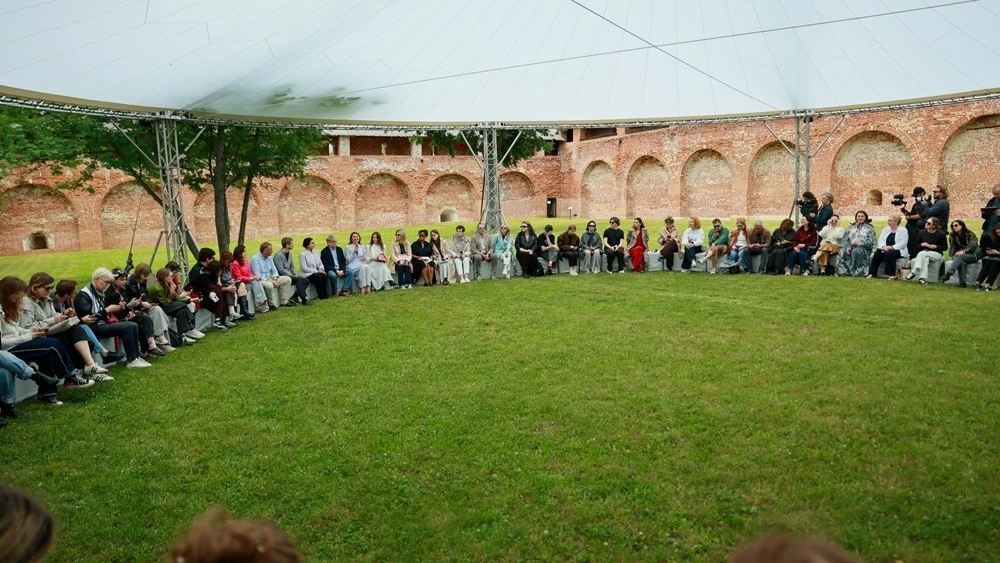
The first IET TALK, a discussion and educational platform of the International Ethnographic Triennial (IET), was held at the Zaraysk Kremlin.
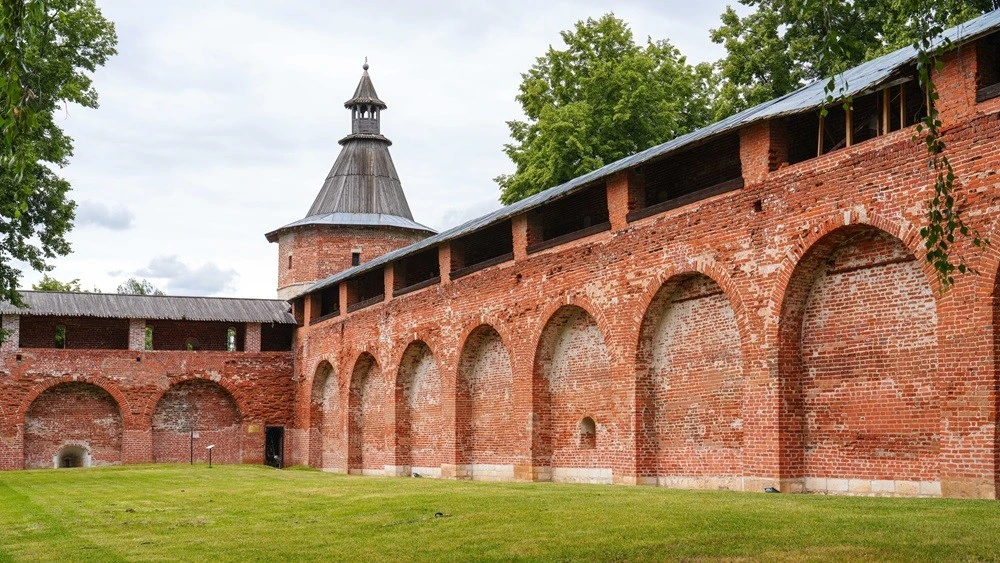
The opening of the triennial is scheduled for 2030.