

Service as a daily choice: the values that bring people together explored at the National Centre RUSSIA
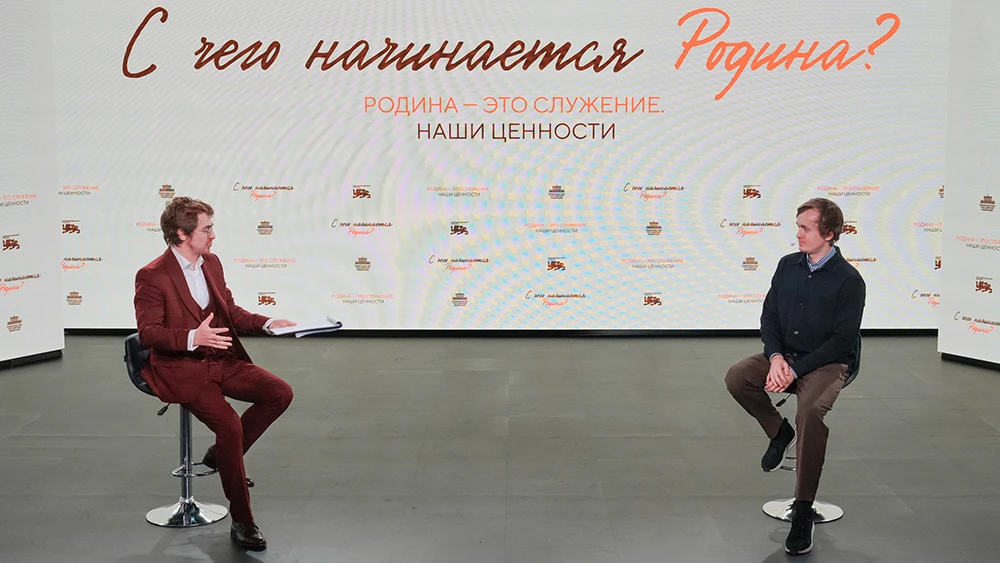
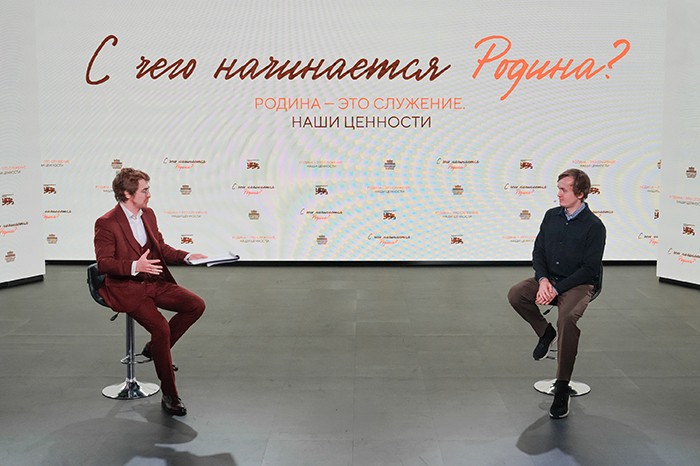
Serving one's country begins not with grand words, but with the daily choice to do one's job honestly and see it through to the end. This was the conclusion reached by participants in the themed meeting "Motherland Is Service. Our Values". Held at the National Centre RUSSIA on 3 November, on the eve of National Unity Day, the event explored what truly brings people together. It was part of the "Motherland Is Service" series of meetings, held under the nationwide project entitled "What Does the Motherland Begin With?". The project is being implemented at the National Centre during the Year of Unity of the Peoples of Russia. The guests shared stories of their personal journeys, their first steps, the mistakes they had made and what had helped them persevere.
The first speaker was Ilya Sponyakov, Adviser to the Minister of Culture of the
Russian Federation, Hero of the Russian Federation, recipient of the Order of
Courage and participant in the "Time of Heroes" special personnel
programme. A Guards Captain, he spoke about why military service had become his
life's work, explored the role of mentors and mentorship in his own life, and
his transition into the cultural sector. For him, mentorship began in the
family and continued in the army.
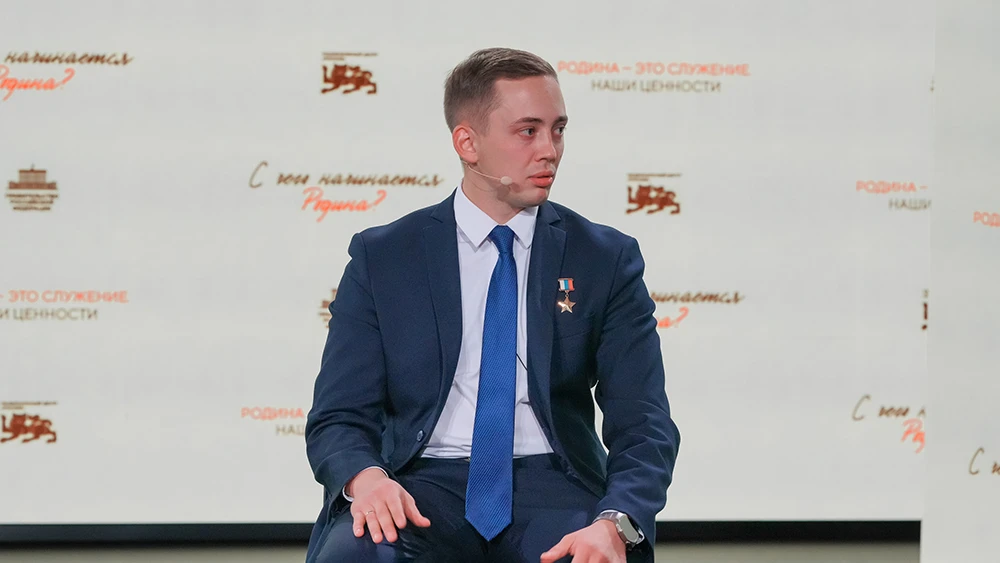
"If my father set me on this military path, put me on these tracks, my regiment commander made me a real officer. I am grateful to him for that. High standards are one way to grow. You may ask yourself: why are they demanding so much of me? But you are already several steps ahead of everyone else. If you want to develop, you cannot turn your back on that. [...] Mentorship is still part of my life today, and I try to help others myself. I meet good people along the way, and I want to offer them advice and support. I can see that they take it on board. I suppose that's my principle: helping people grow and develop, and supporting their learning," said Ilya Sponyakov.
His desire to help young people was one of the reasons Ilya Sponyakov moved into the cultural sector. He currently works with participants in the special military operation and their family members, for whom the Ministry of Culture offers educational programmes. He is also Deputy Chairman of the Youth Council's patriotic education division, where he helps young people develop cultural projects and initiatives. At the same time, he noted, culture encompasses far more than the work of cultural institutions.
"Culture is not just cultural institutions, theatres, music and other fields. It is also how we think and reflect. It is the stories and narratives that have developed over the years, the fundamental underpinnings that we must not lose. Our history is rich: the whole world listens to our classical music, knows the Stanislavsky Theatre, and recognises our outstanding artists. We must not lose any of this. It is something I care deeply about, and it is precisely what brought me into the cultural sector," he added.
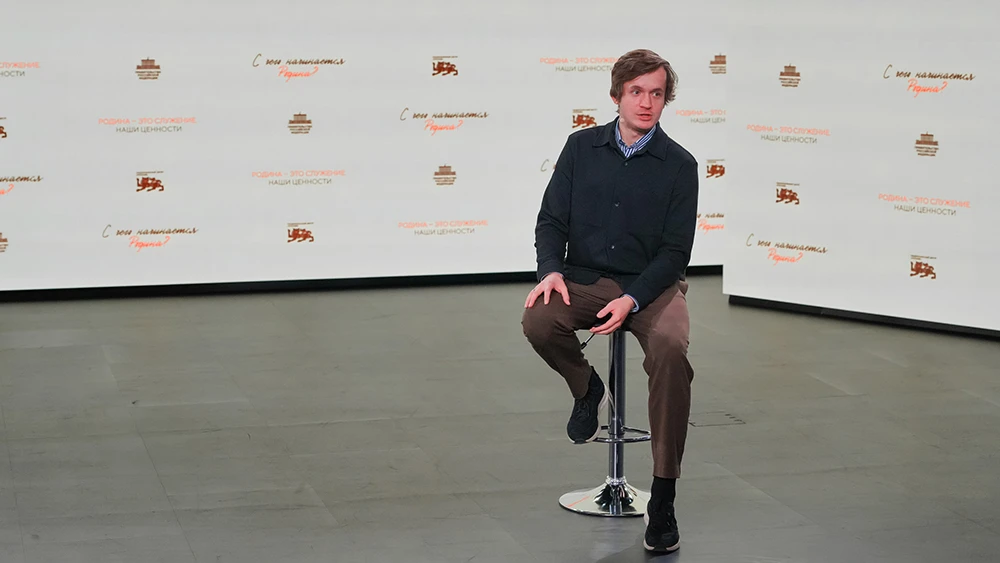
Ivan Nikiforchin, Artistic Director of the Moscow State Academic Symphony Orchestra, founder and principal conductor of the Academy of Russian Music, and recipient of the Presidential Prize for Young Cultural Workers, spoke about how the discipline instilled by his military family tradition had become the foundation of his commitment to his profession. For him, an orchestra is first and foremost about human relations, and its director bears not only artistic responsibility but also a personal responsibility for every musician.
"To me, an orchestra is first and foremost about people, and only then about musicians. Each person has a life, a creative journey and a destiny of their own. As artistic director, I bear not only artistic responsibility for everything that happens on and off the stage, but also personal, human responsibility. This is only possible through complete dedication to the work; nothing can be superficial. If you want to achieve outstanding results, you need to understand how to communicate with each person and understand the psychology of working with every musician. It should always be taken into consideration, as every orchestra has its own style, its own distinctive character and its own history," Ivan Nikiforchin emphasised.
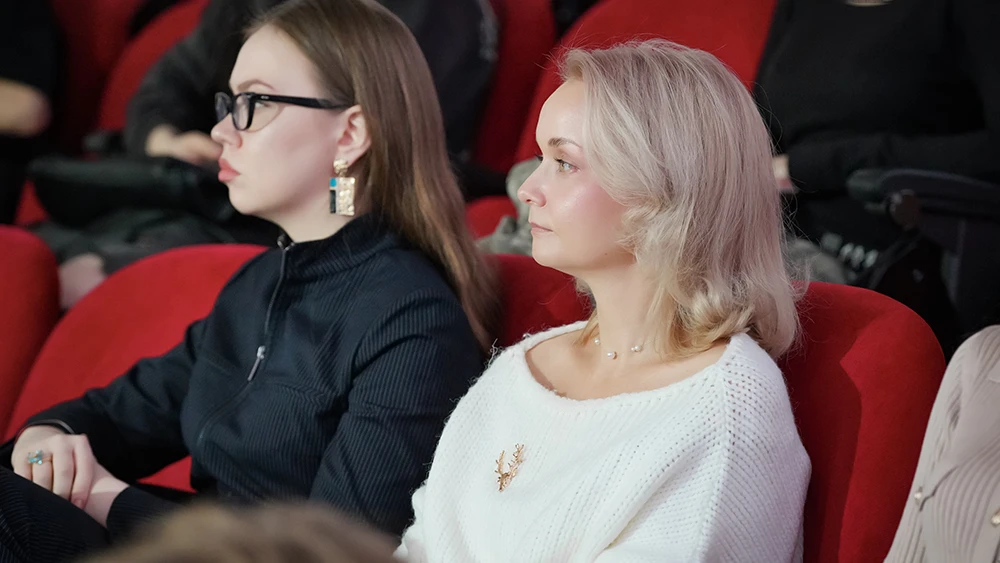
Speaking about the importance of mentorship, Ivan Nikiforchin mentioned that his teacher was composer and Moscow Conservatory professor Yuri Abdokov. According to the musician, it was his mentor who instilled fundamental values in him and taught him a principle that continues to guide him in both his creative and personal life.
"My teacher, Yuri Borisovich Abdokov, instilled some very important
fundamental values in me. He always used to tell me: 'Vanya, being a conductor,
just like being a person, is first and foremost about making choices, not
simply about having a set of qualities.' This idea resonates with everything I
do. Choice is something we face every day. Sometimes it is difficult and leaves
no room for compromise, but we have to make it," Ivan Nikiforchin said.
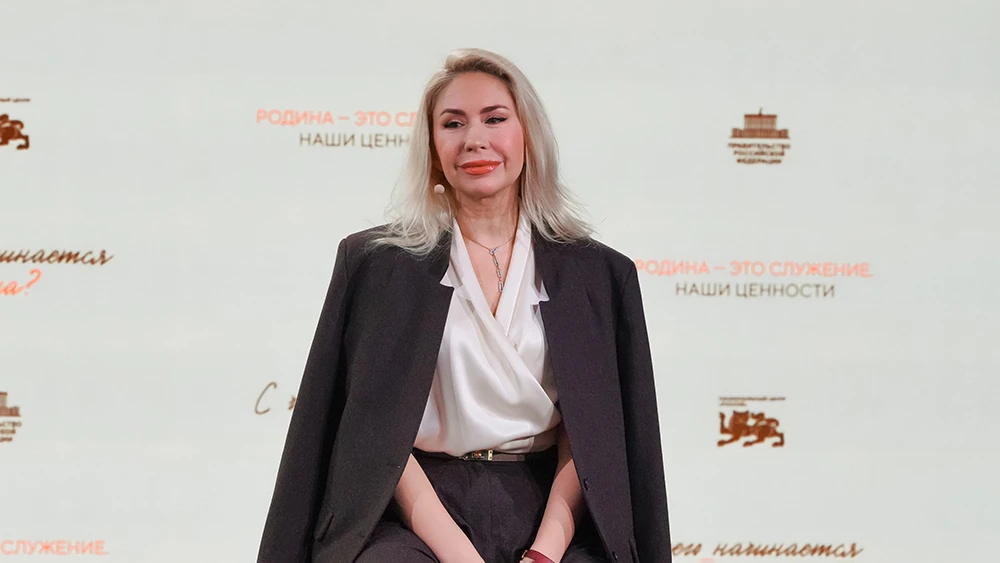
Anastasia Grebenkina, an International Master of Sport, bronze medallist at a World Cup stage and participant in European and World Championships and the Olympic Games, who now runs her own figure skating school, spoke about how service finds expression in sport. She shared her experience of discipline and overcoming challenges, discussed life after elite sport and highlighted the role of coaches at the beginning of an athlete's journey. In her view, sport instils honesty, responsibility and a strong sense of fairness from an early age, and these qualities stay with a person throughout their life.
"Athletes are very disciplined; that is instilled in them from early
childhood. But that doesn't mean we are like robots. On the one hand, athletes
are very tough and resilient, like stone, but on the other, they are flexible,
sensitive and deeply human. They are rarely late, rarely let anyone down,
always keep their word, and are honest and fair because they know what
competition, overcoming challenges and injustice mean. I think athletes also
develop a strong sense of fairness from childhood: we know exactly what is
right and what is wrong," Anastasia Grebenkina said.
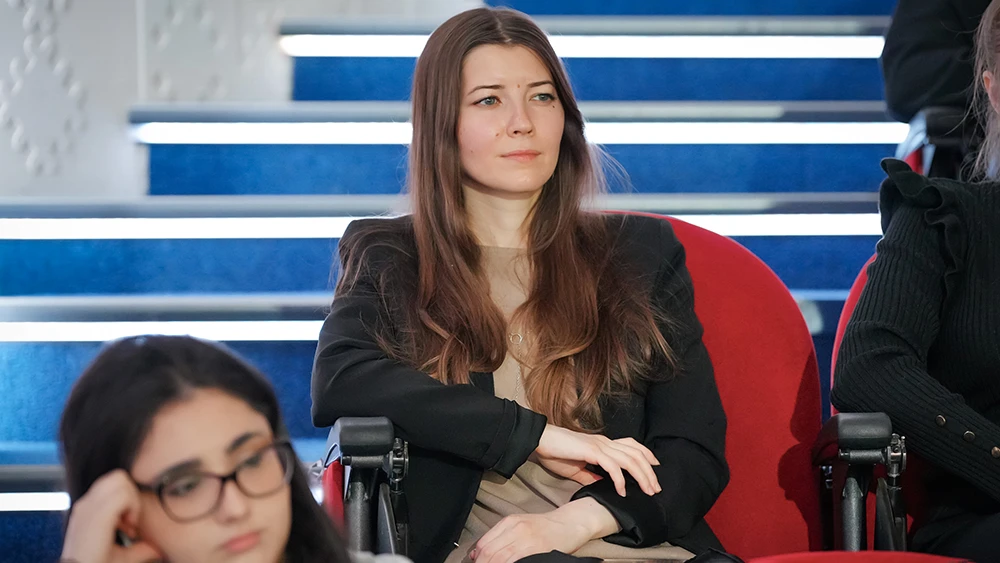
After each presentation, the guests answered questions from the audience. Young participants asked how to start over, how to persevere with work that seems to matter to no one, and how to respond to criticism from a mentor.
The "Motherland Is Service" series tells the stories of people who have made their mark in their professions and made a significant contribution not only to their respective fields but also to the country as a whole. For young audiences, it is an opportunity to gain an insight into different professions, learn from accomplished professionals and discover the opportunities that their chosen career paths can offer. The series is part of the National Centre RUSSIA's original project "What Does the Motherland Begin With?", held during the Year of Unity of the Peoples of Russia with the support of the Government of the Russian Federation.
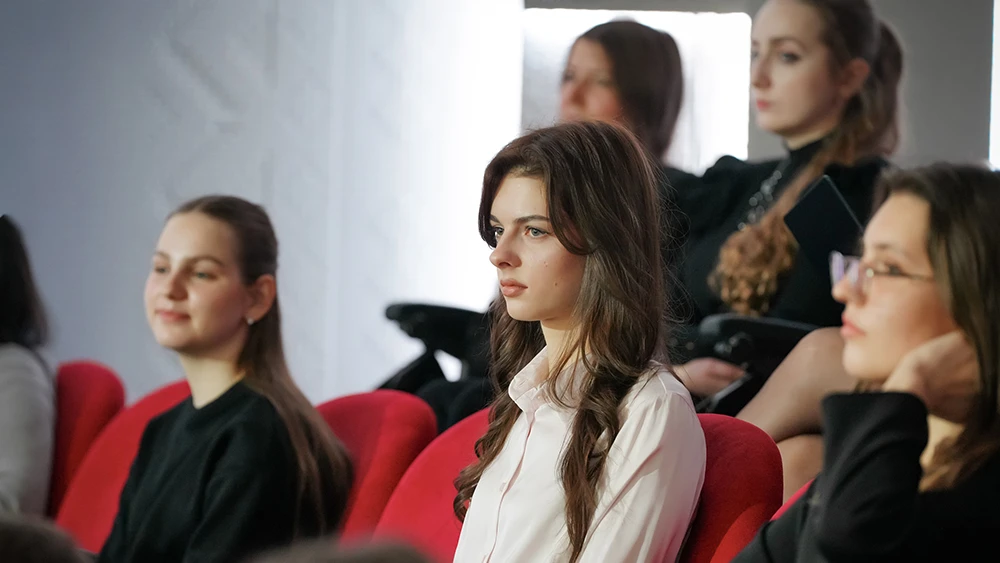
Event photobank

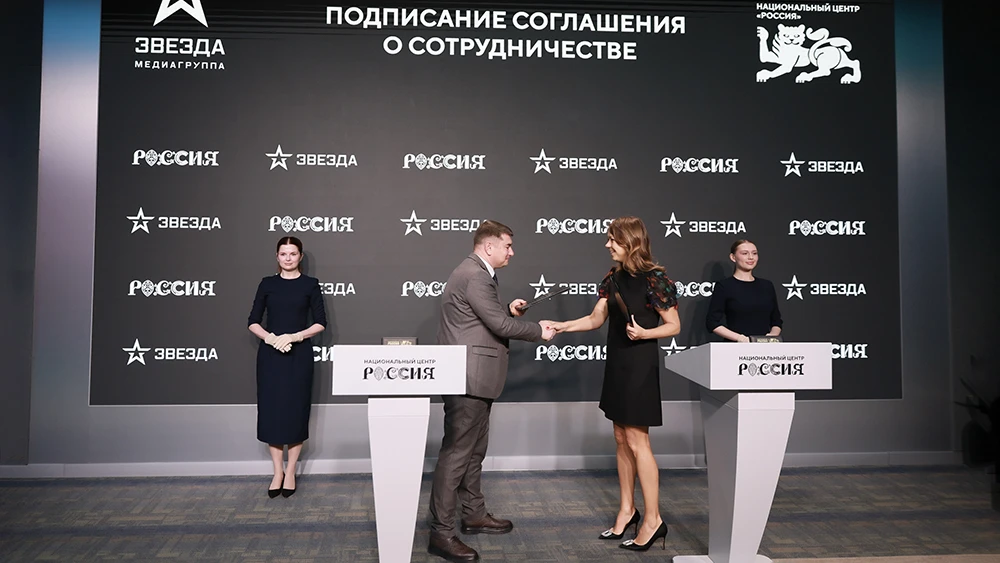
The document was signed by Natalia Virtuozova, Director General of the National Centre RUSSIA, and Mikhail Polusmak, President of the Managing Organisation of the Creative Association "Krasnaya Zvezda" ("Red Star").
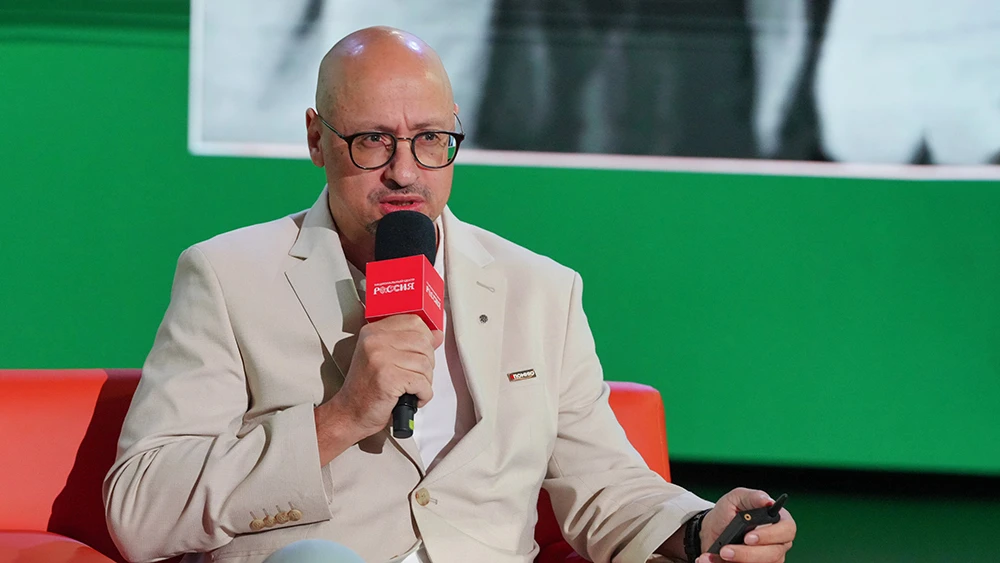
Do you know how a bank card works and why the "Mir" (a word meaning "world" and "peace" in Russian) card got exactly that name?