


The meanings behind new school textbooks revealed at the National Centre RUSSIA Literary Club
Can a
school textbook become a go-to book for the whole family? Can it withstand the
digital information noise that scatters attention and prevents knowledge from
being systematised? And how does it help shape a worldview, cultural code and
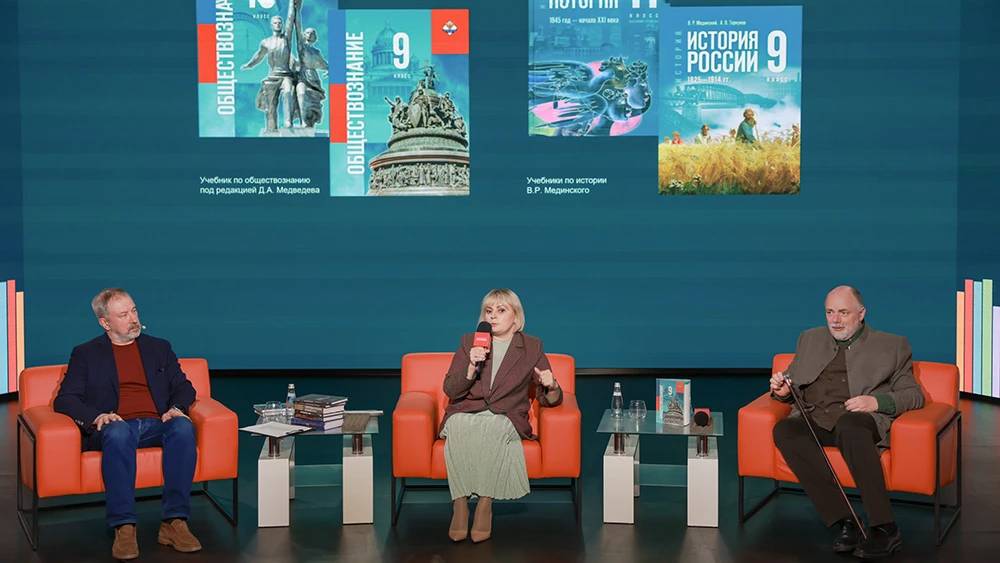
national sovereignty? These questions were the focus of a meeting of the
National Centre RUSSIA Literary Club "What to Read?! Meanings".
The theme of the meeting was "New Textbooks for Children and Adults. A
Path to the Future".
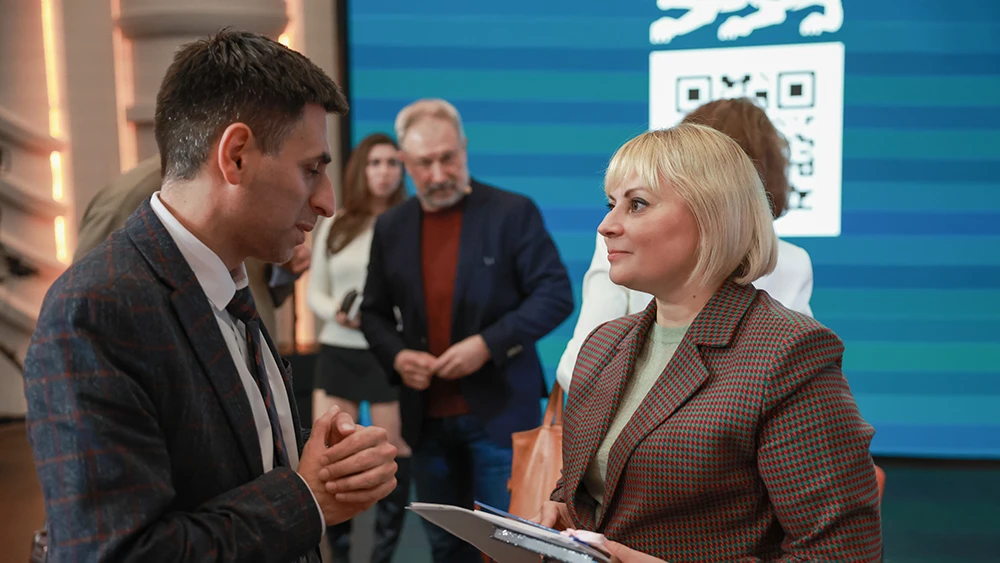
Olga Koludarova, Deputy Minister of Education of the Russian
Federation, noted that today the state is responsible for the content of
textbooks: they are developed in accordance with unified educational standards
and programmes and undergo academic, pedagogical and, in some cases, worldview
assessment. According to her, the textbook remains the main educational tool,
while modern educational content is supplemented by digital opportunities — QR
codes leading to virtual expositions, additional literature, performances and
other materials. She emphasised that the task is to bring together in textbooks
the meanings and values that schoolchildren need, thereby shaping a sovereign
education system.
"History is not only facts and events, but also the
meanings and values embedded in the development of our country. We need to know
our history, understand the trials Russia has been through and love our
country. That is why this is not only about textbooks and a unified standard
for teaching history, but also about literature, which helps us understand our
country and its culture more deeply. It is especially valuable when reading
brings school and family together. If parents themselves pick up a book, read
it together with their child and discuss what they have read, it becomes a
shared value. Reading helps us develop, become literate and express our
thoughts clearly. And when we can discuss all this not only at school but also
with our parents, it brings all of us together, it brings the family
together," said Olga Koludarova, Deputy Minister of Education of the
Russian Federation.
She added that modern educational literature helps people navigate the flow of digital information, develop critical thinking and distinguish reliable knowledge from superficial content, thus becoming a basic system of knowledge for the whole family. This is why, she said, the role of the teacher is also changing: in the modern world, the teacher becomes a true moderator of meaning.
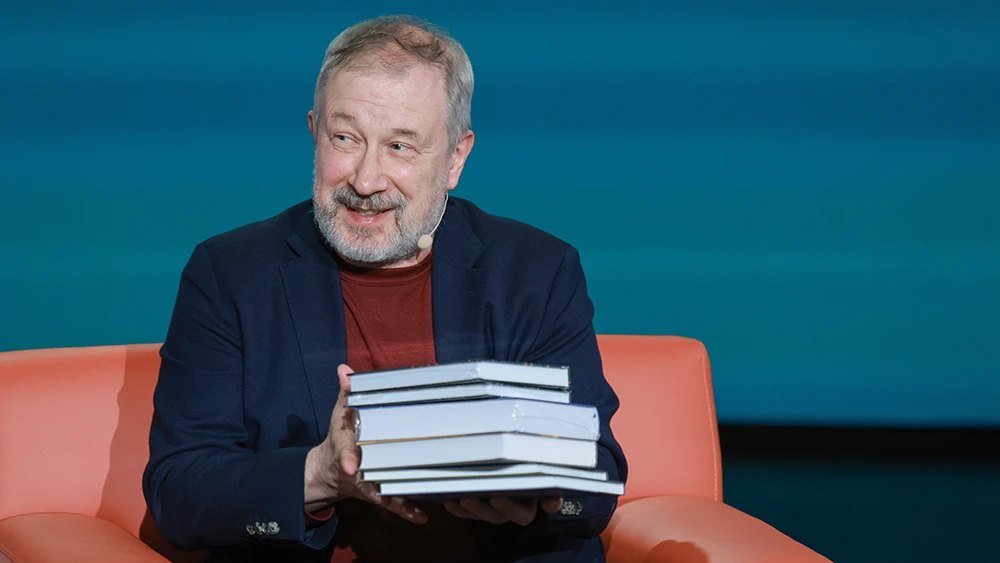
Speaking about the importance of discussing educational
literature, the meeting moderator, Alexei Chesnakov, Head of the Scientific
Council of the Centre for Political Conjuncture, Professor at HSE University
and Candidate of Political Sciences, drew the audience's attention to the rapid
pace at which knowledge is being updated. According to him, keeping up with
these changes — both professionally and in dialogue with children — requires
reading, and not only school textbooks.
"Today, a great deal of new knowledge is emerging, it
is being systematised differently, new facts and new discoveries are appearing,
and the pace of these changes is extremely high. To keep up with changes in
life, to stay on the same level as your children, to set new goals and reach
new heights in your career, of course, you need to read textbooks. And not only
school textbooks, but university ones as well. <...> School textbooks on
social studies and history must be included in the training process for
teachers and lecturers. Because when a first- or second-year student comes to
you, you need to be able to discuss all these issues with them competently and
responsibly. Do we need a single history textbook? Yes, we do. We need a shared
common space from Kaliningrad to Chukotka in which children discuss the same
issues. This is the foundation of our being a single nation," added Alexei
Chesnakov.
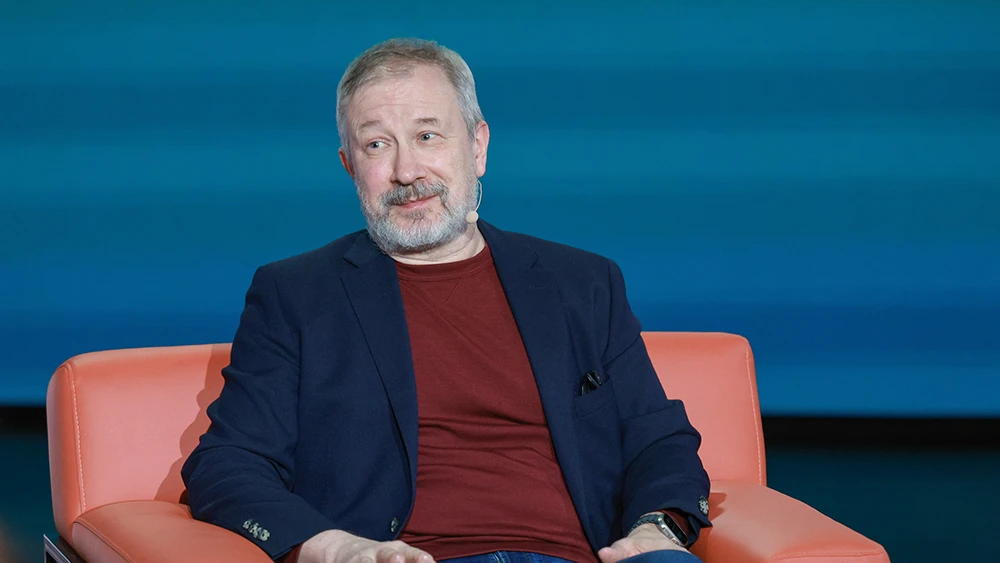
The expert also spoke separately about why adults need textbooks. According to him, as people grow older, they often lose the curiosity characteristic of children, and educational literature can restore their interest in discovering something new.
"Adults do not become adults all at once, but as they
gradually grow up, they lose some of the qualities characteristic of children —
curiosity, for example. In this sense, a textbook can take us back to the time
when we were young, when we wanted to discover new facts and make new and
interesting discoveries. A textbook for adults can help not only to discover
new disciplines and advance professionally, but perhaps even to move entire
industries forward," added Alexei Chesnakov.
Yegor Kholmogorov, publicist, member of the Union of Writers
of Russia and a member of the team of authors behind the "Social
Studies" textbook, drew the audience's attention to the fact that the
struggle over the interpretation of history and culture today also takes place
at the level of school curricula, with the textbook becoming one of the key
tools in that struggle. He explained how authors of school textbooks strike a
balance between accessible language, the necessary depth of material and the
appropriate presentation of complex social issues.
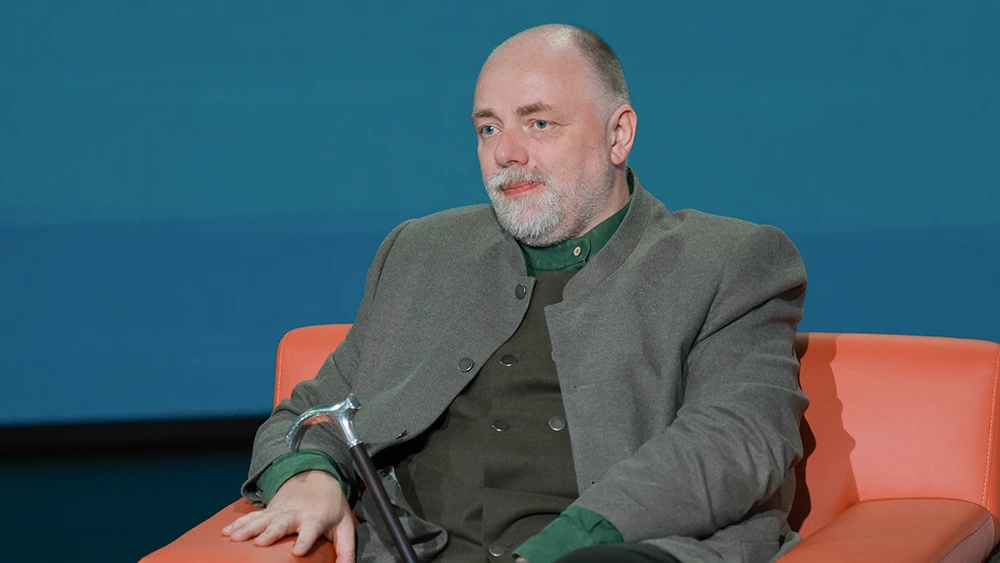
"Such a balance can only be achieved through joint work. Some people generate meanings and imagery to a greater extent, some edit the material to make it clearer for schoolchildren, and others do something else. That is why any textbook, even if only one surname appears on it, let alone one written by a team of authors, is always a collaborative effort, collaborative creativity and collaborative reflection," said Yegor Kholmogorov.
The speaker added that a textbook is important not only for
preparing for an exam, but also for shaping civic attitudes. Using the
"Social Studies" textbook, which he helped create, as an example,
Yegor Kholmogorov identified the key qualities that, in his view, educational
literature of the future should possess.
"A textbook is important above all for its educational
function — it teaches a person to be a citizen. Many children have no one who
seriously talks to them about social issues, and this textbook is an attempt to
explain how society works and how you will live in the world when you grow up.
At the same time, we should not think that a textbook must be written once and
for all. But the timeless meanings embedded in it — and this is the first
social studies textbook in Russian history to include the subject of
traditional values — should remain unchanged or only be improved," Yegor
Kholmogorov is convinced.
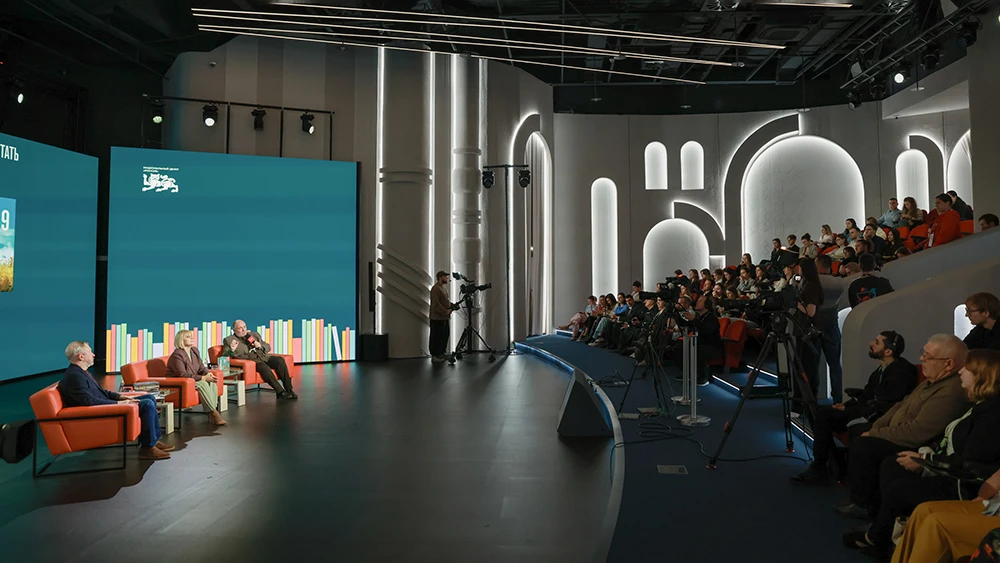
The National Centre RUSSIA's original club "What to Read?! Meanings" was created for those who see books as a foundation for strengthening the spiritual and moral foundations of society and protecting traditional values. Participation in new club meetings is free, but registration on the russia.ru website is required. The current event schedule is available in the "Events" section.
The full recording of the meeting, dedicated to the role of school textbooks in shaping the worldview of entire generations, the cultural code and national sovereignty, is available via the link.
Event photobank


An actor creates a character through voice, movement and intonation, while a chef does it through flavour, aroma, texture and presentation.
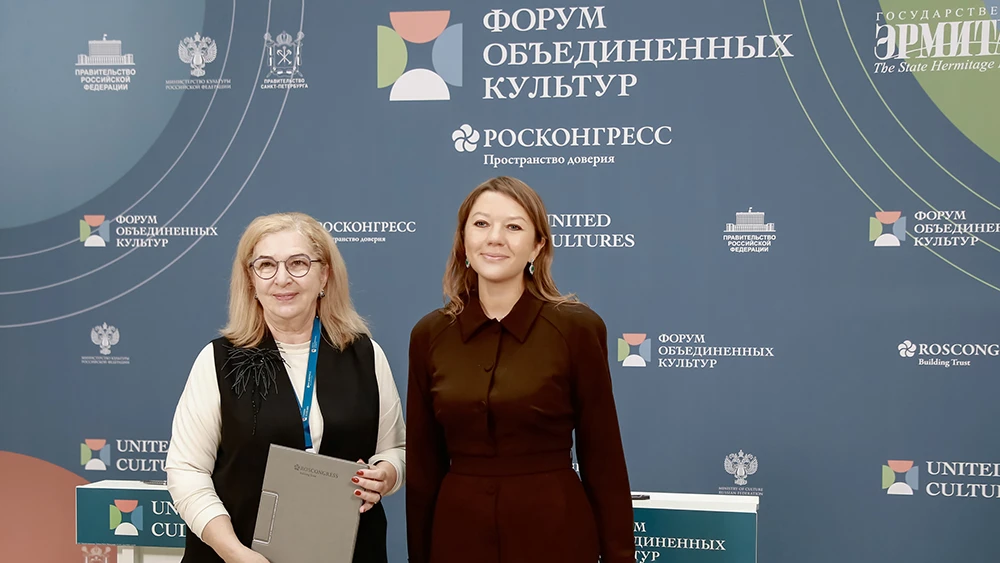
The agreement marks the beginning of a joint journey for the two cultural institutions.
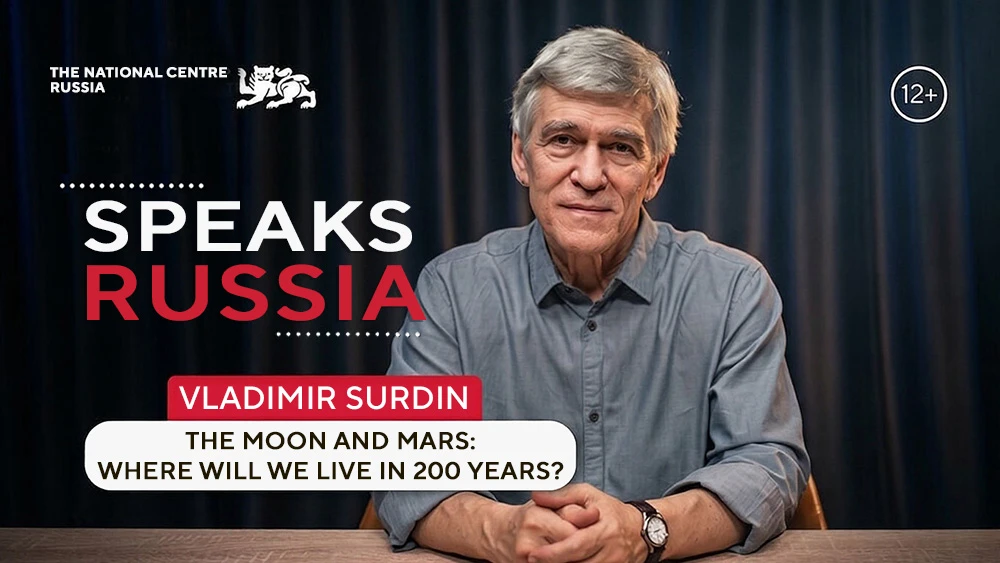
A new episode of the "Russia Speaks" podcast, "The Moon and Mars: Where Will We Live in 200 Years?", has been published on the National Centre RUSSIA website.


